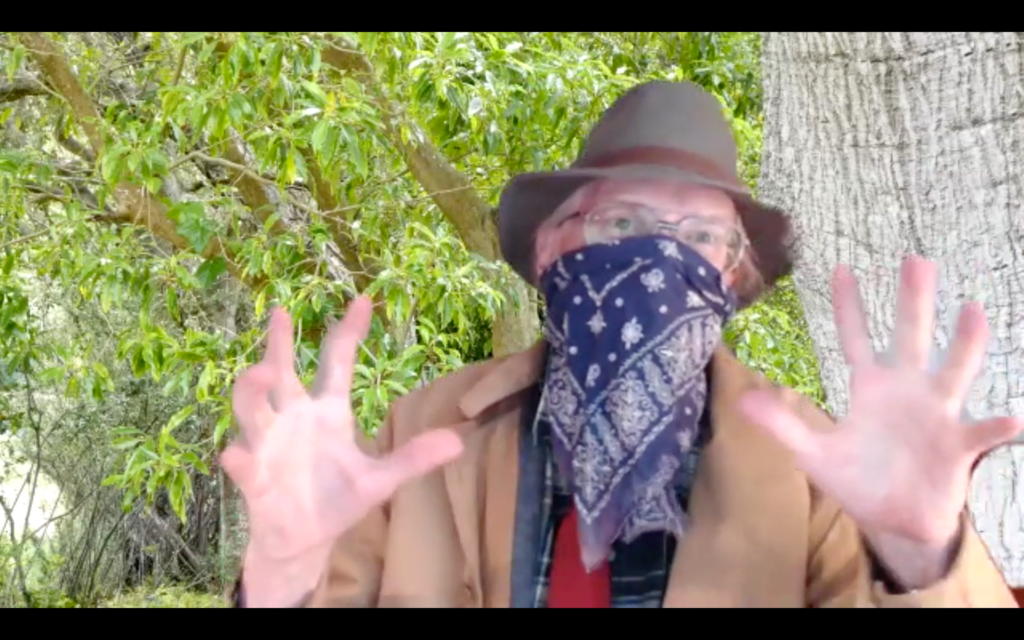
The third installment of the Ecojustice Avenger video series:
Yet Another Unitarian Universalist
A postmodern heretic's spiritual journey.

The third installment of the Ecojustice Avenger video series:
I’ve been re-reading one of the great American autobiographies, James Weldon Johnson’s “Along This Way.” Johnson was a renaissance man: poet, novelist, school teacher, writer of hit songs with his brother Rosamond, diplomat who served as American consul in Nicaragua during a revolution, and executive secretary of the NAACP.
In this last capacity, Johnson investigated a number of lynchings, and in his autobiography he describes an investigation into a lynching in 1917:
“I rushed to Memphis to to make an investigation of the burning alive of Ell Persons, a Negro [sic], charged with being an ‘axe murder.’ I was in Memphis ten days; I talked with the sheriff, with newspaper men, with a few white citizens, and many colored [sic] ones; I read through the Memphis papers covering the period; and nowhere could I find any evidence that Ell Persons was guilty of the crimes that had been committed. And, yet, without a trial, he was burned alive on the charge. I wrote out my findings, and they were published in a pamphlet that was widely circulated….”
More than a hundred years later, we’ve been hearing about the murders of George Floyd and Ahmaud Aubrey. Reading Johnson’s autobigraphy has prompted me to ask myself: What, if anything, has changed? The biggest change might well be the wide availability of videography, and the ability to disseminate videos almost immediately: instead of just reading a pamphlet some weeks after a lynching, we sometimes see a video of a lynching almost in real time. Another change: according to Johnson, some 5,000 people turned out to watch Ell Persons being burned alive; today, while the people doing the lynching still aren’t trying to hide their actions, at least some bystanders might call them out on it.
But in many ways it feels as though not much has changed. A hundred years later, black men are still being murdered without cause. Too many murderers of black men still get away with it. And, as my cousin Saba has pointed out, we still mostly don’t hear about the violence perpetrated on black women.
I suppose now I should offer some of the usual platitudes that white people offer, using key words like “justice” and “white supremacy” and “reconciliation” and so forth. But I think instead I’ll quote James Weldon Johnson’s key insight as he researched the Ell Persons case, as he discovered both the physical sufferings of the black victim, and the “moral degradation” of the white community:
“The truth flashed over me that in large measure the race question involves the saving of black America’s body and white America’s soul.”
It’s been interesting watching to see what online religious education resources people actually use. How-to craft videos? Single digits for number of views. Read-aloud programs? Low double digits, if I’m lucky. It’s not a great return for my invested time.
But what about “Story for All Ages” videos that are included in the Sunday service? We typically get over a hundred log-ins to our Zoom worship services, probably representing 1.5 humans on average, and posting on other social media (Facebook Live, Youtube) might add 10-30 views to the total. Plus a lot of informal positive feedback. These videos are definitely a better return for the time I invest, and as a result that’s what I’ve been concentrating on recently.
Since the “Story for All Ages” gets the largest audience, I thought maybe I’d try a tie-in video. The current “Story for All Ages” video series is about the conflict between Ecojustice Avenger and a dastardly villain named Trashman. The Ecojustice Avenger videos have a 12 second jingle, and after two episodes some kids had memorized all the lyrics to the jingle. That inspired me to expand that 12 second jingle to a full 1:41 music video, with videography inspired by Nam June Paik:
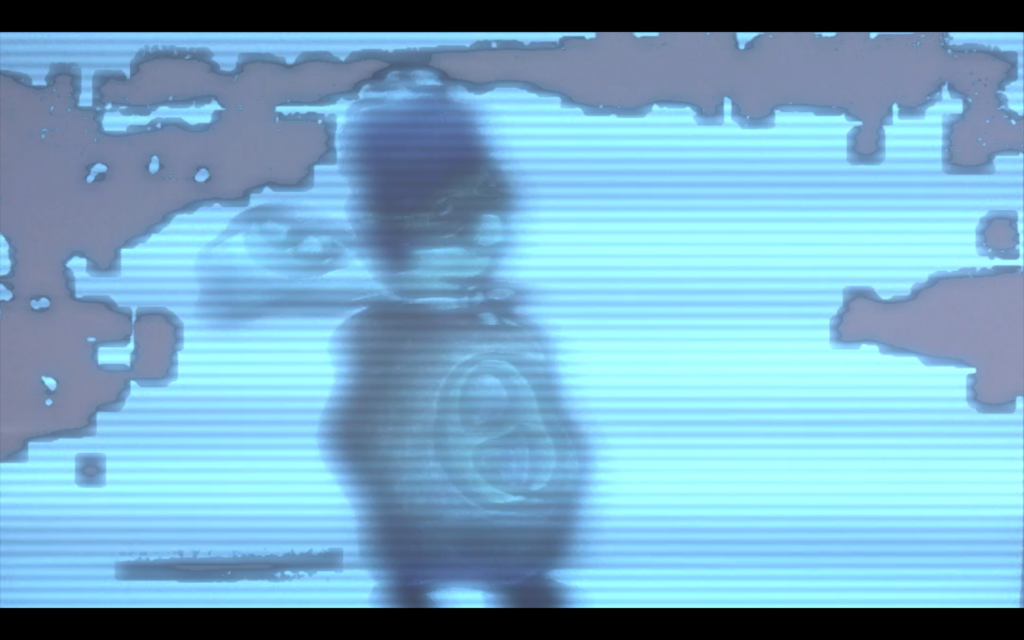
Will this reach kids? Maybe…probably not. But doing religious education in the age of COVID-19 requires constant experimentation until we discover what we can do that will reach kids.
Harvard Business Review (HBR) has a couple of articles on virtual meetings. Back on March 5, they published an article by Bob Frisch and Cary Greene titled “What It Takes To Run a Great Virtual Meeting.” If you’re experienced at running online meetings, most of this will seem like good common sense, but you should read it anyway. Some of HBR’s suggestions should be obvious, like “test the technology ahead of time.” Others may be less obvious, but are still critically important, like “make sure faces are visible.” HBR suggests having a facilitator for meetings, someone who can take the pulse of the group; and one of their more innovative ideas is that the facilitator can use a parallel phone-based survey tool like “Phone Everywhere” to get that feedback.
An earlier article, published in 2015, by Keith Ferrazi was titled “How To Run a Great Virtual Meeting.” This covers much of the same ground, though with different emphases. Ferrazi spent a couple of years researching virtual meetings, and his article summarizes his research findings. One of my favorite points from this article: ban multitasking, because it doesn’t work and it slows down the team. I’ve been guilty of multitasking at virtual meetings, and it’s true: when I start checking email, I lose track of what’s going on in the meeting. That’s one reasons why Ferrazi says to leave video on: so you can see when someone is trying to multitask. (This, by the way, is a big drawback of Google Meet: depending on how you set up the meeting, you can only see 4 people at a time.)
An article by John Wimberly of Congregational Consulting Group got me started reading up on the topic. Wimberley titles his article “Will There Ever Be A Non-Virtual Meeting Again?” Wimberley says that once the COVID crisis ends, many urban congregations will keep doing virtual meetings because of the time it saves commuting to and from meetings. Actually, it’s not just urban congregations: congregations in suburban areas also have traffic problems; plus virtual meeting can include those who can’t travel at night (elders and people with young children); and for those of us in regional congregations, drawing from a big geographical area, virtual meetings allow our more far-flung members to participate. Before COVID-19 hit, our Palo Alto congregation was already doing hybrid meetings — some people in person, some people online — and I expect after COVID-19, there will be more committee and Board members who opt for the virtual option.
The bottom line: since virtual meetings are here to stay, we should learn how to run great virtual meetings.
The second installment in the Ecojustice Avenger series:
The first installment of the Ecojustice Avenger series:
The Unitarian Universalist Association (UUA) posted a notice today recommending that Unitarian Universalist congregations should consider NOT opening in-person meetings before May, 2021. You can read the recommendations here.
I’m glad the UUA has issued these recommendations. I had already come to most of the conclusions outlined in their recommendations. I’ve been trying to figure out how to gently break it to lay leaders and congregants who are already feeling weary of being stuck at home, already getting tired of Zoom meetings, that we really won’t be able to meet in person until there’s an effective vaccine and/or an almost universally effective treatment with incredibly robust contact tracing in place. Which means most likely no in-person meetings for at least another year — maybe longer in some areas.
The only thing I’d quibble about in the UUA recommendations is this statement: “It is the UUA’s strong recommendation that congregations plan for ongoing virtual gathering and operations through May 2021.” I would have added the phrase “at least” before “through May, 2021.” I don’t think there’s any guarantee that we will be able to resume in-person meetings by the end of May 2021; human beings are really good at false hope, and I wouldn’t want to encourage that human tendency.
That minor quibble aside, the recommendations are quite well done, especially in how they recognize that different congregations in different locales will face different sets of problems.
Best of all, now I don’t have to go through the trouble of summarizing all the research I’ve been doing. All I have to do is point to the UUA recommendations, and say, “This generally agrees with the research I’ve been doing.”
And then we can all say together, “OK, let’s plan for a year of online programming. How can we unleash our creativity, serve the needs of our members and friends, and make Unitarian Universalism in Silicon Valley serve the goodness of humanity?”
Religion New Service has reports on an important consideration before your church reopens:
You’ll want to talk with your insurer first.
Insurance companies, as you’d expect, are remaining “neutral on whether churches should reinstitute physical gatherings when restrictions are lifted.” Yet because they’re concerned with safety in general, insurance companies are offering concrete suggestions on how churches might one day safely reopen. According to Religion New Service:
“Guy Russ, Church Mutual’s expert on risk control, said his company’s recommendations include maintaining 6-foot distance from other parishioners in all directions, sterilizing all surfaces, using hard-cover seating options instead of fabric-covered pews to expedite cleaning, removing physical holy books or hymnals from use, and posting signage or projected messages to clearly indicate expectations for worship attendees.”
For our church in Palo Alto, that means reducing the seating capacity from 150 seats to about 50. Then since most of our chairs have fabric covers, we’d have to dig up 50 chairs with hard surfaces.
“Russ also stressed the need for religious groups to train staff and volunteers not only on cleanliness and social distancing practices, but also on how to address individuals who fail or refuse to comply with posted guidelines. In addition, he suggested houses of worship consider instituting some form of ‘contact tracing,’ whereby faith leaders either retain the contact information of people who attend events or use smartphone applications to help local authorities to trace the spread of the coronavirus if members of the congregation get sick.”
This means training a lot of volunteers. This also means taking attendance, including names and contact information, for all in-person services.
“‘If everybody has followed everything that you ask them to do and somebody who has attended an event at your facility becomes ill, what is your protocol going to be?’ he said. ‘We are recommending that each organization thinks through that question.'”
This means yet another safety policy for the Board of Trustees to vote on BEFORE reopening.
Plus there are other considerations. For instance, our music director tells us that we probably shouldn’t have any group singing, nor any group speaking, until there’s an effective vaccine — so no hymns. Beyond that, no choirs and no wind instruments either. From my perspective as an educator, I see major difficulties enforcing social distancing with younger children, so maybe there would have to be a lower age limit.
It begins to look like it will be a major challenge to hold in-person services before there’s an effective vaccine.
Which leads me to ask: What about those states that are allowing churches to reopen soon? Have they thought all these issues through?
More to the point, what about those churches that decide to reopen because they are sure God will protect them? Rev. Stephen Fearing of Beaumont Presbyterian Church in Lexington, Kentucky, has the best answer to that one:
“Bad theology has consequences.”
The sixth installment of the Back in Time series:
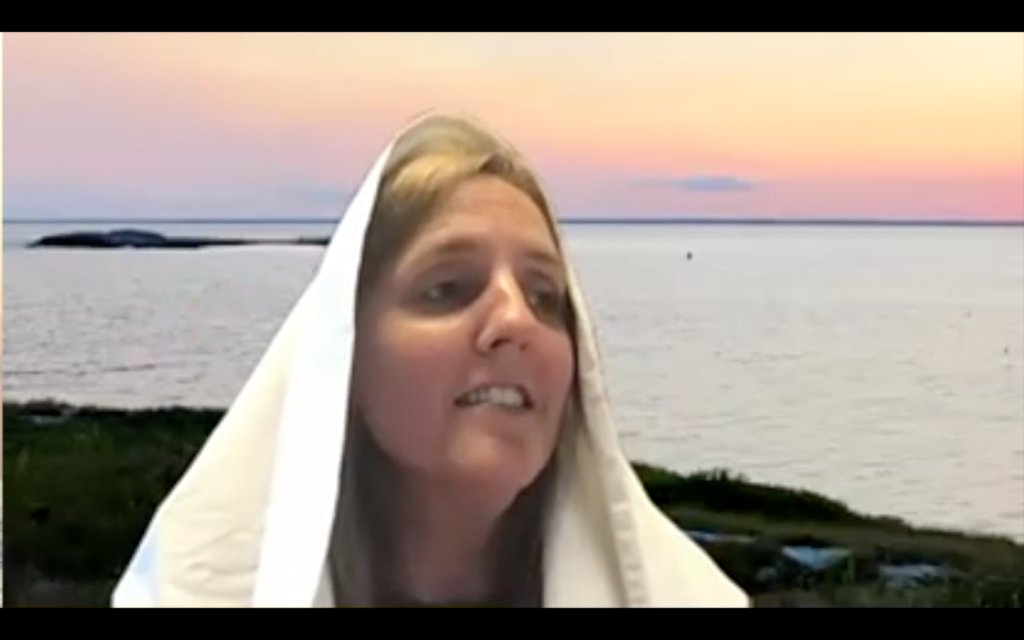
The fifth installment of the Back in Time series: