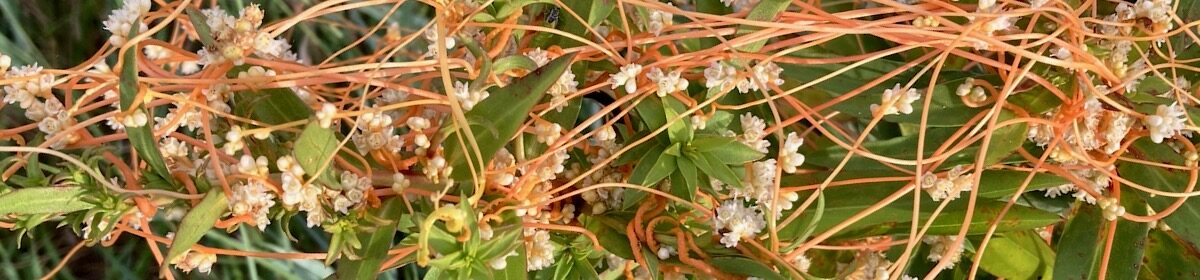
Developing online curriculum

Over the past few years, I’ve slowly been developing UU religious education curriculum that are meant to be published online. This past week, I finally put together a new Web site to publish them: Yet Another UU Curriculum Site.

At present, three curriculum are published on this site: “Beginnings,” an 8-session course for upper elementary grades; “Coming of Age,” a 9 month, 17 session, program for gr. 8-9; and “Greek Myths,” an 8-week course for upper elementary grades that’s still in development. In addition, I’ve included a selection of games that are appropriate for Sunday school classes and youth groups.

Why publish curriculum online?

First and foremost, I wanted to have the complete curriculum available in a format so that a teacher can access it with their smartphone or tablet.

This is good for teachers because all lesson plans and associated resources are easily accessible, and teachers don’t have to worry about leaving their curriculum book or binder at home. Long term, I will convert at least some of the curricula to epub format, and/or to printed books available as print-on-demand copies, so teachers can use whatever format they prefer.

View: Smartphone

Above: The site as it would be seen on a smartphone.

This is also good for parents, because parents can ask which lesson their child did on a given Sunday, and then look up that lesson online. Then they will can go over the material with their child if they want to. Some of the curricula I’m developing have a story associated with each lesson, and long term I’m planning to create storybooks in both epub and affordable print-on-demand print editions.

View: Laptop

Above: The site as it would be seen on a laptop or home computer.

Second, I wanted to have curricula online side-by-side with supporting resources. Thus, one of the first resources I’ve put up on this site are lots of games. That way, if a lesson plan fails, a teacher will have immediate access to back-up activities. Long term, I’m working on an online how-to-teach resource, with tips and techniques for adapting printed lesson plans for your own needs.

Finally, I want to see where this leads me, and I suspect I’ll start thinking differently about curriculum development. With cheap, easily accessible online publishing, it won’t just be teachers who are accessing curricula — parents and even kids will be able to do so as well. I’m going to start allowing people to add comments (which I will carefully curate), and that will enrich the curriculum. Finally, I’m contemplating adding some sort of assessment section to some of the curriculum, by developing fun ways for learners to show what they’ve learned.

This is very much a project that’s in development. I would value your thoughts and comments. To view “Yet Another UU Curriculum Site,” click here.

How to have transcendental experiences

Someone asked how to have transcendental experiences, so I’ll summarize what I know about the subject from my own personal experience.

Introduction
Background: Thoreau’s approach
A basic method for having mystical experiences
A few warnings

Introduction

First, definitions: I would define a transcendental experience as a variety of mystical experience that does not require belief in anything supernatural; the “transcendental” refers back to the Transcendentalists, like Thoreau and Emerson. A transcendental experience is intense and possibly life-changing, and the person having the experience gains a direct knowledge of the ultimate unity of everything and the insignificance of the individual.

Second, a caveat: it seems that only some people can have transcendental experiences — William James estimated that three in four people cannot have them. Perhaps this is because some people simply aren’t able to have such experiences. But I’m inclined to believe that many people either don’t want to go through the trouble of preparing themselves to have transcendental experiences, or if they do have them manage to convince themselves that they didn’t.

Third, mystical experiences seem to have been part of every human culture, and there’s no great secret about how to have one. The classic method to prepare yourself to have mystical experiences is to practice some kind of mental/spiritual discipline. In the Western tradition, this involved some combination of prayer, study of sacred texts and lectio divina (disciplined spiritual reading), and/or retreat from the ordinary workaday world. In the Eastern tradition, this involved some combination of meditation, study of sacred texts, submission to and study under a guru or spiritual master, and/or retreat from the ordinary workaday world. In both the East and the West, the usual interpretation of mystical experiences involved some element of the supernatural: these were experiences of God, or would lead to release from the endless cycle of rebirth, etc.

But I’d like to outline an approach to having mystical experiences that requires no belief in the supernatural (although it can also accommodate a belief in the supernatural quite comfortably). This flexible approach was developed and used by the nineteenth century Transcendentalists, many of whom were Unitarians.

Continue reading “How to have transcendental experiences”

Sutra

The headlines on today’s newspaper screamed: “U.S.CLIMATE HAS ALREADY CHANGED, STUDY FINDS, CITING HEAT AND FLOODS” [New York Times, 7 May 2014, p. A1]. This is news because we didn’t already know what this report, the National Climate Assessment, is telling us. A related story tells us that “Polls Find Americans Skeptical On Climate” [ibid., p. A13]. And why? “Scientists predict that climate change will cause larger problems for poor countries than rich ones….” And the U.S. is way ahead of all other countries in per person emissions of climate-changing gasses.

Smokey the BearThis is human nature: the ones who are causing the problem are least likely to be affected by the problem, so they believe they are not causing the problem. The minority of U.S. citizens who are aware of the magnitude of the problem attempt to convince other U.S. citizens of the truth with rational arguments, but since when did humans change their behavior as a result of rational argument?
No, it is time to call on a higher power. One of the growing problems caused by climate change is the increased incidence of forest fires, and so we immediately know on whom we must call. We will follow the example set by poet Gary Snyder in 1969. Both Buddhists and non-Buddhists, both those who follow the circumpolar Bear cult and those who don’t, should call on the Boddhisattva of Compassion Avalokitesvara — who is also Kamui Kimun of the Ainu — who is also a consort of She Who Saves, Boddhisattva Tara, Mother of Liberation — who is he who carries the vajra-shovel.

Abandon rational argument, and chant together:

Smokey the Bear Sutra

Once in the Jurassic, about 150 million years ago, the Great Sun Buddha in this corner of the Infinite Void gave a Discourse to all the assembled elements and energies: to the standing beings, the walking beings, the flying beings, and the sitting beings—even grasses, to the number of thirteen billions, each one born from a seed—assembled there: a Discourse concerning Enlightenment on the planet Earth.

   “In some future time, there will be a continent called America. It will have great centers of power called such as Pyramid Lake, Walden Pond, Mt. Rainier, Big Sur, Everglades, and so forth, and powerful nerves and channels such as Columbia River, Mississippi River, and Grand Canyon. The human race in that era will get into troubles all over its head, and practically wreck everything in spite of its own strong intelligent Buddha-nature.”

   “The twisting strata of the great mountains and the pulsings of volcanoes are my love burning deep in the earth. My obstinate compassion is schist and basalt and granite, to be mountains, to bring down the rain. In that future American Era I shall enter a new form, to cure the world of loveless knowledge that seeks with blind hunger, and mindless rage eating food that will not fill it.”

   And he showed himself in his true form of

         SMOKEY THE BEAR.

Continue reading “Sutra”

Diné bahané, part five

7. The Fifth World

First Man was not satisfied with the Fourth World. It was a small barren land; and the great water had soaked the earth and made the sowing of seeds impossible. He planted the big Female Reed and it grew up to the vaulted roof of this Fourth World. First Man sent the newcomer, the badger, up inside the reed, but before he reached the upper world water began to drip, so he returned and said that he was frightened.

At this time there came another strange being. First Man asked him where he had been formed, and he told him that he had come from the Earth itself. This was the locust. He said that it was now his turn to do something, and he offered to climb up the reed.

The locust made a headband of a little reed, and on his forehead he crossed two arrows. These arrows were dressed with yellow tail feathers. With this sacred headdress and the help of all the Holy Beings the locust climbed up to the Fifth World. He dug his way through the reed as he digs in the earth now. He then pushed through mud until he came to water. When he emerged he saw a black water bird, the Grebe, swimming toward him. The Grebe had arrows crossed on the back of his head and big eyes.

The bird said: “What are you doing here? This is not your country.” And continuing, he told the locust that unless he could make magic he would not allow him to remain.

The black water bird drew an arrow from back of his head, and shoving it into his mouth drew it all the way through his stomach and intestines and out of hid anus.

“That is nothing,” said the locust. He took the arrows from his headband and pulled them both ways through his body, between his shell and his heart. The bird believed that the locust possessed great medicine, and he swam away to the East, taking the water with him.

Then came the blue water bird from the South, and the yellow water bird from the West, and the white water bird from the North, and everything happened as before. The locust performed the magic with his arrows; and when the last water bird had gone he found himself sitting on land.

The locust returned to the lower world and told the people that the beings above had strong medicine, and that he had had great difficulty getting the best of them.

Now two dark clouds and two white clouds rose, and this meant that two nights and two days had passed, for there was still no sun. First Man again sent the badger to the upper world, and he returned covered with mud, terrible mud. First Man gathered chips of turquoise which he offered to the five Chiefs of the Winds who lived in the uppermost world of all. They were pleased with the gift, and they sent down the winds and dried the Fifth World.

First Man and his people saw four dark clouds and four white clouds pass, and then they sent the badger up the reed. This time when the badger returned he said that he had come out on solid earth. So First Man and First Woman led the people to the Fifth World, which some call the Many Colored Earth and some the Changeable Earth. They emerged through a lake surrounded by four mountains, and this place is said to be near Pagosa Springs, Colorado. The water bubbles in this lake when anyone goes near it.

Now after all the people had emerged from the lower worlds First Man and First Woman dressed the Mountain Lion with yellow, black, white, and grayish corn and placed him on one side. They dressed the Wolf with white tail feathers and placed him on the other side. They divided the people into two groups. The first group was told to choose whichever chief they wished. They made their choice, and, although they thought they had chosen the Mountain Lion, they found that they had taken the Wolf for their chief. The Mountain Lion was the chief for the other side. And these people who had the Mountain Lion for their chief turned out to be the people of the Earth. They were to plant seeds and harvest corn. The followers of the Wolf chief became the animals and birds; they turned into all the creatures that fly and crawl and run and swim.

And after all the beings were divided, and each had his own form, they went their ways.

This is the story of the Four Dark Worlds and the Fifth World, the World we live in. And some say that there are yet two worlds above us: the first is the World of the Spirits of Living Things; the second is the Place of Melting into One.


This version of the Diné bahané is adapted from a public domain source edited by Aileen O’Bryan, The Dîné: Origin Myths of the Navaho Indians, Bulletin 163 of the Bureau of American Ethnology of the Smithsonian Institution, (1956), pp. 1-13. To read part one, click here.

A possible case for teaching intelligent design

The philosopher Thomas Nagel, who declares himself an atheist, argued in a 2008 article in Philosophy and Public Affairs that intelligent design (ID) can not be dismissed as easily as young earth creationism. Yes, ID is very problematic, as Nagel knows:

“I understand the attitude that ID is just the latest manifestation of the fundamentalist threat, and that you have to stand and fight them here or you will end up having to fight for the right to teach evolution at all.” [Thomas Nagel, “Public Education and Intelligent Design,” Philosophy and Public Affairs, v. 36, no. 2, p. 203.]

However, Nagel says, both ID and scientific naturalism are grounded in worldviews that originate outside science. He then asks, Why is it OK to disallow one of these world views in public education, while allowing the other worldview? Speaking as an atheist, he says:

“I do not regard divine intervention as a possibility, even though I have no other candidates. Yet I recognize that this is because of an aspect of my overall worldview that does not rest on empirical grounds or any other kind of rational grounds. I do not think the existence of God can be disproved. So someone who can offer serious scientific reasons to doubt the adequacy of the theory of evolution, and who believes in God, in the same immediate way that I believe there is no god, can quite reasonably conclude that the hypothesis of design should be taken seriously.” [pp. 202-203]

Many political liberals will reject this notion out of hand, but Nagel makes a convincing argument that they should think more carefully about their rejection. It is worth reading the entire article, in order to follow Nagel’s careful and nuanced line of thought; the article is online here.

Mystics and Transcendentalists

Below is the uncorrected text of the talk with which I began a class on the mystical tradition within Unitarian Universalism, focusing (of course) on the Transcendentalists. A fascinating discussion followed, in which participants offered corrections where I was vague or in error, amplified things that needed to be amplified, and added lots of good thinking. So if you read this, remember that you’re missing the most interesting part of the class. Also, I diverged from the text at several places, so the talk you heard may not be the talk you read here.

Yes, liberal religion has a mystical tradition!

It seems odd that I have to assert this so vigorously. But our Unitarian and Universalist traditions, and Unitarian Universalism today, have not been particularly hospitable towards mystics. Throughout our history, and into the present day, the rationalists dominate our theological conversations — and I include both the theistic rationalists and the atheist rationalists. Our faith tradition clings to its belief in a rationalism inherited from the Enlightenment; we believe in carefully reasoned arguments; we have a tendency to focus on the brain and mind and ignore the heart and the rest of the body; we are most likely to use logical thought, and we are inclined to ignore other ways of knowing and interpreting the world.

However, by the same token, the mystics among us been not been kind towards their non-mystical co-religionists.

Emerson against religious formalism

Back in 1838, Ralph Waldo Emerson gave what is now known as the Divinity School Address; he spoke to the graduating class of Harvard Divinity School, supplier of most Unitarian ministers of the day, and told them how to be good ministers. Do not be coldly rational formalists, he warned. And then, speaking of the minister of his Unitarian church in Concord, Massachusetts, a man by the name of Barzillai Frost, Emerson said:

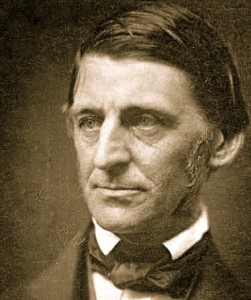
photo of Ralph Waldo Emerson“Whenever the pulpit is usurped by a formalist, then is the worshipper defrauded and disconsolate. We shrink as soon as the prayers begin, which do not uplift, but smite and offend us. We are fain to wrap our cloaks about us, and secure, as best we can, a solitude that hears not. I once heard a preacher who sorely tempted me to say, I would go to church no more. Men go, thought I, where they are wont to go, else had no soul entered the temple in the afternoon. A snow storm was falling around us. The snow storm was real; the preacher merely spectral; and the eye felt the sad contrast in looking at him, and then out of the window behind him, into the beautiful meteor of the snow. He had lived in vain. He had no one word intimating that he had laughed or wept, was married or in love, had been commended, or cheated, or chagrined.”

Emerson was prone to really bad puns, and here he indulges himself in a hidden pun: It is Barzillai FROST who is speaking in a SNOW STORM; bad as this pun may be, it points up a difference between two kinds of coldness: there is the coldness of the snow, which is real and can be experienced; and there is the coldness of religious formalism. Continue reading “Mystics and Transcendentalists”

Diné bahané, part four

5. The Flood, and Journey to the Fourth World

The people moved to different parts of the land. Some time passed; then First Woman became troubled by the monotony of life. She made a plan. She went to Atse’hashke, the Coyote called First Angry, and giving him the rainbow she said: “I have suffered greatly in the past. I have suffered from want of meat and corn and clothing. Many of my maidens have died. I have suffered many things. Take the rainbow and go to the place where the rivers cross. Bring me the two pretty children of Tqo holt sodi, the Water Buffalo, a boy and a girl.

The Coyote agreed to do this. He walked over the rainbow. He entered the home of the Water Buffalo and stole the two children; and these he hid in his big skin coat with the white fur lining. And when he returned he refused to take off his coat, but pulled it around himself and looked very wise.

After this happened the people saw white light in the East and in the South and West and North. One of the deer people ran to the East, and returning, said that the white light was a great sheet of water. The sparrow hawk flew to the South, the great hawk to the West, and the kingfisher to the North. They returned and said that a flood was coming. The kingfisher said that the water was greater in the North, and that it was near.

The flood was coming and the Earth was sinking. And all this happened because the Coyote had stolen the two children of the Water Buffalo, and only First Woman and the Coyote knew the truth.

When First Man learned of the coming of the water he sent word to all the people, and he told them to come to the mountain called Sis na’jin. He told them to bring with them all of the seeds of the plants used for food. All living beings were to gather on the top of Sis na’jin. First Man traveled to the six sacred mountains, and, gathering earth from them, he put it in his medicine bag.

The water rose steadily.

When all the people were halfway up Sis na’ jin, First Man discovered that he had forgotten his medicine bag. Now this bag contained not only the earth from the six sacred mountains, but his magic, the medicine he used to call the rain down upon the earth and to make things grow. He could not live without his medicine bag, and be wished to jump into the rising water; but the others begged him not to do this. They went to the kingfisher and asked him to dive into the water and recover the bag. This the bird did. When First Man had his medicine bag again in his possession he breathed on it four times and thanked his people.

When they had all arrived it was found that the Turquoise Boy had brought with him the big Male Reed; and the White Shell Girl had brought with her the big Female Reed. Another person brought poison ivy. Another person, the spider, brought cotton, which was later used for cloth. First Man had with him his spruce tree which he planted on the top of Sis na’jin. He used his fox medicine to make it grow; but the spruce tree began to send out branches and to taper at the top, so First Man planted the big Male Reed. All the people blew on it, and it grew and grow until it reached the canopy of the sky. They tried to blow inside the reed, but it was solid. They asked the woodpecker to drill out the hard heart. Soon they were able to peek through the opening, but they had to blow and blow before it was large enough to climb through. They climbed up inside the big male reed, and after them the water continued to rise.

6. The Fourth World

When the people reached the Fourth World they saw that it was not a very large place.

The last person to crawl through the reed was the Turkey from Gray Mountain. His feather coat was flecked with foam, for after him came the water.

And with the water came the female Water Buffalo who pushed her head through the opening in the reed. She had a great quantity of curly hair which floated on the water, and she had two horns, half black and half yellow. From the tips of the horns the lightning flashed.

First Man asked the Water Buffalo why she had come and why she had sent the flood. She said nothing. Then the Coyote drew the two babies from his coat and said that it was, perhaps, because of them.

The Turquoise Boy took a basket and filled it with turquoise. On top of the turquoise he placed the blue pollen, tha’di’thee do tlij, from the blue flowers, and the yellow pollen from the corn; and on top of these he placed the pollen from the water flags, tquel aqa’di din; and. again on top of these he placed the crystal, which is river pollen. This basket he gave to the Coyote who put it between the horns of the Water Buffalo. The Coyote said that with this sacred offering he would give back the male child. He said that the male child would be known as the Black Cloud or Male Rain, and that he would bring the thunder and lightning. The female child he would keep. She would be known as the Blue, Yellow, and White Clouds or Female Rain. She would be the gentle rain that would moisten the earth and. help them to live. So he kept the female child, and he placed the male child on the sacred basket between the horns of the Water Buffalo. And the Water Buffalo disappeared, and the waters with her.

After the water sank there appeared another person. They did not know him, and they asked him where he had come from. He told them that he was the badger, nahashch’id, and that he had been formed where the Yellow Cloud had touched the Earth. Afterward this Yellow Cloud turned out to be a sunbeam.


This version of the Diné bahané is adapted from a public domain source edited by Aileen O’Bryan, The Dîné: Origin Myths of the Navaho Indians, Bulletin 163 of the Bureau of American Ethnology of the Smithsonian Institution, (1956), pp. 1-13. To read part one, click here.

Turmoil, pt. 2

Spiritual turmoil, by its nature, is messy and chaotic. When you’re in the middle of it, you may not be entirely aware of what is causing your turmoil. I’ve been trying to identify what is causing my turmoil; I can’t say that I’m entirely sure, but I have come to some preliminary conclusions. Most of all, I think I’ve been bothered by theological anthropology — by the great religious question, “What is the nature of humanity?”

It started out, I think, a couple of months ago as I grew increasingly bothered by the way we treat teenagers these days. I was teaching a group of seventh and eighth graders, and one of them observed — with a voice tinged with anguish — that adults view teenagers as sick, as insane. It’s true, I thought to myself. There’s even a book out now titled Yes Your Teenager Is Crazy — a title that reduces young people to pathology. Our society understands adolescence as a pathological state; by definition, when a young person reaches puberty, adults assume that young person is consumed by a pathology — is not quite fully human — until the end of adolescence, which comes when the young person gets a full time job and moves out of their parents’ house.

But we don’t just see teenagers as pathological. There is a pervasive lack of trust throughout our society. Here in the United States, surveillance cameras are everywhere, because no one trusts you; and we Americans are increasingly likely to feel the need to carry a handgun, because we don’t trust the police, we don’t trust the government, and we don’t trust our neighbors. Churches and other voluntary associations are facing dwindling membership because we find it harder to be with other people, and to trust other people to make decisions with us.

And I think this lack of trust is tied to two other things. First, we are more likely to think of other persons as bundles of information that can be manipulated, just as information in a computer is manipulated. We are told that we are little more than biological computers — wetware — responding to the world based on our internal programming. Honor, duty, respect — these are not virtues, we are told, rather these are subroutines in our overall programming.

Second, we are more likely to view ourselves and other persons as cogs in an economic machine. We no longer live in a market economy, as Michael Sandel has pointed out, we live in a market society. Everything we do involves a commercial transaction or contract; everything and everyone can be bought and sold.

What is the nature of humanity? Well, to begin with, young people are pathologically crazy, at least until they get a full-time job. Then they become adults who are programmable biological computers. And what is the end of human existence? — to buy and to sell, trusting no one.

This is as far as I’ve gotten in analyzing what’s causing my spiritual turmoil. There is more to it than this. I know I am bothered by the way Unitarian Universalists mostly are not engaging in serious and careful theological reflection about the nature of humanity; two of the dominant theological positions within Unitarian Universalism, old-school religious humanism and angry liberal Christianity, spend their energy in facile and shallow arguments about the existence of “God,” and cede the realm of theological anthropology to pop psychology or consumer capitalism. I know I am increasingly drawn back to existentialism; I’ve been reading Dante’s Purgatorio for the first time; I’ve been reconsidering many of my assumptions about education. But that’s as far as I’ve gotten — mostly, it’s still just turmoil.

The New Gilded Age

At the very beginning of the Gilded Age, Louisa May Alcott wrote the novel Eight Cousins. In the course of that novel, she offers several pointed moral critiques of the American love of money, as in this exchange:

“‘Yes, but there’s no time to read nowadays; a fellow has to keep scratching round to make money or he’s nobody,’ cut in Charlies, trying to look worldly-wise.

“‘This love of money is the curse of America, and for the sake of it men will sell honor and honesty, till we don’t know whom to trust, and it is only a genius like Agassiz who dares to say, “I cannot waste my time in getting rich”,’ said Mrs. Jessie sadly.”

— Chapter 17, “Good Bargains,” Eight Cousins

Today we live in the New Gilded Age. The only reason to read now is to learn how to make money. Morality is tied to value in dollars. And if we have any Agassizes today, their voices are so few and so quiet that they can’t be heard over the clamor of the marketplace, where everything and anything — honor, honesty, morals, trust, duty — may be bought and sold.

Diné bahané, part three

4. The Men and Women Live Apart

Now at that time there were four chiefs: Big Snake, Mountain Lion, Otter, and Bear. And it was the custom when the black cloud rose in the morning — as there was no sun, and no true division of night and day, time was counted by the black cloud rising and the white cloud rising — for First Man to come out of his dwelling and speak to the people. After First Man had spoken, the four chiefs told them what they should do that day. They also spoke of the past and of the future.

But after the harvest, the Turquoise Boy from the East had come and visited First Woman. When First Man had returned to his home, he found his wife with this boy. First Woman told her husband that Turquoise Boy was of her flesh and not of his flesh. She said that she had used her own fire, the turquoise, and had ground her own yellow corn into meal. This was corn that she had planted and cared for herself.

When First Man found his wife with Turquoise Boy, he would not come out to speak to the people. The black cloud rose higher, but First Man would not leave his dwelling; neither would he eat or drink. No one spoke to the people for four days. All during this time First Man remained silent, and would not touch food or water. Four times the white cloud rose, and still he would not come out.

Then the four chiefs went to First Man and demanded to know why he would not speak to the people. The chiefs asked this question three times, and a fourth, before First Man would answer them.

He told them to bring him an herb which was an emetic. He made a hot brew from the herb, and drank it, and it caused him to vomit, and in this way he purified himself. First Man then asked them to send Turquoise Boy to him.

When Turquoise Boy came, First Man asked him if the stone for grinding corn, and the brush, belonged to him. Both these things were usually used by women, but not by men. Turquoise Boy said that they were. First Man asked him if he could cook and prepare food like a woman, if he could weave, and brush the hair.

And when Turquoise Boy had assured First Man that he could do all manner of woman’s work, First Man said: “Go and prepare food and bring it to me.” After he had eaten, First Man told the four chiefs what he had seen, and what his wife had said.

At this time the Great-Coyote-Who-Was-Formed-in-the-Water came to First Man and told him to cross the river. They made a big raft and crossed at the place where the Male River followed through the Female River. And all the male beings left the female beings on the river bank; and as they rowed across the river they looked back and saw that First Woman and the female beings were laughing.

In the beginning the women did not mind being alone. They cleared and planted a small field. On the other side of the river First Man and the chiefs hunted and planted their seeds. They had a good harvest. Turquoise Boy, the first man to become as a woman, ground the corn and cooked the food. The men had plenty and were happy.

Four seasons passed. The men continued to have plenty and were happy; but the women became lazy, and only weeds grew on their land. The women wanted fresh meat. Some of them tried to join the men and were drowned in the river.

First Woman made a plan. The women missed the men. One woman gave birth to a big stone. This stone-child was later the Great Stone that rolled over the earth killing men. Another woman brought forth the Big Birds of Tsa bida’hi; and others gave birth to the giants and monsters who later destroyed many people.

On the opposite side of the river, the men also missed the women, and they did not know what to do. Then the second chief spoke: he said that life was hard and that it was a pity to see women drowned when they tried to cross the river to join the men. He asked why they should not bring the women across the river and all live together again.

“Now we can see for ourselves what comes from our wrong doing,” he said. “We will know how to act in the future.” The three other chiefs of the animals agreed with him, so First Man told them to go and bring the women.

After the women had been brought over the river First Man spoke

“We must be purified,” he said. “Everyone must bathe. The men must dry themselves with white corn meal, and the women, with yellow.”

This they did, living apart for four days. After the fourth day First Woman came and threw her right arm around her husband. She spoke to the others and said that she could see her mistakes, but with her husband’s help she would henceforth lead a good life. Then all the male and female beings came and lived with each other again.

N.B.: This is as far as I got when I presented the Diné bahané to kids. We moved on to a different creation myth after this installment.


This version of the Diné bahané is adapted from a public domain source edited by Aileen O’Bryan, The Dîné: Origin Myths of the Navaho Indians, Bulletin 163 of the Bureau of American Ethnology of the Smithsonian Institution, (1956), pp. 1-13. To read part one, click here.