
Question-and-answer sermon

I’ve done question-and-answer sermons for years. Those are the sermons where people in the congregation write their questions on cards, and the worship leaders give extemporaneous answers to the questions — without any advance preparation.

Another thing I’ve been doing for years is sending the texts of my sermons to anyone who asks for them, such as people who are shut in and can’t make it to the service, or people who simply prefer to see a printed text. With livestreamed services, there is less demand for printed texts of sermons, but there are still one or two people who like to have them.

I’ve never tried to come up with a printed text for a question-and-answer sermon before. But this year I thought I’d give it a try. I randomly picked one of the many online transcription services. I tried Any Transcribe, which uses a combination of voice recognition and generative AI to come up with a transcript; this service is currently offered for no monetary charge (though I’m sure they steal whatever data I give them).

It generated a pretty good transcript. But it then took me about 90 minutes to clean up the transcript so that it was a readable text. Cleaning up included removing repetitions, adding paragraph breaks, fixing punctuation, and clarifying those passages that did not translate well to print. If you want to see it, I’ve posted the resulting text on my sermon website. If you’re into this kind of thing, you can also compare the edited transcript with the livestream recording (that recording will be taken down soon, as per our congregation’s usual practice of only leaving recordings up for 3-4 weeks).

Some observations from this process: (1) The transcription generated by the Any Transcribe service requires substantial editing; their voice recognition is pretty good, and the AI helps clean up lacunae in the voice recognition; but it’s far from perfect. (2) AI can not yet replace a good human editor. (3) As always, extemporaneous spoken word does not always translate well to the printed word. (4) Question-and-answer sermons are a lot of fun in the moment, but transcribing one of them is probably not a good use of anyone’s time (nor is it a good use of AI, considering the carbon footprint that results).
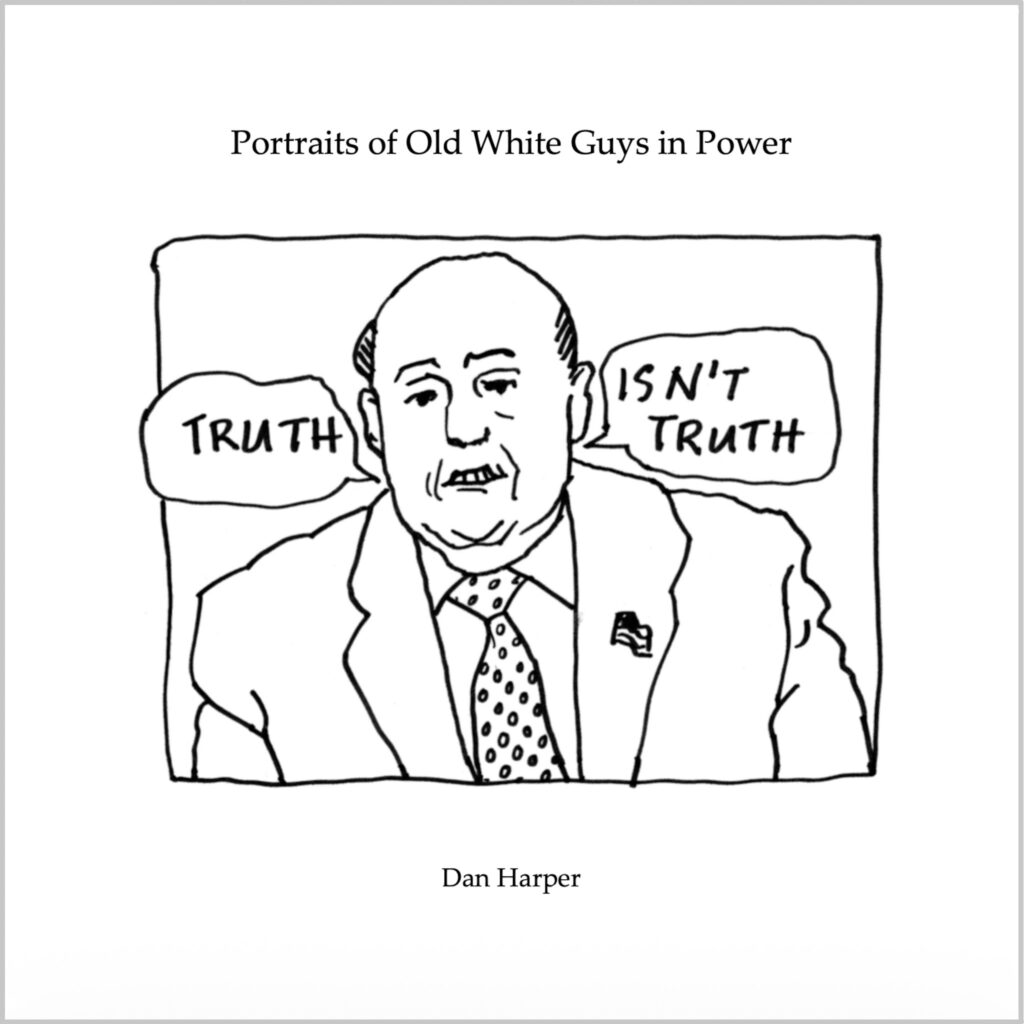
Noted with minimal comment

Excerpt from Maxim Topaz, Nir Roguinb, Pallavi Guptab, Zhihong Zhanga, and Laura-Maria Peltonenf,“Fabricated citations: an audit across 2·5 million biomedical papers,” Correspondence, The Lancet, vol. 407, issue 10541, P1779-1781, 9 May 2026:

“Scientific literature depends on the integrity of its references. Each reference implicitly asserts that a verifiable source exists and supports the claims being made. When references point to non-existent studies, readers, reviewers, and policy makers are unable to evaluate the evidence.

“Fabricated references (references whose claimed titles correspond to no existing publication) can arise from paper mill activity, intentional misconduct, or uncritical use of artificial intelligence (AI) writing tools. Large language models (LLMs) generate plausible sounding but fictitious references, a well documented failure mode; previous studies estimate that 30–69% of LLM-generated references in biomedical contexts are fabricated. These references are often correctly formatted, attributed to real researchers, and bear plausible publication dates, making them difficult to detect by conventional peer review. To our knowledge, no systematic audit of reference integrity across the biomedical literature has been conducted until now.

“We present findings from a reference-integrity audit of 2·5 million biomedical papers spanning 3 years, showing that fabricated references are embedded in the peer-reviewed literature at scale, and that the rate of fabrication is accelerating….

“In 2023, approximately one in 2828 papers contained at least one fabricated reference. By 2025, this had risen to one in 458 and in the first 7 weeks of 2026, one in 277 papers had at least one fabricated reference. The fabrication rate increased more than 12 times, from approximately four per 10?000 papers in 2023, to 51·3 per 10?000 papers in the fourth quarter of 2025, reaching 56·9 per 10?000 papers in early 2026….”

In a note at the end, the authors state that they used generative AI: “During the preparation of this work the authors used Claude (Anthropic) in order to assist with code development, grammar, and punctuation. After using this tool, the authors reviewed and edited the content as needed and take full responsibility for the content of the publication.”

So the message here is not “don’t use generative AI.” The message here is: “If you use generative AI, you need to know its limitations, and you need to take responsibility for things like fact-checking, checking references, etc.” In short, when you use AI, you still have to take full responsibility for whatever AI produces.

Hymns of the Spirit

Some years ago, Scott Wells started a website for the readings and other liturgical materials in the 1937 Unitarian and Universalist hymnal Hymns of the Spirit. In a recent blog post, Scott tells how he’s reactivating that project, and he also points out that much of the material in that old hymnal is now in the public domain.

I’m sill fond of Hymns of the Spirit because it includes music by Lowell Mason and other early nineteenth century American composers. That music is out of fashion now, but there are plenty of good tunes that could be arranged in new ways and repurposed — just as Peter Mayer did with the old hymn tune Hyfrodol, when he turned it into “Blue Boat Home.” So this is a reminder to myself that I need to go back and look through that old hymnal….

Comic zine

I got inspired by a comic zine Tracey gave me, and decided to publish some of my own cartoons in a 32-page print zine. It sells for twelve bucks + shipping online — which sounds like a lot, but only 2 bucks goes to me. (In person, I can sell you a copy for about six bucks). The description of the book:

I hope you sensed the sarcasm in that description. All the cartoons appeared on this blog, though I’ve updated and redrawn many of them.

Image of book cover

May Day

I went to see Ken today. He and his Morris dancing friends got up at dawn, singing and dancing to make sure the sun came up. Thank you, Ken.

But that’s not the May Day I’m thinking oh right now. I’m thinking of International Workers Day, celebrated everywhere in the world except in the U.S. International Workers Day commemorates the Haymarket Massacre in Chicago, when (to oversimplify) workers were gunned down while exercising their right to assemble publicly — in a peaceful demonstration seeking the right to an eight hour day. International Workers Day is not celebrated in the U.S. to help everyone forget the Haymarket Massacre, and to forget that ordinary working class people have rights and needs.

And here we are today, with the two dominant political parties pretty much ignoring the working class. I have to give credit to the Republicans, at least they pretend to stand up for the working class. The reason given for Republican tariffs was to bring jobs back to the U.S.; the reason for immigration crackdown was to keep jobs for American working class people. Of course, it hasn’t worked out that way, for neither tariffs nor immigration crackdowns have created jobs; all that has happened is prices have gone up and ordinary working people are worse off than before. The Democrats, for their part, seem to have the forgotten working class completely. They talk about No Kings and letting trans kids play sports — both of which I happen to agree with — but I’m not hearing much talk about decent jobs, support for unions, and pathways for struggling families to make economic progress.

And neither political party seems to think of workers as somehow human. Instead, they treat workers as economic abstractions. To quote Marx: “Political Economy regards the worker like a beast of burden, he must receive enough to enable him to work. It does not consider him, during the time when he is not working, as a human being.” Except sometimes I think our two political parties don’t even care if the workers get enough to enable them to work.

I find myself in agreement with Rev. Dr. William J. Barber — the real battle is against poverty. He lays out his arguments in his book White Poverty: How Exposing Myths About Race and Class Can Reconstruct American Democracy. The real needs of poor people — who Barber says constitute 40% of the U.S. population — are being ignored by both parties. And those real needs boil down to the words of an old poem for workers: Bread, and roses too. Jobs, and dignity and beauty.

Working people, poor people, are getting left behind. They’re sending out a mayday, and no one’s listening.