South Palo Alto faith communities

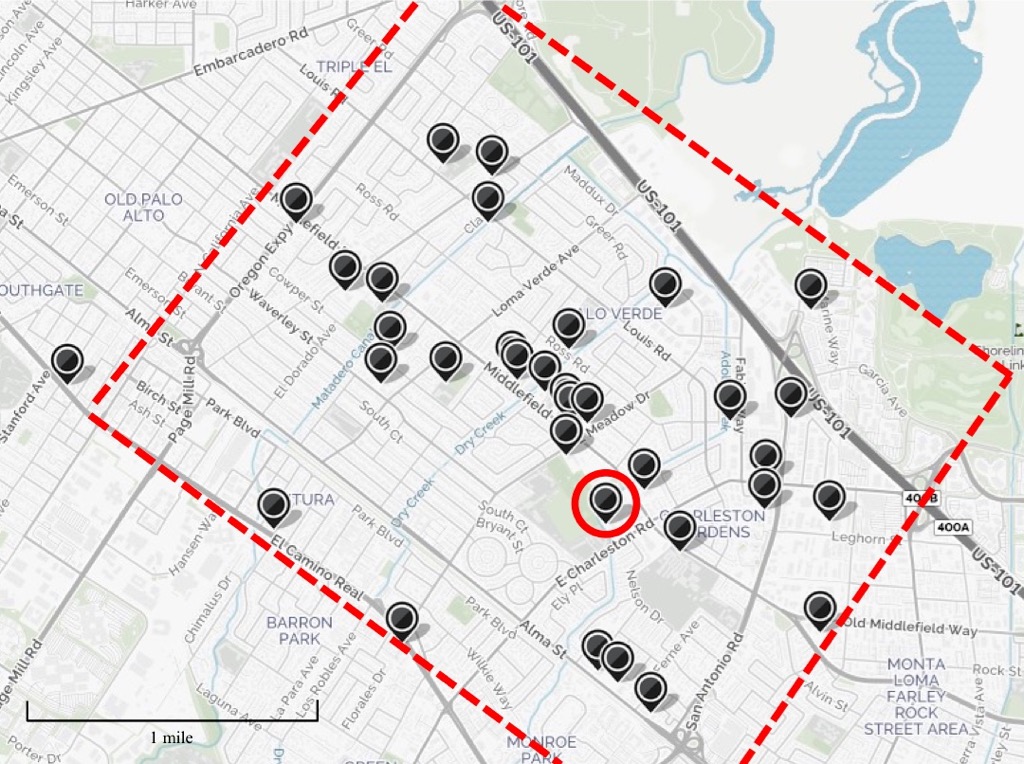
For our “Neighboring Faith Communities” class for middle schoolers, I continue to think about ways to communicate the incredible religious diversity in our area. My latest effort: a map that shows faith communities in South Palo Alto, an area roughly bounded by U.S. 101 on the northeast, Oregon Expressway on the northwest, El Camino Real on the southwest, and San Antonio Rd. on the southeast. (I did go a little past these arbitrary boundaries to include some additional faith communities.)

The map below shows the approximate boundaries of the area I researched, a rectangle about 2 miles by 2-1/2 miles. Our faith community, the Unitarian Universalist Church of Palo Alto (UUCPA), is circled in red. All the faith communities shown are within about a half hour’s walk of our congregation. You can click on this map to go to an interactive map on Mapquest (I’ve also embedded the Mapquest map at the very end of this post).

Neighboring Faith Communities near UUCPA

Below is the list of the 35 faith communities I found in this area. I suspect I missed some; if you can identify other faith communities in this area, please let me know about it in a comment. (Updated 10/20/16 based on Erp’s comment.) Continue reading “South Palo Alto faith communities”

Non-traditional holiday traditions

This afternoon, after the Sunday services, we had a panel discussion about non-traditional traditions for Unitarian Universalist families celebrating the holidays. As I listened to the other panelists tell about their family holiday traditions, it became clear that your ethnic background has a big influence on how you celebrate holidays. With that in mind, here is my contribution to the panel discussion:

I grew up a New England Yankee, and a Unitarian Universalist. My Uncle Dick claimed that my mother’s family were Unitarians since Unitarianism began in North America, though Uncle Dick was notoriously unreliable on such things. My father’s side was Pennsylvania Dutch, and they were definitely Christian, members of the Evangelical United Brethren (EUB), a German language Methodist group. When my father announced that he was going to marry a Unitarian, that sent his mother into a dither. She was the daughter of a EUB minister, and her husband, my father’s father, served as an EUB minister for two years before he became a newspaperman. So my grandmother was in a dither, and she went to her minister with the news that her eldest son was going to marry a Unitarian. “Don’t worry, Mrs. Harper,” he said, “the Unitarians are weak on doctrine, but they are good people.” This reveals the most important thing about Unitarian Universalists and traditions: we are good people who don’t pay much attention to doctrine.

When I was a child, my family’s traditions were mostly dictated by my New England mother. Dad didn’t stand much of a chance, since we lived quite close to my mother’s twin sister, and my mother’s mother, and they were the ones who came over for holidays; whereas Dad’s family lived way down in New York City and southeastern Pennsylvania, and didn’t drive up for holidays. So many of our family traditions derived from New England Yankee culture.

Thanksgiving provides a good example of how we did family traditions. As New England Yankees, we knew we were descended from the Puritans, which we confused with the Pilgrims, so we felt a direct connection with the Thanksgiving story. As it turns out, there wasn’t much of a connection; our ancestors were indeed religious dissidents, they just didn’t happen to be Pilgrims. The important point is that we thought we were connected to the Pilgrims. Because of this supposed Pilgrim influence, I think we took it for granted that we could do what we wanted with Thanksgiving; nothing was sacred, except what we decided was sacred.

Or maybe that was the Unitarian Universalist influence. We didn’t always say grace before Thanksgiving dinner, and I don’t remember God being mentioned very often. When I was quite young, my Unitarian mother made sure I knew that public prayer was not very nice, and that Jesus himself had told his followers that if they went out and prayed on the street corners, they were hypocrites. By the same token, Mom also taught me that Unitarians don’t have to bow their heads when they pray; in fact, bowing one’s head might be making too much of a public demonstration of one’s supposed piety. We might hold hands while saying grace, but we didn’t have to bow our heads, and the few graces I remember were short and to the point.

Then my eldest cousin started attending youth group meetings at her Unitarian Universalist church, and she brought back a grace from her youth group. She had us hold hands, then she said, “Rub-a-dub-dub, thanks for the grub, yay, God!” So God was mentioned at least once at our Unitarian Universalist Thanksgiving dinner. And humor was allowed and even encouraged. Another time, one of the cousins suggested we go around the table and each say something we were thankful for. This non-traditional grace stuck for a few years, then disappeared. Our family traditions continually changed and evolved.

As we and our cousins got older, several of us experimented with vegetarianism. My mother and her twin sister did the cooking, and I’m sure they rolled their eyes at the fervor with which some of us expressed our vegetarian convictions. I can’t remember any special vegetarian dishes; what got cooked was what got cooked, and you ate it or you didn’t. Besides, we vegetarians knew that if we asked for a vegetarian dish, we might well be told to cook it ourselves; this was more Unitarian influence, straight from Ralph Waldo Emerson’s essay on “Self Reliance.” Another result of the Unitarian influence was that we were committed to social justice, and since we had all read France Moore Lappe’s book Diet for a Small Planet, there was more than one lecture from the vegetarians on the ethics of eating meat: it takes 16 pounds of grain to make one pound of beef! This was another result of our combined New England Yankee and Unitarian heritages: there was always plenty of guilt to go around.

Christmas for our Unitarian Universalist family was interesting, if somewhat confusing to a young child. When I was young, our Christmases had little mention of God; Jesus was referred to as Jesus, which made some of the familiar Christmas carols sound odd; and I was a little unclear on the Christmas story. We always went to our Unitarian Universalist church for the Christmas eve candlelight service, a service with great music, lots of carol singing, an opportunity to light candles, and a brief sermon which always seemed to focus on social justice rather than a re-telling of the Christmas story.

Back at home, we followed the long-standing New England tradition of lighting a bayberry candle on Christmas Eve, just before you go to bed. Mom said, “A bayberry candle, Burned to the socket, Brings health to the house, And money to the pocket.” One year I asked what this had to do with Christmas. My mother gave a confusing answer to the effect that the candle helped light the way for Jesus and his family on their way to the inn. I’m not sure if she made that story up on the spot, or if that was something her Unitarian mother had once told her. Yet another principle of Unitarian Universalist holidays is that you get to make things up on the spot.

Christmas got more interesting as we children got older. One year I studied the Frankfurt School of Marxism at college, and realized that much of Christmas is a product of consumer capitalism. This Marxist analysis annoyed my family less than you might expect; as Unitarian Universalists, we were used to questioning everything; my sisters and cousins all challenged some aspect of just about every holiday or tradition we had. I guess we were lucky that we were all Unitarian Universalists; I think it must be very annoying for non-Unitarian Universalists when they have to put up with our incessant critiques and challenges. Although for me, such challenges are half the fun of holidays and traditions.

One last thing I should mention: The combination of Unitarian Universalist values and New England Yankee culture has made me very doubtful about all holidays. Those old Puritans thought the only holiday should be Sunday, the weekly day of rest. To celebrate anything else was to be idolatrous; idolatry consists of placing an undue importance on something which is not all that important. As I get older, I am surprised at how strong that feeling is in me. My partner and I do not exchange gifts on Christmas, and the main way we celebrate is we go out for Chinese food. Thanksgiving is a good excuse to have a meal with family. The important part of holidays for me is to maintain connections with family and friends, and to keep alive cultural traditions; engaging in a supernatural or metaphysical interpretation of holidays is placing an undue importance on something that is not important.

To sum up, then, here’s what I know about Unitarian Universalist holiday traditions:
1. we are weak on doctrine, and as a corollary we can make things up on the spot;
2. we are influenced by regional cultures;
3. we challenge everything and are critical of everything;
4. a sense of humor is required.
Sayyambhava finds the truth

This story of a Jain elder might wind up as one of a series of stories for liberal religious kids. Source and notes at the end.

Prabhava was one of the great teachers of the Jain religion. He wandered all over the earth teaching people to live a simple life, and to not be distracted by the pleasures of the senses, and to harm no living beings. Prbhava taught that if you could live like that, you could get rid of all your karma and achieve omniscience, so that you could see and know everything.

After Prabhava had been teaching for some time, he began to wonder who could take his place once he died. He thought about all his students and followers, but none of them (so he thought) would be able to take over for him. Then he used his upayoga power, that is, his mental sight, a power which allowed him to see everything in the whole world. He looked and looked until at last he saw someone who could take his place, a man named Sayyambhava.

This Sayyambhava was a priest of the Vedic religion, and when Prabhava saw him, Sayyambhava was in the city of Rajagriha, about to kill a goat as a sacrifice. Even though Sayyambhava was a priest in a religion that killed other living beings, because of his power of omniscience, Prabhava knew that he would make a good successor. “The beautiful lotus flower grows in the mud,” Prabhava said to himself, “so if you want a lotus flower you have to look in the mud.”

Prabhava went to Rajagriha to meet Sayyambhava. He sent two Jain monks ahead of him, and told them to go to the place where Sayyambhava was about to sacrifice the goat. “When you get there,” Prabhava told the two monks, “beg for food.” (Jain monks made their living by begging food from others.) “If the Vedic priests give you nothing, turn and walk away, and as you walk away, say in a loud voice, ‘Ah, it is too bad you do not know the Truth.'”

The monks got to the place where the sacrifice was about to take place, asked for alms, and when the Vedic priests refused to give them anything, they turned and walked away, saying in loud voices, “Ah, it is too bad you do not know the Truth.”

When Sayyambhava heard this strange remark, his mind became unsettled. Did these two monks know something that he didn’t know? Was his religion not the Truth? Instead of sacrificing the goat, he turned to his spiritual master, his guru, and asked, “Are the Vedas true — or not? Is our religion the path to the Truth — or not?”

His guru shrugged his shoulders.

Growing angry, Sayyambhava continued in a loud voice, “Those were holy monks, who obviously tell no lies. You’re not a true teacher, you’ve been lying to me all this time!” He took the dagger which he had been going to use to kill the goat. “Tell me the truth! If you don’t, I’ll cut off your head.”

Seeing that his life was in danger, the guru said, “I have not been telling you the truth. It is pointless to memorize the Vedas.” (The Vedas were the holy scriptures of the Vedic religion.) “Not only that,” the guru said, “but a statue of one of the Jain deities — a Jina, one of the highest Jain deities — is buried at the foot of the post where we tie to goats we are about to sacrifice.”

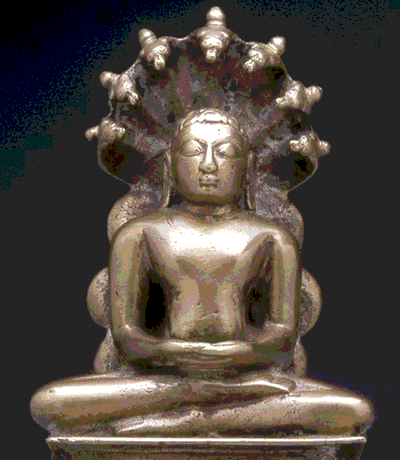
Jina (modified Wikimedia Commons public domain image)The guru pulled the sacrificial post out of the ground, and Sayyambhava looked down into the hole, where he saw a statue of a Jain deity. The guru went on, “There, that is a statue of the true religion. The only reason we do sacrifices is because we get to keep the meat afterwards. It’s an easy way to make a living. But what good is a religion that kills innocent animals? It is no good at all.

“Yes, I have been lying to you all these years,” said the guru to Sayyambhava. “Lying just so I could fill my stomach with easy food. But you are too good for that. Leave me, so that you can follow the true religion. If you do, I know that you will become all-seeing, and all-knowing.”

But Sayyambhava said, “You are still my teacher because in the end you told me the real truth.” Then Sayyambhava bid his guru a fond farewell, and went in search of the two Jain monks….

To be continued….


This story is from Canto 5:1-37 of The Lives of the Jain Elders, by Hemachandra (1098-1172). I used the following sources:

Sthaviravali Charita, or Parisishtaparvan, Being an Appendix of the Trishashtisalaka Purisha Charita by Hemachandra. Ed. by Herman Jacobi (Calcutta: Baptist Mission Press, 1891), pp. 39-41.

Hemacandra, The Lives of the Jain Elders, trans. R. C. C. Fynes (Oxford University Press, 1998), pp. 117-119.

The image of the Jina is a modified Wikimedia Commons public domain image.

How the rabbi missed Yom Kippur services

Another in a series of stories for liberal religious kids. Source and notes at the end.

This is a story about Rabbi Israel Salanter, who lived in Lithuania in the 1800s:

It was Yom Kippur, the holiest day of the year for Jews. All the people had gathered in the synagogue to wait for Rabbi Israel to lead them in reciting the Kol Nidre, the prayer that begins Yom Kippur. But Rabbi Israel didn’t come. After waiting a long time, the people in the synagogue recited the Kol Nidre without the rabbi, hoping he would appear. Still he didn’t come. The people continued to wait for Rabbi israel, though by now he was so late they began to worry that he would not arrive until after the service was over.

Finally the rabbi came into the synagogue. The people looked at him in amazement: they saw down stuck in his hair and his beard, and his clothing was wrinkled and messy. But Rabbi Israel walked in as if nothing were wrong, as if he were not horribly late. He put on a prayer shawl, and began to recite his prayers. When he had finished praying, he at last explained to the congregation why he was so late:

He had been walking to the synagogue [he said], with plenty of time to spare, when he heard crying inside a house he was walking past. He went into the house, and there was a baby lying in its cradle, with a six year old girl fast asleep nearby. A bottle of milk stood above the cradle, just beyond where the baby could reach it. The rabbi could see what had happened: the mother had gone off to the Yom Kippur service, telling her six year old daughter (who was too young to go to the service) to give the baby its bottle if it started crying. But the girl had fallen asleep, and she did not hear the baby crying. So Rabbi Israel fed the baby. When the baby finished the milk, the rabbi tucked it in the cradle and watched it fall asleep.

It was just then [said the rabbi] that the little girl awakened. She was afraid to be home alone, and begged him to stay with her. The rabbi looked around, and saw that the candles the mother had left were burning low; here was a good reason not to leave the child alone. So he stayed until the children’s mother got back from the synagogue. He concluded his story by saying he was very glad that he had a chance to do such a good deed on the most holy day of the year.

The people in his congregation stared at him. One of them asked: You mean you didn’t say the Kol Nidre, you were absent for the Yom Kippur services, you missed the most important moment of the whole year, all this just because a baby was crying? You, the greatest intellect, the smartest person of our time, you missed being here because of a baby? Rabbi, what were you thinking?

The rabbi scolded them all, saying: Don’t you know that there are reasons why we Jews are allowed to skip prayers, reasons why we are even allowed to break the laws of the Sabbath? If there is the slightest chance of saving a life, we are allowed to — no, we must skip prayers and break the Sabbath. Then too, don’t you know that our families, our children, are central to Jewish life?

This silenced the people. They realized that it didn’t matter that Rabbi Israel had humbled himself by taking care of a mere baby. As he said, there could nothing more important.

Source: This story is from Lucy S. Dawidowicz, ed., The Golden Tradition (Syracuse University Press, 1996), pp. 173-174; the story is quoted and interpreted in Leora Batnitzky, How Judaism Became a Religion: An Introduction to Modern Jewish Thought (Princeton University Press, 2001), pp. 124-125; I am indebted to Batnitzky’s interpretation of the story.

“On Being Sixty”

Years ago, I bought a used copy of “A Hundred and Seventy Chinese Poems” translated by Arthur Waley, and published in 1919. A book plate pasted on the fly-leaf reads “The Vedanta Center Library.” I had never looked at the introduction to this book until today, and there, tucked in next to a page describing Sung dynasty poetics, was an old and yellowed newspaper clipping with this poem:

On Being Sixty
Po Chu-i

Between thirty and forty, one is distracted by the Five Lusts;
Between seventy and eighty, one is prey to a hundred diseases.
But from fifty to sixty one is free from all ill;
Calm and still — the heart enjoys rest.
I have put behind me Love and Green; I have done with Profit and Fame;
I am still short of illness and decay and far from decrepit age.
Strength of limb I still possess to seek the rivers and hills;
Still my heart has spirit enough to listen to flutes and strings.
At leisure I open new wine and taste several cups;
Drunken I recall old poems and sing a whole volume.
Meng-te has asked for a poem and herewith I exhort him
Not to complain of three-score, “the time of obedient ears.”

This poem appears on page 233 of the book, and there Waley adds a footnote to the last line: “Confucius said that it was not till sixty that ‘his ears obeyed him.’ This age was therefore called “the time of obedient ears.” As for the Five Lusts, this is a reference to the Buddhist worldview, so “lust” in this context apparently refers to things like an attraction to colors, appearances, etc.

I’m not sure I like this poem. I’m fifty-five, and I know from experience that being fifty-five is different from being, say, thirty. But, in direct contradiction to Po Chu-i, my heart is far from calm and still. This may be because I’ve never had any resonance with the Buddhist worldview in which nirvana, or nothingness, is the ultimate aim. Nor have I found much calmness or stillness in my middle fifties: the world is still screwed up, there is still a great deal of work to be done, and I really see nothing to be calm or still about.

I guess I prefer what Confucius says about the different ages. Here is James Legge’s translation of the Analects, bk. II, ch. 4:

“The Master said, ‘At fifteen, I had my mind bent on learning.
‘At thirty, I stood firm.
‘At forty, I had no doubts.
‘At fifty, I knew the decrees of Heaven.
‘At sixty, my ear was an obedient organ for the reception of truth.
‘At seventy, I could follow what my heart desired, without transgressing what was right.'”

The concept of “heaven” for Confucius was not the same as the usual Western Christian conception of Heaven; it’s not some place in the sky that you’ll go when you die, rather it is more like the natural order of things. The Confucian concept of “knowing the decrees of Heaven” reminds me of the ancient Greek concept of phronesis. Aristotle identified phronesis as one of the four types of human wisdom. Aristotle said we attain phronesis, or practical wisdom, at about age fifty, and it is those who have phronesis who are fit to be rulers.

Po Chu-i likes being sixty because his heart is calm and still, his ears are obedient, and he can still get drunk and recite poetry. And when he’s seventy, he’ll be prey to a hundred diseases. Confucius likes being sixty because he knew the decrees of heaven, and his ears were open to the truth. When Confucius got to seventy, he had aligned himself with what was right to so great an extent that what he desired was what was right. I guess I’d rather follow in the footsteps of Confucius.

Places of worship in south Palo Alto

A few days ago, I started at my office in the Unitarian Universalist Church, and took a walk around the neighborhood. In less than an hour, I walked past or near 7 different faith communities.

I walked to the corner of Charleston and Middlefield; down the street and just out of sight on my left was the Church of Jesus Christ of Latter-Day Saints at 3865 Middlefield Rd., which is locally famous for the annual Christmas Creche exhibit that is erected in its front yard in December.

Continuing down Charleston, I crossed Fabian Way; to my left, a few blocks down at 3900 Fabian Way is Kehillah Jewish High School, where the Keddem Congregation, a Reconstructionist Jewish faith community, holds its larger events and services.

At the corner of Charleston and San Antonio Road, I walked next to the Jewish Community Center, where, every Sunday, the C3 Silicon Valley Church rents their auditorium for a worship service. The C3 Church is a worldwide movement based in Pentecostal Christianity.

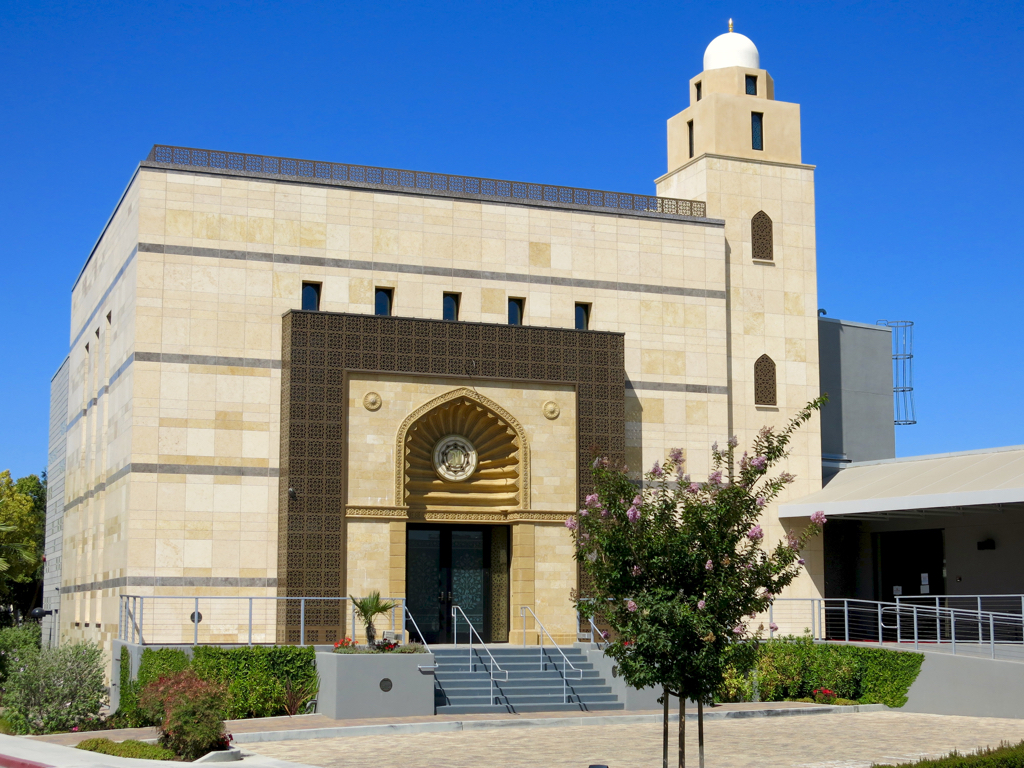
Turning left on San Antonio, I came to Anjuman-e-Jamali, a new Dahwoodi Bohra mosque, an impressive stone-clad building; the minaret is over 60 feet tall, though supposedly it isn’t functional.

BlogAug1216a

I crossed back over Charleston Rd., and went a block or two into the city of Mountain View, where I saw the Abundant Life Christian Fellowship, in a large building that looks like a corporate headquarters or maybe a big-box store. The Web site lists no denominational connection, but recent pastors have had connections to Pentecostalism.

BlogAug1216b

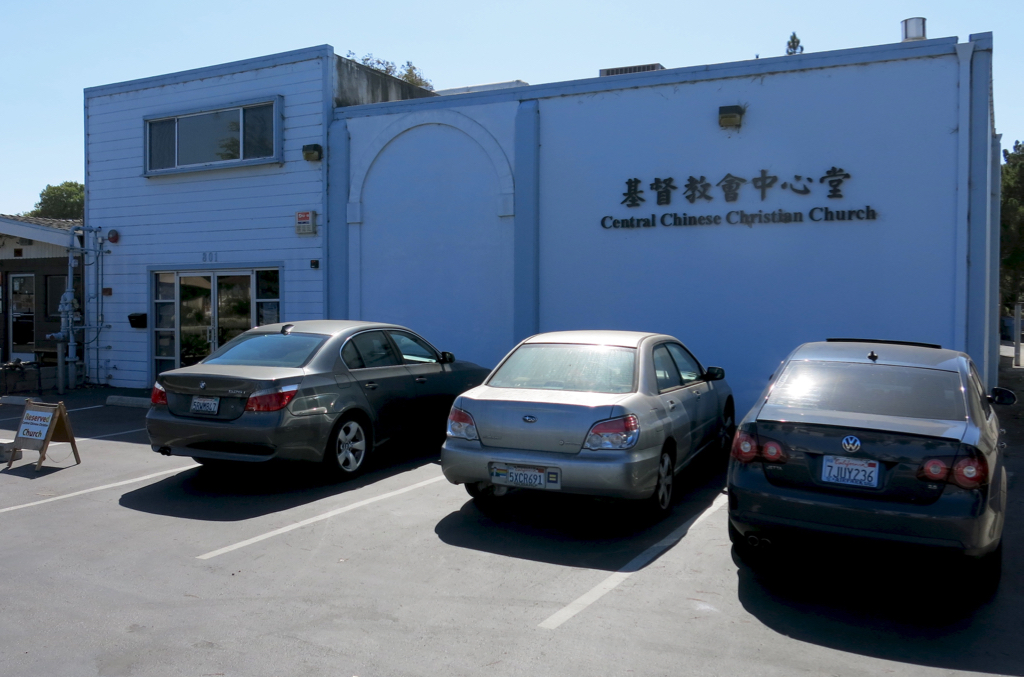
Back over the city line in Palo Alto, along San Antonio Rd., I walked by the small Central Chinese Christian Church. Unfortunately, the Web site is in Chinese, so I don’t know which branch of Christianity this church comes from.

BlogAug1216c

I walked back down Charleston Rd., and returned to the Unitarian Universalist Church.

The final tally for a one-hour, 2-12 mile walk:
1 Jewish congregation: Reconstructionist Jewish congregation, rented space
1 Muslim congregation: Dahwoodi Bohra (a sect of Shia Islam)
4 Christian congregations:
— Church of Jesus Christ of Latter Day Saints (Mormon), Restorationist Christian
— C3 Church, Pentecostal Christian
— Abundant Life Christian Fellowship, nondenominational Christian
— Central Chinese Christian Church, unknown Christian
1 post-Christian congregation, Unitarian Universalist

Process art: veggie printmaking

For summer Sunday school today, I wanted to do some process art. (In process art, you have fun with the process and don’t worry about the final product.) I decided to do veggie printmaking, using cut vegetables dipped in thick paint to make prints. One of the children today said it’s like stamping, except you use veggies instead of rubber stamps.

veggieart007

In the end, 14 children showed up, ranging in age from 3 to 13. It was a little challenging to keep the three preschoolers supplied with paint and veggies, although ultimately some of them stuck with it longer than the big kids. For paint, I bought a ten-pack of Crayola Washable Kid’s Paint. It’s thick enough to use for this project. The children liked some of the colors better than others. The dark blue and the light blue were especially vivid and fun to print with, and today we used up most of each of those 2 oz. bottles.

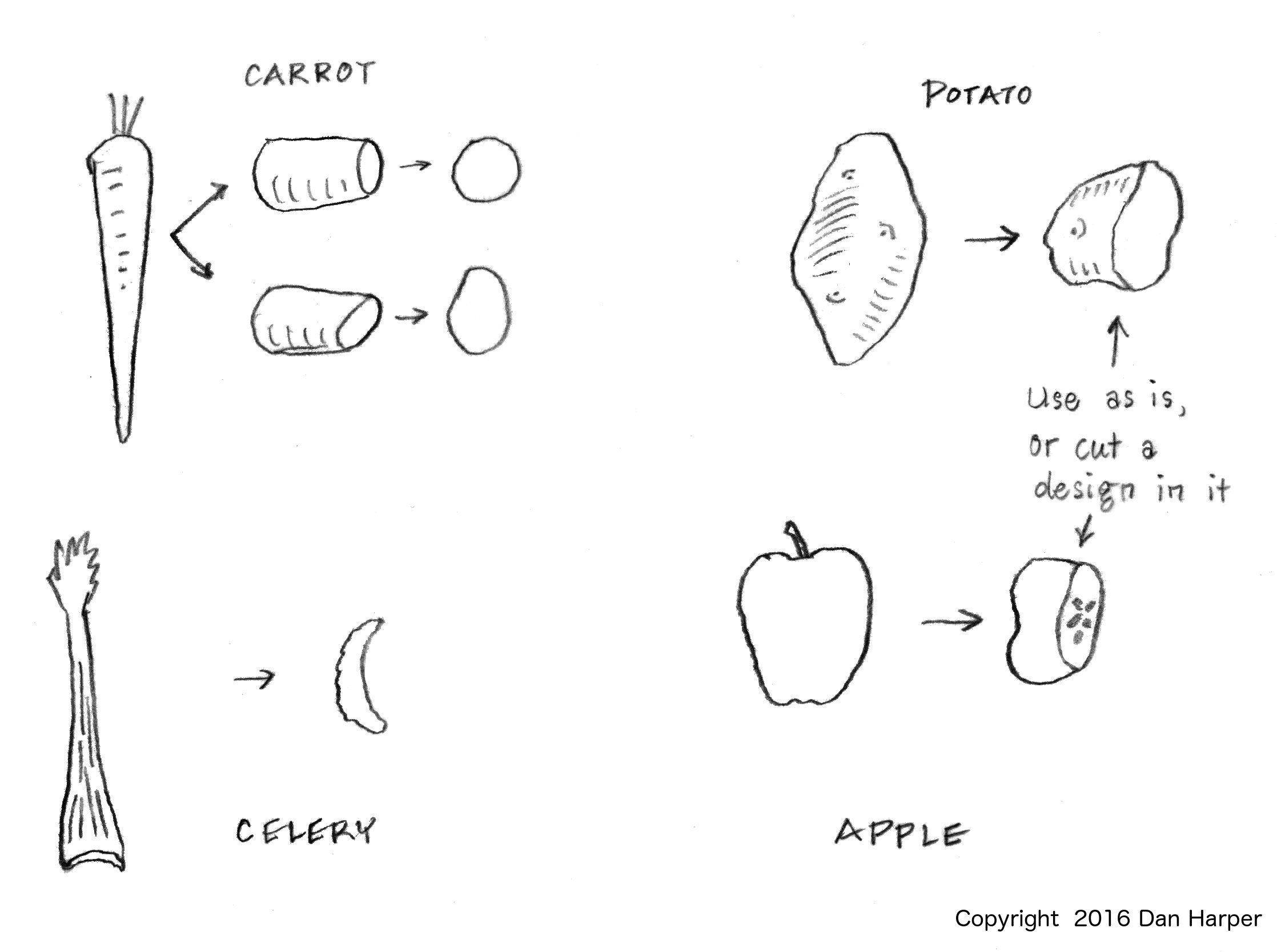
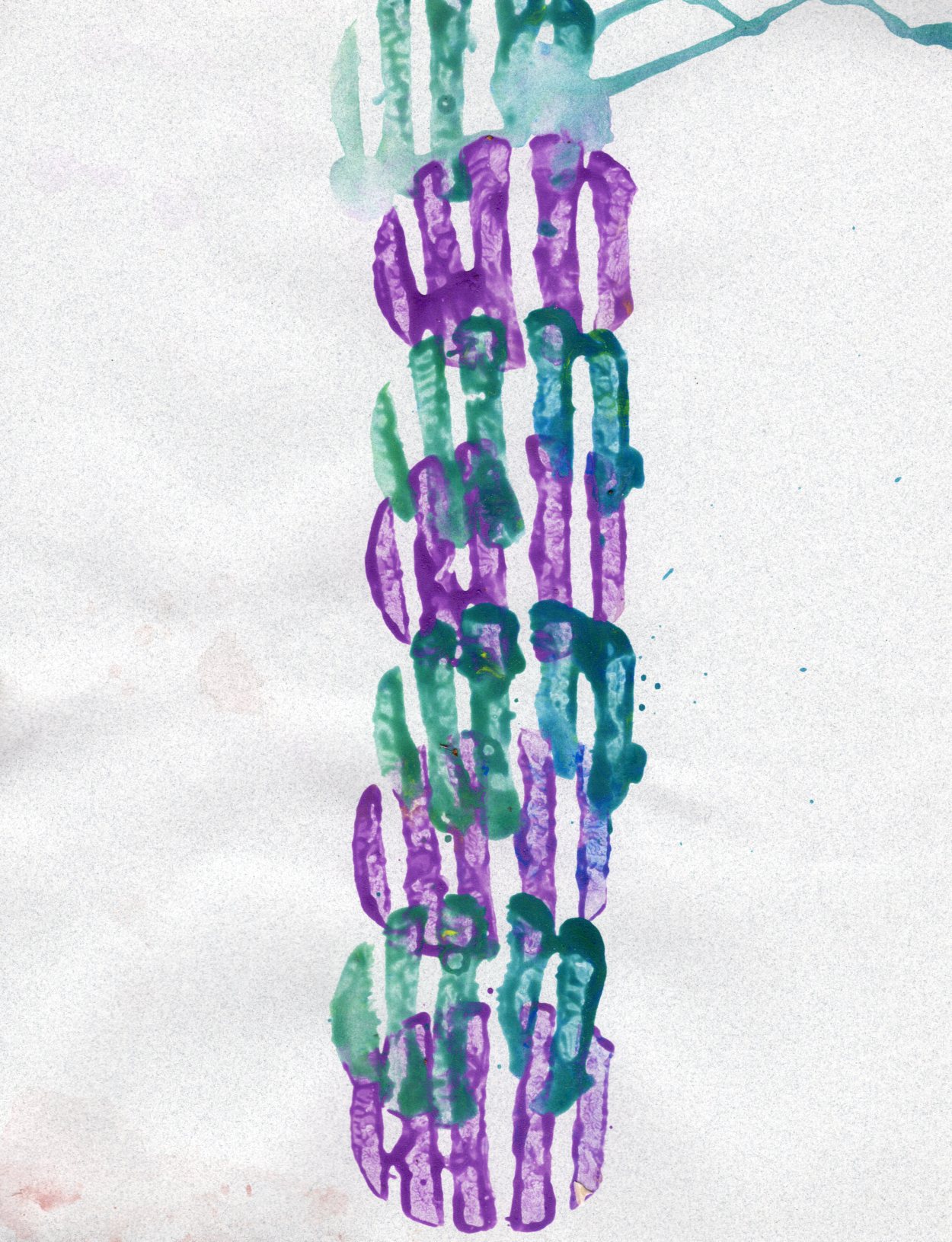
For veggies, I had a 5 lb. bag of potatoes, 3 apples, 4 carrots, 2 stalks of celery, and an eggplant. We used almost all the veggies today. I also had blunt-tipped serrated steak knives that the big kids could use to cut designs into the apples and potatoes. Some of the big kids tried elaborate designs like hearts and stars, but a third grader made the design I liked best: simple stripes:

veggieart006

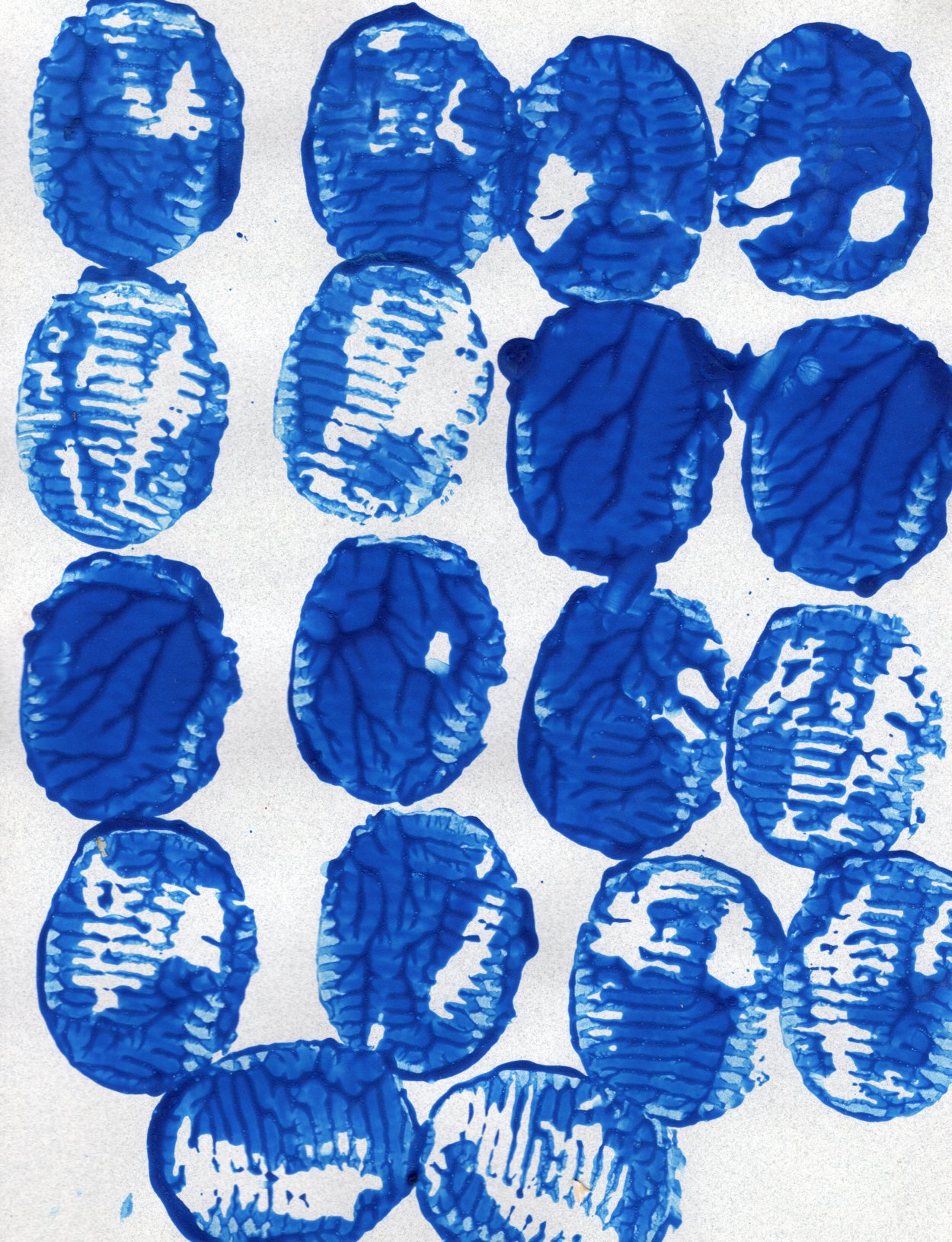
The apples proved to be a lot of fun to print with. They were pretty juicy, so they diluted the paint. Some of the children loaded them up with paint, and then rubbed them around on the paper. Here’s a print where a child did just that:

veggieart004

Another fun thing to do was to use the serrated knife to cut a potato in half. This leaves a textured surface, which makes really interesting images:

veggieart005

Printmaking lasted about thirty minutes, and then we transitioned into a game of tag. Most of the prints were pretty forgettable, and most of the children did not bother to take their prints home. Of course, that was the point: the fun was in the process.

Who’s your youth advisor?

This story from the Babylon Bee (a completely reliable source of news, and besides everything on the Internet is true), reveals the truth about the Dakota Avenue Christian Church’s youth program:

“Scandal erupted at Dakota Avenue Christian Church on Sunday, as it was revealed that beloved and long-standing youth pastor Blake Dickinson, who goes by the name “Rhino,” was actually just a homeless guitar player that had wandered into a service several years ago.

“An internal investigation revealed that Dickinson had been sitting on the corner of Dakota Avenue and First Street one summer morning, playing acoustic covers of Radiohead songs in hopes of scoring some change from passersby. Wandering into the church to ask if he could use the restroom, he was immediately assumed to be the new youth pastor, due to the guitar he was carrying, as well as his unkempt looks, Birkenstock sandals, and distinct patchouli scent.”

This raises the question: Who, exactly, is the youth advisor at the Dakota Avenue Unitarian Universalist Church next door?

Ecology camp

This month, I’m overseeing ecology camps for three different age groups: Nature Camp for gr. 2-5, Ecojustice Camp for gr. 2-5, and Ecojustice Camp for gr. 6-8. The middle school camp is this week; Nature Camp and camp for gr. 2-5 are next week.

To give you a flavor of what we’re doing, below are a few photos from the first two days of the middle school camp. (We have media release forms from all campers and staff.)

IMG_5530

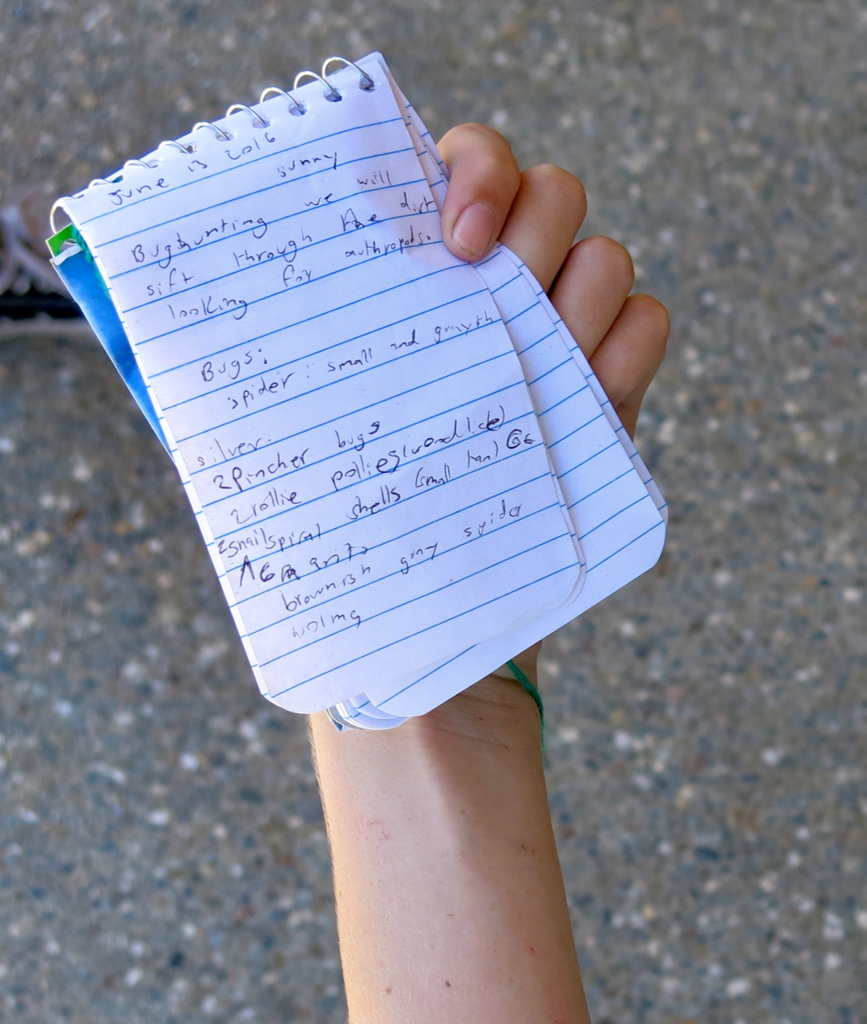
Above: One camper’s field notes on arthropods. Yesterday, arthropod expert Jack Owicki visited and gave an overview of arthropods. Then we checked some insect pitfall traps we had set, checked bushes and plants for arthropods, and looked at spider webs.


IMG_5519

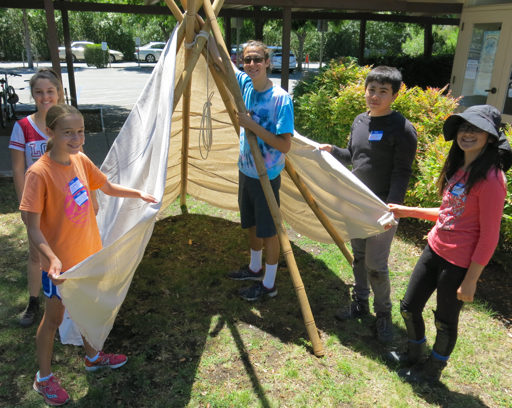
Above: Some of the campers built a teepee yesterday. This is not a traditional teepee as built by the native peoples of the Great Plains. We used structural bamboo borrowed from Darrel DeBoer, an architect specializing in natural materials. Bamboo has good structural properties, and can be grown sustainably.


IMG_5527

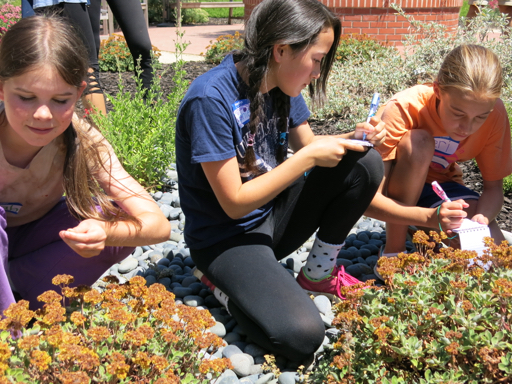
Above: Nancy Neff, an expert on native plants, came yesterday and gave us a guided tour of the native plant gardens on campus. She explained some of the adaptations native plants have to grow in our climate.


IMG_5551

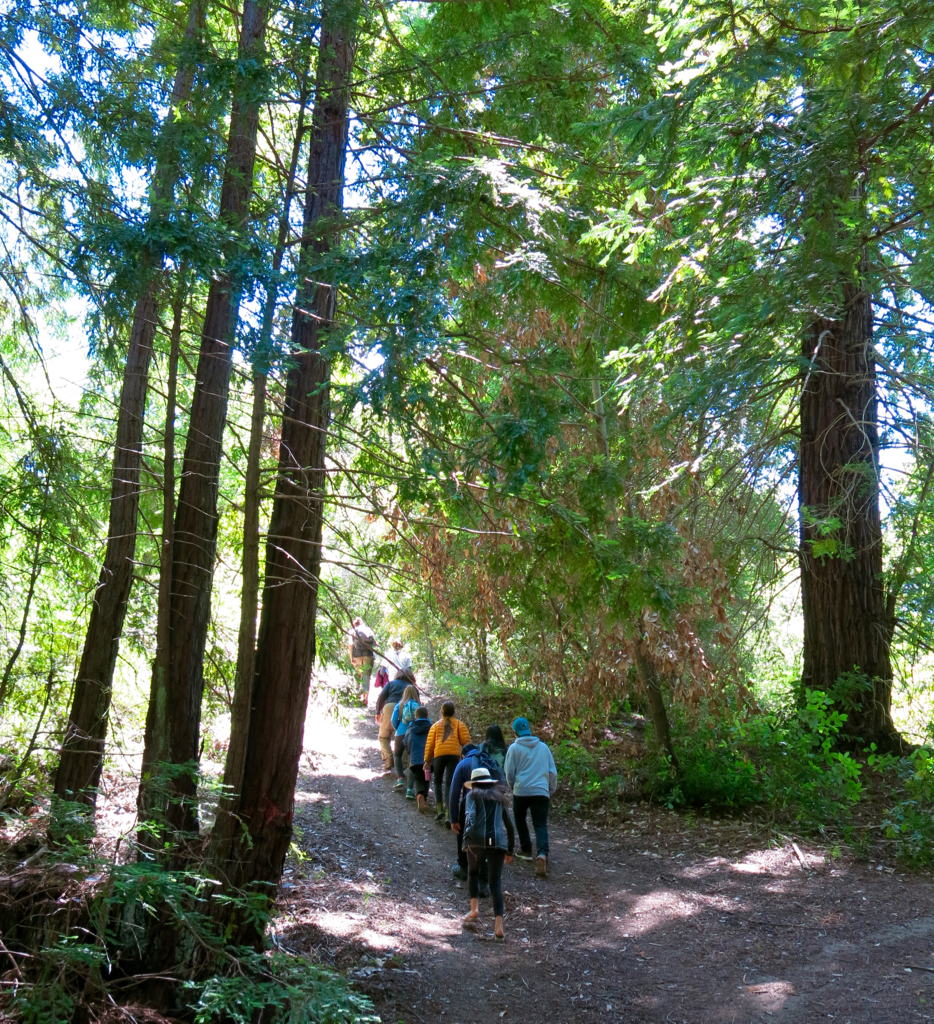
Above: Today we visited the Zeise place, up in the redwood forest near the Skyline to the Sea Trail. As you can see, some of the trails were pretty steep (and this was not the steepest trail we hiked!).


IMG_5548

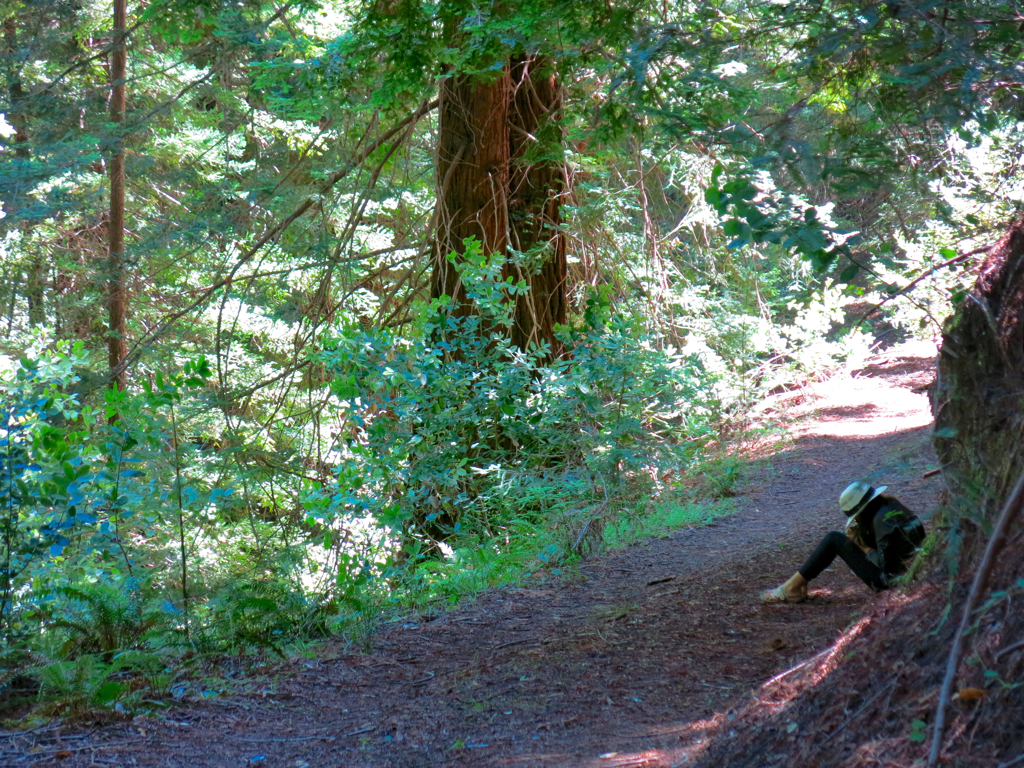
Above: Every camper got about 20 minutes of alone time in the redwoods.


IMG_5555

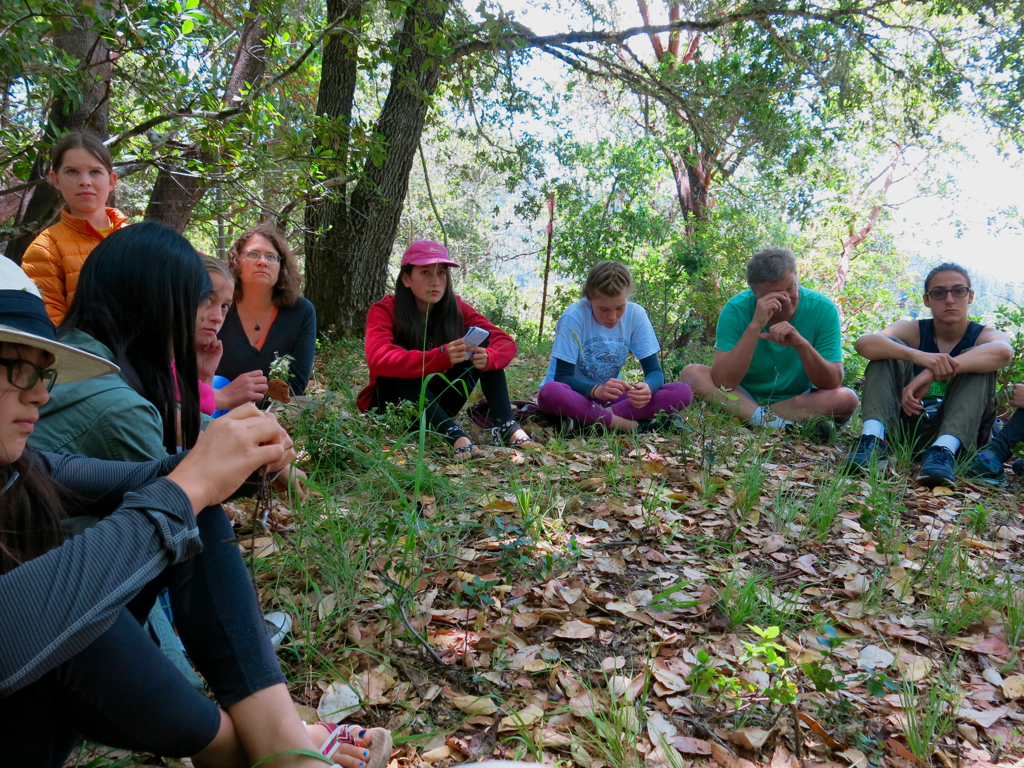
Above: Talking together about the experience of being alone in the woods. Notice that some of us are wearing jackets. It was windy and cool today, and when we sat in the shade it got pretty chilly.

Interfaith, international

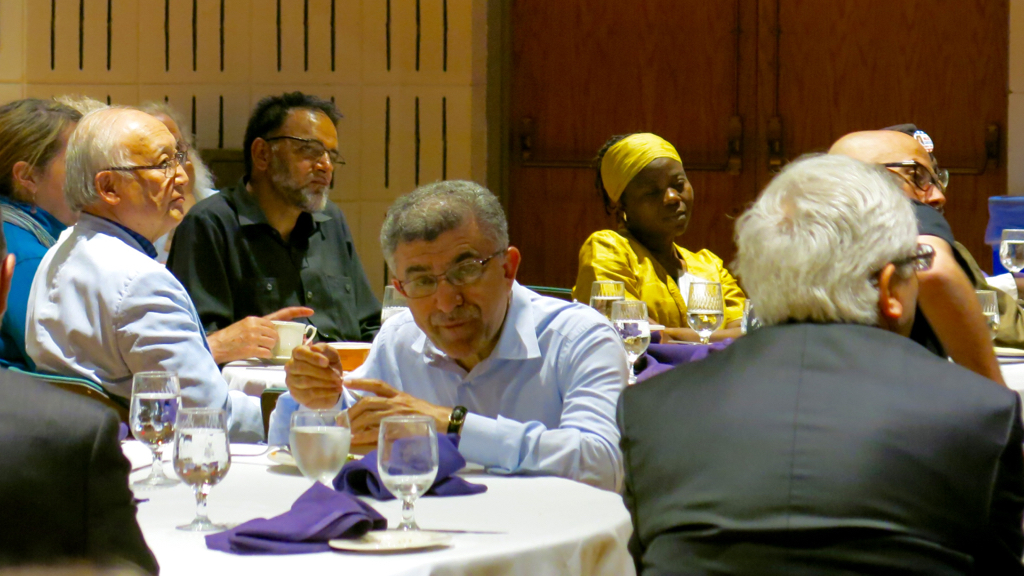
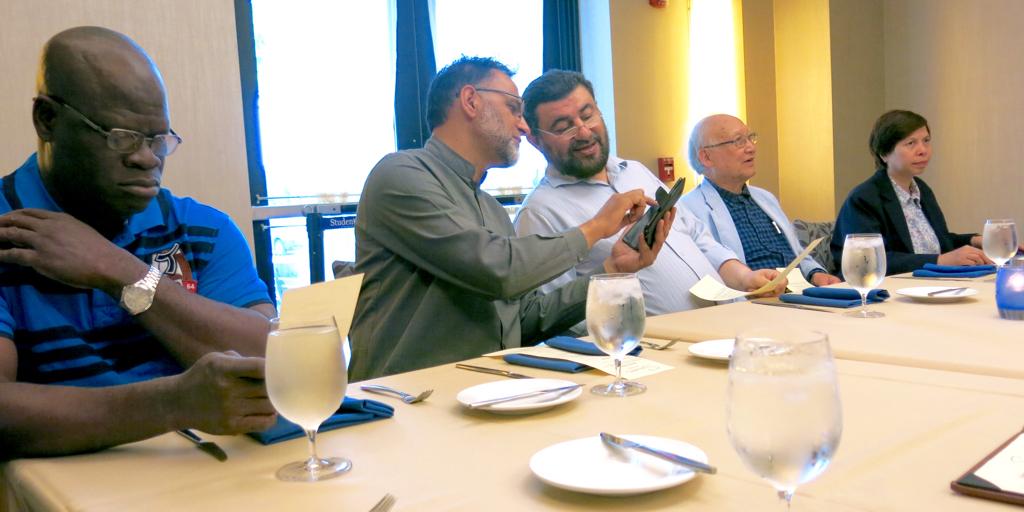
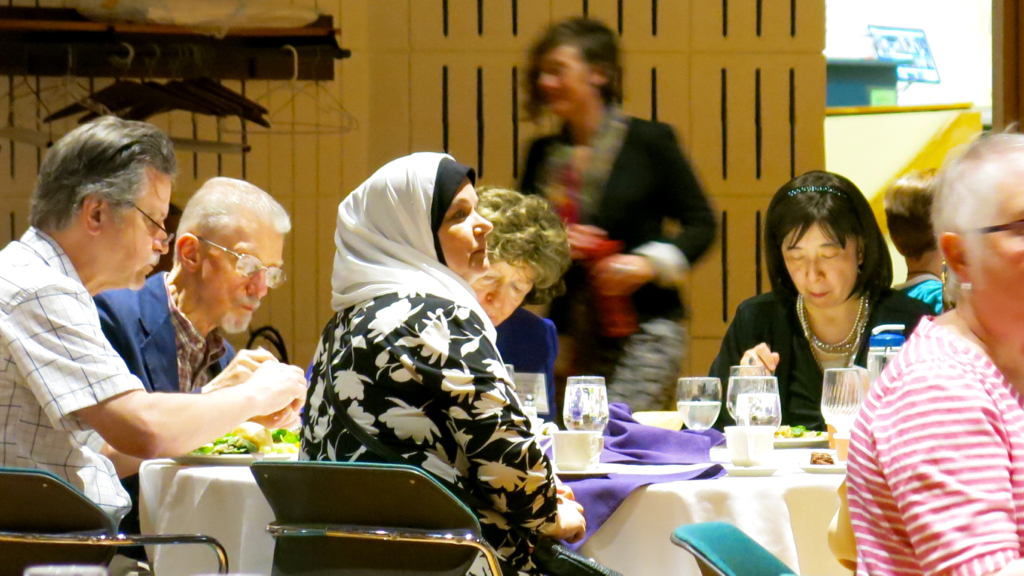
The Sacred Texts Human Contexts conference was an international conference. I met people who held passports from Canada, the Democratic Republic of Congo, Japan, Turkey, and the Philippines; and people born in Israel, China, Pakistan, Germany, and Indonesia but now living in the U.S. I was also aware of people who came from other countries, including Nigeria, India, and Malaysia. I’ve probably missed some other nationalities.

The Sacred Texts Human Contexts conference was also an interfaith conference. I met or talked with Christians (both Catholic and Protestant), Jews, Muslims, Buddhists, and adherents of syncretic traditions; there were also Hindus, and probably other religious affiliations that I missed.

Since there were only about 70 people at the conference, this is quite a bit of diversity indeed — as these photos show:

BlogMay2716a1

BlogMay2716a2

Sacred Texts Human Contexts – Version 2

And even though I’m just another white guy from the U.S., I was pleased to be able to provide a tiny bit of religious diversity myself, as an adherent of a miniscule (and even inconsequential) post-Christian sect.

Being a part of such a diverse conference was an interesting experience. Although I try to be a good world citizen and have at least some understanding of major world religious traditions, this conference made me confront how little I know about Islam. My ignorance of Islam may have something to do with the peculiarities of U.S. culture, in which everyone knows (or thinks they know) about Christianity, most of us have some familiarity with Judaism, and college-educated people tend to have a fair amount of knowledge of Buddhism, Taoism, and Hinduism (because these are the Cool Religions, i.e., Not Christian). But here in the U.S., we tend to know little about Islam, except that Malcolm X converted. It’s always good to come up against one’s ignorance; that’s one of the most direct routes towards wisdom; and now I know about my ignorance of Islam, I can take steps to remedy that.

What a privilege to be a part of this conference, to meet such diverse and interesting people! And it was also a privilege to be able to partake in such interesting intellectual conversations, on such an important topic: how world religions might work individually and together to address the global climate crisis.

I’ll conclude my reporting on the content of the conference in two more posts, which should go live tomorrow….