I promised a friend that I’d buy 30 of his poetry books for a reading he’s doing in our congregation this weekend.
Unfortunately, he self-published through Amazon. So I had to buy his books through Amazon. Yuck. I expect Amazon to underperform, but they outdid themselves this time.
First of all, I paid extra for 2 day shipping. The books took four days to arrive. No surprise there. Amazon consistently ships items late, even when you pay extra for their Prime service.
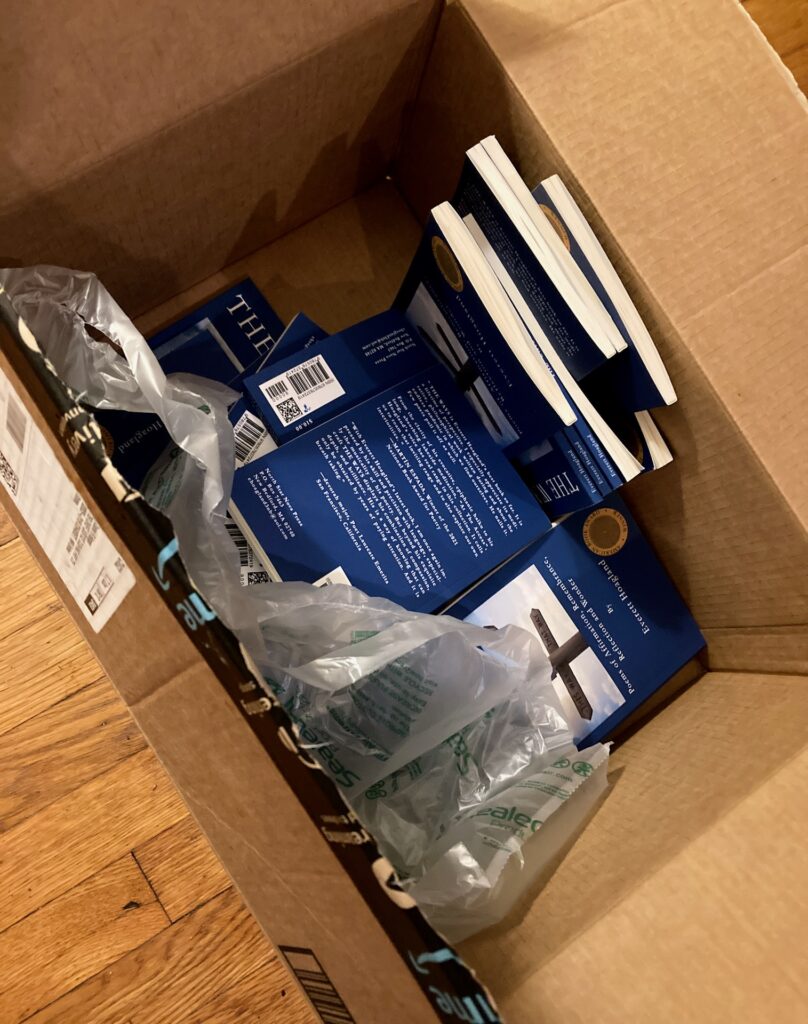
Secondly, here’s what the books looked like when I unpacked the box:
What the box looked like when we opened it
The books were shipped loose in way too large a box. There was essentially no attempt to keep the books from flinging themselves around during shipping. As a result, corners are damaged, covers are bent. It’s just a mess.
First lesson to be learned: don’t self-publish your books through Amazon. Your customers are liable to receive poorly packaged and damaged books.
Second lesson to be learned: Amazon. Doesn’t. Care. About. Books.
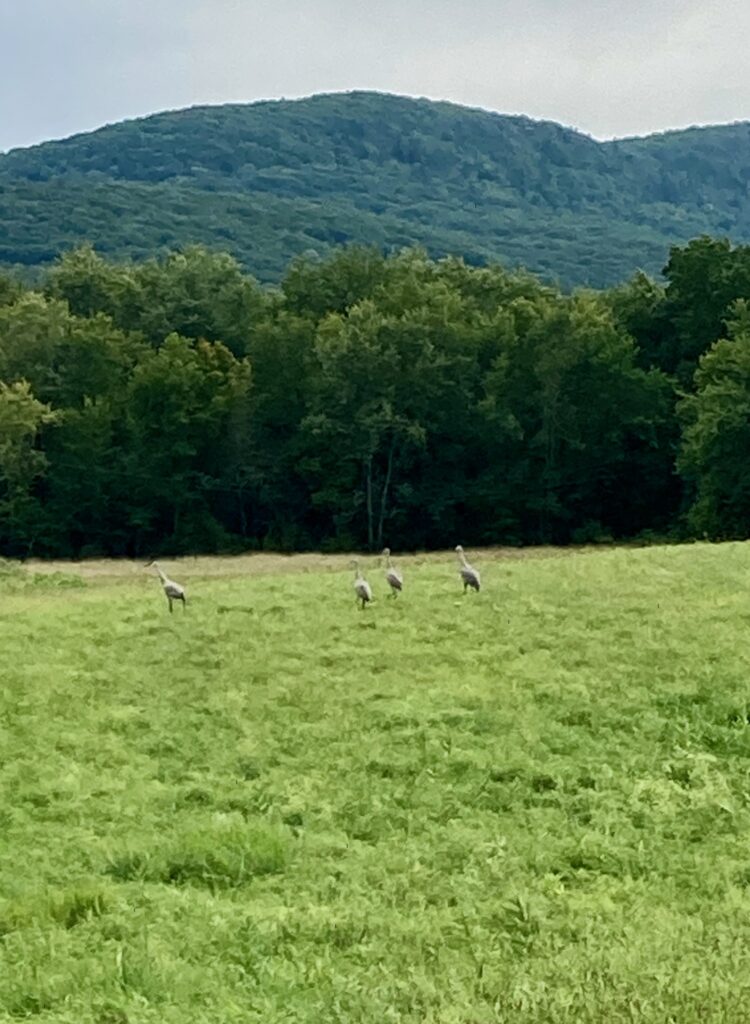
Four Sandhill Cranes have been frequenting Arcadia Audubon Sanctuary in Holyoke. We don’t see Sandhill Cranes in Massachusetts all that often. But I had a long talk with a woman staffing the visitor center at the sanctuary, and she said these four seem to have been around all summer, and there’s some who think they might be getting ready to breed in the area next summer.
The four Sandhill Cranes with the ridge of Mt. Tom in the background.
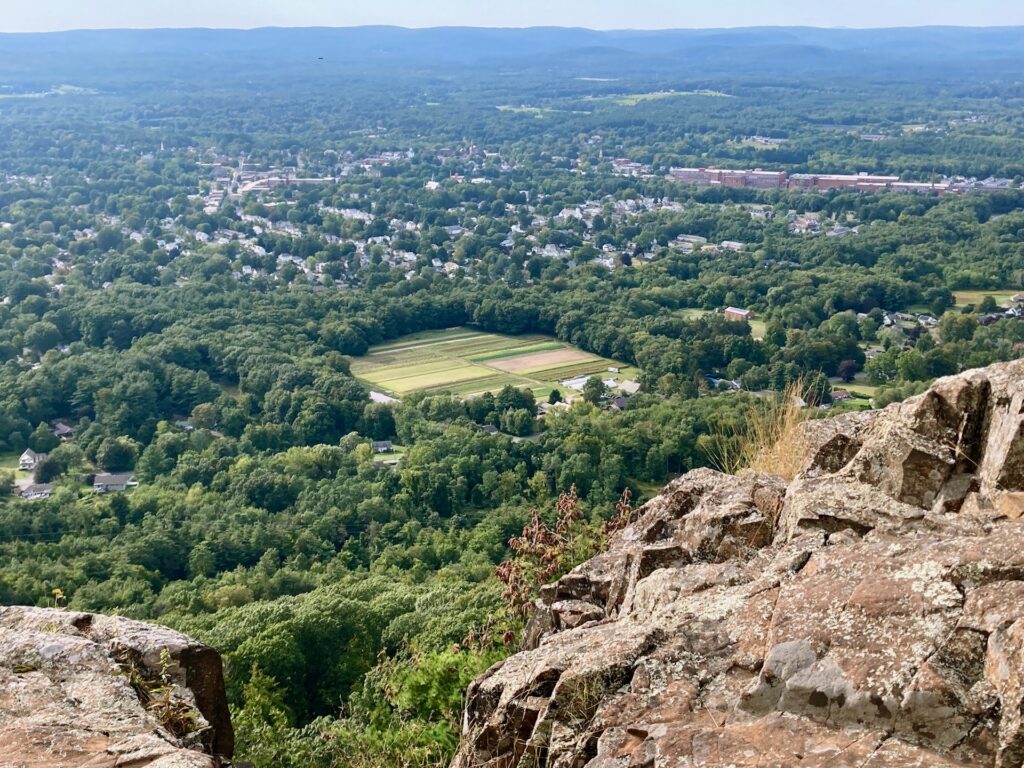
I’m on a brief road trip to the Connecticut River Valley. After driving through heavy and slow traffic along the Mass Pike — there must have been a lot of people going away for the weekend today — I arrived at Mount Tom State Reservation with just three hours before the park closed. I got up to Whiting Peak, then walked along the New England Trail with dramatic views over Easthampton west to the the Berkshire Hills.
The view from the New England Trail, just below Whiting Peak
I’m spending the night in a motel in Ludlow, and tomorrow I’ll be on a Mass Audubon botany field trip. I would have liked to have more time to explore Mount Tom today. But it’s good to get away for even this brief time, just to recharge my spirit.
Back in the 2008 and 2012 presidential election cycles, this blog encouraged people to vote for Cthulhu for president. According to an old MIT webpage :
“Cthulhu is a large green being which resembles a human with the head of a squid, huge bat-wings, and long talons (true, that doesn’t really resemble a human, but bear with me here). [In] H. P. Lovecraft’s story ‘The Call of Cthulhu,’ Cthulhu rests in a tomb in the city of R’lyeh, which sank beneath the Pacific Ocean aeons ago. Cthulhu is dead but not truly dead, as he and his fellow inhabitants of R’lyeh sleep the aeons away…. From time to time R’lyeh comes to the surface, and Cthulhu’s dreams influence sensitive individuals across the globe to depict his image, slay, and found cults dedicated to him.”
Back then, I thought it was funny to promote Cthulhu as perhaps the worst presidential candidate anyone could conceive of. Then came the 2016 presidential election, and it didn’t seem funny any more.
As we approach 2024, the Republican Party seems to have turned into awakened Cthulhu — they’re ready to get violent with anyone they don’t agree with (“if I have to kick down doors, that’s just what patriots do”). The Democratic Party, by contrast, seems to drift ever further from their roots as the party of economic opportunity for ordinary working people — they look like Cthulhu sleeping away the aeons.
With both the Republicans and the Democrats trying to become bad imitations of an Elder God, I’ve decided it’s time to bring back the Elder God Party. Let’s get a real Elder God involved in politics. Imagine a debate between Donald Trump, Joe Biden, and Cthulhu. Cthulhu speaks first. Donald Trump starts to shout over him, and Cthulhu eats him. Joe Biden tries to inject a comment, and Cthulhu mocks him for not being vicious enough. That’s the end of the debate. After Cthulhu is declared the winner, he eats the audience.
Look at it this way. We can die a slow death from ecological disaster while ruled by an authoritarian regime. Or we can die the same slow death while under the leadership of a party that is unable to organize its followers around the obvious unifying cause. Or — we can die a really fast death by electing Cthulhu, who will simply kill everyone and eat them.
Do the right thing. Vote for a really fast death. Vote the Elder God Party in 2024.
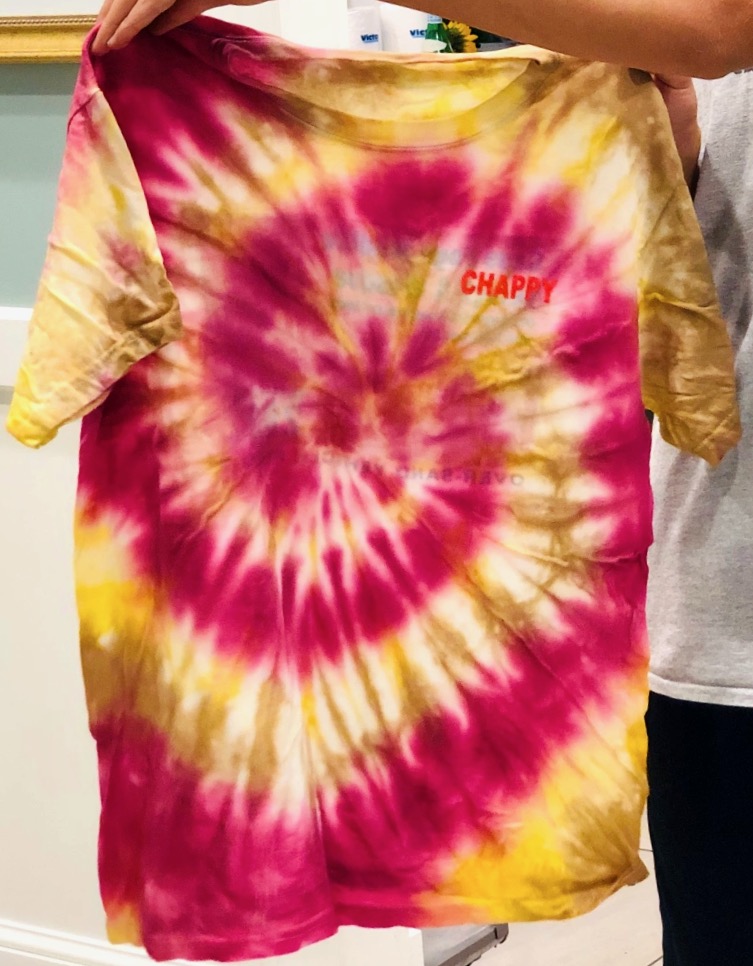
Our experiments in early August to make natural dyes using pine cones or invasive plants weren’t very successful. Subsequently, Carol did a lot of research and experimenting. When we held Ecojustice Camp in mid-August, she was able to produce some pretty good colors using natural dyes.
Tie-dye cotton t-shirt by Micah with turmeric, choke cherry, and walnut husks
The most successful colors came from turmeric powder (bright yellow), choke cherry (magenta), and black walnut husks (brown). Camper Micah brought in the choke cherries. I’m not sure what Carol’s dye recipes were, but I do know she used an alum mordant.
Right out of the dye vats, the colors were pretty spectacular. After a first washing, the colors definitely faded to some degree. Nevertheless, they were still attractive.
I liked the warm brown of the black walnut husk dye the best. I’ve been collecting walnut husks over the past couple of weeks. If I can just find the time, I’m all ready to cook up some dye with them. And if I do, I’ll post the results here.
Every once in a while, someone asks me if they can get notified by email when I post something on this blog. There are several solid email notification solutions for WordPress that charge a fee — but I can’t justify spending any more than I already do on this website. And all the email notification solutions I’ve found take time to set up and maintain — but I’d rather spend the limited amount of time I have on writing blog posts rather than on maintaining an email list.
These days, most of the web is devoted to making money. Websites are either trying to promote a business or a nonprofit, or websites are trying to show you advertisements. Those people who make money from their websites — by showing you ads, or by promoting goods or services, or by soliciting donations for a nonprofit — are more likely to have a marketing budget and staff time they can devote to their website. But on this website, it’s just me, with no marketing budget.
The Congregational Consulting Group blog has a new post by David Brubaker titled “Social Movements and Congregational Responses”:
“Congregations [in the U.S.] often experience conflict in response to social movements in the world around them. Since World War II, movements regarding civil rights, the war in Vietnam, the ordination of women, and human sexuality—each vitally important in its own right—also have raised challenges inside congregations, forcing leaders to address internal questions of power and culture.”
Brubaker gives a brief overview of four external social movements that had a big effect on U.S. congregations: the Civil Rights Movement; the movement against the Vietnam War; the movement to ordain women; and the LGBTQ+ rights movement. I’d like to take a look at Unitarian Universalist (UU) response to each of these movements.
We Unitarian Universalists like to think that we were on the “right side” (i.e., the progressive side) of each of these movements, but that’s not true. We don’t often tell this part of our history, but if you talk with older Unitarian Universalist (UUs) — or if you’re old enough to remember these movements yourself — you know that we had a very mixed record for all these movements.
Civil Rights Movement
We like to tell ourselves the story that we were early and unified and vigorous supporters of the Civil Rights Movement. There is little evidence that was true.
After a summer that’s been cool and rainy, it’s going to be hot all week here in Massachusetts. Records are going to get broken. Some local school districts are worried, because of course schools aren’t air conditioned in Massachusetts. We never used to need air conditioning in September.
In other news, clean up continues in Vermont and western Massachusetts after the devastating floods in July and August.
The phrase “global warming” now feels outdated. So does “climate change.” So does “climate weirdness.” In fact, the phrase “climate emergency” is beginning to feel a little dated….
What really amazes me is that there are still people in the U.S. who think climate change isn’t real.
Labor Day has come again — at least, the United States version of Labor Day.
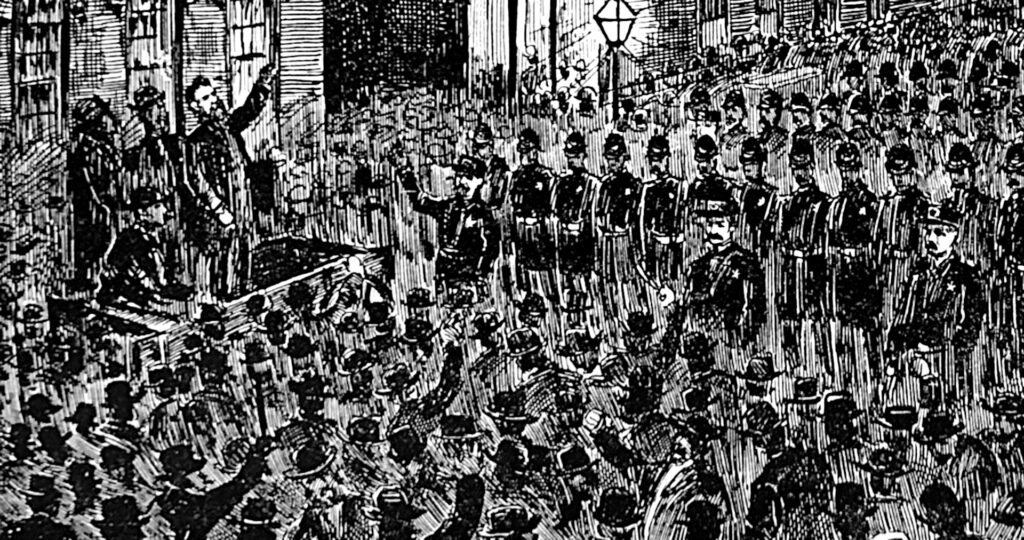
Everywhere else in the world, Labor Day is celebrated on May 1. But not in the United States. May 1, 1886, was the date of a general strike throughout the United States for the right to an eight hour day: “Eight hours for work, eight hours for sleep, eight hours for what we will.” In Chicago, the strike continued through May 3, where as many as 80,000 workers stopped work. Though the workers were peaceful, the police were not — on May 3, they fired on striking workers, killing at least two workers. So a mass rally was arranged for the next day, May 1, in Haymarket Square.
Police arrived in Haymarket Square at 10:30 p.m., just as Methodist minister Samuel Fielden was concluding a short speech, and as the peaceful demonstration was beginning to wind down. Police Captain John Bonfield, backed by a large contingent of armed police officers, ordered the already dispersing workers to disperse. Then someone threw a bomb, killing one officer and wounding several others. Police began firing at the workers, and also apparently at each other. Seven police officers were killed, at least some of them probably by friendly fire. At least four workers were killed, and over a hundred people total were wounded.
Eight people were convicted of the bombing, in a trial that almost all historians agree was a travesty of justice. In 1893, the governor of Illinois pardoned the three who hadn’t been executed, saying, “Capt. Bonfield is the man who is really responsible for the deaths of the police officers.”
Detail of an illustration from the anti-union propaganda book Anarchy and Anarchists by Michael J. Schaak (F. J. Schulte & Co.: Chicago, 1889), p. 140. The original caption read: “The Haymarket Meeting, ‘In the name of the people, I command you to disperse.'”
But the damage to the labor movement had already been done. The Haymarket Massacre was all the excuse that employers needed to put an end to the call for an eight hour day. Corporations, newspapers, and politicians blamed the violence on immigrants and anarchists. The Chicago city government used the Massacre as an excuse to arrest scores of labor organizers. The massacre, which was acknowledged to have been incited by a police official, turned out to be a major setback for organized labor’s efforts to win an eight hour day for all U.S. workers.
The eight hour day finally became a reality — sort of — in the 1937 Fair Labor Standards Act (FLSA), which required about one fifth of U.S. employers to pay overtime if a worker had to work more than 40 hours in a week. Gradually, that sort of became the norm for most workers, and atually became the law in some states. By 1984, when I started working in a Massachusetts lumber yard (because there were no jobs for philosophy majors during a recession), we were required to work a 50 hour week, but at least we got paid overtime if we worked more than 40 hours in a week, or if we worked more than 8 hours in a day.
I continued to work hourly-wage jobs until 1997 when I got a FLSA non-exempt job. Of course, I just took the eight hour day and the right to overtime for granted. The story of the Haymarket Massacre, and the rest of the bitter fight for an eight hour day — no one told me that story. It’s the kind of story that gets people worked up, that makes them believe that their employers don’t have their best interests at heart, that makes them believe that they might deserve to have more control over their working life. But I didn’t know any of that. Labor Day took place in early September, not on May 1, and rather than commemorating the Haymarket Massacre, it was just a nice way to end the summer.
Today, the age cohort known as Generation Z has become very supportive of unions. No surprise there. Employers are paying less, finding ways to ignore labor laws, and generally treating workers like they’re disposable. Many in Gen Z have realized that their most viable path to a middle class life is through unionizing. Maybe Labor Day can become more than an end to summer — maybe it can become a celebration of Gen Z’s unionization efforts.
And as we celebrate another U.S. Labor Day, perhaps some members of Gen Z will join me as I hum to myself — quietly, so as not to disturb our corporate masters — an old song that still seems to resonate today: “The Commonwealth of Toil” by Ralph Chaplin, hummed to the tune of “Nellie Gray”:
In the gloom of mighty cities, amid the roar of whirling wheels, we are toiling on like chattel slaves of old. And our masters hope to keep us, ever thus beneath their heels, and to coin our very life blood into gold.
Chorus: But we have a glowing dream of how fair the world will seem, when we each can live our lives secure and free. When the Earth is owned by labor, and there’s joy and peace for all, in the commonwealth of toil that is to be.
They would keep us cowed and beaten, cringing meekly at their feet. They would stand between the worker and their bread. Shall we yield our lives up to them for the bitter crust we eat? Shall we only hope for heaven when we’re dead?
They have laid our lives out for us to the utter end of time. Shall we stagger on beneath their heavy load? Shall we let them live forever in their gilded halls of crime, with our children doomed to toil beneath their goad?
When our cause has been triumphant, and we claim our Mother Earth, and the nightmare of the present fades away; we shall live with love and laughter; we, who now are little worth, and we’ll not regret the price we’ve had to pay!
Carol and I have been doing as little as possible over this holiday weekend. We talked about driving somewhere, but driving is always a nightmare on Labor Day weekend. So, we’ve been sleeping late and doing some desultory housecleaning. And I took a couple of walks at nearby conservation areas.
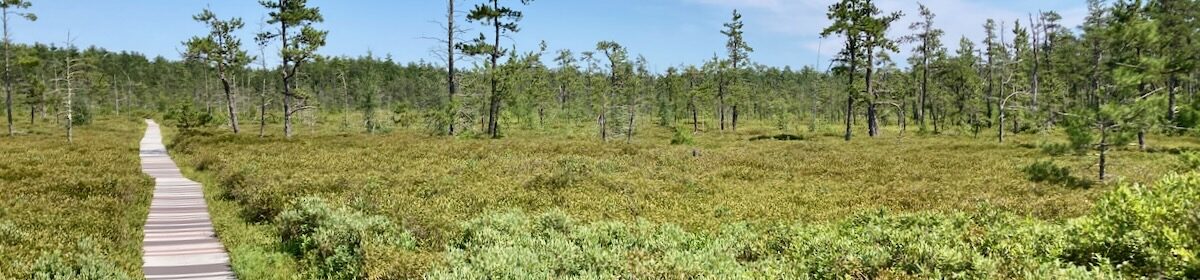
On Friday, I went to Black Pond Bog, a Nature Conservancy property in Norwell.
A small green bee (Augochlora sp.?) pollinating Rough Boneset (Eupatorum pilosum) near Black Pond Bog, Norwell
On Saturday, I took a long walk in Wompatuck State Park. The park covers about 3,500 acres, and you can spend all day walking its miles of trails. It’s mostly wooded, but there are also a number of ponds.
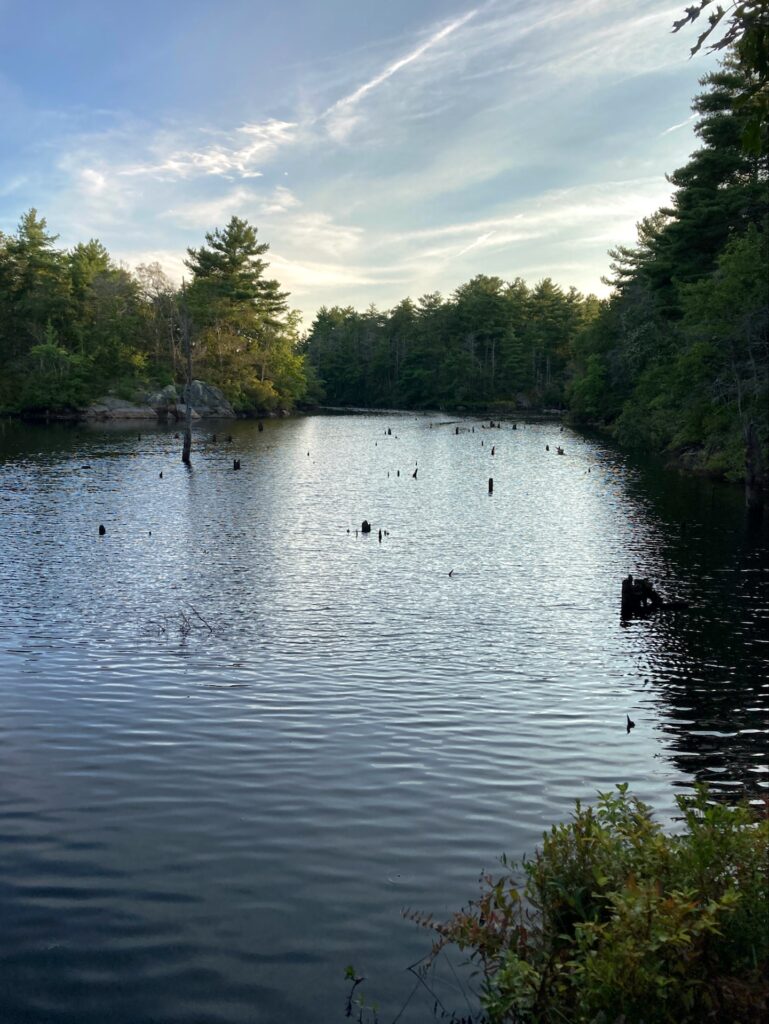
Heron Pond, Wompatuck State Park, Hingham
Getting to Black Pond Bog and Wompatuck State Park both required a fifteen minute drive.
Today, neither Carol nor I felt like driving even that far. So we walked down Main Street from our apartment to Wheelwright Park, and from there into Wright Woods.
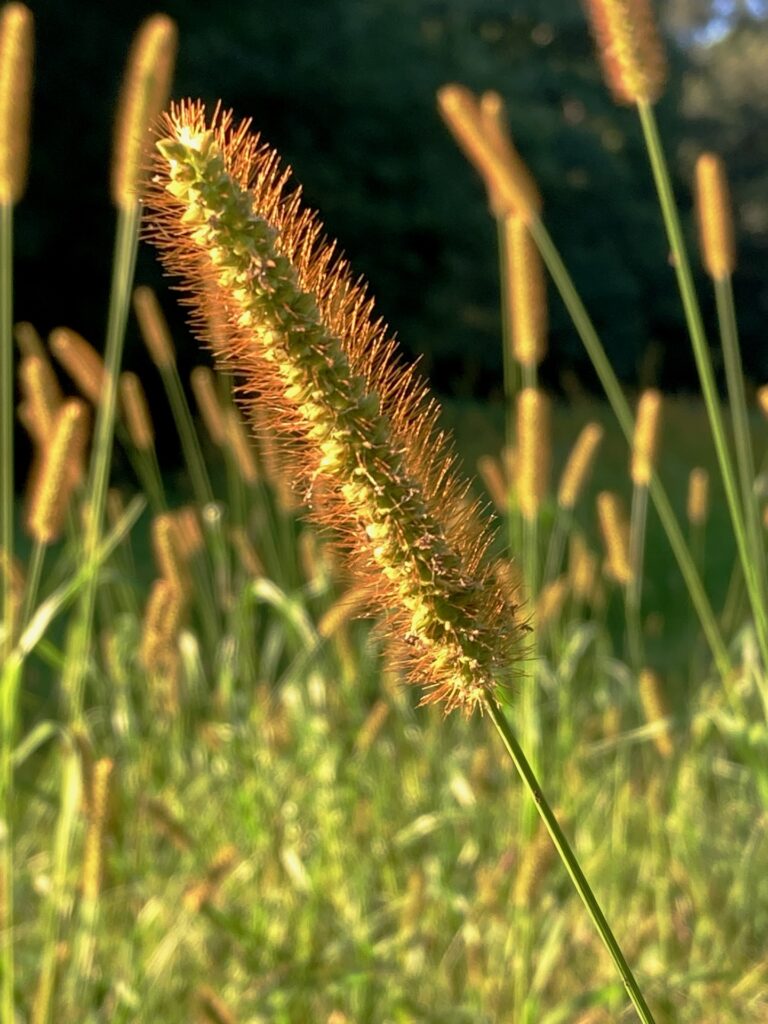
Yellow Foxtail (Setaria Pumila), Wheelwright Park, CohassetCardinal Flower (Lobelia cardinalis) in Ice Pond, Wright Woods, Cohasset
We’re extraordinarily lucky to live in a place where we don’t have to drive long distances to find something to see and do on Labor Day weekend.