COVID-safe outdoor program space

The pandemic has forced many readjustments. Children’s programming is, I feel, a big challenge. Given that there’s still no vaccine in testing for children 12 and under, we may be looking at COVID restrictions in children’s programming for another academic year. Offering only online programming for another academic year does not feel like a good solution to me.

Our congregation is fortunate in having lots of good outdoor space. The problem with our outdoor space is that anyone can access it, and current regulations for children’s programming in our county require limiting access to children’s programming space so that only the children and staff may enter. So the congregation purchased that ugly orange emergency fencing and a bunch of steel fence posts, and last week I and one of the members of the Board of Trustees (who is teaching in one of our in-person classes, and who is also the teen member of the Board) installed a fence around our primary children’s program area.

It’s not very attractive, but it seems to do the job of keeping unauthorized persons out of the program area. Once you’re inside the children’s program area, it’s less visible. In fact, the program area looks reasonably attractive.
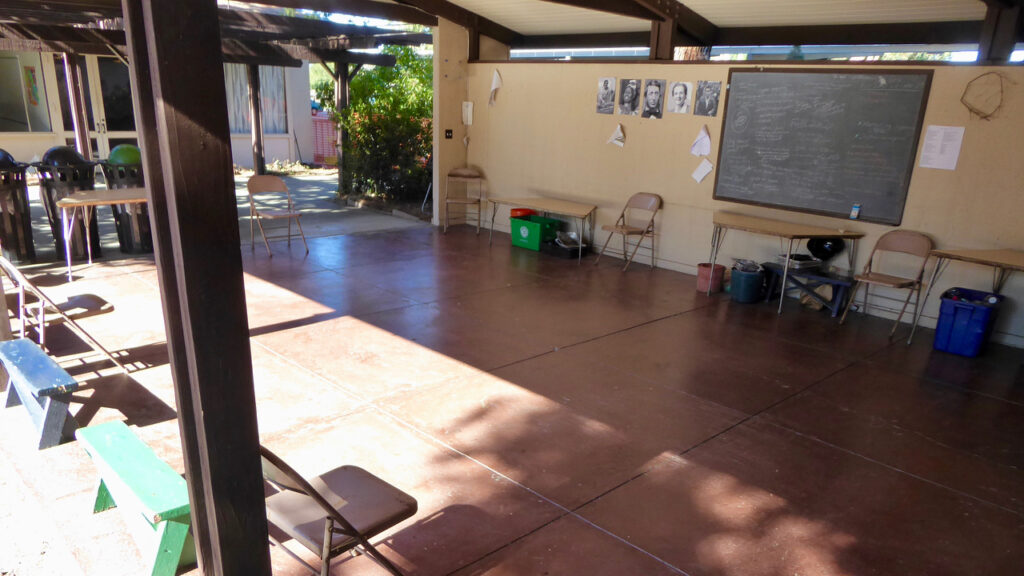
We have some more improvements in the works, and soon should have another COVID-safe in-person children’s programming area ready. We’re going to max out at two in-person children’s programming areas, however, because at this point each program area has to have its own bathroom. With the bathroom limitation and the maximum allowed group size fo social distancing, our capacity for in-person children’s programs has dropped from 80 children pre-pandemic, to 16 under current COVID regulations.

Unpleasant meditation-related experiences

A peer-reviewed paper published back in 2019 states that significant percentages of regular meditators may have negative meditation experiences:

“Surveying over one thousand regular meditators, this is the largest cross-sectional study to assess particularly unpleasant meditation-related experiences to date. Approximately one quarter of participants reported that they had encountered particularly unpleasant meditation-related experiences (e.g., anxiety, fear, distorted emotions or thoughts, altered sense of self or the world) in the past.” Schlosser M, Sparby T, Vörös S, Jones R, Marchant NL (2019) Unpleasant meditation-related experiences in regular meditators: Prevalence, predictors, and conceptual considerations. PLoS ONE 14(5): e0216643. https://doi.org/10.1371/journal.pone.0216643

I’m glad to see that this phenomenon is finally being studied. I meditated for years, but stopped because it became — well, unpleasant. As a minister, I’ve come across other people who don’t meditate for the same reason. Unfortunately, almost all of the recent scientific studies of meditation and mindfulness focus on the purported benefits of meditation and mindfulness; indeed, Schlosser et al. were only able to find two other studies that looked at the negative effects of meditating (both those studies also reported high percentages of people with unpleasant meditation-related experiences).

To my mind, there’s been a bias at work among scientists studying meditation and mindfulness, not unlike the biases in those scientific studies that purportedly prove the power of prayer. This bias is prevalent, not only among scientists engaged in studying “contemplative science,” but also among Unitarian Universalists. Unitarian Universalists tend to be skeptical of prayer, and have tended to be skeptical of studies proving the power of prayer. Yet Unitarian Universalists seem to abandon their skepticism when it comes to mindfulness and meditation.

But back to the study of unpleasant meditation-related experiences. The authors of this study make the important point that these unpleasant experiences need additional study:

“The high prevalence reported here and previously points to the importance of expanding the scientific conception of meditation beyond that of a (mental) health-promoting, stress-reducing, attention-enhancing, self-regulating technique.”

I would add an important ethical warning to anyone who teaches or recommends meditation. Those who teach or recommend meditation or mindfulness have an ethical duty to acknowledge to potential students that meditation can result in unpleasant side effects. Schlosser et al. cite a study which outlines some of the unpleasant effects meditators may experience: “fear, anxiety, hallucinations, social impairment, and changes in motivation, worldviews, self-world boundaries, sleep”; some of these are not trivial.

Those who teach meditation and mindfulness to children have a special ethical burden. Not only do they need to recognize that as many as a quarter of their students may have unpleasant experiences from meditation, they need also figure out how they’re going to support vulnerable children who have these experiences.

I’m not saying that we should not teach meditation and mindfulness. But if you do teach these practices, do it ethically.

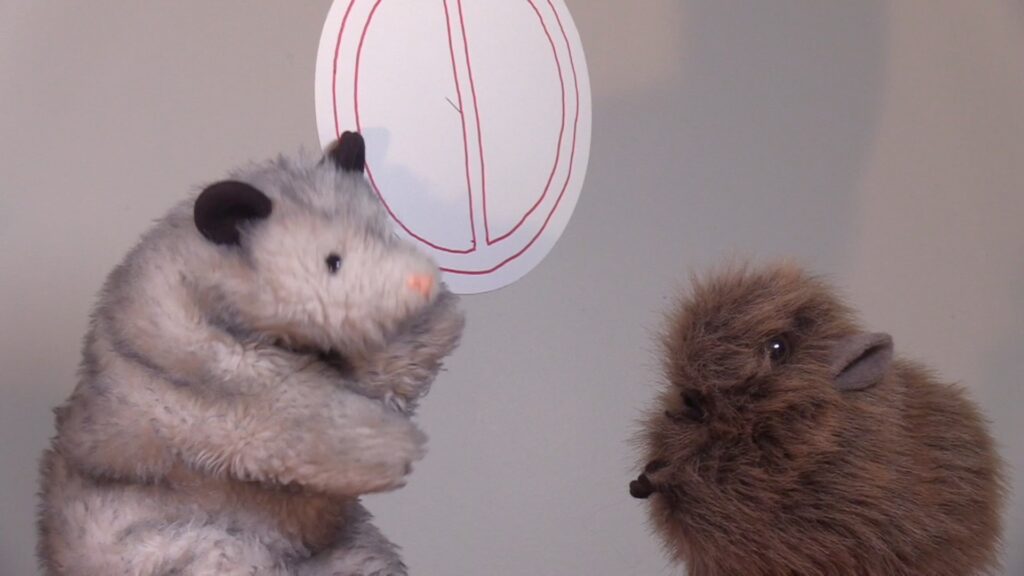
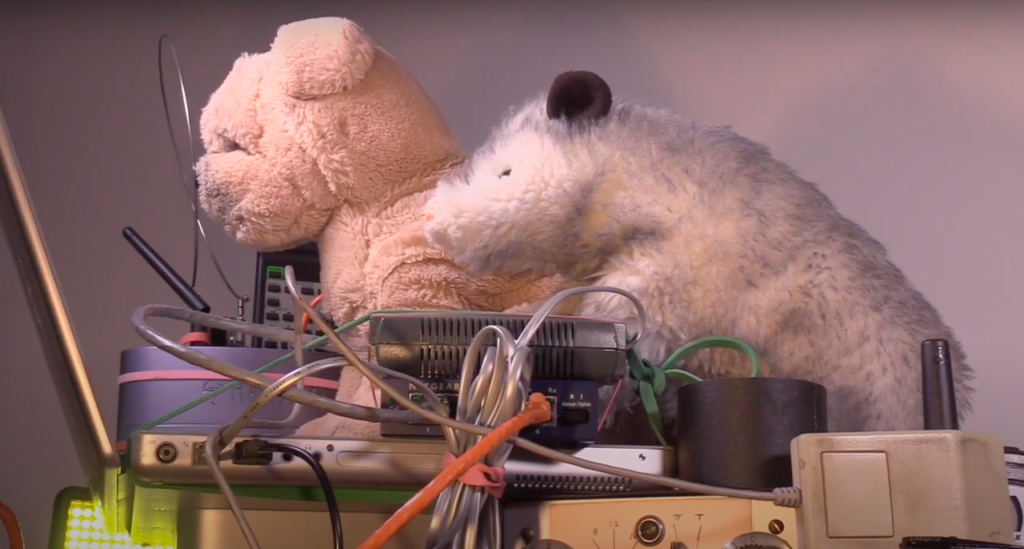
Possum learns about protest

When Castor the Beaver asks Possum why he’s protesting, Possum decides to ask Dr. Sharpie why people protest. Sharpie fires up her time machine, and together they look at some protests from the Civil Rights Movement. It wasn’t quite what Possum was expecting….

Click on the image above to view the video on Youtube.

Full script below; this week the script has not been corrected, and may diverge from the video.

Continue reading “Possum learns about protest”

About the Jataka Tales

For an adult class this evening, I made two video talks giving an overview of the Jataka tales. Links to the videos are below the fold. [talks removed from Youtube, sorry.] Also below the fold: text versions of both video talks.

Continue reading “About the Jataka Tales”