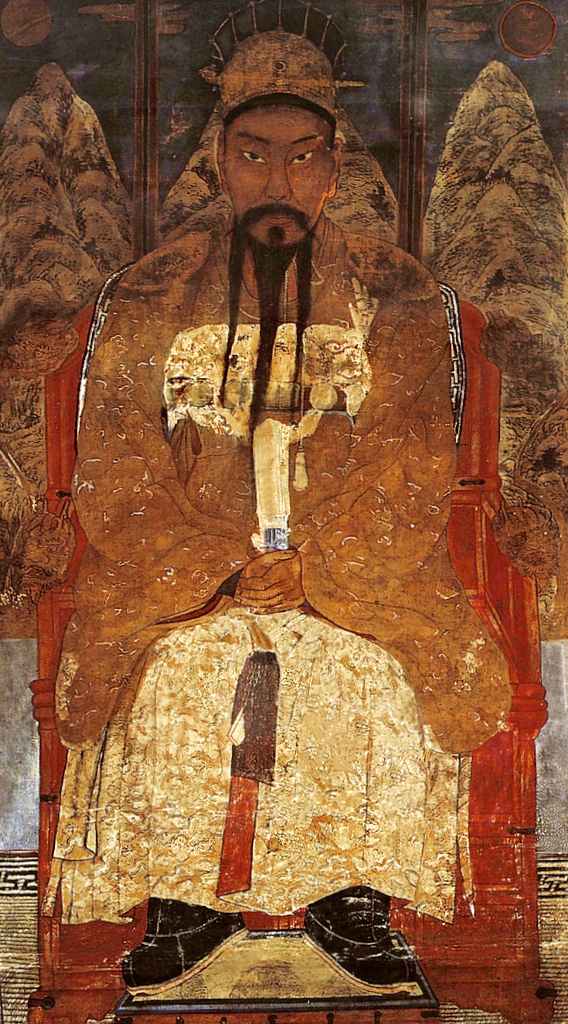
Religion in the public square

In the United States, all too often the phrase “religion in the public square” means someone accosting you and telling you that you should join their religion; so the meaning of the phrase becomes, “our religion is right and yours is wrong.” Or that same phrase can be used pejoratively to imply that all religious practice shouldb e kept out of public view; so the meaning of the phrase becomes, “all religion is wrong.” Either way, someone is imposing their own views on the rest of a democratic society.

But if ours is a truly multicultural democracy, we should allow space in the public square for a variety of worldviews, without letting any one worldview dominance over the others. This becomes a delicate balancing act. Literal or metaphorical shouting matches between religious worldviews don’t promote tolerance; mind you, sometimes you have to get into shouting matches to preserve the openness of the public square, as when we have to fight to limit Christmas displays on public property, but no one imagines that these shouting matches increase tolerance. So given that public religious expression is a delicate balancing act, what does it look like when you have an appropriate expression of a religious worldview in the public square?

Sukkah at the JLISF, Columbus and Lombard, San Francisco

Today I saw such an expression of a religious worldview in the public square, and it looked like a rented flatbed trailer with a sukkah built on top of it. The trailer was parked in front of the Jewish Learning Institute of San Francisco (JLISF), on Lombard Ave. right off busy Columbus Ave in the North Beach neighborhood. Carol and I walked by just as some people from JLISF were cleaning up from lunch. They were polite and friendly, and ready to explain that they were celebrating Sukkot, and what a sukkah was, and so on.

This is a good display of religion in the public square: present, but not intrusive; with friendly people who are ready to explain, but not berate.

Sukkah through a bus window

(Posted the next day, and backdated.)

New edition of “A Treatise on Atonement”

Now in print: a new reader’s edition of Hosea Ballou’s classic statement of universal salvation, A Treatise on Atonement.

This new edition has been edited for clarity and ease of reading. I broke up long paragraphs, modernized punctuation, and added section breaks where there was a logical break in the text. I also added an extensive general index that references names, topics, etc., and also references Ballou’s entertaining illustrations and parables. Scriptural references have been added in the text where missing, and there is a full scriptural index. An appendix has a brief biography of Ballou, written by Thomas Whittemore a year before Ballou’s death.

This project started almost a decade ago, when I couldn’t find an adequate online edition of Ballou’s Treatise. Scott Wells, Russell Allen, and Steve Rowe all helped produce the Web edition, which went online in 2011. This new print version represents a complete revision of the online edition, with added indices and appendix.

Why bother with a new print edition when the classic Ernest Cassara edition, published by the Unitarian Universalist Association, is still in print? Most importantly, the text of the Cassara edition retains the crazy-long paragraphs of the early nineteenth century editions; adding new paragraph breaks makes the book much easier to read. Then too, I’ve long felt that the index to the Cassara edition was inadequate. Finally, after Cassara’s death earlier this year, there was no longer any hope that he might revise his edition.

The new 2015 edition of A Treatise on Atonement is available now through Lulu.com for $12.99 plus about $3.99 for shipping. In approximately 8 weeks, it will also be available direct through major online booksellers, as well as through bookstores via Ingram distributors, at a retail price of about $12.99 (the minimum price I can set that allows such wide distribution).

Treatise on Atonement, thumbnail of cover

What’s a deity?

This week I’ve been posting images of deities. But what is a deity, anyway?

Here in the United States, popular culture has been heavily influenced by Protestant Christian culture, and so when we are asked to define a deity, we default to the concept of a monotheistic transcendent deity. If we have to draw a picture of this deity, we might either draw a picture of a man with a white beard sitting on a cloud, or say that this deity is transcendent and can’t be pictured.

However, most of the human race, for most of human history, has had a far more complex and nuanced understanding of deities. In our own Western cultural tradition, which extends back to the civilizations of Rome, Greece, and the ancient Near East more generally, we can find a great diversity of deities. Here’s a list of some of the categories of deity we can identify in the Western religious traditions:

• a single transcendent deity, e.g., the transcendent god of Xenophanes and other early Greek philosophers; God for some Jews; God the Father for some Christian sects
• a most powerful deity among other deities, e.g., Zeus in ancient Greece
• greater deities, e.g., the more powerful ancient Egyptian deities such as Horus, Osiris, and Ra
• lesser deities, e.g., the Titans in ancient Greece
• local deities, e.g., river gods, deities of a grove or forest, etc.
• household deities, e.g., the household gods of ancient Rome, etc.
• deified humans, e.g., the ancient Egyptian Pharaoh, Roman emperors deified after death, etc. (some might argue that the Virgin Mary of some Christian sects fits into this category)
• humans that are more than mortal but slightly less than gods, e.g., Herakles for the ancient Greeks, Jesus for the Christian followers of Arius, etc.
• humans with special powers who are worthy of veneration, e.g., canonized saints, sports figures and celebrities, etc.
• abstract concepts as deities, e.g., god as the unmoved mover in Aristotle, scientific method, financial success, etc.

These are just the first examples from the Western religious traditions that come to my mind. Then we can add in all the deities which are current in our increasingly multicultural world, such as the vast hierarchy of Hindu deities, the several Buddhas (who may appear as humans with special powers, but who may also appear as transcendent deities), ancestors who are venerated (as in some African traditions), deities as part of nature or tied to natural places (as with some Navajo deities), etc., etc.

I don’t believe we should accept without question the U.S. Protestant Christian definition of deity as a single transcendent god in whom one either believes or doesn’t believe. Humans in the U.S. today venerate a variety of deities, many of which look nothing like the U.S. Protestant transcendent God. And that veneration can take a variety of forms, from overt public worship to more covert forms of veneration. Given that, don’t you think that there is a lot more religion in the U.S. today than is captured by polls which ask whether people believe in “God” and attend “church”?

Easy face painting

Some of our high school youth youth advisors went to Kids Carnival today, the fun event organized by the University AME Zion Church as a way for people of different races and ethnicities to get to know each other a little better while having a good time. Our youth group offered to do a face painting booth. We lucked out in that Elaine, a high school senior from the Palo Alto Vineyard Church, joined us — she is a fine artist who has her own business doing face painting for kids’ birthday parties. We let her do all the hard designs (Ice Bear, a Death Eaters logo, etc.), and we used our own easy designs.

Our designs turned out to be easy enough that children can do them (we let some of the children who came to our booth use our paints to paint designs on each other) — yet they’re satisfying and look pretty good when you’re done. I’m posting them here in case you want to use them next time you do face painting in your congregation. Except where noted, our designs are meant to go on cheeks or backs of hands. We had copies of the designs where children could look at them and choose the one they wanted. One last suggestion: it is worth spending extra money for good face paints; we bought the cheap ones, but when Elaine let us try hers, we saw that they were far better.

Face Painting 1

Face Painting 2

Face Painting 3

Chart of Christian churches

Another handout I developed for our “Neighboring Faith Communities” course for middle schoolers, a timeline of Christian churches and their derivatives:

Christian Church timeline thumbnail

Christian church timeline (PDF)

This is a revision of an earlier version of this timeline, which I originally posted here.

One purpose of this chart is to introduce middle schoolers to the incredible diversity of Christian churches, especially churches that are not well know in the West (i.e., Oriental Orthodox Churches, African Independent Churches), and groups that are often passed over or ignored by religious liberals (i.e., Restorationist groups including Mormons, Pentecostals).

Another purpose of the chart is to show how Unitarian Universalists do in fact derive from Christian churches — and further to show how very few in number we Unitarian Universalists are compared to the various Christian churches.

Chart edited. See comments.

Chart of world religions

Here’s a handout I developed for our “Neighboring Faith Communities” course for middle schoolers, a timeline of some world religions:

World religions chart thumbnail

Timeline of some world religions (PDF)

This timeline shows the eight major world religions, as listed in Stephen Prothero’s book God Is Not One: Islam, Christianity, Confucianism, Hinduism, Buddhism, Yoruba religion, Judaism, Daoism.

In addition, the timeline shows some other religions of interest. Two religions from the Americas are shown, Mayan religion and Navajo religion. Two ancient religions that influenced the Western tradition are shown, viz., ancient Greek and Roman religions and ancient Egyptian religion. Several smaller religions that may be of interest to Unitarian Universalists are also shown: Jainism, Sikhism, Zoroastrianism, and Baha’i.

I’m still revising this timeline, and I invite your comments!

Journal on childhood and religion

Noted recently on the Religious Education Association blog: an online journal devoted to childhood and religion.

The Journal of Childhood and Religion is a peer-reviewed journal providing “an interdisciplinary forum for scholars representing a wide range of research fields, interests, and perspectives that relate to children and religion.” The journal was started in 2010, and there are about four articles per year.

I’m glad to find a journal focused on children and religion; so many religious education scholars and researchers these days focus either on older persons, or on abstract issues.

Test your religious knowledge

Think you know a lot about religion? Well, the Pew Research Center has developed a “U.S. Religious Knowledge Quiz” where you can find out. The fifteen questions on the quiz test your knowledge of the Bible and of world religions. The online quiz is here.

After you take the online quiz (and find out how much you really do know), you’ll want to go on to read about the survey from which this quiz was extracted, the “U.S. Religious Knowledge Survey.” Pew Research Center did a telephone survey in which they asked 32 religious knowledge questions of a random sample of U.S. residents. The average number of correct responses was 16 out of 32. Jews, atheists/agnostics, and Mormons scored best on this longer quiz. Scoring below average were white mainline Protestants, black Protestants, Hispanic Catholics, and “nothing in particular.”

There were so few Unitarian Universalists included in the sample that they are not included in the statistical analysis. How well would we perform? Sometime I’d like to administer either the shorter quiz, or the longer set of survey questions, to young people who have gone through a UU religious education program. How well have we done at teaching our children basic religious literacy? Since religious literacy is not the goal of most UU religious education programs, my guess is that our kids would only do well if their day school taught them this information. And how about us professional religious educators, how would we do on this quiz? I scored 100% on the quiz, but I’ve been working in UU congregations for two decades, during which time I earned my M.Div. degree — back in 1994, when I started working as a religious educator, my guess is that I would have scored between 50-75%. Finally, how about our ministers?

Do we care? — that is, should religious literacy be a goal of Unitarian Universalist religious education (and should it be a goal for our ministers and religious educators)? I’d argue that in order to be good U.S. and world citizens, we do need a basic level of religious literacy, and that Unitarian Universalists have always aimed to produce good citizens; yet there are very good reasons to disagree with making religious literacy an educational goal.

What do you think?

Rethinking a classic story

“The Picture on the Kitchen Wall,” a story from the classic Sophia Fahs book From Long Ago and Many Lands, has some serious problems: it’s arguably not very Chinese, it contains a number of hidden biases, etc. This story is, in fact, a good example of why we should question everything that Sophia Fahs wrote — even though she remains the most brilliant Unitarian Universalist religious educator we’ve ever seen, she was not by any means perfect.

“The Picture on the Kitchen Wall” purports to tell the back story of the Kitchen God, the minor deity in Chinese popular religion whose image is mounted somewhere near the kitchen stove. Each year, according to most accounts, the Kitchen God leaves the kitchen and reports to a higher deity (sometimes identified in English-language accounts as the Jade Emperor) about the good and bad deeds of the family in whose house he lives. In Fahs’s retelling of the Kitchen God’s story, he was originally a historical figure, a person named Chang Kung.

In tracing Chang Kung, I find him mentioned in a book of maxims attributed to Emperor K’ang-hsi [Kangxi], who ruled China from 1661-1722, an early emperor of the Ch’ing [Qing] dynasty. These maxims appeared in English translation in 1817 as The Sacred Edict, Containing Sixteen Maxims of Emperor Kang-He, Amplified by his Son, the Emperor Yoong-Ching, trans. Rev. William Milne (London: Black, Kingsbury, Parbury, and Allen, 1817), pp. 51-52:

“Formerly, nine generations of Chang-kung-e inhabited the same house; and a Mr. Chin of Keang Chow had seventy persons who all ate together. Those who belong to one family, and are of one surname, should think of their ancestors; rather exceed, than be deficient in respect; rather surpass, than be wanting in kindness. When there is prosperity, rejoice mutually, by an interchange of social affections; when adversity, sympathize mutually, by affording reciprocal aids. In building a family temple to sacrifice to ancestors; in erecting a domestic academy for instructing youth; in purchasing a charity field for the supply of indigent brethren; and in correcting the family calendar, to interweave the names of the more distant relatives — let the same mutual aid be afforded.”

Chang Kung continued to be mentioned by later English-speaking writers as the nineteenth century progressed. A typical example, with an unpleasantly racist conclusion, may be found in Arthur H. Smith D.D., Village Life in China: A Study in Sociology (New York: Fleming H. Revell Co., Publishers of Evangelical Literature, 1899), p. 27:

Continue reading “Rethinking a classic story”

Racial diversity and religious groups

How racially diverse are various religious groups in the United States? The Pew Research Center recently investigated this question, and ranked various religious groups based on a racial diversity index they developed.

Out of 29 religious groups they looked at, the most racially diverse group was Seventh day Adventists, with a diversity index of 9.1. A higher number indicates greater diversity. Seventh Day Adventists are 37% white, 32% black, 15% Latino/a, 8% Asian, and 8% other. The study included only five racial categories, where the fifth category is “other.” Muslims and Jehovah’s Witnesses come close, with diversity indices of 8.7 and 8.6, respectively.

And where do Unitarian Universalists come in? No, not dead last; don’t be so cynical. With a diversity index of 2.7, Unitarian Universalists come in at 21st place. By way of reference, the racial diversity of all United States adults is 6.6. (Note that this study does not consider the racial diversity of individual congregations, but only of nationwide religious groups; individual congregations may be more or less diverse than the nationwide group.)

Given how white Unitarian Universalism is, I have a couple of thoughts about where we might put our efforts to change that. With congregational polity, no one can tell any congregation what to do; but we can offer incentives to help motivate congregations. So when the denomination and other funding bodies consider funding new congregations, first priority should go to ministers and leaders of color who intend to start non-white congregations; and ongoing funding should be tied to maintaining either a non-white majority and/or a high diversity index. And when existing congregations seek financial assistance of any kind, they can be asked to verify their racial mix, and priority should be given to more racially diverse congregations. In short, don’t belabor ’em with guilt, motivate ’em with money.