Ecology camp

This month, I’m overseeing ecology camps for three different age groups: Nature Camp for gr. 2-5, Ecojustice Camp for gr. 2-5, and Ecojustice Camp for gr. 6-8. The middle school camp is this week; Nature Camp and camp for gr. 2-5 are next week.

To give you a flavor of what we’re doing, below are a few photos from the first two days of the middle school camp. (We have media release forms from all campers and staff.)

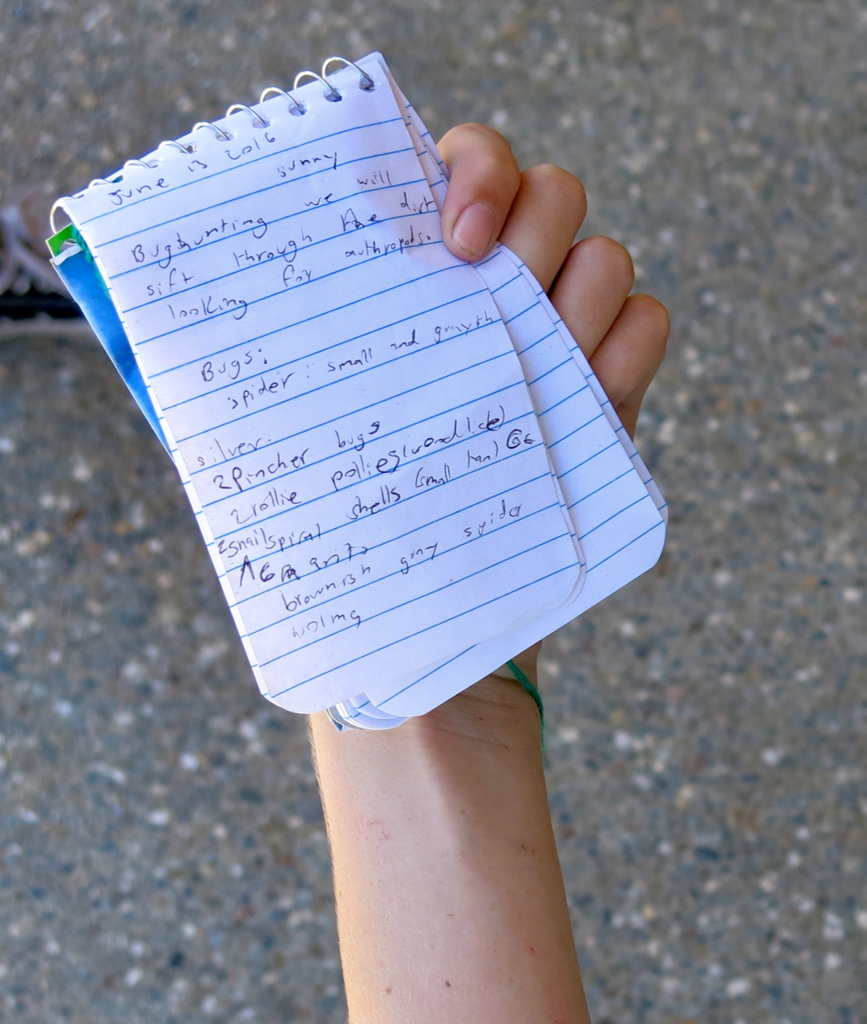
IMG_5530

Above: One camper’s field notes on arthropods. Yesterday, arthropod expert Jack Owicki visited and gave an overview of arthropods. Then we checked some insect pitfall traps we had set, checked bushes and plants for arthropods, and looked at spider webs.


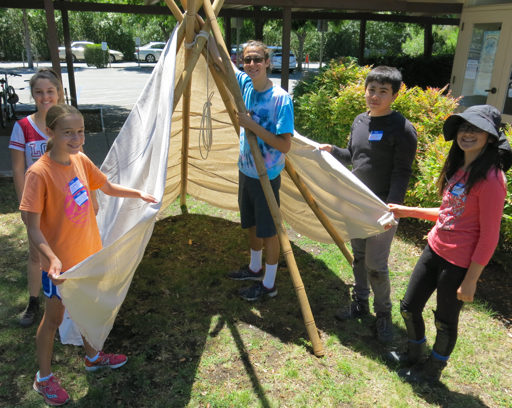
IMG_5519

Above: Some of the campers built a teepee yesterday. This is not a traditional teepee as built by the native peoples of the Great Plains. We used structural bamboo borrowed from Darrel DeBoer, an architect specializing in natural materials. Bamboo has good structural properties, and can be grown sustainably.


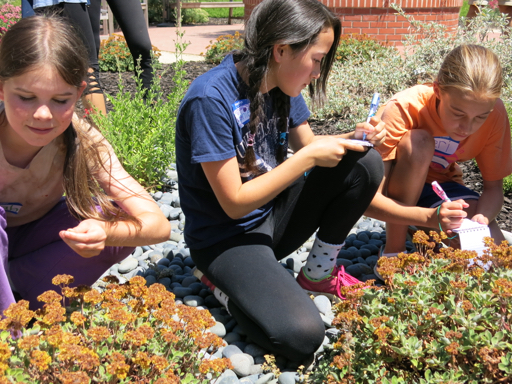
IMG_5527

Above: Nancy Neff, an expert on native plants, came yesterday and gave us a guided tour of the native plant gardens on campus. She explained some of the adaptations native plants have to grow in our climate.


IMG_5551

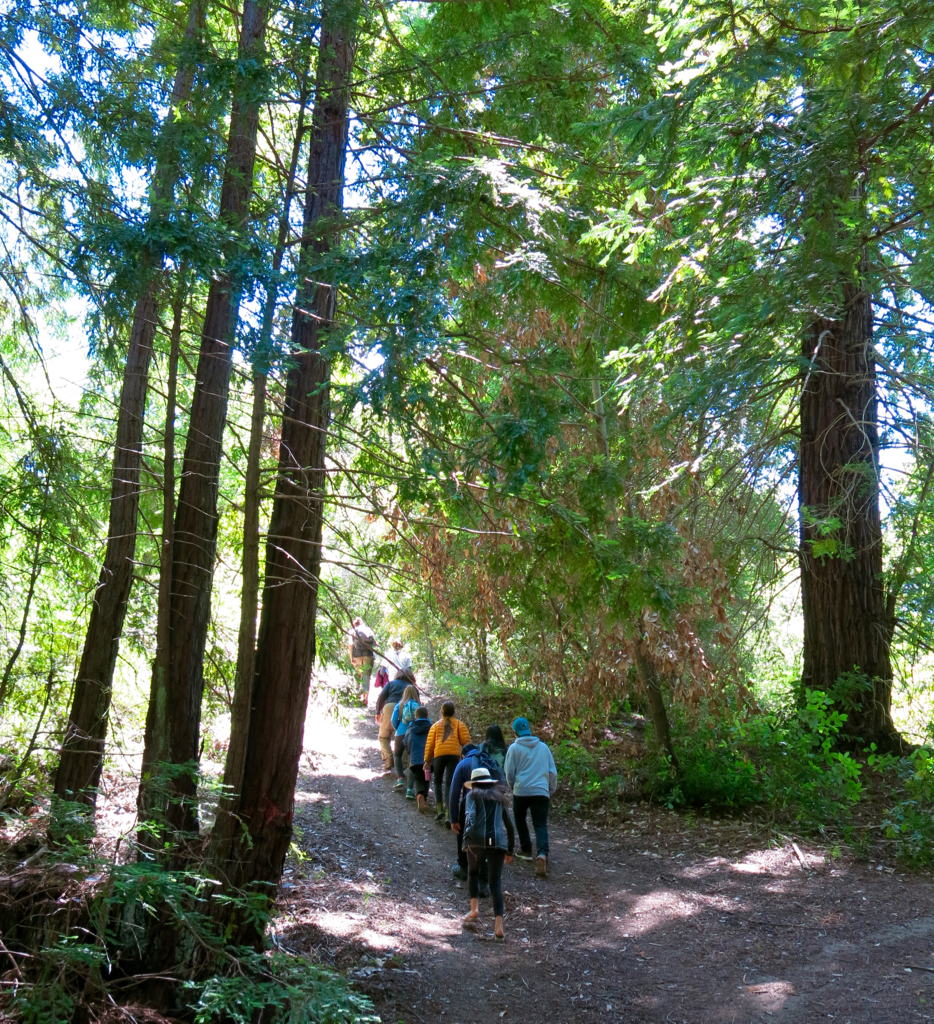
Above: Today we visited the Zeise place, up in the redwood forest near the Skyline to the Sea Trail. As you can see, some of the trails were pretty steep (and this was not the steepest trail we hiked!).


IMG_5548

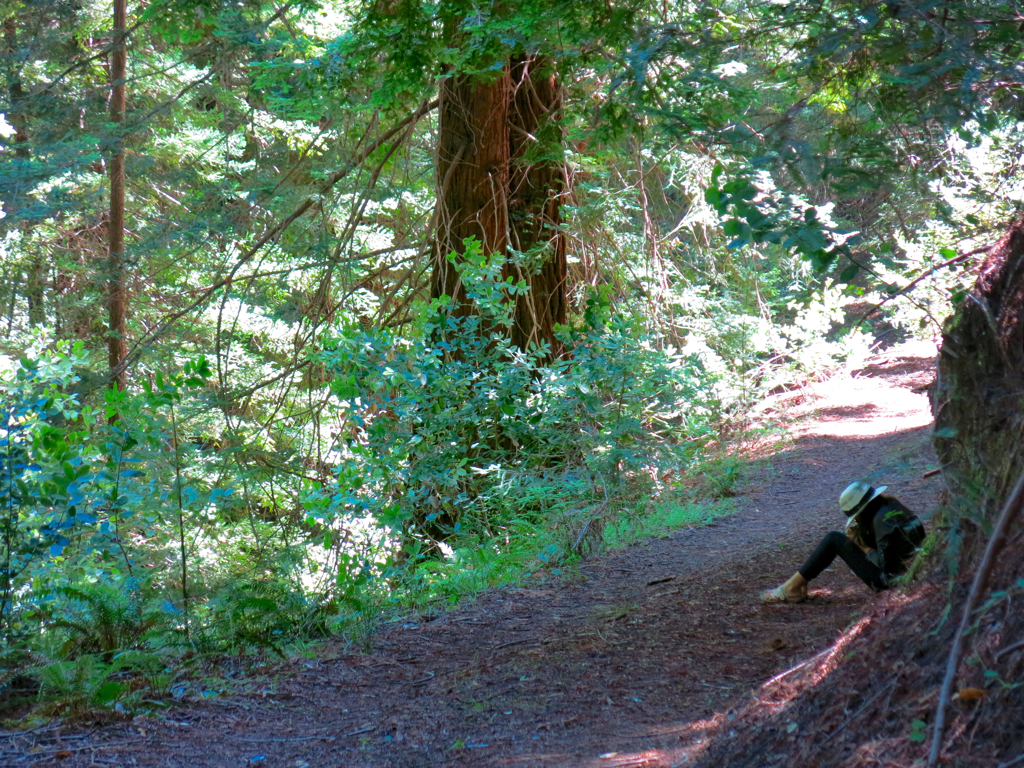
Above: Every camper got about 20 minutes of alone time in the redwoods.


IMG_5555

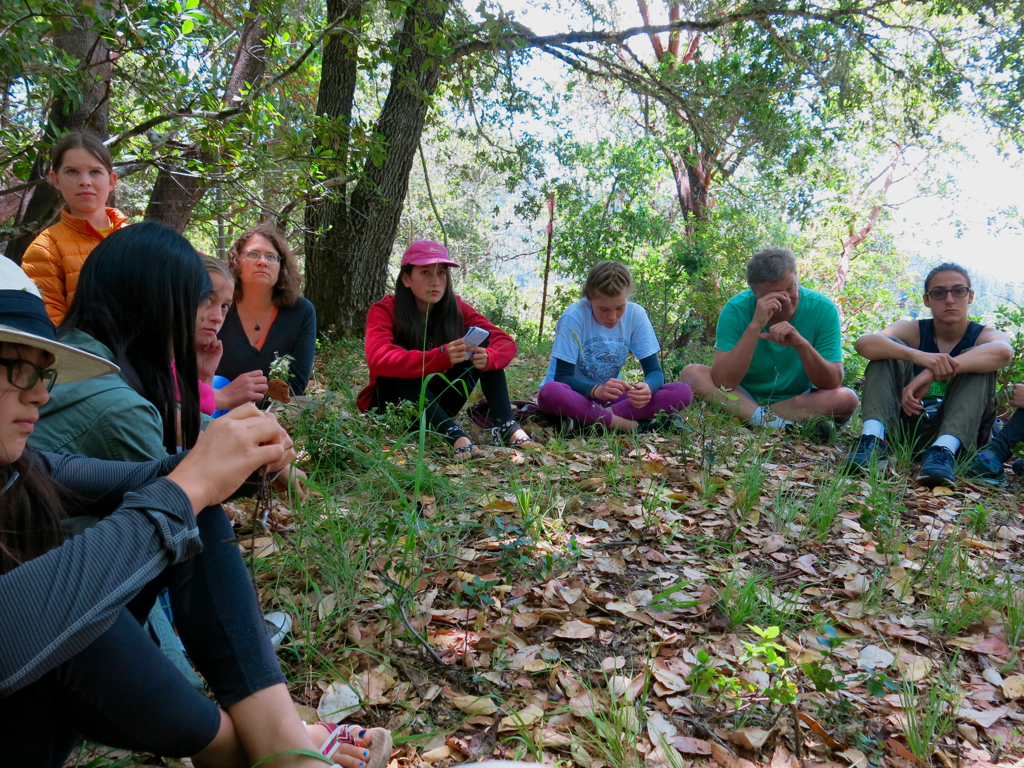
Above: Talking together about the experience of being alone in the woods. Notice that some of us are wearing jackets. It was windy and cool today, and when we sat in the shade it got pretty chilly.

Mud puddling

Butterflies, so goes the common wisdom, like flowers, so if you want to attract them you plant flowers that they will like. But butterfly enthusiasts point out that some butterflies prefer “mud puddling”: they are attracted to mud puddles, and like to hang out there.

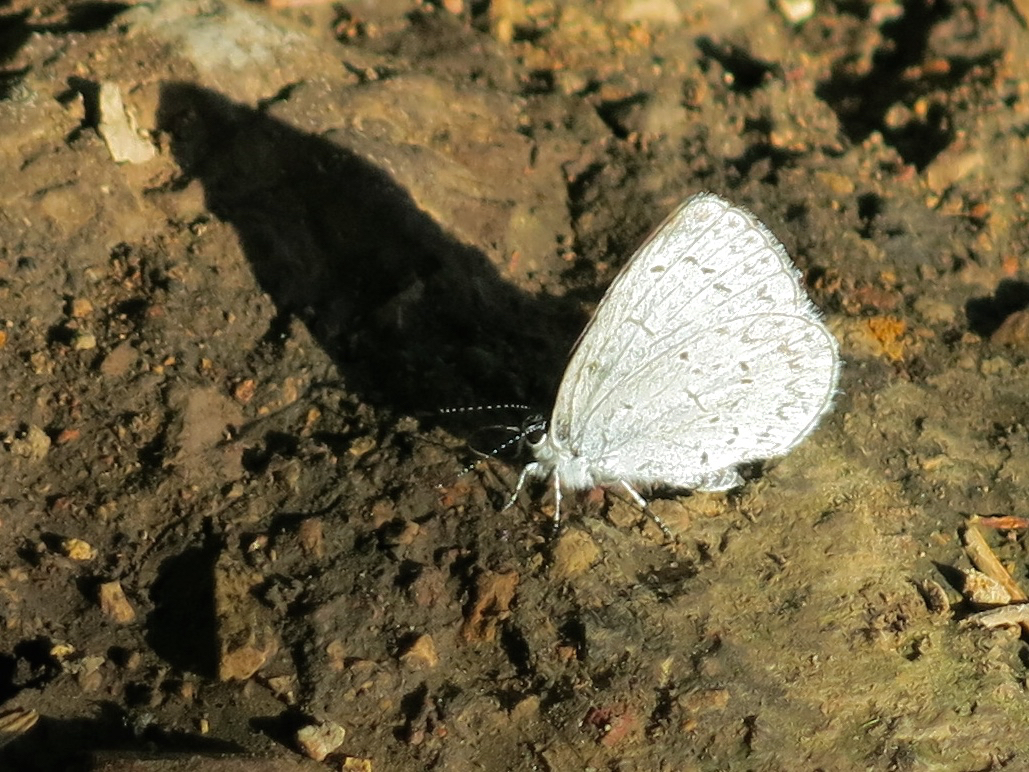
Carol and I went for a walk in Purisima Creek Redwoods preserve. In places the trail was still damp and even muddy, and in one such place, on a boundary between chaparral and Douglas fir forest, I saw an Echo Blue fluttering along. The trail wasn’t exactly muddy, but I guess it was damp enough, for the insect would light every now and then, put its wings up, and bask.

BlogJun0316

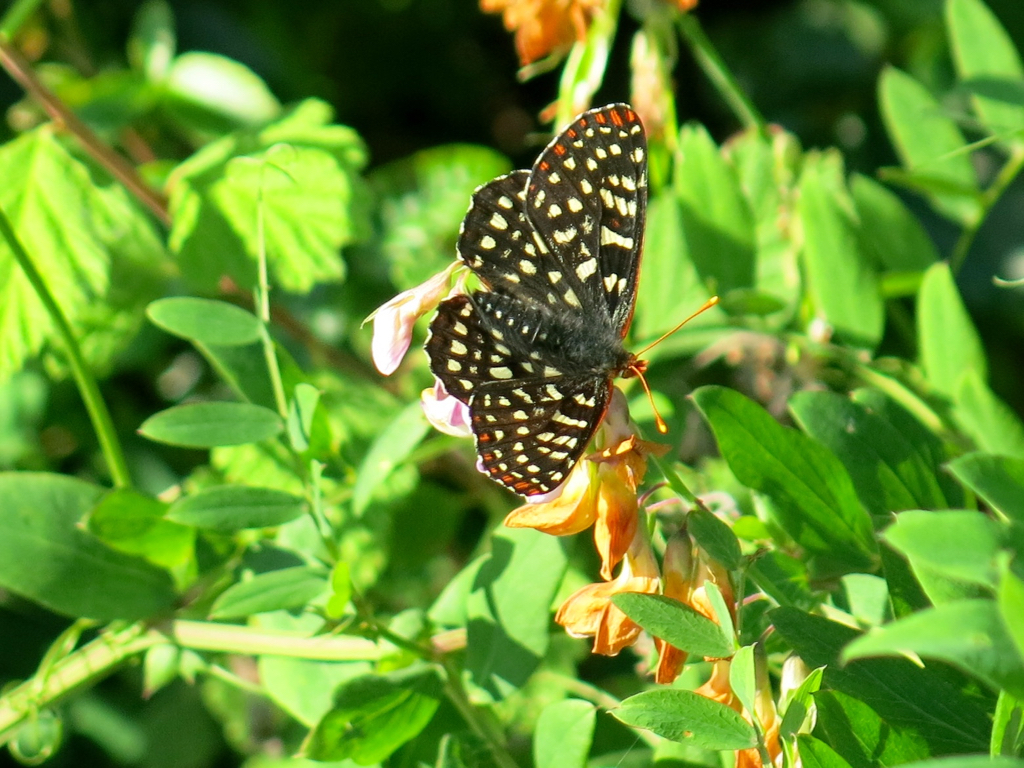
When I got too close, it unfolded its wings, revealing its attractive bright blue upper surfaces, and flew quickly away, staying close to the trail. I never once saw it go near a flower; so simple observation happened to disprove a stereotype generated by common wisdom. On the other hand, sometimes common wisdom is right. A little further down the trail, a Variable Checkerspot was energetically seeking out flowers.

Variable Checkerspot

Cliff Swallow nest

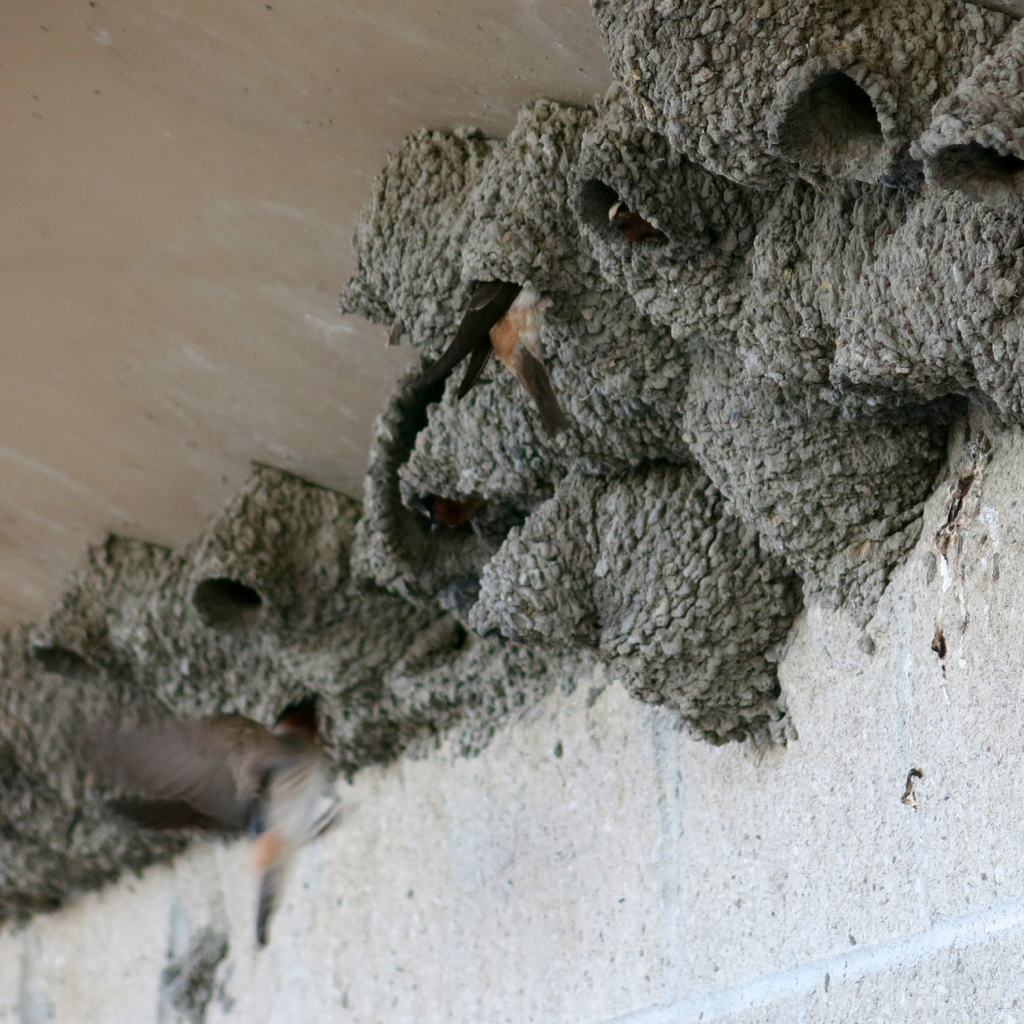
I went out the Baylands Nature Preserve to check on the Cliff Swallow nesting colony. There are now at least thirty completed nests, most of which appeared to be active (that is, I either saw birds flying into or out of them, or I saw a bird poking its head out the entrance). Many of the nests are built right next to other nests, which may cut down on the amount of construction the birds have to do since they can utilize existing walls (thus saving energy).

BlogJun0116a

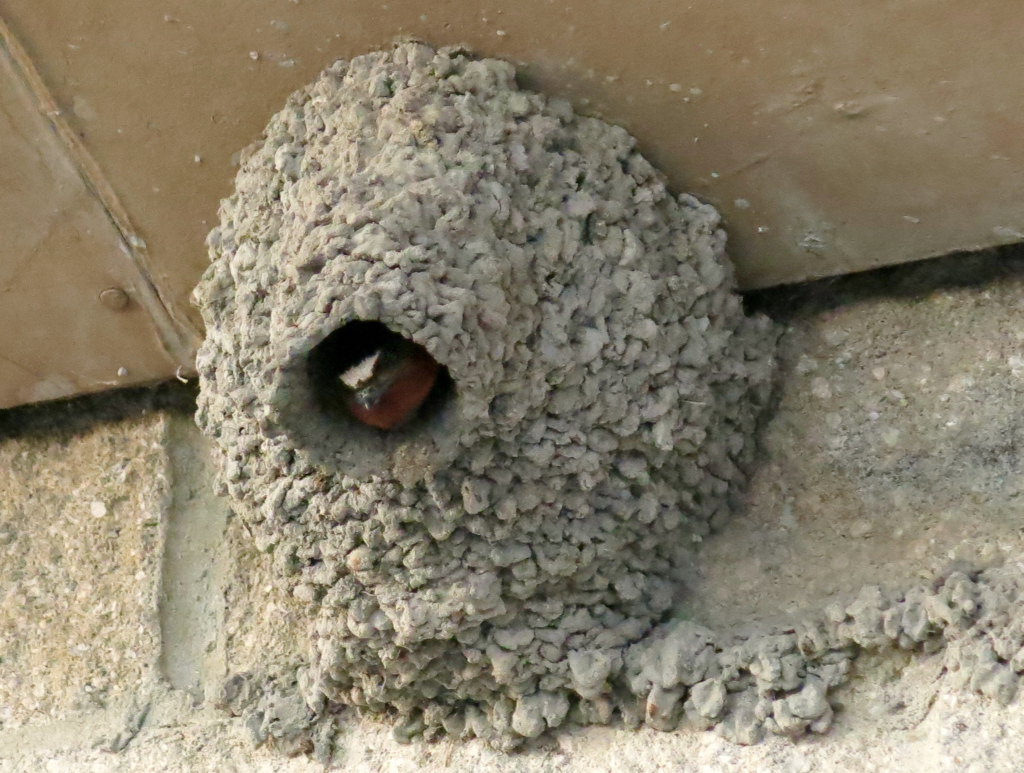
Most of the nests are under a large overhang that faces roughly south, which means they get little or no sun during the day (because the overhand shades them). One nest has been built on a west-facing wall; even though there is plenty of room for more nests nearby, no other birds have built nests there, though it looks like some birds started placing mud there. I can only speculate why no other birds built nests there: too much sun late in the day heats up the nest? the mud dries too quickly in the afternoon sun? there is no fence around that wall as there is along the other wall to keep curious humans at a distance? In any case, the nest on that west-facing wall is active, and a Cliff Swallow poked its head out as I came close.

BlogJun0116

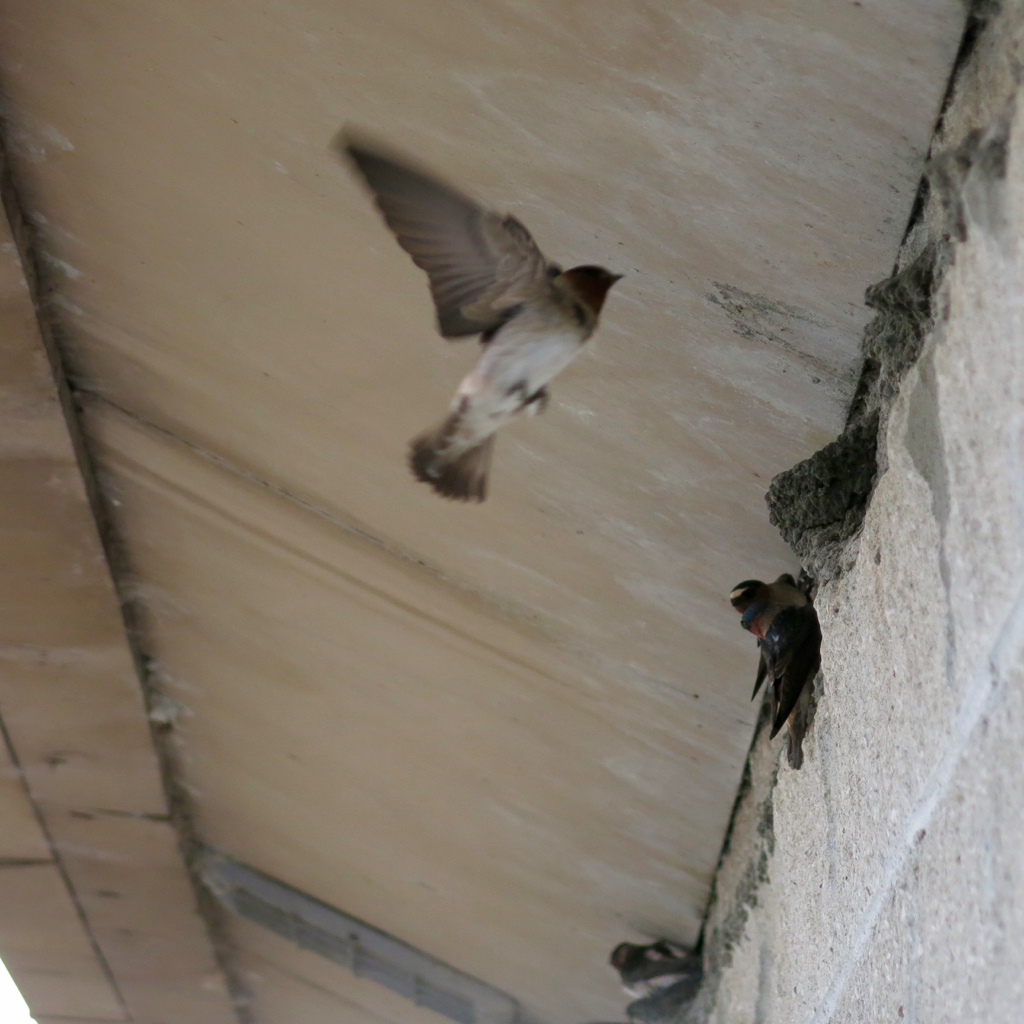
Some swallows are still building nests, which means the nesting season is going to extend for at least another couple weeks. Yet for the past two years (at least) Cliff Swallows have not built nests in this location.

Nest building

On my dinner break this evening, I made a quick visit to Baylands Nature Preserve, where Cliff Swallows are building nests along the wall of the small building that controls the outflow from Casey Forebay into the flood control basin.

BlogMay0316

Yesterday, I watched as swallows flew down to get a bill-full of mud in the forebay, then up to the building where they clung to the wall with their feet while placing the mud on the growing nest. They worked for about twenty minutes then stopped, presumably to let the mud dry: you could see the layer of wet mud sitting on top of the previously dried mud.

This evening the swallows were again picking up mud and placing it on the nests. The nest have not increased all that much in size since yesterday; this appears to be a fairly slow process.

My pick for president

I’m tired of the whining presidential candidates calling each other names. Calling each other names is so 2008. We need a REAL presidential candidate who goes beyond name-calling.

That’s why I’m supporting Cthulhu of the Elder God Party.

Cthulhu2016

Of course the Mainstream Media are not taking the Elder God Party seriously. But if they did, imagine a debate with Clinton, Cruz, Sanders, Trump — and Cthulhu.

The other candidates quake in fear as Cthulhu comes on stage, its face a mass of feelers, the scaly rubbery-looking body looming over the other candidates, the prodigious claws on hind and fore feet, the long narrow wings behind. Cthulhu’s supporters begin to chant, “Ph’nglui mglw’nafh Cthulhu R’lyeh wgah’nagl fhtagn!”

Donald Trump points to the Elder God and says, “I’d like to punch him in the face.” Cthulhu eats him.

Bernie Sanders shakes his finger and says, “We are living in a world where greed has become for the wealthiest people their own religion, and…” Cthulhu interrupts him by eating him.

Now only Cruz and Clinton are left standing. By this point, both are quaking in fear. But Cruz is packing a handgun, and he pulls it out, points it at Cthulhu. “If you are one of the gun grabbers and come after our guns, then what I say is ‘Come and Take it.’” One of the tentacles around Cthulhu’s mouth reaches out, takes the gun from Cruz, then pulls the screaming human into its vast mouth.

Clinton looks at the audience, all of whom are now wailing and moaning in mindless terror, then she looks up at the Elder God and says, “Everyday Americans need a champion, and I want to be that champion.” Cthulhu grasps her in one great foreclaw and eats her. It grabs Megyn Kelly and Anderson Cooper, both screaming uncontrollably, and eats them.

The next day, the polls show Cthlhu with an approval rating of over 87% from both Democrats and Republicans, and the Elder God is leading all the other candidates — though that’s a moot point, since the other major candidates are dead, and Kasich hastily concedes (glad that his poll numbers were so low he wasn’t allowed to participate in the debate). Vladimir Putin and Kim Jong-un try to claim that they can take on Cthulhu, but the Elder God flies over and eats them both. Eventually Cthulhu eats all human beings — thus ending global climate change, and the threat of nuclear armageddon — and sinks back beneath the seas to wait in silence until the stars are right once again.

That’s the kinds of candidate we need to lead America. Vote Elder God Party in 2016.

Pot-in-Pot Preservation Cooling System

This system, developed by Mohamed Bah Abba of Nigeria, cools food by evaporation, using no electricity. The Arabic term for this device is transliterated as “zeer,” so it is sometimes called a “zeer pot.”

How it works: The Pot-in-Pot Preservation Cooling System consists of two nested porous clay pots, with fine sand in between them, and a cloth covering the opening. You pour water into the sand, until it soaks through the outer pot. You also soak the cloth in water. As the water evaporates from the outer pot and the cloth, it cools the inside. The sand and pots act as both water reservoir, and thermal mass (so the pot stays cool when you open the lid). The moist interior is especially good for cooling fresh produce (which is what it was originally designed to do).

How cool it can get (theoretically): The inside temperature of the Pot-in-Pot Preservation Cooling System depends on outside air temperature, humidity, air flow around the pot, and whether the pot stands in the sun. Under ideal conditions, the inside temperature should get close to what meteorologists call “wet-bulb temperature.” Some users report temperatures as low as 40° F. I will track the temperature inside this pot over time.

How I made one:

Materials:
1 – 12″ dia. terracotta pot
1 – 14″ dia. terra cotta pot
6 – small pottery feet
2 – corks to fit the holes in the pots
1 – 12″ dia. pot saucer
1 – old T-shirt
25 lbs. of fine sand
water

Note that dimensions of terracotta pots are variable, so you may have to adjust things to fit what you can get.
BlogApr0916a

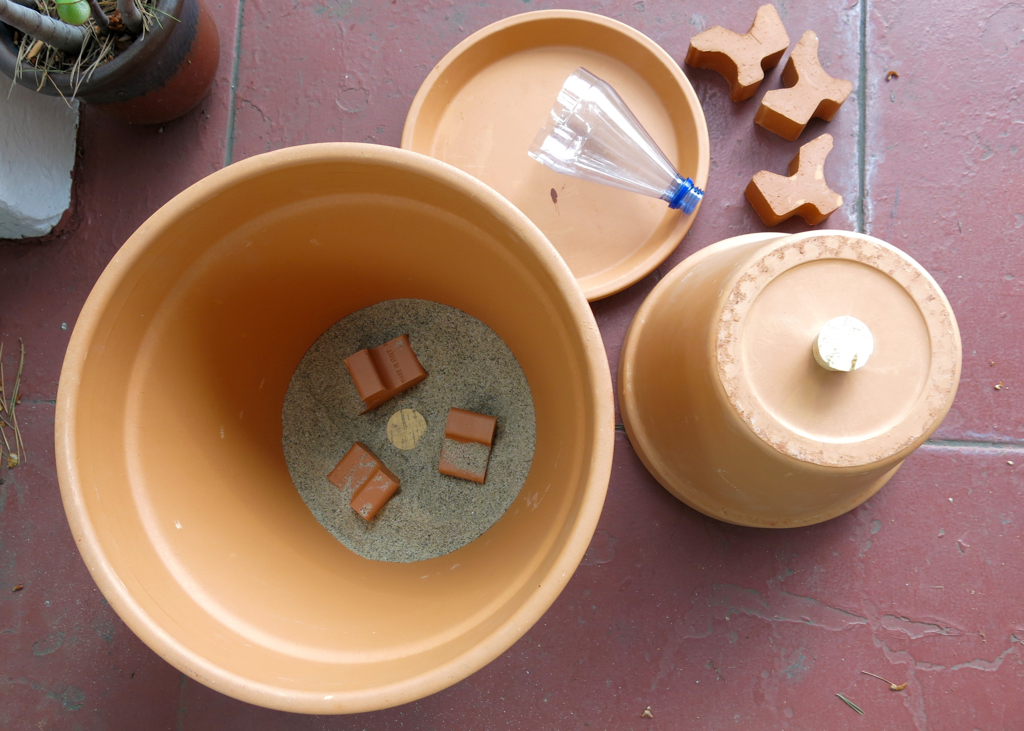
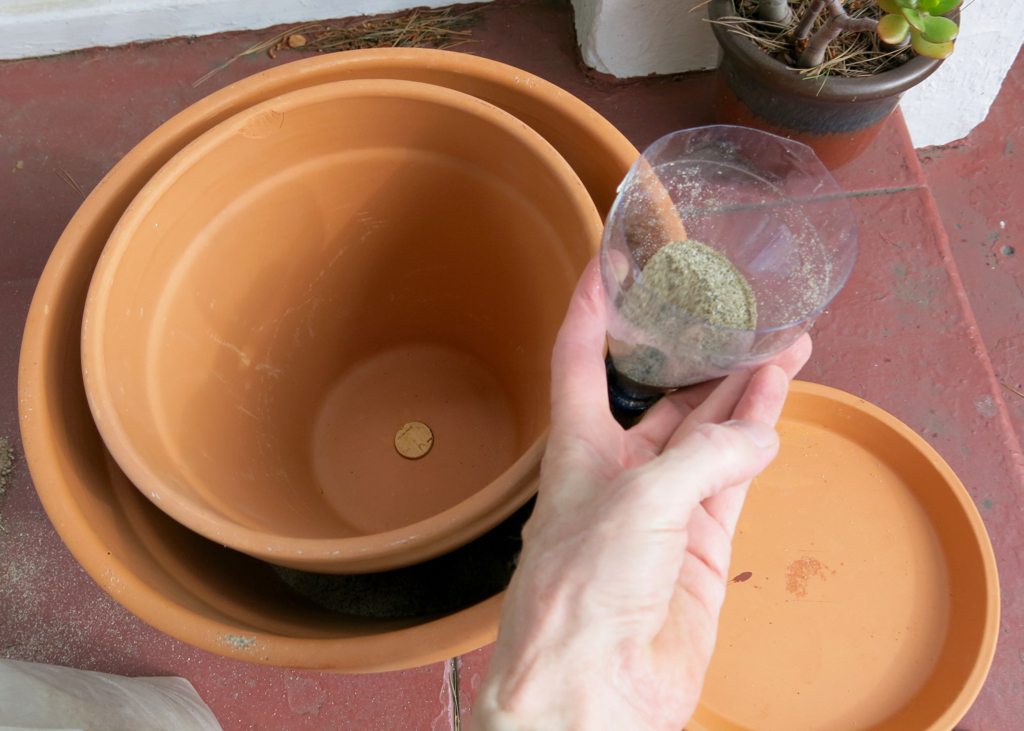
Sand the holes in the pots until the corks fit smoothly inside. Cork the holes. Place 3 of the pottery feet in the bottom of the 14″ pot so that the 12″ pot will fit inside without the corks bumping. Then fill the rest of area with sand, leaving room for the cork in the 12″ pot. Now put the 12″ pot inside, and fill the space between the pots with sand with a funnel — I made a funnel from a cut-off seltzer water bottle — to within an inch of the top of the outer pot.
BlogApr0916b

Place the whole assembly on the three remaining pottery feet, so air can circulate on the bottom, which will increase evaporation and cooling slightly.

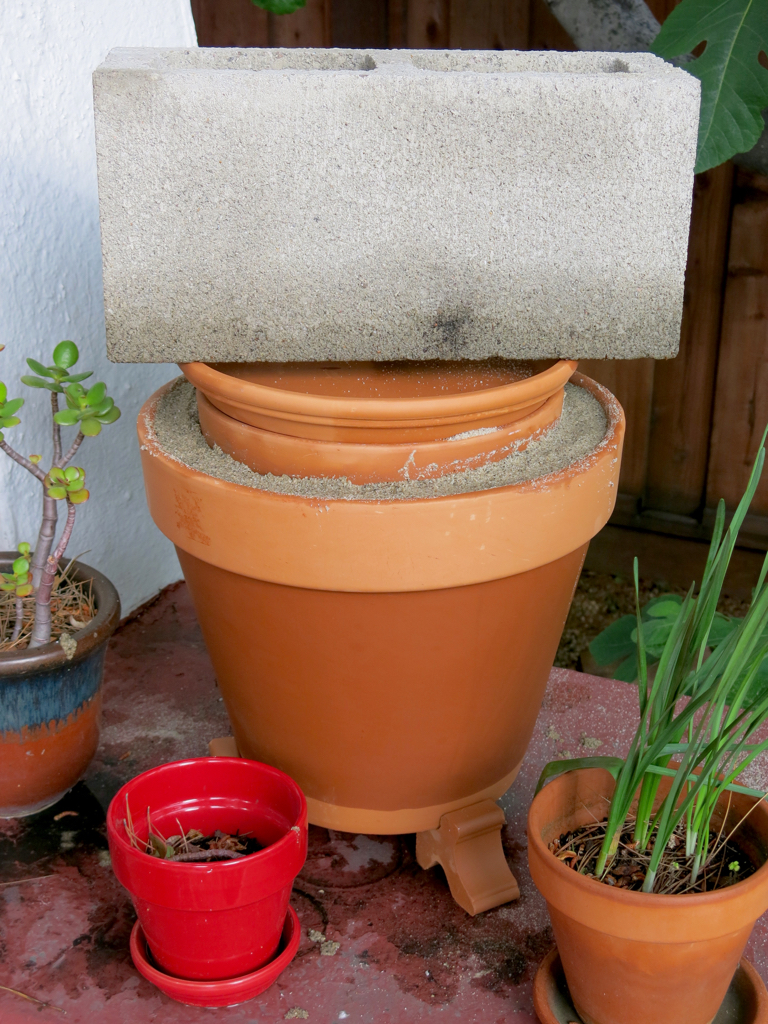
Pour an inch or two of water into the 12″ pot, wetting in the inside of the pot. Next, slowly pour water into the sand, letting it soak in. The idea is to give the water time to soak into the sand and the terracotta pots. It can take several hours and up to a gallon of water to fully charge it. I found if I rushed this step, the inner pot started floating up; then I had to weight the inner pot with a cinder block to keep it in place until the water soaked in. Some people suggest tying the inner pot down with a strap or rope; others use threaded rod with nuts and washers (expensive and sure to rust). I had a cinder block on hand, and that worked fine.
BlogApr0916c

The pot saucer isn’t entirely necessary, but it helps keep the inside clean, and where we live it helps keep the squirrels out of the food (the cinder block might even keep raccoons out). Pour some water into the saucer, soak the old T-shirt, and cover the pots with the T-shirt, adding even more evaporative surface. It gets pretty windy where we are, so I tied the T-shirt in place.

Total cost: about $55 (if you have to buy sand), with no cost to run it ever. Mohamed Bah Abba sells them for 40¢ ea. in Nigeria, a brilliant example of low-cost yet highly effective technology from the developing world.

More about this invention here.
In the clouds

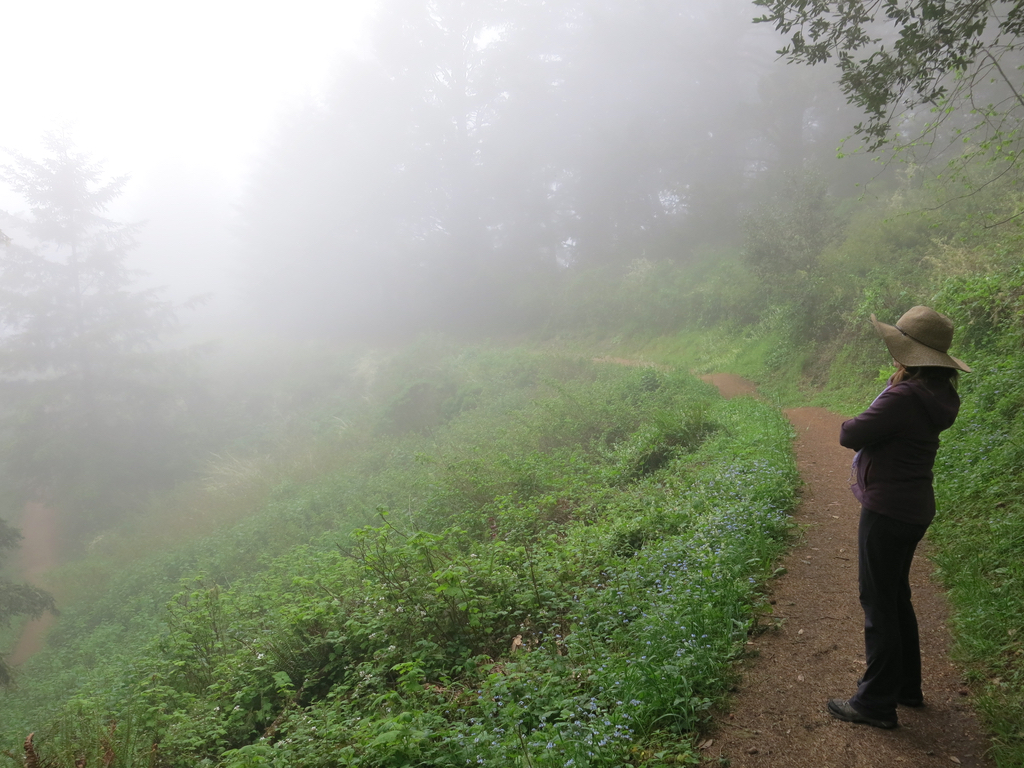
We decided to go for a hike up in the redwoods late this afternoon. As we drove up into the hills, we got closer and closer to the clouds, until finally we were in them. The trail started close to two thousand feet above sea level, then wound down the coast side of the hills. The clouds were blowing in from the ocean against the hills, so we were in the clouds all the way down to where we turned around, at about twelve hundred feet elevation. In fact, the clouds (or was if fog?) got thicker the lower we got.

IMG_5124

It continues to amaze me that we can start driving from downtown San Mateo, in the city a mile from the bay at maybe twenty feet about sea level, and in twenty minutes we can be hiking in the mountains among Douglass fir and redwoods two thousand feet above sea level. This is one of the benefits of living in a seismically active region: mountains right next to the ocean.

Experiment in hugelkultur

Carol has decided to experiment with hugelkultur in the garden this year. A hugelkultur garden bed consists of decaying wood and other compostable material from plants. This technique is supposed to create more fertility in the soil, and improve water retention. Given the ongoing drought here in northern California, improved water retention alone makes this technique worth trying.

Rather than build up a mound of decaying material, as is typical with hugelkultur, Carol got me to make a raised garden bed; with the tiny amount of space we have for our garden, this seemed to make the most sense. We got some cheap boards from a lumberyard, I scrounged some scrap wood for the corners, and in about an hour we put together a bed 96 inches long and 25 inches wide. Then we put in some partially finished compost, along with twigs and small branches.

hugelkultur raised garden bed

In the photo above, we’ve put down a layer of partially finished compost; the two buckets behind the raised garden bed are more compost waiting to go in. Carol has started laying some twigs and branches on the compost. After this, she put down another layer of compost, and then added a layer of potting soil we purchased from the hardware store across the street.

Carol is also planning to set up a greywater system (she is something of an expert on the topic). We already collect greywater — we have to run about two and a half gallons of water before the water in the shower gets hot, so we collect this and use it for watering the garden. Given how bad the drought is, that wasn’t enough water, so she is looking at other easily accessible sources of greywater that we can use without annoying our very nice landlord.

If you look closely at the photo, you’ll see potatoes growing in the raised bed behind the new bed. Today they started wilting a little. The National Weather Service predicts “dry weather and above average temperatures are likely to persist into the first half of next week”; we’re going to have to start watering the garden now, right in the middle of the winter-wet season. This is global climate weirdness happening in front of our eyes; maybe hugelkultur is one small way to help restore some balance to an out-of-balance world.

another view of hugelkultur bed

Above: The bed with more twigs and branches, and more bins of partially finished compost ready to go on top (photo credit: Carol Steinfeld).