Small “u” universalists are everywhere

Today I attended the annual Macedonia Church Singing, a group of people who have been singing shape note hymns on Sand Mountain in Alabama for generations. This is one of the few parts of the country where churches sing in four part a capella harmony from the The Sacred Harp, a four-shape note hymnal, in regular Sunday services. Thus, liturgically speaking it is one of the more conservative parts of the United States; they still conserve some of the old ways of conducting Sunday services that date back a hundred and fifty years or more.

At lunch I sat down across from a fellow who was also singing in the bass section, and when he found out that I was a Unitarian Universalist he grinned and said, “I’m a Christian universalist.” We spent the rest of the lunch hour talking about James Relly — when he found out I hadn’t actually read Relly, he said I simply had to do so — and about Rob Bell, and the Primitive Baptist Universalists, and Hosea Ballou. He probably knew more about universalism than I did, although I was able to tell him one thing that he didn’t know: that Abraham Maxim, one of the composers in The Sacred Harp, had been a Universalist.

It turns out that he belongs to a Methodist church, where he is a Bible study leader. When he became convinced of the truth of universalism, he offered to step down as a study leader, but his church thought it would be fine if he stayed on. I asked about his pastor, and he said that his pastor seemed to have universalist leanings, though of course he didn’t come right out and say so, he just never preached about hell.

You just never know when you’re going to run into another universalist.

Memphis: Civil Rights Museum

Carol and I went over to the Civil Rights Museum this afternoon. The museum has been constructed on the site of the Lorraine Motel, where Rev. Dr. Martin Luther King, Jr., was shot and killed on 4 April 1968. The exhibits are well-done and exhaustive, and very heavy on text — it took me two hours to read through the exhibit material, skipping over about half of the reproduction documents and explanatory text, and I only got halfway through the museum. You read about the big events — the sit-ins, the Freedom Riders, the Highland Folk School, and so on — but you also get to read about some of the smaller cities where things happened, and the one-person sit-ins that took place. For me, though, the most powerful moment in the museum was towards the end of the documentary film that served as an introduction to the museum, when Rev. Billy Kyles tells the filmmaker that King got shot because he was beginning to talk about economic inequality; in Kyles’s opinion, when King spoke out about economic inequality, that was more dangerous than speaking out about racial injustice. Given the increasing economic inequality in the United States today, that really struck home for me.

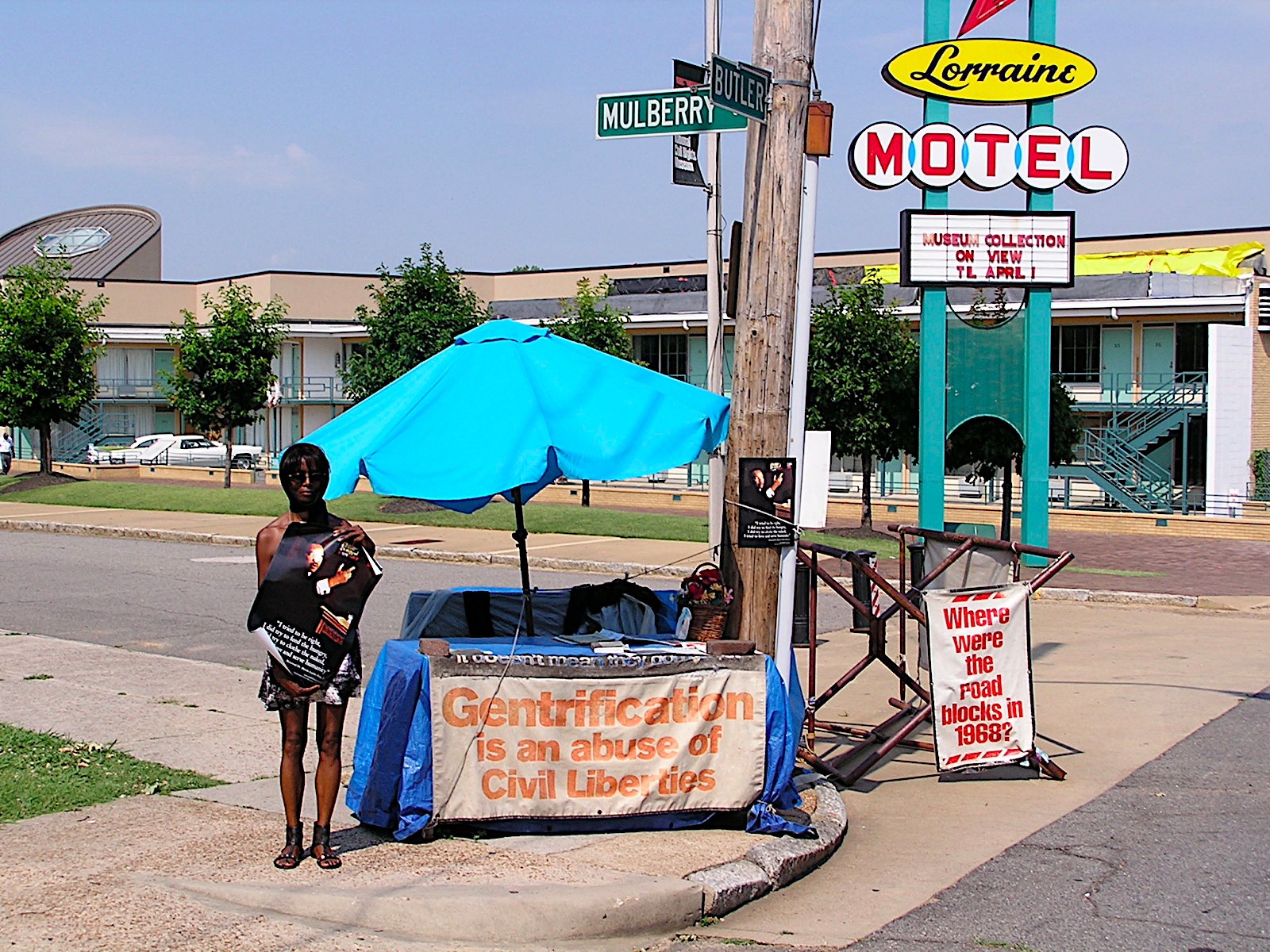
We headed out of the dark air-conditioned museum into the heat of a bright, sunny Memphis afternoon. Carol wandered over to where a woman sat behind a booth under an umbrella. On the front of the booth was a sign that read “Gentrification is an abuse of Civil Liberties.” We got to talking with the woman, whose name was Jacqueline Smith. She was the last person to live in the Lorraine Motel — apparently it housed quite a few permanent residents in the 1980s. The state of Tennessee forcibly evicted her in January, 1988, so they could take over the Lorraine Motel and turn it into the Civil Rights Museum. She said she believes that a more fitting monument to King would have been to turn the Lorraine Motel into housing for the poor, or some other project that furthered King’s ideals. She also pointed out how the neighborhood was being gentrified. “There’s an American Apparel store now, over in the next block,” she said scornfully. “Where are the poor people supposed to live?” She has a point. Chain stores like American Apparel usually mean the death of small locally owned businesses. In an article in today’s New York Times business section titled “A Slowdown for Small Businesses,” reported Catherine Rampell points out that small businesses are not doing well these days:

While big companies are buoyed by record profits, many small businesses, which employ half the country’s private sector workers, are still struggling to break even. And if the nation’s small businesses plan to further delay hiring — or, worse, return to laying off workers, as they now hint they might — there is little hope that the nation’s 14 million idle workers will find gainful employment soon. [p. B1]

Jacqueline Smith pointed out that the Civil Rights Museum was sponsored by many large businesses. I had already noticed that — half of one memorial mounted below Room 306 in the Lorraine Motel, the room where King had been staying before he had been shot, was devoted to extolling the virtues of its big corporate sponsor. That struck me as crass commercialism, at best; or disrespectful, at worst; take your pick.

Carol asked if we could take Jacqueline Smith’s photo and post it here, and she said we could. Ms. Smith also gave us a poster showing Dr. King, with the words “I tried to be right, I did try to feed the hungry, I did try to clothe the naked, I tried to love and serve humanity,” and in the photo below she is holding this poster. You can see the balcony where King was shot just above her in the photo.
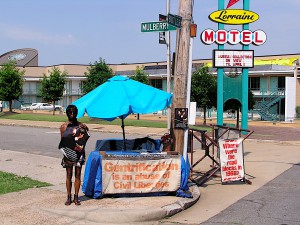
Photo by Carol Steinfeld.

Ms. Smith has her own Web site where she promotes her point of view. She says in part: “Sadly, [the Civil Rights Museum] fails to live up to [its] ideals. The truth is that the museum has become a Disney-style tourist attraction, which seems preoccupied with gaining financial success, rather than focussing on the real issues.” And this raises the very interesting question for me: has Martin Luther King’s legacy become too sanitized?

Memphis

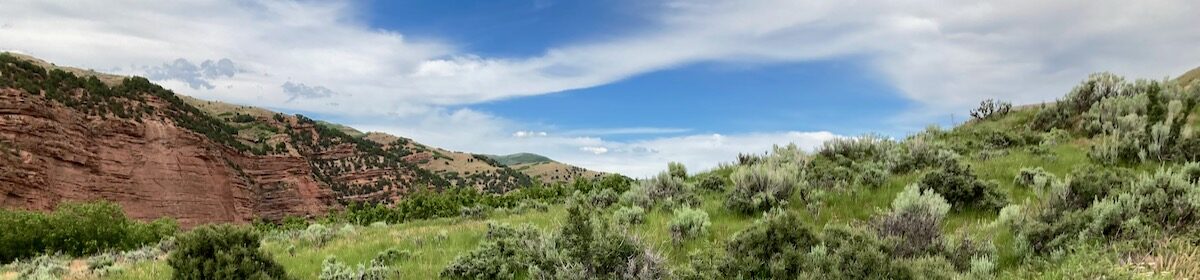
We arrived in Memphis in the middle of the afternoon. We are here to act like tourists. The Center for Southern Folklore was closed, so we walked along the bank of the Mississippi River, and saw the cobblestone landing where river boats have been landing for the past 150 years. Carol found W. C. Handy’s small little shotgun house — W. C. Handy! I couldn’t believe it! — and she took a picture of me sitting stiffly on the front porch. We ate dinner at B.B. King’s Restaurant, hoping to hear Blind Mississippi Morris, but he was feeling under the weather and when two young men started playing Eric Clapton, we left. We took photographs of the Purple Martin houses on Memphis rooftops, and I watched the the Common Nighthawks swooping overhead calling, “peent, peent.” We talked to a guitarist in Central Station, the old railroad station still used by Amtrak; he was waiting for the City of New Orleans, and playing his guitar in that huge cavernous space while he waited. And after the sun went down, we walked down Beale Street at night, listened to the blues pouring out of the windows of the clubs, and watched the people walking up and down the street.

It was a satisfyingly touristy day.

Egregious conduct by politicians

Sometimes you just can’t believe the egregious behavior of certain politicians. No, I’m not talking about Anthony Whiner, er, Weener — and I’m not talking about former California governor the Gropinator’s 13 year old love child. I’m talking about the egregious hypocrisy of Gov. Rick Perry of Texas.

Perry, you may recall, presents himself as religious man. He’s the kind of guy who attends prayer breakfasts where he puts his religious faith on display; he has even opened a national prayer breakfast for governors of U.S. states. But while eating breakfast in our Texas motel this morning, I opened today’s edition of the Amarillo Globe-News and read that Perry gives financial support to his church at a rate lower than even than most Unitarian Universalists (who are the worst contributors to their congregations of any U.S. denomination aside from Catholics). Here’s an excerpt from the AP story:

“The San Antonio Express-News reports the Perry family’s income tax return shows Perry gave $90 to his church in 2007, a year in which he reported an income of more than $1 million….”

Hmmm. If I were his pastor, I think I’d be giving Rick Perry a friendly little phone call right now. However, to be fair, Perry’s giving record was not that bad every year he’s been governor:

“The records from 2000, when Perry became governor, through 2009 show he earned $2.68 million and gave $14,243 to churches and religious organizations, about a half percent.”

In other words, over a ten year period, Perry earned an average of $268,000 a year, and gave an average of $1,424 per year to his church. By comparison, last year I earned about $60,000 and gave about $3000 (or 5%) to my church.

This leads to Harper’s Rule: Politicians may not use Biblical references, nor refer to their “Christian faith,” unless they contribute at least 5% for their income to their church. If a politician breaks this rule, you should shout “Matthew 6:5!” at him or her.

Gallup to Amarillo

We left Gallup in the morning, and not too far eastward everything began to look hazy. Then it was more than hazy: everything began to look foggy. We noticed that some drivers coming the other direction had their headlights on. Then I began to smell smoke very faintly. “This must be the smoke from the wildfires in Arizona,” I said to Carol.

When we got to the BLM ranger station at El Malpais National Conservation Area, there was a note under the day’s weather forecast about the smoke from the wildfires. From the trail behind the ranger station, we could see how a range of mountains to the north of us was mostly obscured by the smoke:

We stopped for a late lunch in Albuquerque. I couldn’t remember the name of the restaurant Dad had recommended, so we went to Old Town. Although it was very tourist-y, we agreed that we were tourists, so it seemed just about right. The owner of Bebe’s Cafe chatted with us while she made our sandwiches. Carol asked how she was doing in this economy, and she said that she was doing well enough. “I think places like this are doing well,” she said. “It’d comforting to go out for a meal, but people will pass by the more expensive restaurant to come here.” She asked if we had seen smoked from the wildfires, and we said that we had.

East of Albuquerque, the land gradually flattened out. The mesas got smaller, the dry washes weren’t as deep, until at last the land was pretty much flat and we were in the Great Plains:

And all along the highway we saw signs warning of extreme wildfire danger.