More on Multimedia Era curriculum kits

I’ve been trying to figure out why I’ve grown so interested in the multimedia curriculum kits produced by the Unitarian Universalist Association from 1964 to about 1990. I was first attracted by the integration of texts, audio recordings, and visual materials. But I realized I am also attracted by the existential educational philosophy. And I am attracted by the experimental nature of many of the curriculum kits.

First, some historical background: Continue reading “More on Multimedia Era curriculum kits”

“Multimedia” curriculum

I’m on study leave, in the archives of Meadville/Lombard Theological School, looking at curriculum kits published by the Unitarian Universalist Association under the editorship of Hugo “Holly” Holleroth, during the so-called “Multimedia Era” (c. 1968-1987).

Multimedia Era curriculum kits were packaged in attractive cardboard boxes, which contained the expected leader’s guides, but also included other materials such as audio recordings (long-playing records in the earlier units, cassette tapes in the later units), visual resources (including film strips and photographic slides in earlier kits, videos tapes in one 1989 kit, posters, etc.), written or text resources (including story books, resource books, etc.), and other materials (games, pamphlets, etc.). The earliest Multimedia Era curriculum kit dates from about 1968, and kits were still being published in the late 1980s.

I’m interested in curriculum kits from the the Multimedia Era for three main reasons:
(1) They incorporated audio, visual, textual, and interactive components — not unlike today’s Web-based curriculum
(2) They were developed in a time of rapid social change, and time that questioned organized religion — not unlike the rapid social changes we face today
(3) Many of the kits were founded on an educational philosophy quite different from the usual essentialist or progressive educational philosophies of so much UU curriculum development Continue reading ““Multimedia” curriculum”

Stupid joke

Hannah and I were standing on the patio greeting people as they arrived. Usually, there’s an audio recording of the bell that is played when it’s time to go into the Main Hall for the service. But the bell recording wasn’t working today, so Chaz had to come out and tell people it was time for the service. A couple of us more childish types started imitating bells by saying, “Dong! Dong! Dong!”

Which reminded me of a stupid joke, which I immediately had to tell. “Hannah,” I said, “What’s brown and sounds like a bell?”

She thought for a moment. “I don’t know,” she said.

“Dung!” I said.

She laughed. But I was kind and refrained from telling her another bell joke: What’s pinches and sounds like a bell? Tongs!

The Saturday Bag

Mom got tired of her two children leaving their toys and belongings all over the house, and so she came up with the idea of the Saturday Bag. Mom explained how the Saturday Bag was going to work: If Jean or I left something around the house, she would pick it up and put it in a brown paper bag high up on the top shelf of the closet in the kitchen, where we could not reach it. On Saturday morning, she would bring down the Saturday Bag from its high shelf, open it up, and Jean and I could get back anything of ours that was in it.

Jean and I asked questions about how this was going to work. Would we really have to wait until Saturday morning to retrieve our belongings? Yes, said Mom calmly, we would. But what if we forgot, and left something in the kitchen? Mom said, then it will go into the Saturday Bag. And we won’t be able to get it until the next Saturday? That’s right, said Mom. What if we leave something out that’s too big to go inside the Saturday Bag? Then, said Mom, it will just go up on the top shelf next to the Saturday Bag.

This Saturday Bag idea worried me. I pretty much knew that sometime during the week I would forget and leave a favorite toy where it didn’t belong, and Mom would put it in the Saturday Bag. And of course I did leave things out, and they promptly went into the Saturday Bag. I have a vague memory of saying, Mom, I can’t find something-or-other — and Mom telling me that it was in the Saturday Bag. I have a distinct memory of looking up at the high closet shelf where the Saturday Bag was, knowing that some of my things were up there, in the Saturday Bag, where I couldn’t get them back until Saturday.

I was only about five years old, and so it seemed like it took forever for Saturday to arrive. It was a bright sunny morning. After breakfast, Mom reached up and took down the Saturday Bag. At last I had my toys back! But I knew, I just knew that it would all happen again in the coming week: once again I would forget and leave something out, and Mom would pick it up, and put it in the Saturday Bag.

I don’t think Mom kept the Saturday Bag idea going on for very long. Or maybe it went on for years, but I don’t remember it after the first few months because I got good at putting my toys and belongings away. Kindergarteners can be trained to put things away, and my mother had been a kindergarten teacher for a decade before she got married; if anyone could train a five year old boy and a seven year old girl, it was my mother.

What I did on my vacation, pt. 2

Ms. M and Mr. O, old friends of ours, are adopting two girls. I’m supposed to make two shelf units for them by this weekend. So far, one is completed and ready for finishing. Here’s the completed unit (the fish-eye lens makes it look out of square, but it’s not):

DIY shelves

I’m supposed to have both shelf units completed by this weekend. I don’t think I’m going to make the deadline. The sad truth is that it’s been something like eighteen or nineteen years since I worked for the cabinetmaker, and I’ve gotten out of shape — I can’t put in an eight hour day in the shop any more.

(The details: 28 x 33 inches, 9-1/4 inches deep. Adjustable middle shelf. Solid pine construction throughout.)

California drought

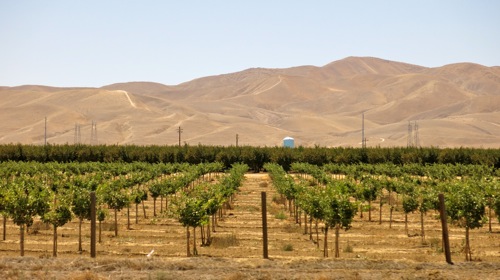
Good photos of the ongoing Clifornia drought, and summary of long-range forecast possibilities, in a January 25 post at the California Weather Blog.

Here in San Mateo County, our drought level is classified as “extreme,” second highest of the five possible drought levels. The hills of the Coastal Range should be bright green right now, but instead they are dull gray-brown; needless to say, the fire danger is high. We haven’t had any significant rain in over a month, so the air is filled with fine particulate matter. And with a declared state-wide drought emergency, we’re all expecting mandatory water restrictions in the next few months.

On the plus side, we’ve had abnormally sunny and warm weather, with temperatures often in the seventies. while we need bad weather, at least we can enjoy the good weather while we’ve got it.

The green flash

We all knew my mother’s illness had gotten to the point where she had only a couple more years to live. So I decided to go on a ten day hiking trip.

I really wanted to take an entire month and hike the Long Trail in Vermont. I had left one job in June and was about to start another job in August, which meant I had a month to spare. But what if my mother should get suddenly worse while I was on the trail? This was before cell phones, and you couldn’t count on a pager receiving a message in the Green Mountains of Vermont. Finally Carol told me what I already knew: I could not take a whole month to go hiking. I settled on ten days hiking the Long Trail in the Green Mountains of Vermont.

Carol drove me up U.S. 4 to where it intersected the Long Trail, and I started hiking south. It had taken a good three hours for Carol to drive me from our group house to the trailhead, so I only got a half day’s hiking in. I stopped about an hour before sunset to spend the night at Pico Camp, a bunkhouse near Pico Peak. One more hiker showed up to spend the night, a fellow a few years younger than I; he was headed north, through-hiking the Appalachian Trail.

The other hiker suggested we climb up the lookout tower on Pico Peak to watch the sunset. We hiked the steep little half mile trail to the summit of the mountain, and climbed up the old fire tower.

Aviators talk about unlimited visibility. That’s what we had. We could see the Taconic Range in New York straight ahead, the White Mountains in New Hampshire fading into dusk behind us, and the broad ridge of the Green Mountains heading south towards Massachusetts on one side of us, and north towards Quebec on the other side. We didn’t say much, but just looked and looked, amazed at the view.

The sun began to set behind the distant mountains of New York. We watched it touch the horizon and slowly disappear. Just as it disappeared, there was a flash of green light.

“Did you see that?” we said to each other. We had just seen the legendary green flash. It’s a rare sight at sea, and rarer still on land. Just by chance, the two of us had happened to wind up at Pico Camp on a day with unlimited visibility; we just happened to have time to climb the old fire tower right at sunset. We looked at each other, and back at the waning light from the sun.

“I’ve been hiking since February, and this is the best view I’ve gotten, and you get it on your first night out,” said the other fellow, without rancor.

We stayed up in the fire tower another fifteen minutes. But it was getting cold and dark and late, and we both had a long day of hiking ahead of us the next day. We climbed down the rickety steps of the tower, hiked down the spur trail to Pico Camp, and went to bed. The other hiker headed north to Mt. Katahdin in Maine, and I headed south to Mt. Greylock in Massachusetts. Of course I never saw that other hiker again; I’m told that the rickety old fire tower is gone from Pico Peak; and I’ve never seen the green flash again.

Sunny and seventy

I’m getting ready for the Christmas Eve candlelight services at the Unitarian Universalist Church of Palo Alto. It’s over seventy degrees and sunny, and while the sun was hitting my office window it got warm enough that I had to have the door open to cool off. At this point, some of you who live in places where it is now cold and dark and maybe snowy might be saying to yourselves, “Warm and sunny? That doesn’t feel like Christmas Eve!”

Ten years ago, I spent a year working part-time as the religious educator for Church of the Larger Fellowship, an online congregation that serves religious liberals around the world, including in the tropics and in the Southern Hemisphere. On my first week on the job, the senior minister and the administrator both warned me to remember that given our congregation it was a mistake to draw parallels between Easter and springtime, and between Christmas and the winter solstice. If I did so, I was further warned, I would be sure to get complaints from our members in places like Australia and New Zealand and equatorial Africa. That’s how I learned to be able to separate Christmas from the seasons.

Now that I’m in the Bay Area, however, I’m living in a so-called Mediterranean climate, a climate that is similar to the climate of Bethlehem and Nazareth (though we are farther north so we have much longer nights at this time of year). Our seasons correspond reasonably well with the seasons of ancient Judea. We’ve had a very dry year, so this year at Christmas because it’s sunny and warm we’re praying for the winter rains to hit — like the people of the Ancient Near East, we’re less concerned with snow and crackling fires and short nights, and we’re far more concerned with where our water is going to come from.

So this year here’s what I’m humming to myself:

   I’m dreaming of a wet Christmas,
   Just like the ones in El Nino years,
   When the treetops glisten
   And children listen
   To hear raindrops falling near….