The meaning of justice

From the novel Second Sister by Chan Ho-Kei, a native Hong Konger. The novel is set in Hong Kong in the year 2014, and follows the adventures of Au Nga-Yee as she tries to find out why her sister Siu-Man committed suicide by jumping from the window of their apartment. Without spoiling things for you, I can safely tell you that the plot involves social media, the Dark Web, and the tech industry. Nga-Ye has to hire N, a hacker and a most unusual detective, to figure out what really happened to Siu-Man.

Late in the book, N, the detective, reflect on his motivations for continuing to work as a detective:

“The word he hated most in the world was ‘justice.’ Which wasn’t to say he didn’t know the difference between good and evil — but he understood that rather than simplistic morality, most conflict in the world arose from differences of opinion, with both sides raising the flag of justice and claiming to be on the side of reason. This allowed them to justify the most underhanded means as ‘a necessary evil’ to defeat the other side — the law of the jungle, essentially. N had a deep understanding of this. He had money, status, power, and talent, so he could do pretty much whatever he wanted and other people would see him as an avatar of ‘justice’ — but he knew that keeping others down in the name of justice is another form of bullying.” (Chan Ho-Kei, trans. Jeremy Tiang, Second Sister [2017; trans. Grove Atlantic, 2020])

While this passage merely represents one character in a murder mystery talking to himself, there is some truth in what this character says. It is all too easy to misuse the word “justice.”

An interesting anecdote

I’m still slowly making my way through is Fear of Black Consciousness, by Lewis Gordon. I’ll read a few pages, which will get me thinking hard about something, I’ll go follow those thoughts for a while, until eventually I come back to Lewis Gordon’s book. The latest bit that’s sending me off on a tangent is this interesting anecdote:

“During … [a] conference … in South Africa in the late 1990s, the hosts took the presenters to a wildlife preserve. I hate even the idea of a safari, but I went along in the spirit of being a good guest. As the game warden and the resident veterinarian were explaining safety measures at the facility, I glimpsed one of the guests, a white Frenchman in his thirties, straying away from the group. Curious about what he was up to, I watched as he made his way over to a fence, behind which rested a lioness. Seeing him coming close, the lioness rose on all fours. The Frenchman looked at her for about a minute and then slowly extended his hand to pet her. The lioness licked her lips.

“‘Stop!‘ yelled the game warden.

‘The Frenchman paused, his hand near the fence. ‘Why?’

“‘Because she’ll eat you!’

“There is something many people of color, especially those of us from the Global South, know about white people as a group but rarely discuss with them. Although many white people despise nonwhite peoles, especially blacks, they love animals. The love is to the point of many if not most whites seeming no longer capable of imagining animals as wild.” [pp. 40-41]

I have noticed this tendency among some of my white friends, a tendency I don’t quite share. I remember walking into a city park with a white friend, when we passed an eagle sitting, quite fearlessly, fairly close to a boardwalk over a constructed wetlands. We both looked at the eagle for half a minute. Then I continued walking, but my friend decided to stay and commune with the eagle for the net half hour. I didn’t share their impulse, but I could understand it.

Contrast that with another young white friend, who was majoring in biology and managed to get a summer job working with a field biologist banding birds. After that summer, she no longer thought birds were cute, nor did she particularly like them, although she did respect them. Or another young white friend who was in 4-H. After milking goats, and cleaning up their shit, and watching them give birth, and taking care of their illnesses, and sending them off to be slaughtered for food — she did not see goats, or any other animals, as cute and cuddly. Then, too, when I was working lower middle class jobs, I had a number of white friends who were hunters or trappers. They lacked any sentimentality about killing animals; in fact, for some of the older ones, hunting and trapping had been how they got through the Great Depression. So there are white people who, because of their experiences, lack sentimentality when it comes to animals. However, it’s worth noting that these white people tend to see animals in utilitarian terms, or as resources to be conserved or exploited.

Lewis Gordon points out: “Pleonexia — wanting everything — requires the absence of limits. White pleonexia transforms land, living things, including other human beings, and even thoughts, into property; the covetous mentality is applied to the skies, to outer space, and even to time…. This desire expands to the expectation, if not presumption, of invulnerability and absolute entitlement….” [p. 40]

[A side note: what I mean by “animals” in this post, and what I think Lewis Gordon means, are the charismatic mega-fauna and mesa-fauna, primarily in phylum Chordata, classes Mammalia, Reptilia, and Aves — we’re mostly not talking about poriferans, molluscs, arthropods, annelids, etc.]

Noted with a brief comment

Josiah Royce, in his 1913 book The Problem of Christianity (pp. 213-214, 2001 reprint edition):

“No religion can survive unless it keeps in touch with men’s [sic] conscious needs. In the future men’s needs will be subject to vastly complex and rapidly changing social motives. In the future, religion, as a power aiming to win and keep a place in men’s hearts, can no longer permanently count on the institutional forces which have in the past been amongst its strongest supports. Its own institutions will tend, with the whole course of civilization [i.e., Western culture], to come increasingly under the sway of the law of accelerated change. The non-religious institutions of the future, the kingdoms and democracies of this world, the social structures which will be used for the purposes of production, of distribution, and of political life, will certainly exemplify the law of accelerated changes. And these social structures will not be under the control of religious institutions.”

There are one or two problems with Royce’s argument here. His use of “civilization” really means those parts of the world dominated both by Christianity and by persons of European descent. So there are some colonialist assumptions baked into his argument. His use of “men” to represent all human beings reveals his assumption that male human beings are the most important ones. When he talks about “Christianity,” he assumes a monolithic Christianity of which the largest English-language Protestant denominations in the United States in his day serve as the paradigm.

Nevertheless, he got two important things right. Religion is now very much under the sway of the law of accelerated change. And religion that doesn’t meet the conscious needs of people doesn’t survive.

Reading list: Red Flags

Red Flags, a novel by Juris Jurevics, was originally published in 2011, and reissued as a paperback in 2021 by Soho Crime. Soho Crime typically publishes mysteries, but this isn’t exactly a mystery. Maybe it’s a thriller, thought it’s not one of those thrillers that raises your blood pressure and keeps it high.

I’d say Red Flags is maybe a war novel. It’s set in Vietnam circa 1967 or 1968. Two noncommissioned officers in the U.S. Army Criminal Investigation Division are ordered to find who’s behind a large opium growing operation that’s netting huge amounts of money for the North Vietnamese. The two non-coms are sent to Cheo Reo, a backwater town in the Central Highlands of Vietnam that served as a provincial capital. Eventually they find out who’s in charge of the drug operation, and of course it turns out to be someone that was right in front of them the whole time.

Considered as a mystery, or even as a thriller, the plot is a bit thin. But really the genre elements are just there to support a portrait of what it was like to be in Vietnam in the Central Highlands. Jurevics actually served in Cheo Reo for more than a year, in 1967-1968:

“Juris Jurjevics deployed to Vietnam and was assigned to C Company, 43rd Battalion in the 1st Signal Brigade at Kontum, but spent very little time there before being assigned to a remote outpost in Cheo Reo, in what was formerly Phu Bon province, in the Central Highlands. Shocked by the austere defenses of his camp, he found the corruption staggering. Supplies intended for the troops or for Montagnard auxiliaries rarely reached their destination, or arrived in significantly reduced quantities. He noticed that everything in Vietnam was for sale, and extortion through tribute was widespread. While in Vietnam, he felt a bond with the Montagnards, but noticed the South Vietnamese disdain for the mountain people.” (from the introduction to an oral history video, West Point Center for Oral History)

Or maybe this is more of a history book thinly disguised behind an entertaining veneer of genre fiction. The level of detail in this 390 page book is almost overwhelming. You learn about the diseases, the parasites, the wildlife, and the beauty of the Central Highlands. You get portraits of people that are probably based in large part on real people (presumably suitably disguised to prevent lawsuits). You get a stunningly detailed look at corruption caused by the Vietnam War.

I would also say this book is a meditation on morals and ethics. There is no ultimate Goodness in this fictional/historical world. Even the essentially good characters have compromised morals. On the other hand, there is plenty of evil, but the evil grows out of the overall situation and can never be fully attributed to individuals.

The United States pulled out of the Vietnam War when I was fourteen years old. I spent my childhood listening to nightly body counts on the evening television news. I spent my teen years listening to adults argue about what happened in Vietnam, why we pulled out, whether it was a war we lost or a war we threw away. By the time I was a young adult, most everyone stopped talking about the Vietnam War. Every once in a while a Vietnam vet would talk a little bit about what they had seen. So Vietnam was a huge real-life mystery story for me. What had happened? People my age had to piece together clues. I’ve looked at any number of histories of the Vietnam War, but most of the histories turn out to be dry recounting of battle plans, with the human story mostly left out. I’ve read any number of Vietnam memoirs, but too many of them are gung-ho boring military porn. Because I’ve read so many bad books on the Vietnam War, I no longer go looking for books about it. Yet every once in a while I run across a good book that manages to give me a little part of the answers I’ve been looking for: Graham Green’s The Quiet American (1956); Tim O’Brien’s book If I Die in a Combat Zone, Box Me Up and Ship Me Home (1973); Robert Mason’s Chicken Hawk (1983)….

And now Juris Jerjevics’s Red Flags (2011) has just given me another little part of the answers.

Recommended. But only if you don’t mind a grim book with lots of killing that gives a depressing portrait of humankind.

Review on Kirkus Reviews

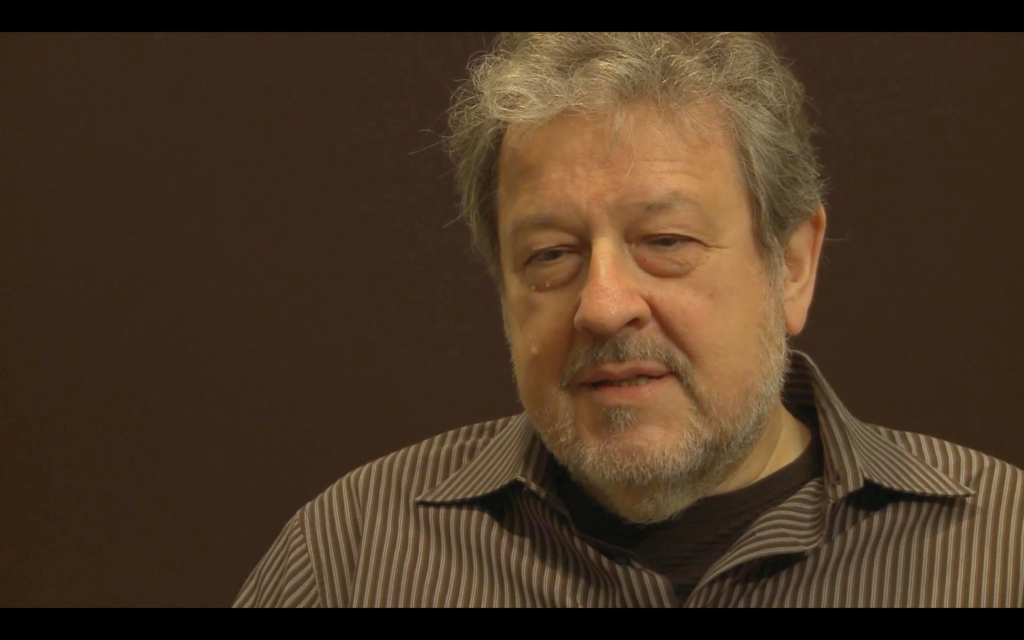
Screen grab showing a head and shoulders shot of an older white man with a beard.
Screen grab from the West Point oral history interview showing Juris Jurjevics

How long have horses been in the Americas?

In a Ph.D. dissertation with the imposing title “The Relationship between the Indigenous Peoples of the Americas and the Horse: Deconstructing a Eurocentric Myth” (Univ. of Alaska Fairbanks, 2017), Yvette Running Horse Collin (now Dr. Collin) argues that horses did survive in parts of the Americas from the Ice Age to at least the twentieth century. She surveys archaeological evidence, the historical record, and indigenous oral history to make her case.

Scholarship being what it is — a long, slow process — it will take a long time, decades even, before scholars come to a consensus on this question. But Collin’s work does address a question I’ve long had. The historic record states over and over again that the native peoples of the Americas were superb equestrians. Yet they became superb equestrians in a very few years, whereas I’d expect the level of expertise exhibited would be the result of a long cultural process. And their expertise seems to be reported as being a different kind of expertise than European expertise as equestrians. So if Europeans brought horses to the Americas, how was it that the native peoples of the Americas became such superb equestrians in such a short time?

This whole issue is complicated by a religious issue. The sacred writings of the Church of the Latter Day Saints (Mormons) apparently assert that horses were in North America before European contact in the fifteenth century. I would be extremely skeptical of that particular claim, just as I’m skeptical of all claims that every word of every sacred scripture is literally true. Sacred scriptures are more like myths, where mythos represents a different kind of truth than logos, or logical thought. In my view, Collin is making a very different claim from the Latter Day Saints. She is arguing about a bias she believes she has found in historiography, where there are often assumptions placing Europeans at the center of any historical account. So regardless of the religious claims of the Latter Day Saints, Collin’s work should be taken seriously.

Abuse of evil

Back in 2005, in the wake of the 9/11 terrorist attacks, we started talking more and more about evil — the evil of our terrorist opponents. Philosopher Richard J. Bernstein wrote:

“I want to examine this new fashionable popularity of the discourse of good and evil… it represents an abuse of evil — a dangerous abuse. It is an abuse because, instead of inviting us to question and to think, this talk of evil is being used to stifle thinking. This is extremely dangerous in a complex and precarious world. The new discourse of good and evil lacks nuance, subtlety, and judicious discrimination. In the so-called ‘War on Terror,’ nuance and subtlety are (mis)taken as signs of wavering, weakness, and indecision. But if we think that politics requires judgment, artful diplomacy, and judicious discrimination, then this talk about absolute evil is profoundly anti-political. As Hannah Arendt noted, ‘The absolute … spells doom to everyone when it is introduced into the political realm.'” [Richard J. Bernstein, The Abuse of Evil: The Corruption of Politics and Religion Since 9/11 (Malden, Mass.: Polity Press, 2005), pp. 10-11]

Here we are in 2022, and it seems that the discourse of good and evil has only become more firmly entrenched in the US, and in parts of the rest of the world. Here in the US, I see this happening across the political spectrum. There are political liberals who equate Donald Trump with evil. This is unwise, because it stops us thinking about what, exactly, Donald Trump and his supporters are doing. We brand them as “alt-right” or “fascists” — epithets which are just one step removed from calling them “evil” — and once branded as such, we stop thinking about them. On the other side of the political spectrum, there are political conservatives who use similar language to equate political liberals with evil.

It has become very easy to brand others as evil, or to brand others with some euphemism that implies evil. Richard J. Bernstein wrote, “‘Evil tends to be used in an excessively vague and permissive manner in order to condemn whatever one finds abhorrent.” [p. 97] Of course we should name evil when we see it. But we should stop and think first — are we naming this thing as evil because it is evil, or only because we happen to find it abhorrent? It should never be easy to brand others as evil.

Noted without comment

“In the United States, Protestantism has been both the privileged religious discourse and the discursive frame privileged in efforts to define both ‘religion’ and race,’ alongside a host of other modern categories. Such was the case even as race, framed as secular, modern discourse, was hailed as the principle of social organization that trumped religion — as an umbrella term for a host of ‘primitive practices’ associated with a previous epoch — under the sign of modernity. In short, to become a modern subject was not simply to become secular or to lose one’s religion. Rather, it was to acquire ‘good religion,’ which meant ascribing to a particular sort of Christianity (read: primarily ethical, literate, and reasoning). Good religion took on the form of white Protestantism. In contrast, black religion was ‘bad religion” in that it carried, by definition, evidence of earlier, African ways of being in the world….”

Josef Sorett, “Secular Compared to What?”, in Race and Secularism in American, ed. Johnathan S. Kahn and Vincent W. Lloyd (Columbia Univ. Press, 2016), p. 50

MLK and Royce

I recently learned that Martin Luther King’s famous idea of the “Beloved Community” apparently derives from pragmatist philosopher Josiah Royce. So on this Martin Luther King holiday, I decided to look into Royce.

I’ve started looking through Royce’s The Problem of Christianity (New York: MacMillan Co., 1913), a series of lecture he delivered at Manchester College, the Unitarian college at Oxford University. It’s available at the Internet Archive. And while I’m just getting started in this book, I skimmed through it to look for references to the Beloved Community. It looks like Royce equates the Beloved Community with the Kingdom of Heaven:

“The Christian churches and nations of mankind [sic] have done as yet but the very least fragment of what it was their task to accomplish; namely, to bring the Beloved Community into existence, or to bring the Kingdom of Heaven to earth.” [p. 371]

Later on, it seems to me that Royce is saying the Beloved Community is the Spirit (note the capital “S”) in institutional Christianity (p. 428): “Let your Christology be the practical acknowledgement of the Spirit of the Universal and Beloved Community.” And then a page later: “The core of the faith is the Spirit, the Beloved Community, the work of grace, the atoning deed, and the saving power of the loyal life.”

In this and other passages, it sure sounds like Royce is providing a sort of theology or philosophy of institutionalism. Which is right up my alley. In fact, this is exactly what I’ve been thinking about recently: what is my philosophy or theology of religious institutions? In the past I’ve used a little Bernard Loomer and a little Starhawk and a lot of handwaving. But with the rapid decline of religious institutions, clearly this is an area to which I need to devote a lot more thought.

So I decided I had better start studying Royce myself. I immediately went to the Seminary Coop Bookstore website and ordered a recent scholarly edition of The Problem of Christianity. That’s a special order, but they also had in stock two basic introductions to Royce, Basic Writing of Josiah Royce: Logic, Loyalty, and Community, and The Philosophy of Josiah Royce. (On a whim, I also ordered Varieties of Transcendental Experience: A Study in Constructive Postmodernism, which apparently references Royce.)

What a great way to spend MLK Day.

“Water is sacred”

In an essay titled “Jain Ecology,” Satish Kumar records a “water sutra” taught to him by his mother:

Waste no water
Don’t ever spill it
Water is precious
Water is sacred
The way you use water is the measure of you
Water is witness
Water is the judge
Your wisdom rests on your careful use of water.
(Satish Kumar, “Jain Ecology,” Jainism and Ecology, ed. Christopher Key Chapple [Harvard Univ., 2002], p. 187)

This sutra expresses an ethic that is removed from Western thinking. Most Westerners would agree that humans are sacred, in some sense of the word”sacred.” Some Westerners would argue that animals are sacred. Maybe a few Westerners would contend that plants and fungi are sacred. But as for inanimate objects — or bacteria, archaea, and eukaryota aside from plants, animals, and fungi — I think only a very tiny minority of Westerners would consider these to be sacred.

If water, earth, and air are sacred, it would much easier to advocate for treating them with respect. But since they are not sacred in the West, then if you want to protect them from pollution or wastefulness, you wind up arguing from a selfish point of view — we should protect water, earth, and air because to do so is to protect our own health.

This represents a big difference in the ethics of ecology.

Noted, with comment

I’m slowly making my way through Lewis Gordon’s new book, Fear of Black Consciousness. It’s slow going, because Gordon keeps dropping in this little observations that make me stop and think.

Like this one:

“The expression ‘black bodies’ pops up often wherever antiblack racism raises its ugly, and at times polite, head. It is there on blogs, in news interviews, in editorials in major newspapers, in broadcast lectures, and in award-winning books ranging from Ta-Nehisi Coates’s Between the World and Me to Ibram X. Kendi’s How To Be an Antiracist. It makes sense since racism involves a form of two-dimensional thinking in which black people supposedly lack inner lives. [Frantz] Fanon referred to this as ‘the epidermal schema.’ It refers to treating black people as mere surfaces, superficial physical beings without consciousness and thus a point of view — in short, only bodies. Yet in the midst of this attention to black bodies, many blacks are left wondering what happened to black people. How has it become acceptable — indeed, even preferable — for black people to refer to ourselves as ‘bodies’ instead of as ‘people’ or as ‘human beings’?” [pp. 31-32]

It is not for me, a white person, to tell black people how to refer to themselves. But I have been uncomfortable with the way it has become fashionable to refer to people, not just black people, as “bodies.” I suspect this comes from some kind of post-Foucauldian analysis, that is, an analysis that attempts to follow in the footsteps of philosopher Michel Foucault.

Foucault’s philosophy does place an emphasis on the body; his philosophy “aims to bring the body into the focus of history.” [Stanford Encyclopedia of Philosophy, article on Michel Foucault, section 3.4]. This move by Foucault was brilliant and necessary, to help us understand how modern society uses hierarchy and discipline to control and punish people. I don’t think Foucault’s intent was to reduce persons to bodies; however, some of his followers may have adopted Foucauldian discourse without adequately reflecting on the deeply humanistic purpose of that discourse.

Returning to Lewis Gordon’s argument — Gordon points out that the term “bodies” is now being used in a way that can indeed reduce black persons to something less than three dimensional beings — reduce them to less than human. Whether Gordon is also offering a critique of Foucault isn’t something I can comment on, since I’m not up on Foucault (I admire his work, but reading him is a chore that I don’t care to put myself through). It does look like Gordon is suggesting that Fanon would be a more useful thinker if we’re going to explore this topic.

At the same time, I don’t hear Gordon telling people to stop using the term “bodies.” Rather, as a philosopher should do, he’s pointing out where public discourse has gotten imprecise, sloppy. He’s suggesting that writers and speakers should think hard about what they really mean when they use the term “bodies.” Is “bodies” the more precise term, or are the more precise terms “people” or “human beings”? It’s fine to use “bodies if that’s what is really meant (if you’re doing Foucauldian analysis), but Gordon clearly favors the latter two terms. If you’re talking about people, says Gordon, then say “people”; if you’re talking about human beings, then say “human beings.”

You can see how reading this book is slow going for me. I had to go look Foucault. And now I’m going to have to dig into Fanon. But this is what books by philosophers should do — cause us to think hard about the way we’ve been thinking.