Mushroom

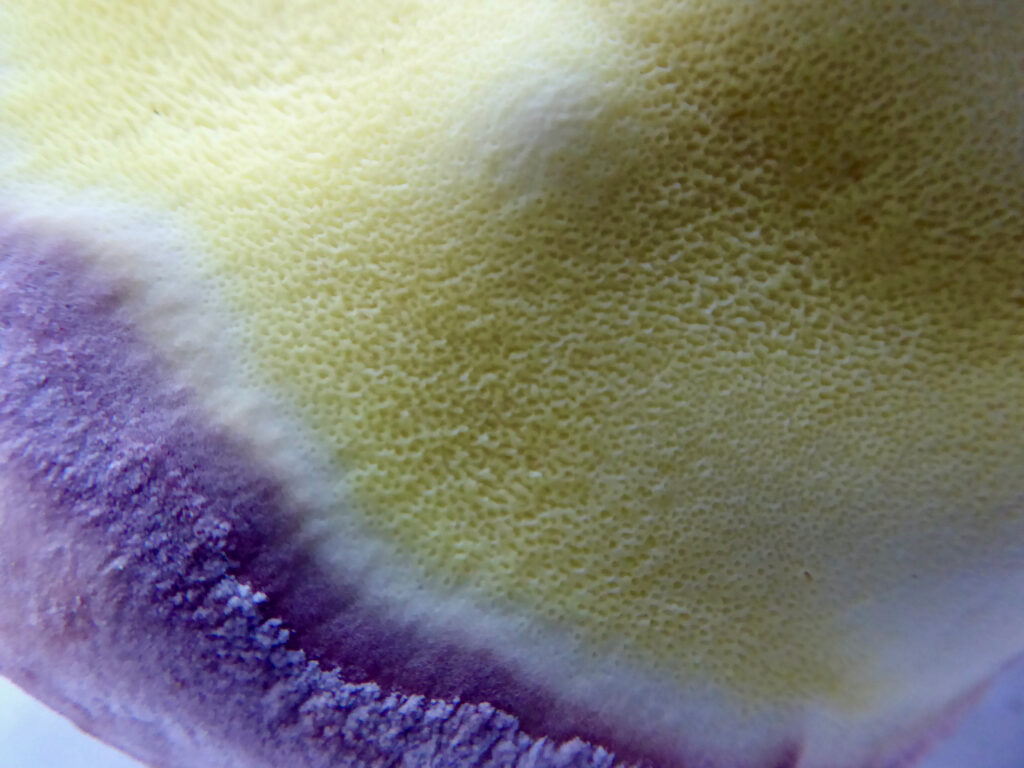
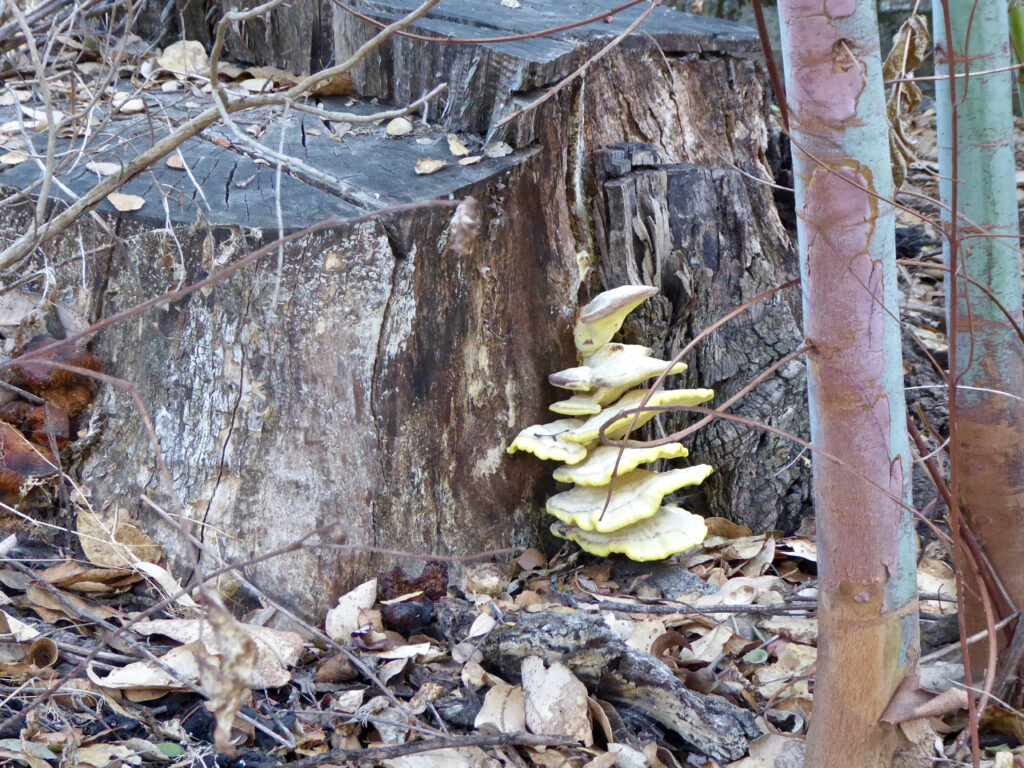
When I was walking around the cemetery this evening, I saw some spectacular shelf fungus growing on the side of a eucalyptus stump.

Sulphur Shelf (Laetiporus. gilbertsonii)

David Arora, in his comprehensive 1986 book Mushrooms Demystified, identifies this as Laetiporus sulphures, but the more recent book Mushrooms of the Redwood Coast (2016) by Noah Seigel and Christian Schwarz identify it as L. gilbertsonii — turns out L. sulphures was split into three species in 2001.

Close-up photo of the underside of L. gilbertsonii showing pores

Common names for L. gilbertsonii include Sulphur Shelf and Chicken of the Woods. As you’d guess with a name like “Chicken of the Woods,” you can eat it, and supposedly if it’s cooked correctly it does taste something like chicken. However, in a few individuals it can cause vomiting. (This apparently happens more often with the two western species, L. gilbertsonii and L. conifericola; not so much with the eastern species, L. sulphures.) I have a weak stomach, and I’m not an experienced mushroom hunter to begin with, so I didn’t try to eat it.

But it is beautiful, and finding it made my day.

Possum presents: Halloween costumes for stuffies

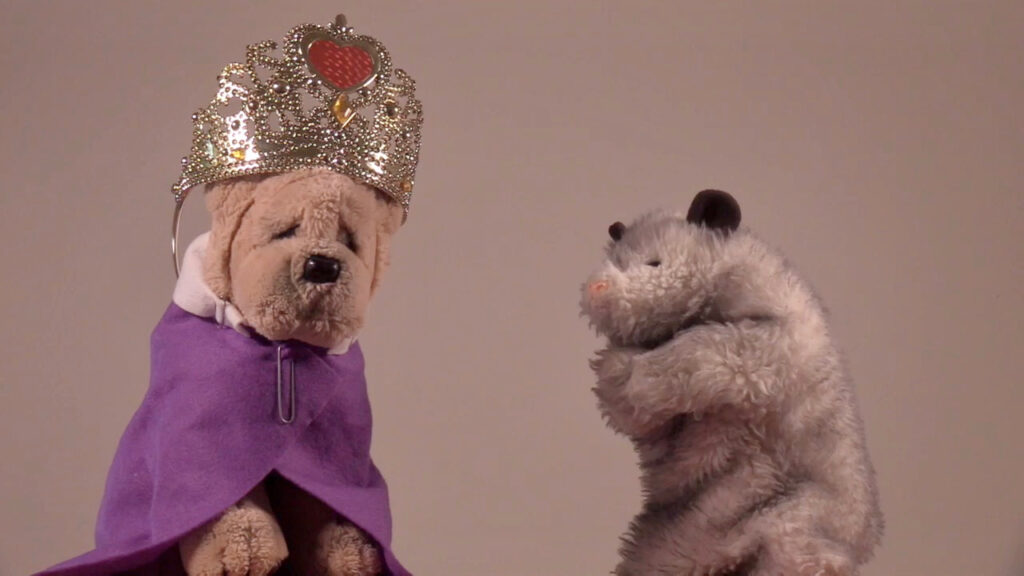
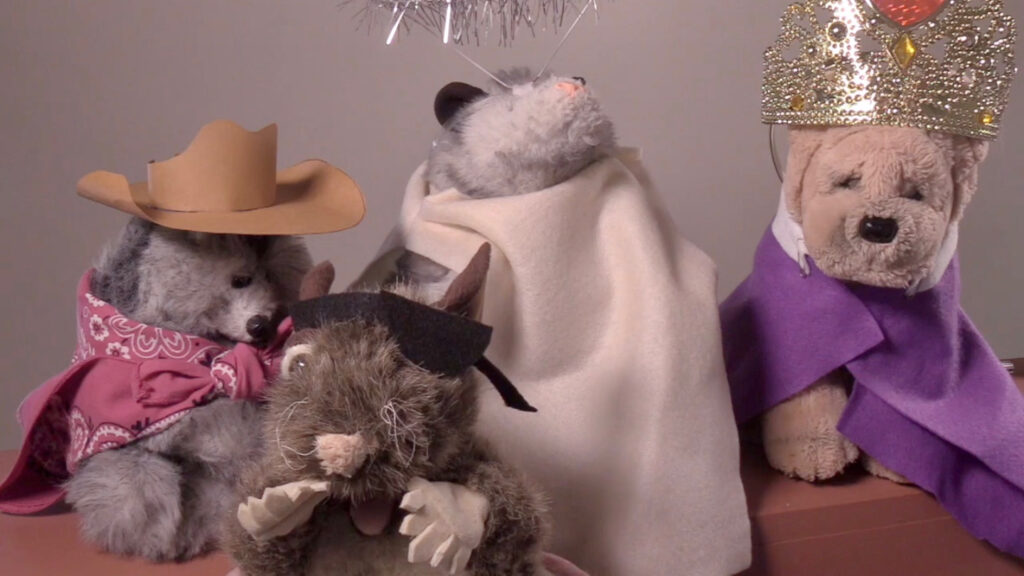
Possum, Packrat, and Dr. Sharpie — er, Queen Sharpie — present photos from UUCPA kids showing their stuffies in Halloween costumes. Whose costume is best? Queen Sharpie has an answer…. (Updated version of the video, with three more stuffie costumes.)

Click on the image above to view the video on Youtube.

Complete text of the video is below the fold….

Continue reading “Possum presents: Halloween costumes for stuffies”

Flipgrid

This year, the Religious Education Association (REA) invited anyone who’s going to participate in their online annual meeting to post a video response on Flipgrid, answering the question, “Why REA?”

Of course I had to try it. I’m always a sucker for trying out new forms of social media, especially when they’re designed for educators. And Flipgrid advertises itself as a video making Web site that can be used from preK to PhD — how cool is that?

But then I logged in — you can log in using your Google account — and Flipgrid told me it only supports Google Chrome and Microsoft Edge. Seriously? no support for Firefox or Safari? Oh, right, it’s a Microsoft company. At least they allow video uploads, so I recorded a quick-and-dirty video and uploaded it. But I won’t be using Flipgrid with kids, because what about that kid who doesn’t have Chrome or Edge….

Aside from that fatal flaw, Flipgrid seems like it has potential. You as teacher can post a video, kids can respond to it, Flipgrid gives you a QR code that you can send to parents so they see the video responses. Although, uh oh, what about media releases to show videos of legal minors? Given the safety policies in our congregation, that’s another fatal flaw if I want to use it with kids.

Even though Microsoft has incorporated at least two fatal flaws in Flipgrid, the basic idea still has potential. And it still could work with adult programs.

Downside to decline

The report by the Unitarian Universalist Association’s Commission on Institutional Change puts it starkly: if Unitarian Universalists don’t figure out how to become less white, we will die out (because: demographics).

Fair enough. But we’re seeing rise of the “nones,” people who have no religious affiliation, and so maybe it’s time for organized religion to die. If it’s time for organized religion to die, why should we care?

In a recent article titled “White Christian America built a faith-based safety net. What happens when it’s gone?”, Religion News Service has an answer to this question:


“The growth of the so-called nones doesn’t mean that belief is disappearing, but ‘loosely organized spirituality’ among people who have few ties to each other lacks precisely the organization that can marshal thousands of key volunteers.

“‘They don’t congregate,’ [Brad] Fulton [associate professor of nonprofit management at Indiana University] said. ‘And that is the key thing.’

“Religious congregations, on the other hand, he said, ‘ask people to give once a week, week after week. They tell people about volunteer opportunities once a week, week after week. There is no other social institution like them.’

“In some ways, the infrastructure of religion matters more than the spiritual part. The so-called nones, at least for now, can’t replace that.

“‘There is some upside to organized religion that has very little to do with religion,’ he said. ‘They have a great mechanism to bring people together. It is really hard to identify an organized secular equivalent.'”


This is not far from what Unitarian theologian and sociologist James Luther Adams said in the mid-twentieth century: congregations function as voluntary associations. And congregations provide real and tangible benefits to society.

Another point worth noticing here: Fulton, a scholar of management, says that what congregations do — that no one else does — is to congregate, “week after week.” The loose networks created by social media (so far at least) don’t do this, so unfortunately we can’t expect social media networks like Black Lives Matter to fill this void.
Sacred myths of Abrahamic religions, parts 1-3

Three video lecturettes on the shared myths of Abrahamic religions. I’ll include links to all three videos below the fold, followed by texts of the talks.

Some of the books referenced in this video series:
“Cosmopolitanism: Ethics in a World of Strangers,” Kwame Anthony Apiah (W. W. Norton, 2006)
“J.B.: A Play in Verse,” Archibald MacLeish (Houghton Mifflin, 1958)
The children’s story books are:
“Bible Stories of Jewish Children: Joshua to Queen Esther,” Ruth Samuels (Ktav Publishing, 1973)
“The Pilgrim Book of Bible Stories,” Mark Water (Pilgrim Press, 2003) “Goodnight Stories from the Quran,” Saniyasnain Khan (Goodword Books, 2005)

Continue reading “Sacred myths of Abrahamic religions, parts 1-3”

Bertrand Russell on humanism

“I should not have any inclination to call myself a humanist, as I think, on the whole, that the non-human part of the cosmos is much more interesting and satisfactory than the human part.”

As quote in Phillip Hewett, Unitarians in Canada, 2nd ed. (Toronto: Canadian Unitarian Council, 1995), p. 234.

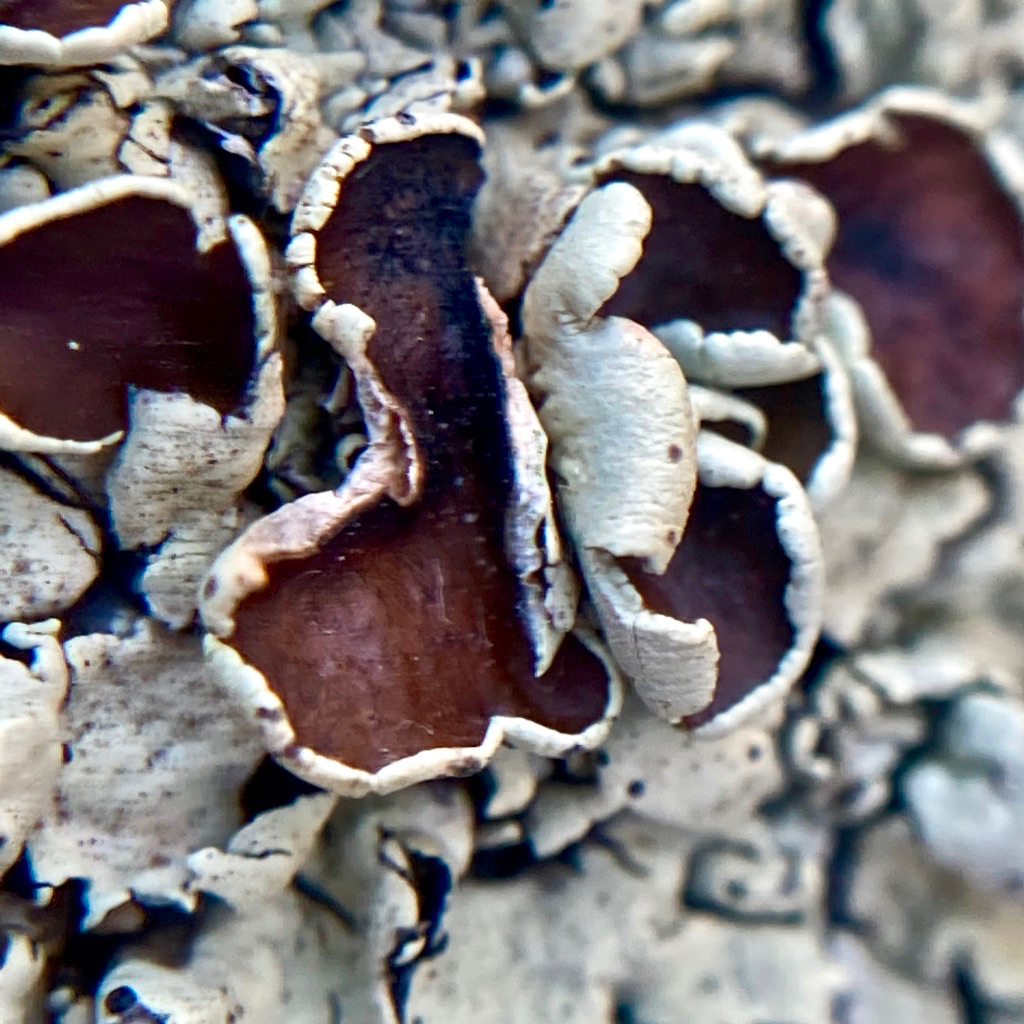
One organism of the non-human cosmos: lichen, probably Xanthoparmelia spp.

Obscure Unitarians: The Franklin family of Palo Alto

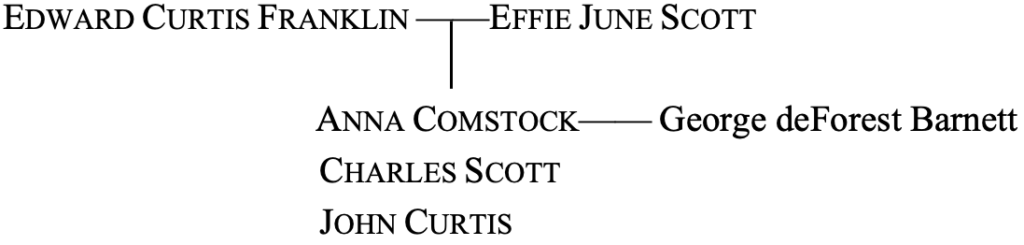
The Franklin family of Palo Alto included Edward Curtis Franklin, expert on nitrogen compounds and professor at Stanford Univ.; Effie June Scott Franklin, professor of modern languages at the Univ. of Kansas; and Dr. Anna Comstock Franklin Barnett, physician and professor at Stanford Medical school. They were all affiliated with the Unitarian Church of Palo Alto (1905 to 1934) at one time or another.

Family tree showing two generations of Franklins
Continue reading “Obscure Unitarians: The Franklin family of Palo Alto”

Akhenaten, part one

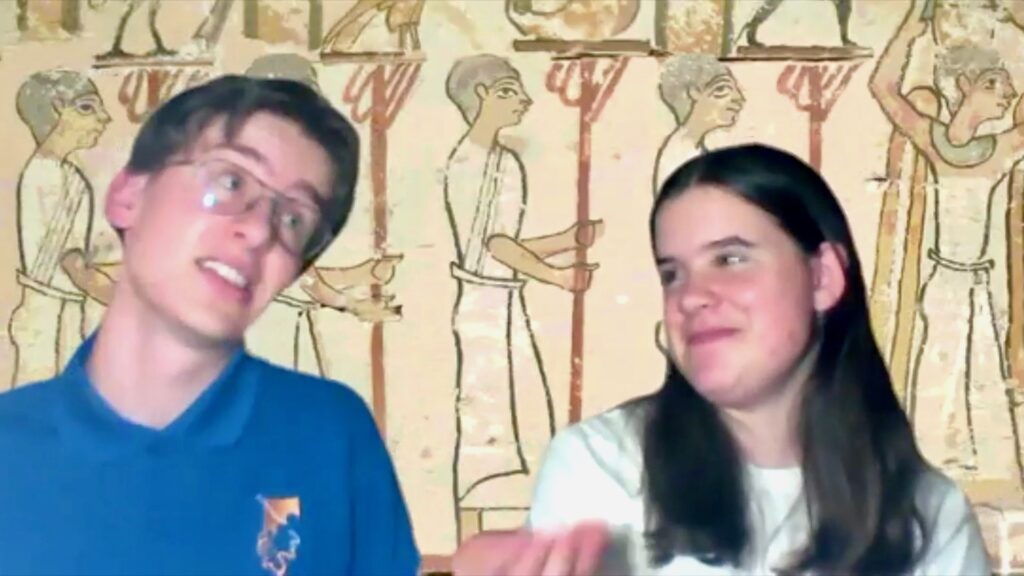
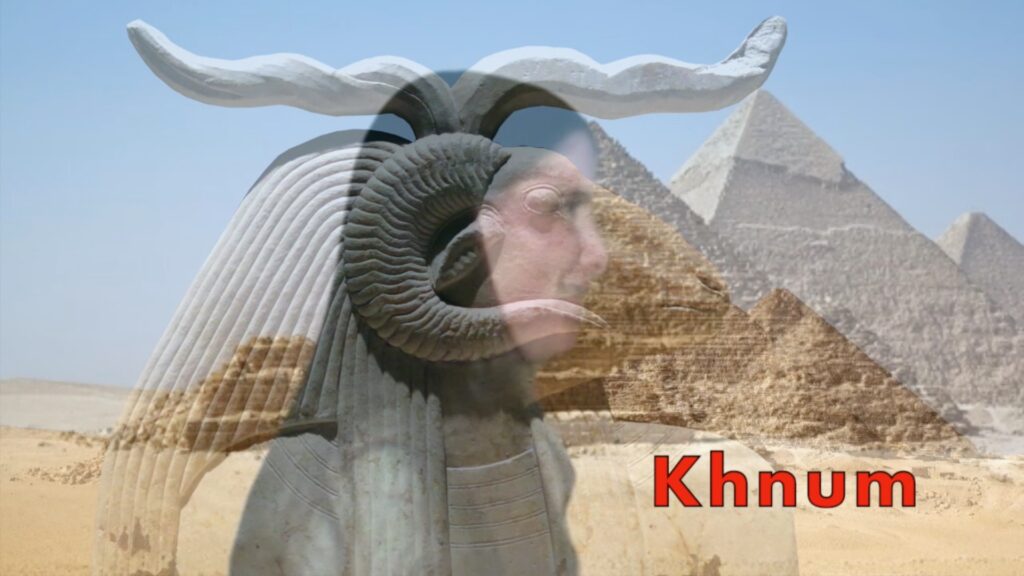
There used to be a Unitarian curriculum on the Pharaoh Akhenaten, purportedly the first monotheist, maybe the first unitarian. This is my take on the Akhenaten story….

Click on the image above to see the video on Youtube.

As usual, the full text of the script is below.

Continue reading “Akhenaten, part one”

How to make Halloween costumes for your stuffies

If you can’t go out trick-or-treating this year, or go to a Halloween party, how about making costumes for your stuffed animals? You could even hold a costume party for stuffies. Here’s a video with some idea on how to make easy, effective costumes for your stuffed animals:

Click on the image above to take you to the video on Youtube.

In the video, you’ll see Dr. Sharpie Ann get costumed as a queen (Queen of the Universe, of course), Packie the Dusky-footed Woodrat as a pirate, Possum as an angel, and Hedgehog as a cowboy.

Once you dress up your stuffies, take their photos and post them on social media.