Smoke-pocalypse

The smoke cloud that’s covering most of California is so thick overhead right now that it looks like deep dusk. We have to turn on the lights in our house, as if it’s almost night. Drivers have to turn on the headlights of their cars. The temperature is stuck at 63 degrees, because there’s no solar warming going on.

It’s really spooky.

At least the air quality here along the coast is tolerable, due to the marine layer keeping the worst of the smoke aloft.

The dark orange light outside at 11:00 a.m. It looks like late evening.

Scholar strike for racial injustice

A bunch of U.S. professors and scholars will stop teaching and attending to routine meetings today and tomorrow, in order to have a sort of “teach-in” about racial injustice in America. On the blog of Academe magazine, Anthea Butler and Kevin Gannon write:

“Scholar Strike is both an action, and a teach-in. Some of us will, for two days, refrain from our many duties and participate in actions designed to raise awareness of and prompt action against racism, policing, mass incarceration and other symptoms of racism’s toll in America. In the tradition of the teach-ins of the 1960s, we are going to spend September 8–9 doing YouTube ten-minute teach-ins, accessible to everyone, and a social media blitz on Twitter, Facebook, and Instagram to share information about racism, policing, mass incarceration, and other issues of racial injustice in America.” Link to full blog post.

It was Anthea Butler, professor of religious studies and Africana studies at UPenn, who started the whole thing with a tweet towards the end of August. I’ve been interested in her work for a while now: she keeps getting quoted in news stories I read, and she’s got a book coming out in the spring, White Evangelical Racism: The Politics of Morality in America, that I’m looking forward to reading.

Butler and Gannon also acknowledge that many, perhaps most, scholars working in academia, will not be able to participate in the strike:

“We are also acutely aware of the precarity of most college faculty; many of our colleagues hold positions in which they cannot step away from their duties for a day or two, or are covered under collective bargaining agreements. It might seem odd to think of college faculty as “workers,” but the stereotype of the fat-cat tenured professor is not an accurate one. Indeed, 75 percent of all credit hours in US colleges and universities are taught by underpaid adjunct faculty, who not only lack the protections and benefits of full-time faculty, but are employed on a class-by-class, term-by-term basis. Even those of us in more secure positions still work on campuses where fiscal crises and a pandemic have combined to make everyone’s employment status precarious….”

And of course it’s a challenge to do this kind of teach-in when many students aren’t even on campus due to COVID — and of course, distance learning was already becoming the norm for many colleges and graduates schools, since distance learning is so much less expensive for the administrators to operate. Nor is it a coincidence that distance learning also makes it much harder to fan the flames of discontent among students.

Follow the strike live:
Scholar Strike Web site
Scholar Strike Youtube channel
Scholar Strike Facebook page
Twitter hashtag #ScholarStrike
Canadian Scholar Strike
News stories:
Inside Higher Ed article
Religion News Service article (emphasizes religion and theology scholars)

Click on the logo above to head to the Scholar Strike Web site.

Is it science? or religion?

In a book published this year, the philosopher Evan Thompson says, “When science steps back from experimentation in order to give meaning to its results in terms of grand stories about where we come from and where we’re going — the narratives of cosmology and evolution — it cannot help but become a mythic form of meaning-making and typically takes the structures of its narratives from religion.” — Why I Am Not a Buddhist, (New Haven, Conn.: Yale Univ. Press, 2020), p. 18.

What Thompson says is akin to what Hannes Alfvén said back in 1984, in his paper “Cosmology: Myth or Science?” Alfvén argued that “there has been — and will perhaps always be — an oscillation between mythological and scientific approaches.” He further documented what he felt was a mythical orientation in the cosmology of 1984: “In a true dialectic sense it is the triumph of science which has released the forces which now once again seem to make myths more powerful than science and causes a ‘scientific creationism’ inside academia itself.”

And these days, I’ve heard apparently well-educated people saying things like, “I don’t believe in religion, I believe in science” — thus ignoring or passing over the fact that scientific models are not matters for belief, they are intended to be checked against empirical evidence through multiple investigations, and they are subject to a constant revision that is not compatible with what is generally meant by “belief.” I don’t think it’s a good idea to turn science into a religion, and it would be better to find one’s mythic meaning-making elsewhere, maybe in poetry or music or paintings or novels or even religion.

Update

The past couple of weeks have been a wild ride for me.

At work, this is always the busiest time of year because we’re getting ready for a new school year. This year is busier than usual because so many things have to be moved online. Fortunately, we were able to delay the start of Sunday school classes till after Labor Day, but even with that there’s a lot to be done.

The weather has been crazy. We had thunderstorms last week that lit wildfires all around us, and now just about the whole state of California is covered in a big smoke cloud. There are fires burning to our south — they’ve closed Highway 1 south of Half Moon Bay down to Santa Cruz because of the fires — and fires burning to our east, and fires burning to our north. There’s smoke everywhere. At its worst, the AQI peaked at over 400 in our area, then we had a couple of clear days, and now the AQI is up to about 150. Here’s a recent screenshot of fire.airnow.gov. Density of smoke plumes is indicated by the darkness of the gray overlays; the little squares and circles are AQI monitors, with green being healthy, yellow moderate, orange unhealthy, and purple hazardous; then the little flame icons show locations of fires, and the little glowing dots are potential fires from satellite imagery:

And now we have a Red Flag Warning — a warning for high danger of potential fires — because of a forecast of the possibility of more dry lightning over the next four days. Someone recently asked what a Red Flag Warning means. For me, it means: double-check your go-bag, then place it by the front door because you may only get 30 minutes warning to evacuate. Ah yes; the joys of living in a world dominated by global climate change.

Then if that’s not enough, I’ve been sitting too long at the computer — because, of course, when you work at home you have to spend hours and hours sitting in front of your computer — and my foot muscles got all cramped up; so much so that it’s actually painful to walk. I didn’t even know that could happen to my feet.

Pandemic, wildfires, and job. It would be easy to get discouraged, but I look at it this way — at least I get to work indoors.

Wild weather

Before we went to bed Saturday night, we saw a couple of flashes of distant thunder. The National Weather Service had said that moist air from a tropical storm to the south was being driven up the Pacific coast by a big, hot high pressure system parked over the southwest, and they had predicted the possibility of thunder and lightning. Since this is the Bay Area, where we hardly ever get thunder and lightning, and what we do get is inconsequential, we thought that was the end of it.

We were awakened at half pst three by lightning flashes and loud thunder and wild wind and — could it be? — the sound of rain. It never rains in the Bay Area in August, but this sounded like real rain. Then the power went out. We got up, and went around closing windows. I stood out on the back steps for a moment, just so I could feel some raindrops.

The power was still out when we awoke on Sunday morning. That meant the huge cemetery gate that closes every evening wouldn’t open. I had to open it so I could drive to work. The hand crank was missing, meaning I was stuck inside until the cemetery staff showed up. And of course it started raining again while I was out there.

Since then, it’s been muggy — by Bay Area standards, muggy means relative humidity of about 60% — and partly cloudy — we hardly ever get real clouds in August, just high fog. It feels like the New England summer days I’m used to. It’s very pleasant. I just wish we’d get another thunderstorm, but I know that’s too much to ask.

Possum is still stressed…

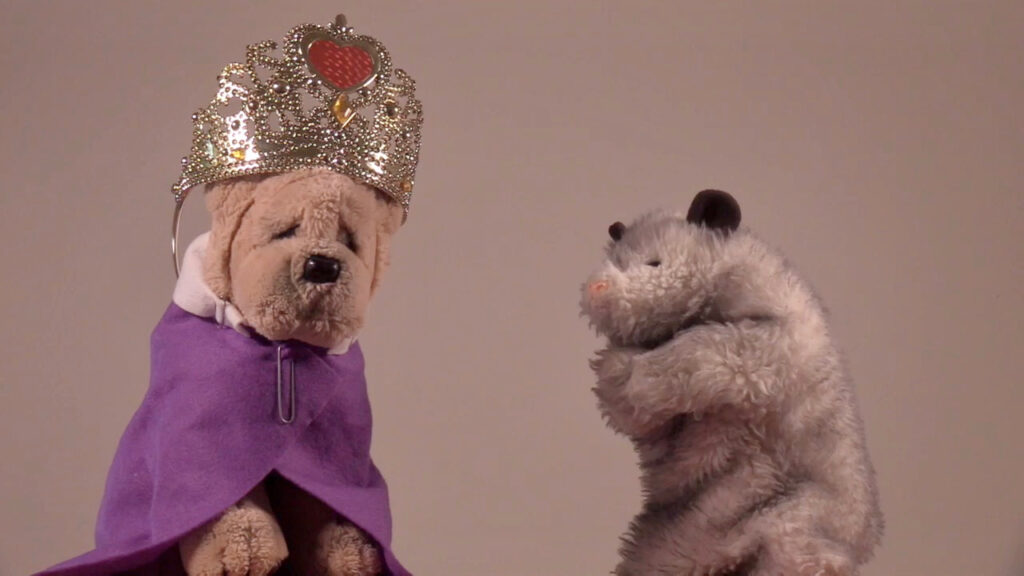
In the third installment of the Possum Feels Stressed video series, Possum learns about prayer as a spiritual practice (even though he doesn’t believe in God):

Video still showing characters from the video.
Clicking the photo above will take you to the video on Youtube.

The first poem mentioned in the video is by Edward Everett Hale, a Unitarian minister:

I am only one.
But still I am one.
I cannot do everything.
But still I can do something.
And because I cannot do everything
I will not refuse to do the something that I can do.

The second poem mentioned in the video is by Universalist poet Edwin Markham:

Outwitted
They drew a circle that shut me out —
Heretic, rebel, a thing to flout.
But Love and I had the wit to win:
We drew a circle that took them in.

Full script for the video is below….

Continue reading “Possum is still stressed…”