Hosting a stuffed animal sleepover in your congregation

I heard about stuffed animal sleepovers from my sister Abby, the children’s librarian. Children’s librarians have been hosting stuffed animal sleepovers at their libraries for some years now. I thought it would be fun to do one for my congregation, but the time never seemed quite right. But now, when children aren’t allowed to go into the congregation’s buildings due to the pandemic, is the perfect time for a stuffed animal sleepover.

So here’s how you can host a stuffed animal sleepover at your congregation.

The end result of a stuffed animal sleepover is a photo album that you post on Facebook or other social media platform. I started out by looking at a couple of Abby’s photo albums from her stuffed animal sleepovers at the Harvard, Mass., public library: the 2019 Stuffed Animal Sleepover and the 2018 Stuffed Animal Sleepover. And for your reference, here’s our 2020 Stuffed Animal Sleepover.

Abby pointed out some of the educational content in what seems like light-hearted fun. In the course of the sleepover, the stuffed animals see some of the library’s resources that might be of interest to children; they look at some books that Abby wanted to make more widely known; and they became familiar with the library building as a place that was both fun and welcoming to children.

Stuffed animals of different sizes cooperate to use the slide in the playroom at UUCPA.

That helped me establish my own educational content. In my congregation, our primary educational goal is to have fun and build community. This is both a practical goal — organized religion is very much an optional activity in our culture, and if it isn’t fun then families are less likely to remain involved — and an idealistic goal — religious education is not mere preparation for life, it is learning by doing, learning how to build the beloved community by creating community in religious education settings. So in my congregation, a Stuffed Animal Sleepover is going to be light-hearted fun for kids, it’s going to promote a feeling of identity with the congregation, and it’s going to show stuffed animals living in beloved community.

With that idea in mind, I began to write out a script for the photos I wanted to take. Because children have now been away from our building for three months, I wanted to show remind them what their classrooms and other places on campus look like. I wanted to incorporate some of the basic rituals of congregational life, including lighting a flaming chalice, drinking hot chocolate (in surveys with children, over 90% of kids report hot chocolate as a favorite part of our congregation), and being in a worship service in our Main Hall.

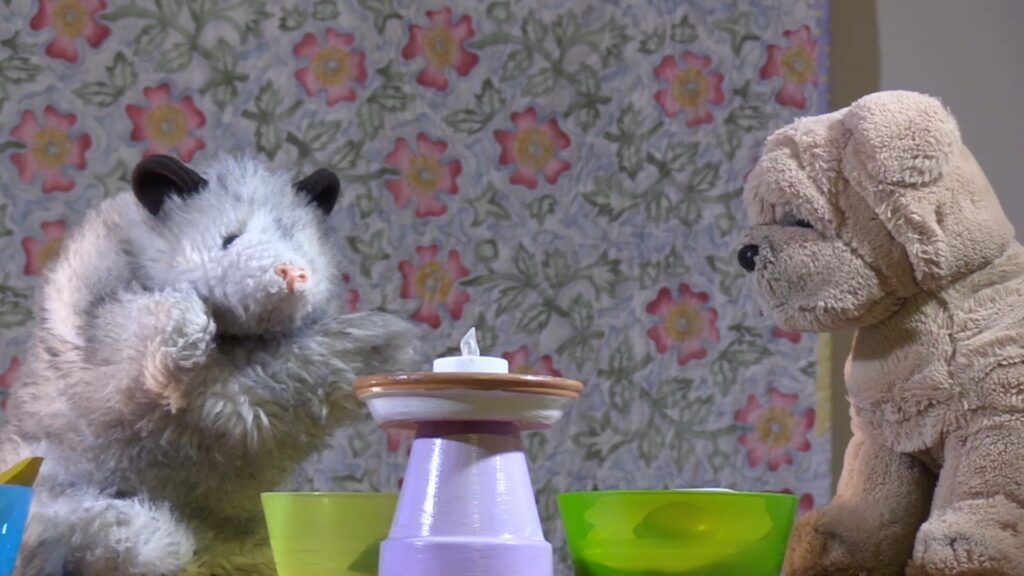
Stuffed animals gather in a circle around a flaming chalice in the Main Hall at UUCPA. The chalice is one that was painted by children of the congregation.

The actual written script didn’t go into all this high-level stuff, though. My script was terse and practical. Here’s an excerpt:

Saturday morning:
Room 10:
Brunch
[Props: Granola, hot chocolate]
Lighting chalice, check-in
[Props: chalice, candle, matches]
Room 7:
Play time
[Props: play equipment already in the room]
Room 6:
Playing games
[Props: board games]
Coloring
[Props: crayons, coloring pages]
POST PHOTOS TAKEN THUS FAR

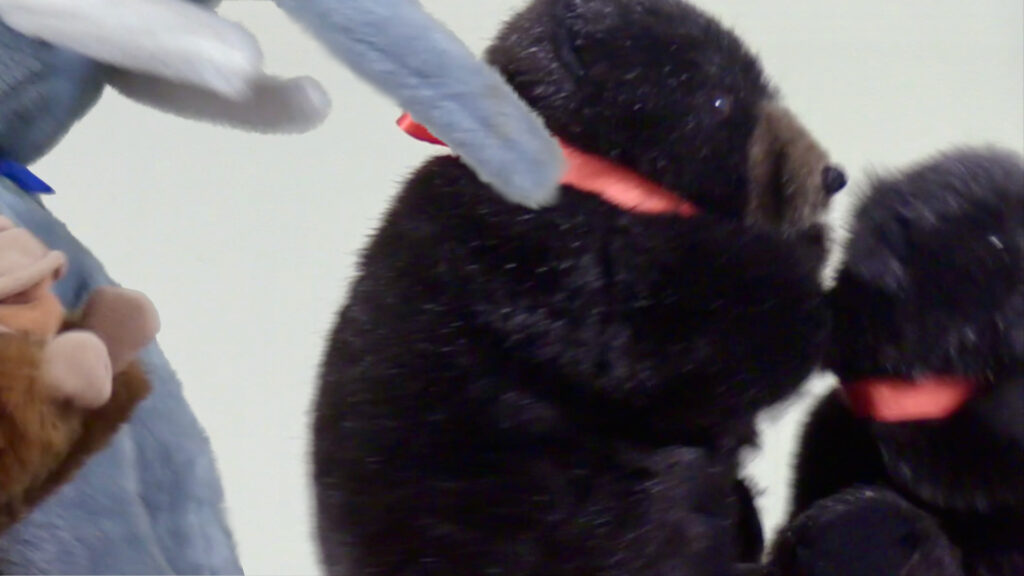
Mr. and Ms. Bear serve hot chocolate to the stuffed animals. Hot chocolate is one of the favorite things for kids at our congregation.

Our campus is spread out, so I used a wagon to carry the stuffed animals from one location to the next. The wagon also allowed me to show more of the campus: I could leave the stuffies in the wagon, as if they’re going on a tour, and take photos of them admiring parts of the campus.

Stuffed Animal Sleepover on a tour of the native plant gardens at UUCPA.

The captions you write are just as important as the photos themselves. In the captions, you find out that the stuffed animals vote when they’re making important decisions; you learn that some of the stuffies identify as LGBTQ+; you discover that the stuffies have conversations about race and racism; etc.

I was also able to showcase some of my favorite cooperative board games, and I could highlight some books to which I wanted to draw attention.

Stuffed animals look at books in the congregation’s library: Who Are You, a Kid’s Guide to Gender Identity; Hide and Seek with God; Goddesses coloring book; Louisa May & Mr. Thoreau’s Flute; Usborne Encyclopedia of World Religions; Is God a White Racist.
Stuffed animals playing Wildcraft, a fun cooperative board game that teaches children how to identify wild herbs.

I created an online registration form for the stuffed animals. Mostly, I wanted to have the cell phone and name of the adult who was going to be dropping off the stuffed animal. But, at the instigation of my sister, I added questions like: What time does your stuffie have to go to bed? and What kind of snakc is your stuffed animal allowed to have?

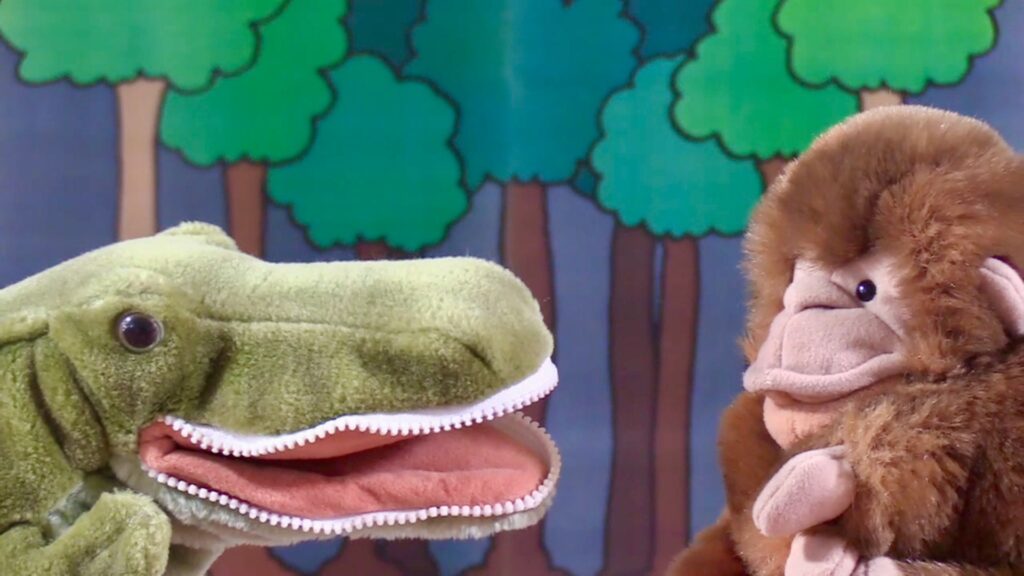
Publicity started going out 3 weeks before the event, with an announcement in the monthly religious education newsletter. I made a two and a half minute video with the two chaperones, two plush puppets named Mr. and Ms. Bear who were going to be the chaperones of the event, and this video was aired during the congregation’s online worship service the week before the event. Then I sent out email announcements 3 days before, and the day before. Out of a total enrollment of 112 children and teens, 10 children brought stuffies to participate. (Several other parents told me that their child couldn’t bear to part with a stuffie; some families just plain forgot; and some more families reported that their family didn’t understand what it was all about, but now that they knew they would participate the next time.)

I spent most of Wednesday prepping rooms for photos. A homeless shelter had just vacated our rooms a few days before, so I did some touch-up cleaning, arranged furniture the way kids would remember it, etc. More importantly, I got props ready — story books, games, snacks, etc., were either placed in the room where they’d be used, or were placed in paper bags ready to carry to the appropriate room.

Drop-off for stuffies was Friday evening. I asked that stuffies be brought in a paper bag, and told everyone that they were going to be left overnight in quarantine (actually to minimize my own risk of getting COVID-19 from a stuffie). I posted a few photos of the check-in process on Facebook, to build some initial interest.

Saturday was a 12 hour day. I planned to take between 80 and 90 photos (I actually wound up taking 83 on Saturday). Moving stuffies from room to room, arranging the stuffies and props, taking extra photos just in case, uploading photos to Facebook and writing cpations — it all takes time. I managed an hour for lunch, and half an hour for dinner. Bed time for the stuffies was 8 p.m., but then I spent another hour or so cleaning up.

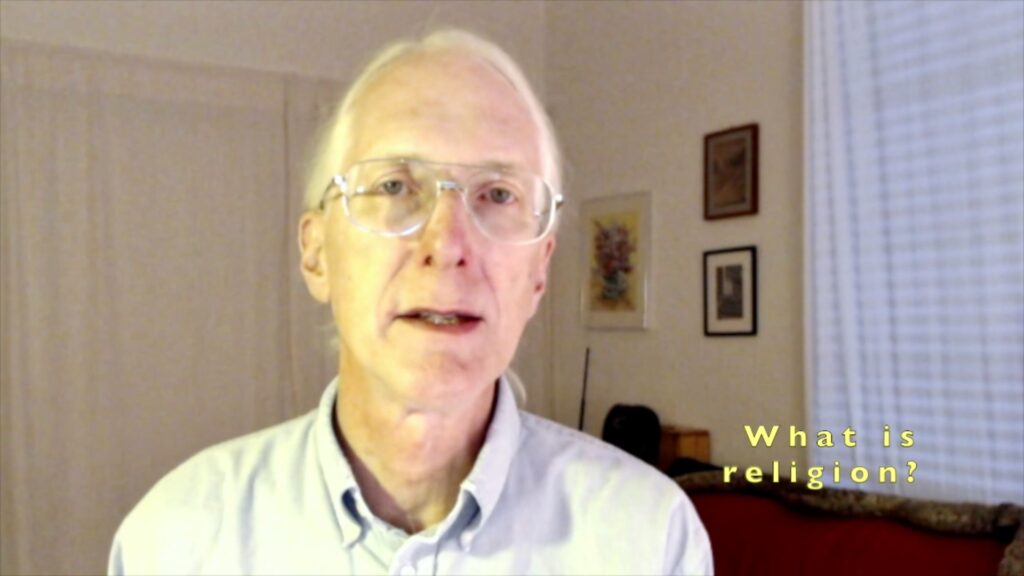
Still from the Sunday worship service video, showing our senior minister, Amy Zucker Morgenstern, talking to the stuffies. It was Flower Communion Sunday, so the stuffed animals had a few vases of flowers.

Then on Sunday morning, the stuffies appeared in the livestreamed service. Arranging them, and lighting them, took more time of course. Then once the service was over, I returned them to their paper bags, and spent the afternoon waiting for families to come pick them up again.

As my sister Abby warned me, doing a Stuffed Animal Sleepover takes hours and hours of time; I spent most of my forty hours this past week on the sleepover. The response — both from the children, and from adults with no children — has been overwhelmingly positive. Plus this is the perfect activity for this pandemic– yes the stuffies are cute, yes there’s some obvious educational content — but right now people of all ages just want to see the campus that they spent so many happy hours in before shelter-in-place.

Stuffed Animal Sleepover in the worship service

The stuffies who were staying on the Stuffed Animal Sleepover appeared in the worship service today, and participated in the Flower Communion. Here’s a photo of the senior minister, Amy Morgenstern, welcoming the stuffies to the service:

Clicking the image above will take you to the video of the worship service on the UUCPA Youtube channel

The dangers of forgetting

A recent post on the Black Issues in Philosophy blog explores the dangers inherent in forgetting this history of violence perpetrated on black people. The authors, Desireé Melonas, professor at Birmingham-Southern College, and Alex Melonas, and independent scholar, note that society’s forgetfulness in this area can cause “black people [to become] subjects thought existentially to inhabit the realm of the ‘unreal,’ having therefore no legitimate claim on reality….” Needless to say, this has negative consequences for black people:

“We know that keeping intact historical accounts that blot out or minimize the severity of black terror violence perpetuates the idea that black people aren’t human beings whose lives are worth preserving, that they aren’t human beings at all. Reality, then, continues to conform itself around this idea.”

Melonas and Melonas have been addressing this existential threat on a local level by “confronting historical erasure.” They do this through a community remembrance coalition, one of many such coalitions across the U.S., to memorialize the victims of racial terror, educate local communities about instances of racial terror that have been effectively erased from community memory, and then advocating for racial justice in the present day. They say: “By renegotiating the boundaries of our collective memory, we invite into our consciousnesses an alternative view of those whom we ought to consider valuable.”

Their blog post, titled “Why We Forget,” is thoughtful and readable, both in exploring some of the philosophical problems that arise from communal forgetfulness, and in suggesting concrete and practical ways to address those problems.

“The Spiritual Danger of Donald Trump”

A group of Christian evangelicals have published a book titled “The Spiritual Danger of Donald Trump.” In an interview with Religion News Service, the editor, Ronald J. Sider, founder of Evangelicals for Social Action, answers the question, “So what is the spiritual danger of Donald Trump?”

“I would summarize it this way [Sider says]: Trump lies constantly. He has repeatedly demonstrated adulterous sexual behavior. He fails to make justice for the poor a concern in his policies. He constantly stokes white racism. His response to COVID-19 was dreadfully weak in the first couple of months. His position on climate change is simply disastrous. And his constant attacks on the fake media undermine democracy.”

Most Unitarian Universalists don’t like Donald Trump, but rarely do we speak about why he is a spiritual danger; mostly we focus on why he’s a political danger. I’m obviously not an evangelical Christian, and therefore not the target audience for Sider’s book or his remarks, but I think this summary of Trump as a spiritual danger is spot-on.

Another interesting point Sider makes in this interview is in response to the question of why white evangelicals supported Trump so strongly in 2016. A part of Sider’s response is particularly relevant to Unitarian Universalism:

“It’s partly because, let’s be honest, there’s a left wing fundamentalism as well as the right wing fundamentalism. And there’s a part of the liberal wing of the Democratic Party, which is really, I think, hostile to Christianity and certainly to evangelicalism. White evangelicals feel that, and don’t like it.”

This describes too many Unitarian Universalists: we can indeed come across as left wing fundamentalists who refuse to acknowledge that intelligent people can disagree with us on religious issues. For example, there are Unitarian Universalists who are convinced that global climate change is one of the top two or three most pressing issues facing humanity, who claim they’ll do everything they can to arrest global climate change, yet who are condescending and dismissive when they hear the term “creation care.”

There is no doubt that Donald Trump represents a pressing spiritual danger: he’s a liar, a racist, a misogynist, and he’s going to let the world go up in flames. It would be wise for us Unitarian Universalists to figure out how we can work effectively with all those who want to stop this clear and present spiritual danger.

Law and order

It has been very interesting to listen to Donald Trump respond to the protests following the lynching of George Floyd by Minneapolis police officers: Trump has made calls for “law and order.” For anyone who remembers Barry Goldwater or Richard Nixon, in the not-so-distant past a call for “law and order” was code for using police to keep African Americans in their place. But that history goes back before Goldwater and Nixon, as is made clear in this excerpt from “O Say Can You See,” the blog of the National Museum of American History:

“William J. Simmons, a former minister and promoter of fraternal societies, founded the second incarnation of the Ku Klux Klan in Georgia in 1915. His organization grew slowly, but by the 1920s, Simmons began coordinating with a public relations firm, in part to chip away at the (accurate) perception that the Klan was an outlaw group involved in extralegal violence. Membership in the Klan exploded over the next few years. As part of this PR campaign, Simmons gave an interview to the Atlanta Journal newspaper in January 1921. While explicitly advocating white supremacy, Simmons played up his group’s commitment to law and order … and even boasted of his own police credentials. He claimed members at every level of law enforcement belonged to his organization, and that the local sheriff was often one of the first to join when the Klan came to a town. Ominously, Simmons declared that ‘[t]he sheriff of Fulton County knows where he can get 200 members of the Klan at a moment’s call to suppress anything in the way of lawlessness.'”

This blog post ends with a pertinent question in Latin, “Quis custodiet ipsos custodes?” Here’s my free translation of this phrase: “Who will police the police?”

And don’t forget…

As reported by Religion News Service: Breonna Taylor, a black woman, was killed by police on March 13, yet…

“‘Despite the number of unarmed Black women killed by police or who have died under police custody under suspicious circumstances, none of them, with the exception of maybe Sandra Bland, has brought a lot of widespread attention, whereas consistently we see that men get more attention,’ said Dr. Chanequa Walker-Barnes, womanist theologian and associate professor of pastoral care and counseling in the McAfee School of Theology at Mercer University.”

Why is this so?

“‘Black women are often romantically imagined. We are “warriors.” We are “mothers.” We are “queens” … People don’t consider us as human. And our institutions, including churches, schools, workplaces and even our movements are guilty of exploiting the labor of Black women. We are forever invisible and, yet, simultaneously, always to blame,’ said [Baptist minister Candace] Simpson.”

Back to Walker-Brown for a final quote:

“‘We believe when Black women are free and when Black women’s lives matter, everyone’s lives will matter.'”

Environmental destruction and COVID-19

The BBC reports that scientists are expecting more pandemics like COVID-19. Why?

“Many scientists agree that our behaviour — particularly deforestation and our encroachment on diverse wildlife habitats — is helping diseases to spread from animals into humans more frequently. According to Prof Kate Jones from University College London, evidence ‘broadly suggests that human-transformed ecosystems with lower biodiversity, such as agricultural or plantation landscapes, are often associated with increased human risk of many infections’.” 

In other words, COVID-19 is a result of environmental destruction and mismanagement. And those of us in the wealthier countries are especially culpable:

“The current crisis, Prof Eric Fevre [from the University of Liverpool and the International Livestock Research Institute in Nairobi, Kenya] said, provides a lesson for many of us about the consequence of our own impact on the natural world. ‘All of the things we use and take for granted — the food we eat, the materials in our smart phones; the more we consume, the more someone will make money by extracting them and moving them around the world. So it’s incumbent on all of us to think about the resources we consume and the impact it has’.”

A word to my fellow white guys

On Saturday, Clarissa-Jan Lim, a journalist with BuzzFeed News, reported on the violent protests against police violence and George Floyd’s murder:

“In a video that has been shared online widely, [Tay] Anderson [a Denver school board director and activist], who is black, is seen confronting a white man with a cloth covering on his face after the man spray-paints ‘ACAB’ — ‘all cops are bastards’ — on public property. Anderson said he was doing a news interview when he saw the man vandalizing, so he turned around and tried to stop him.

“‘I said, “We asked allies to step back so that we can make sure that you’re following what we’re asking you to do,”’ he recalled. ‘And he was like, ‘I’m not your ally, you guys want to protect the status quo….”’”

Well, actually — that white guy is doing his best to reproduce the status quo.

We white men are brought up to believe that we always know best, that we always have to be in charge. Just like that white guy that Tay Anderson confronted in Denver. I get very skeptical when I hear about white men talking about joining or helping organize protests against racism. Us white guys need to — to paraphrase Tay Anderson — step back and follow the lead of people who are not white guys. If we can’t do that, for all we may talk about being allies we’re actually just protecting the status quo.

How does this protect the status quo, you ask? Let’s go back to Tay Anderson:

“Anderson … said he knows that others ‘are going to blame black people for the violence and destruction, whether or not they started it. When we aren’t asking people to destroy things in our name and people do it anyway, we know that this is something that’s going to blow back on us,’ he said. ‘I’m pissed that this is going to blow back on us, because we don’t deserve this. We didn’t ask for this.’”

You see how this works, right?

White guys go to a non-violent protest march organized by black people. The white guys can’t stand not being the center of attention, so they start getting violent. This displaces the center of authority from the black organizers of the protest march to the white guys. Suddenly, it’s no longer a non-violent protest march organized by black people, it’s a violent protest organized by white guys. And as usual, if anything goes wrong, black people get blamed. The status quo of American racism is preserved yet again.

Here’s a word of advice to my fellow white guys:

If you really want to change the status quo, then when you go to one of the protests, make sure for once in your life that you’re not in charge of anything. In fact, if you go to a white allies protest, let white people of other genders run it. When you’re at a protest, don’t draw attention to yourself. Don’t do anything to cause others to photograph you. Don’t be a rugged individualist or a lone ranger. Don’t even go bragging all over social media about what a social justice warrior you are because you, a white guy, were brave enough to attend a protest. In short, for once in your life, you’re not going to be the center of attention. I’m a white guy myself, so I know how hard that will be; but that’s what we need to do.

Because if us white guys could actually stop trying to be in charge all the time, that would go a long way towards changing the status quo.