Where we are now with COVID and congregations

I’m watching the case rates in Santa Clara County, where the Palo Alto congregation is located. The 7-day rolling average is over 4,000 — yikes, that’s high. On the other hand, preliminary figures for mortality seem to show a low death rate — probably due in part to the fact that 82.8% of county residents have been fully vaccinated (thought only 58.2% of eligible residents have received boosters). But on the other other hand (that’s three hands, if you’re keeping track), anecdotal evidence from health care professionals says that ICU beds are getting full again, and elective surgeries and procedures that require an overnight stay in the hospital are being postponed.

Obviously, this is not where we hoped to be. But rather than feeling discouraged, I suggest we consider this as another problem in planning. So, how do we plan for next steps in our congregations?

First, just to say the obvious — any plan we make has to be flexible, to account for changing circumstances.

Second, to say something else that’s obvious — we’ve discovered that the big thing that draws many people to UU congregations is the community. Sure, we like the theology, but the big draw is a chance to be a part of a community with shared values. And many people want to get a regular dose of UU community in person.

Third, something else that’s obvious — we’re gaining a pretty good sense of what’s safest, and less safe. It’s safest to do in-person gatherings that are outdoors, distanced (or small groups), and masked. It’s less safe to do indoors events, but some indoors events are still possible in some circumstances. Instead of saying, “Oh we can’t do what we used to do, waaah!” we probably need to start saying, “Gee, what are our present options for fun and engaging communal events?”

So here’s one obvious thing I believe we should be doing: we should be planning outdoors events. Whatever that might be: outdoors worship services, outdoors small group meetings, outdoors classes. (And I know what those of you are going to say who live where winters are really cold — you’re going to say this doesn’t apply to you. Well, my-sister-the-children’s-librarian, who lives and works in Massachusetts, is doing outdoors story time for kids in the winter; sure, her attendance is lower, but people still show up.) It’s true that not everyone in your congregation is going to come to outdoors events, but I suspect enough people are hungry for in-person interaction that it’s worth doing.

Another thing I believe we have to do: start planning like COVID is not going away. I would love it if COVID suddenly decided to go away next month. But it now looks like there’s a good chance that COVID is going to become endemic. If it has become endemic, then we’re going to have to learn to live with it. So maybe we should start thinking about one or more of the following: requiring proof of vaccination; think about shorter indoor worship services (e.g., 45 min., to limit time spent indoors); adding more worship services (so you can have more smaller indoors services); creating permanent spaces for outdoor programs where possible; improving ventilation in indoor spaces; and/or many other things.

Another obvious thing we should do: for our online offerings, keep improving community interaction. I’ve been noticing that many people are getting better at participating in online events — video conferencing is a learned skill. Similarly, I believe many of us are getting better at facilitating online communal interactions. In my own case, I’ve become much better at teaching online, and at facilitating online meetings — again, these are learned skills. As we continue to get better at participating in and leading online events, one of our goals should be improving community interaction.

One final thing I believe we should be doing: we should go easy on ourselves. Yes, the pandemic is probably going to kill off some UU congregations; but if you start thinking that way, you’re liable to either get tense and stressed out, or sad and filled with grief, neither of which is going to help keep your congregation going. Of course, getting overwhelmed and doing nothing is also not helpful; my point here is that we do need to do something, we just don’t need to be overachievers. My primary rule for congregational life has always been: if it’s not fun, let’s not do it. This still holds true during the pandemic!

I’m actually feeling pretty positive about congregational life in the immediate future. Yes it’s different from what I’m used to, and yes it’s hard to let go of a lifetime of past expectations, and yes change is annoying and difficult. But new possibilities are opening up, and I’m actually feeling quite positive about the future of our congregations.

We shall overcome burdensome copyright restrictions

I recently learned that the song “We Shall Overcome” is now in the public domain, due to a 2017 court ruling and a 2018 settlement. A lawyer tells the whole story in some detail here.

The short version: In 2017, a federal court ruled that the tune, arrangement, and first verse of “We Shall Overcome” are in the public domain (We Shall Overcome Foundation v. The Richmond Organization, Inc., 2017 WL 3981311 [S.D.N.Y. Sept. 8, 2017]). In addition to the court ruling, the defendant and plaintiff subsequently entered into a settlement agreement which said, in part, that TRO would not “claim copyright in the melody or lyrics of any verse of the song ‘We Shall Overcome’”; furthermore, TRO agreed that all verses of the song were “hereafter dedicated to the public domain” (We Shall Overcome Foundation v. The Richmond Org., 330 F. Supp. 3d 960 [S.D.N.Y. 2018]).

This is very good news indeed. Sure, now the song can be used in all sorts of horrible advertising. At the same time, now you cannot be slapped with a royalty fee for using “We Shall Overcome” in your worship service, in the video that you made of some rally or demonstration, or in the audio recording of you singing at a coffeehouse.

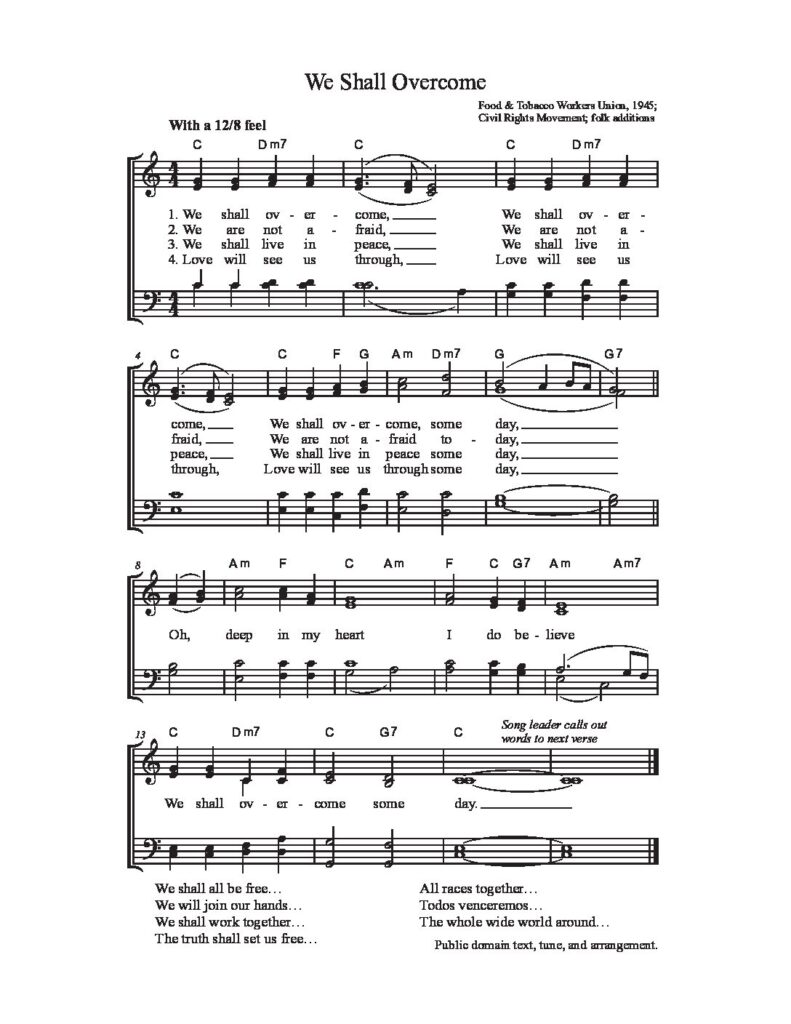
Of course, just about all the piano or choral arrangements out there are copyright protected, including the one in the current UU hymnal. So here’s a very basic arrangement of “We Shall Overcome” which I’m releasing into the public domain; and hey, if you don’t like my version, it’s a public domain song so you can write your own! (I’ve changed a couple of the usual verses so they’re less ableist.)

Click the image above for sheet music.

By the way, I’m finding that it’s a good song to sing around the house now that we’re hunkered down because of the Omicron surge.

The UU year in review: 2021

Wow. It’s been a year of change. As 2021 winds down, I’ll briefly summarize the changes I’ve seen in Unitarian Universalist congregations — some positive, some not so positive, some neutral.

Not-so-positive

(A) Enrollments of children and teens appear to be falling precipitously. We don’t yet have official numbers from the year-end certification count, but I’m estimating declines of 33% to 100% across the board.

(B) Adult membership also appears to be falling in most congregations, though the declines are not as steep.

(C) There appear to be many fewer newcomers in most congregations. The lack of newcomers probably accounts for about half of the decline in adult membership. Most Unitarian Universalist congregations have an annual turnover rate of 10-25% (due to moving away, death, lack of interest, etc.), and depend on a steady stream of newcomers to maintain stable membership.

(D) From what I can tell, most congregations saw a decline in revenues this year. The decline can be attributed to the general decline in membership, loss of other revenue streams such as rentals, and the end of the federal Payroll Protection Plan.

(E) I’d say that more peripheral people have gotten out of the habit of occasional participation in the life of the congregation. It’s still too soon to know if they’ll ever come back, but I’m not hopeful.

(F) This past year saw an epidemic of clergy resignations. In the spring, the Unitarian Universalist Association was begging ministers to come out of retirement to fill all the interim ministry positions. By all accounts, this past year saw a shortage of ministers.

Neutral

(G) I expected more resignations by other (non-clergy) paid staffers in UU congregations this past year. But so far I’m not seeing evidence that that happened. This may be because so many other paid staffers are part timers, meaning they weren’t exposed to as much stress as full-time ministers. Or it could be that the resignations happened, but they’ve been less visible than minister resignations.

Positive

(H) Online adult religious education classes have proved to be more popular than in-person classes in some congregations. The convenience of attending a class while sitting comfortably at home turns out to be quite attractive to many.

(I) Moving online apparently has worked for many (not all) support groups, again due to the convenience.

(J) Congregations have adopted digital giving tools, to the pleasure of most people under the age of 50.

(K) Most Unitarian Universalist congregations have developed good to excellent online services. Online services have proved so successful that most of the congregations I know of plan to continue multi-platform services (i.e., combined online and in-person services) after the pandemic is over.

(L) Online does not work for everything. And most Unitarian Universalist congregations have developed safe ways of having at least some in-person programs.

Summary

In a time of great change, it’s easy to get despondent, just because change can be so disorienting. But I have to say I’m feeling mostly optimistic. In a follow-up post, I’ll have more to say about how I believe we can address the not-so-positive changes productively.

But the positive aspects of this year of change are very positive. Even though our primary “product” continues to be in-person connections, it’s also good to be able to expand the ways we can connect with our congregations, by adding multi-platform services, online classes, and digital giving.

Scrooge would have loved omicron

Scrooge famously said: “If I could work my will, every idiot who goes about with ‘Merry Christmas’ on his lips, should be boiled with his own pudding, and buried with a stake of holly through his heart!”

The omicron strain of COVID-19 is acting like Scrooge. If you go wish your family ‘Merry Christmas’ in person, you could wind up with omicron in your lungs. Bah humbug.

A month ago, we started planning in-person services for Christmas Eve. But as of today, it looks like we’re going to be moving to online-only for Christmas Eve. Omicron is present here in Santa Clara County. Omicron doubles every 2-4 days (depending on who you listen to). Vaccinated and boostered people are getting omicron. Everyone is expecting a major surge by mid-January. So in-person indoors meetings are most definitely Not A Good Idea. Bah humbug indeed.

I had been looking forward to seeing people in person on Christmas Eve — especially college students, many of whom come home for winter breaks. But honestly I’m relieved that we’re not going to have in-person services. I admit it — I don’t like the looks of omicron.

So — see you online….

“Rigid methodologically”

In a 2004 interview with Christian Century magazine, progressive evangelical Brian McLaren compared conservative evangelical Christians with more progressive Christians:

“[Religious] conservatives tend to be rigid theologically and promiscuous pragmatically and [religious] liberals tend to be rigid methodologically and a lot more free theologically ….”

Although McLaren wasn’t talking about Unitarian Universalists (he probably doesn’t know we exist), what he says applies to us: we are indeed free theologically, but rigid methodologically. Wouldn’t it be nice if we could be a little more “pragmatically promiscuous”….

Institutionalism

I sometimes like to say that I’m religious but not spiritual, because I associate “religion” with institutions, and “spirituality” with individualism. I’ve come to really dislike the hyper-individualism of the U.S. today, and for me institutionalism lies at the very heart of my religion. So to better express my religious values, I just added an article on institutionalism to my static website.

Your comments are welcome, but you’ll have to comment here or send me emial.

Responsive reading

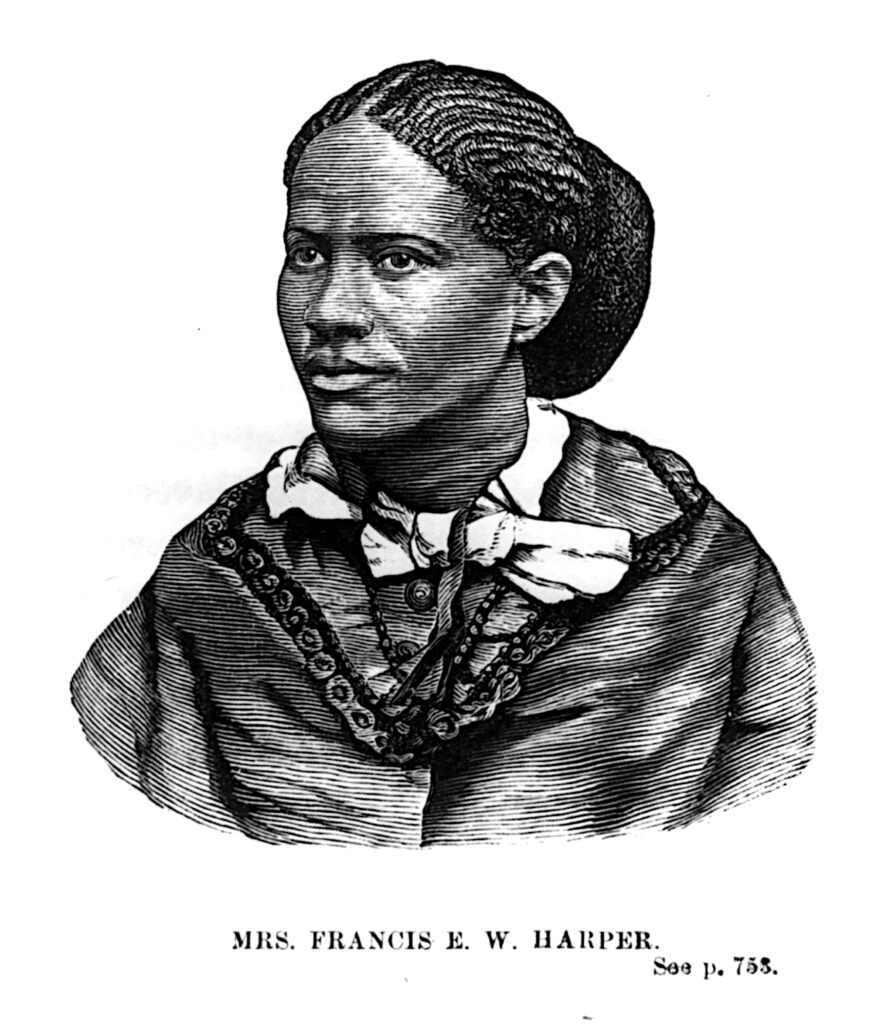
Last week, I posted a responsive reading with words by the Universalist minister Eliza Tupper Wilkes, that’s copyright-free so you can use it freely in online worship. Now here’s a copyright-free poem by Unitarian poet Frances Ellen Watkins Harper, arranged as a responsive reading and available under a copyright-free CC0 license.

Our twenty-first century eyes might find Frances Harper’s nineteenth century rhythms and rhyme schemes a little trite. But I think when read out loud, responsively, our twenty-first century ears will enjoy this poem.

Songs for the People

Let us make songs for the people
Songs for the old and young;

Songs to stir like a battle-cry
Wherever they are sung.

Not for the clashing of sabres,
For carnage, nor for strife;

But songs to thrill the hearts of all
With more abundant life.

Our world, so worn and weary,
Needs music, pure and strong,

To hush the jangle and discords
Of sorrow, pain, and wrong.

Music to soothe all its sorrow,
Till war and crimes shall cease,

And human hearts grown tender
Girdle the world with peace.

Arranged from “Songs for the People,” Frances Ellen Watkins Harper (Unitarian) CC0

Frances Ellen Watkins Harper, public domain image from the Library of Congress

Responsive reading

I’m slowly working on an update to my static website, including a complete overhaul of readings for use in worship that have no copyright restrictions. (I hope that update will be done by 2022.) I’ve been having fun with this project. For example, I found a transcription of a sermon that Rev. Eliza Tupper Wilkes gave at Stanford University’s Memorial Church back in 1895, and arranged some of her words in the form of a responsive reading.

Below you’ll find that responsive reading. I’m releasing my arrangement of Wilkes’s public domain words under a CC0 license so you can freely use them in online worship, in recordings, etc., and you can also revise them and rework them in any way you want.

The Re-creating Force of Love

Life has in it a re-creating force. This force brings to us the sweetest results; it can remove the scar and destroy every sign of injury.

Each great thought emerging in our brains gives to us a new re-creative force, and puts new life in what appeared to be mud and dust.

Through intellect and affection, new life comes to fainting souls. Every new burst of emotion arouses the will, and it is through action that character arises.

So it is that we can change our lives. Our destinies are in our hands: what we love is what we become.

The greatest power is a loving power. But how can we know that great power?

We know it only through the touch of human love.

Adapted from a sermon by Eliza Tupper Wilkes (Universalist), preached May 6, 1895, in Palo Alto, California CC0

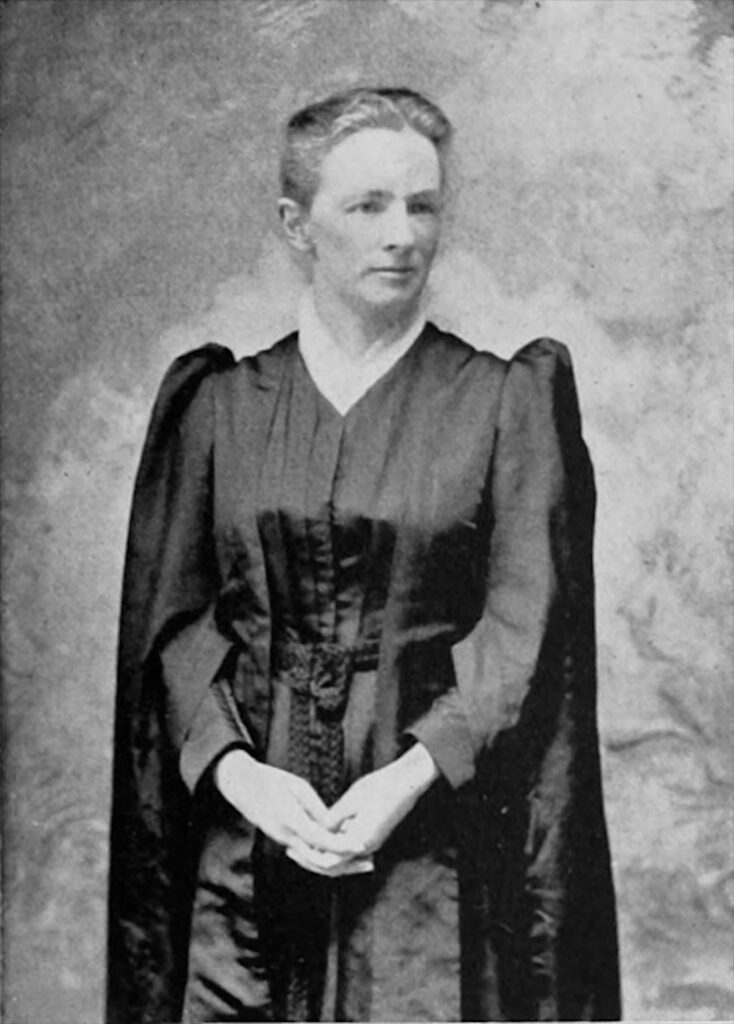
Eliza Tupper Wilkes, public domain image from an 1893 book

What we can learn from Afghanistan

Thomas Reese, a senior analyst with Religion News Service, who earned a doctorate in political science from UC Berkeley, has written a short and helpful essay analyzing the U.S. withdrawal from Afghanistan. Early in his essay, Reese points out that the Trump administration made an agreement with the Taliban declaring that the United States would be leaving, and that the Biden administration is finally implementing that agreement. (This was a helpful reminder to me here that both Democrats and Republicans agreed that it was time to leave Afghanistan; it must have seemed a truly hopeless situation if those two deeply polarized parties actually agreed we had to get out.) Moving quickly past blame and recriminations, Reese’s essay gets to what I think is the heart of the issue:

“What we and our allies should learn from Afghanistan, and what we should have learned from Vietnam, is that the United States military cannot save countries from themselves. If their leadership is corrupt, if their government does not have popular support, if the country is divided by warring ethnic or religious factions, if there is civil war, the American military cannot solve their problems. In fact, history tells us that American troops often make matters worse by using tactics that cause disproportionate collateral damage and by making the local military dependent on us.”

This will be hard for many Americans to hear, but it’s obviously true: our military can’t solve every problem. Our leadership, and our electorate, needs to learn this lesson before we get involved in yet another mess like Vietnam or Afghanistan. Reese ends his essay by advocating for morality in diplomacy:

“Political realists argue that morality has no place in foreign policy, but their tactics have consistently failed. It is time to try a moral strategy that uses diplomacy rather than guns, and fights corruption rather than tries to bribe elites to do our bidding.”

I agree with Reese. Back in the 1970s, the Unitarian Universalist church of my childhood was riven by conflict over Vietnam. Some members of the church thought the war in Vietnam was a moral stand against communism. Some church members thought the war in Vietnam propped up an immoral South Vietnamese regime and used immoral methods. When they called Dana Mclean Greeley as their new minister in 1971, they hoped for someone who would offer guidance out of this intra-congregational conflict. Greeley didn’t take sides on Vietnam. Instead he explained that in the nuclear era, war can no longer be considered a reasonable, sensible option. A few months after the United States pulled out of Vietnam, he preached a sermon which was even more pointed:

“War is insanity in this day and age. It is total destructiveness; it is total immorality; it is total waste. The end of war should be our goal today. Negotiation should be our commitment. We ourselves ought to be both wiser and more ethical than our fathers, but we are not.”

Back in 1975, Greeley called upon us to learn how to be ethical. Now in 2021, Reese calls upon us to be moral. I agree with them both. Rather than using the military to try to solve problems, our goal should be — as Greeley said so many years ago — to end all war.

The Ten-minute Wedding

Over the years, I’ve performed a number of ten-minute weddings. What’s the point of a ten-minute wedding? I’ve done these weddings for couples who had a friend officiate at their wedding ceremony then needed a legal wedding, and for other couples whose wedding ceremony was not, for some reason or other, a legal wedding. These weddings are also useful for those who want a courthouse-type wedding, but who prefer not to go to city hall to be married. Mostly I’ve done this type of wedding in my office at church, but memorably I did one for a couple at a restaurant where the waitress was one of the witnesses (the couple gave her a really big tip).

I realized I’ve never put this ten-minute wedding on my Web site. In case it might be useful to someone else, here’s the form I use:


The Ten-Minute Wedding

Intention: A and B, it is now time to begin your passage into marriage, by declaring your intent to marry and then by making your vows to each other. Are you now ready to begin your passage into marriage? [Answer “I am.”]

Vows:

I, A, take you, B, to be my spouse,
to join our visions for a better future,
to join our voices for equality and love,
to have and to hold,
from this day forward,
as long as we both shall live.

I, B, take you, A, to be my spouse,
to join our visions for a better future,
to join our voices for equality and love,
to have and to hold,
from this day forward,
as long as we both shall live.

[Or use these more traditional vows: “I, A, take you, B, to be my spouse, / to have and to hold, / from this day forward, / as long as we both shall live.”]

Declaration: Inasmuch as A and B have agreed in their desire to go forward in life together, seeking an ever richer, deepening relationship, and because they have pledged themselves to meet sorrow and joy as one, we rejoice to recognize them as married.

CC0


As far as I know, all these words are in the public domain, so I slapped a Creative Commons CC0 “No rights reserved” label on the wedding above (the words in blue type). That means it’s in the public domain, so you can use it, modify it, etc.

Here are some thoughts on this wedding from:

(1) Obviously, other vows may be used.

(2) While I’m pretty insistent on making weddings absolutely gender-neutral —I feel vows should be the same for both persons in the couple, and I use the gender-neutral “spouse” — you may have different views on gender neutrality. Feel free to use words like “husband” and “wife,” or to have one spouse to say they’ll “honor and obey” the other spouse (just so long as I don’t have to attend the wedding).

(3) An unspoken assumption in this wedding form is that both persons involved know exactly what they’re getting into, and both freely consent to the marriage. I wouldn’t perform a wedding unless both parties are fluent in English, or unless there’s a certified interpreter — many courthouse officiants have similar requirements. All the usual criteria for consent also apply: e.g., I won’t perform a wedding where one member of the couple appears to be dominating or abusing the other, or where one member of the couple appears to be intoxicated, or where one member of the couple is under the age of consent.

(4) I feel it’s archaic and ridiculous for the officiant to say, “You may now kiss.” (And no way would I ever utter the sexist words, “You may kiss the bride.”) If both members of the couple are above the age of consent, why do they need my permission? But at the end of the brief ceremony, I might remind them that this a a time when couples often kids each other, if they choose to do so.

(5) Although I call this a Ten-minute Wedding, if you’re the officiant you’ll want to schedule at least 15 minutes. You’ll need five minutes to check the marriage license, and get the couple settled down. The actual wedding takes about five minutes. Then another five minutes for you to sign the marriage license, and to have any witnesses sign as well (if your state requires witness signatures).

Finally — yes, I can do a Ten-minute Wedding for you if you need one. Email me to schedule a time to meet in my office. If I don’t know you, I’ll require a minimum $50 donation to LifeMoves, a nonprofit that provides services and housing to homeless people; if you can’t afford $50, let me know and we’ll work out a sliding scale. (Also, if you want anything more than the wedding shown above in blue — that means any customization, including writing your own vows — my fee immediately goes to $500, because customization requires more time from me.)