Skunk skull

A few months ago, I found a dead skunk in a forgotten corner of St. John’s Cemetery; at that time, all that was left was the skin and the skeleton, and of course a faint smell of skunk. The skunk was lying in the midst of a deer trail. I couldn’t figure out how it had died: did a predator such as a raptor or a Bobcat kill it (Carol has seen a small Bobcat near the cemetery)? or did it die in some other manner? Based on what was left of the pelt, I’d say it was a Striped Skunk (Mephitis mephitis), not a Western Spotted Skunk, the only other species that lives in this area.

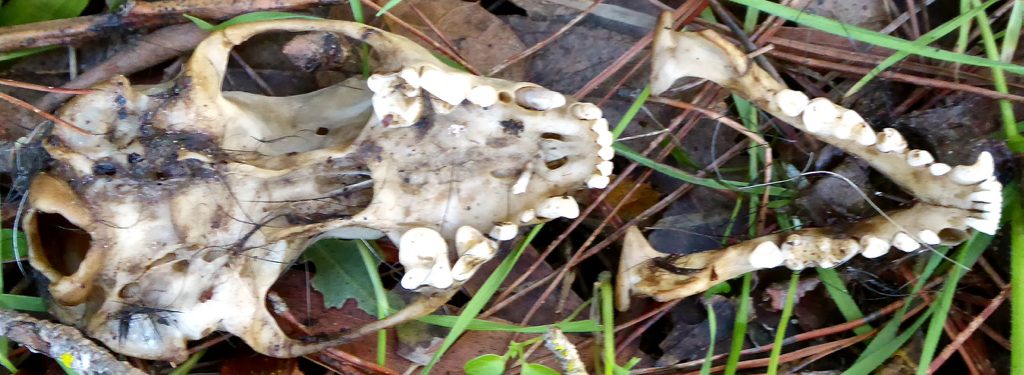
Since I first saw the body, the decomposers have been at work, and as the skin withered and decayed, the skeleton has slowly been emerging. Some of the smaller bones are now missing — it looked like Mule Deer have stepped on what’s left of the skunk — but the skull is now clearly visible. Using a stick, I positioned the skull and jawbone so I could see the teeth.

The dental formula for both the Striped Skunk and the Spotted Skunk is: Incisors 3 per side upper / 3 per side lower, Canines 1/1, Premolars 3/3, Molars 1/2, for a total of 34 teeth. This individual was missing one lower right incisor, the lower right canine, and one upper right premolar.

We have seen Striped Skunks wandering around the cemetery at night. In fact, skunks are the primary reason to not go into the cemetery at night: it would be far too easy to stumble across one as it came walking around from behind a gravestone, and the consequences of such a meeting could be unpleasant. Most of us would prefer to run into a ghost than a skunk.

Fungus

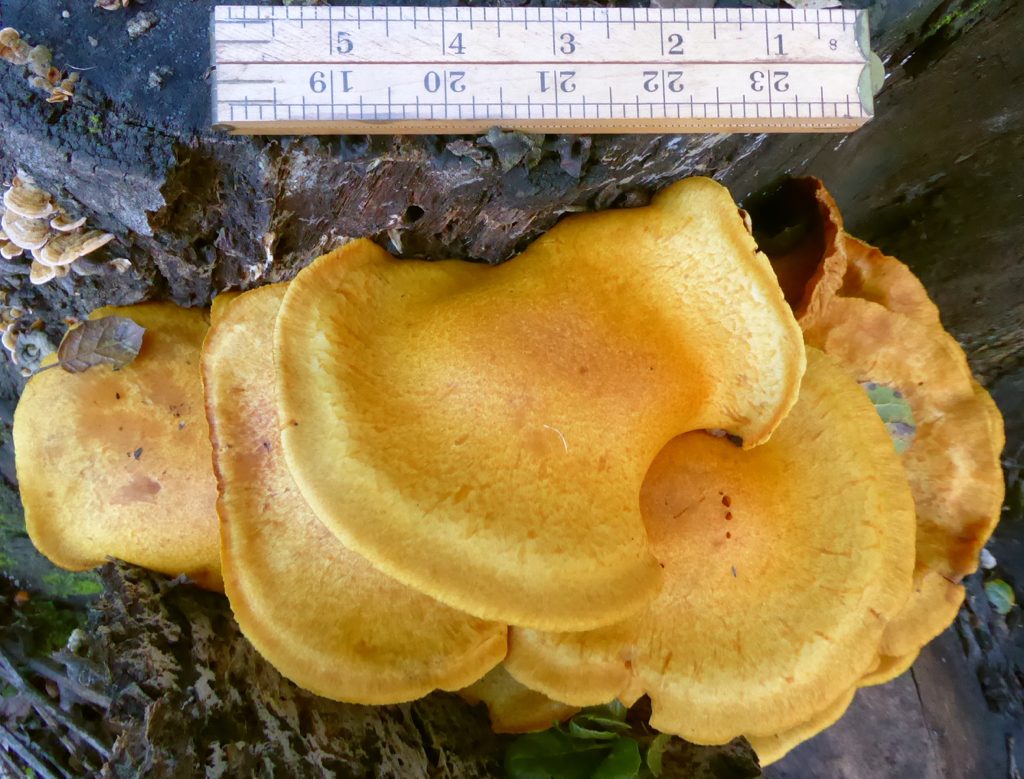
It has been a moist winter, and I’ve been seeing quite a few mushrooms walking around San Mateo. Most of the mushrooms I’ve been seeing are small and inconspicuous, but a few days ago I came across a showy large orange fungus in a hidden location. Today I went back and took some photographs:

I feel fairly confident assigning this to genus Gymnopilus, given the large diameter of the cap (6+ inches / 15+ cm), its orangeish color, and the fact that it is growing on decaying wood (a rotting stump that could be either a conifer or deciduous tree). Based on the description in A Field Guide to Mushrooms of North America (Kent and Vera B. McKnight, Houghton Mifflin, 1987), and without examining spores under a miscroscope or doing chemical tests, I’ll venture a guess that this is Showy Flamecap (Gymnopilus spectabilus, considered by some to be conspecific with G. junonius); however, this is an uninformed guess on my part, and it could easily be another Gymnopilus species. According to Michael Kuo, “identifying the species of Gymnopilus, in North America anyway, cannot yet be done with scientific accuracy.” (Laura Guzman-Davalos et al. [Mycologia, 95(6), 2003, pp. 1204–1214] found genetic evidence that the spectabilis-imperialis complex represents a clade, but they did not attempt to resolve the distinctions between species within this subgroup of Gymnopilus.) So it’s best to leave the identification as Gymnopilus species.

(Revised on Feb. 4. Written on Jan. 19 and posted on Jan. 25; I held this post for several days, because subspecies of Gymnopilus junonius from the eastern U.S. and Korea may contain psilocybin. I didn’t want some idiot to find this mushroom and, based on my very tentative identification, ingest it hoping for hallucinations. The mushroom in the photographs is now pretty well decayed, so that danger is past.)

Mushrooms

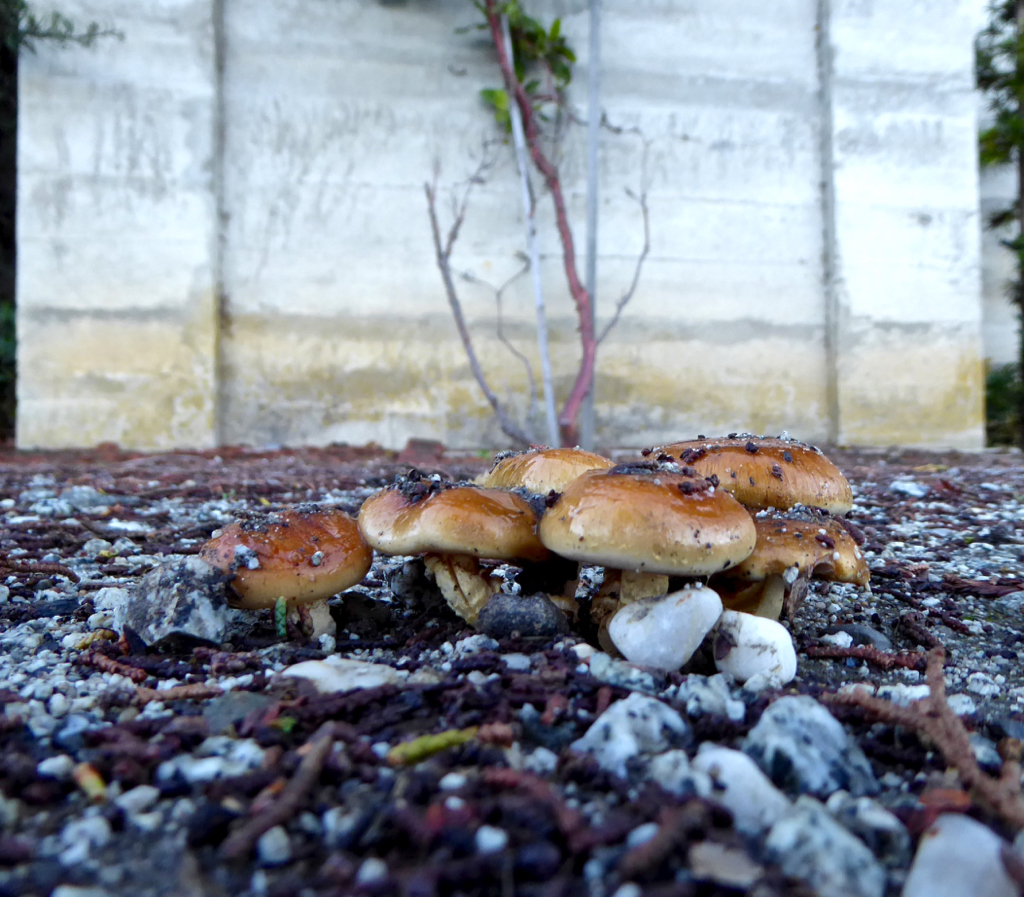
Even though we’ve had less than half the amount of rain we should have received at this point in the rainy season — we’ve only gotten 3.05 inches, while the normal value is 6.52 inches — nevertheless the ground is damp and mushrooms are starting to emerge. Walking around the cemetery this evening, I almost stepped on a small cluster of mushrooms growing up in the middle of the gravel drive close to one of the mausoleums.

Ground-level view of mushrooms with mausoleum in the background

The caps of the mushrooms are about one half to three-quarters of an inch across, and the stipes are a quarter to half an inch tall. I find mushroom identification intimidating, so all I’m willing to say is that this organism probably belongs in the order Agaricales; perhaps it belongs in the family Agariaceae. When the mushrooms get larger (if they don’t get crushed) I’ll try to get some spores to see what color they are.

Air quality

The poor air quality has been getting me down. On Friday, the Air Quality Index was well over 200 in our area — that’s into the “Hazardous” range. I stay in the house as much as I can, and we have a room air purifier running all the time. But of course I have to leave the house to go to work, and to run errands, and when I do go outside it tires me out.

Whine, whine, whine. Yes, the air quality is poor, and my ongoing recovery makes me feel a little more vulnerable. But I’ve got nothing on the rickshaw pullers of Delhi. The poor air quality we’ve had here in the Bay Area for the past week and a half is not much worse than the usual poor air quality in Delhi. Most of the rickshaw pullers live on the street, so they can never go indoors for respite. They may have to work eighteen hour days. They may have inadequate amounts of food. And there is a bitter irony in their situation, according to a rickshaw puller named Himasuddin: “As a rickshaw puller, I hardly contribute to pollution. Ours is a clean way of transportation. But it’s ironic that we are the worst affected from the toxic smog.”

Here in the Bay Area, rain is forecast for later in the week, and that will end our unusual period of hazardous air quality. I will have experienced minor inconvenience for two short weeks. All I can say is, thank God for strict laws against air pollution.

What it looks like when people are really singing

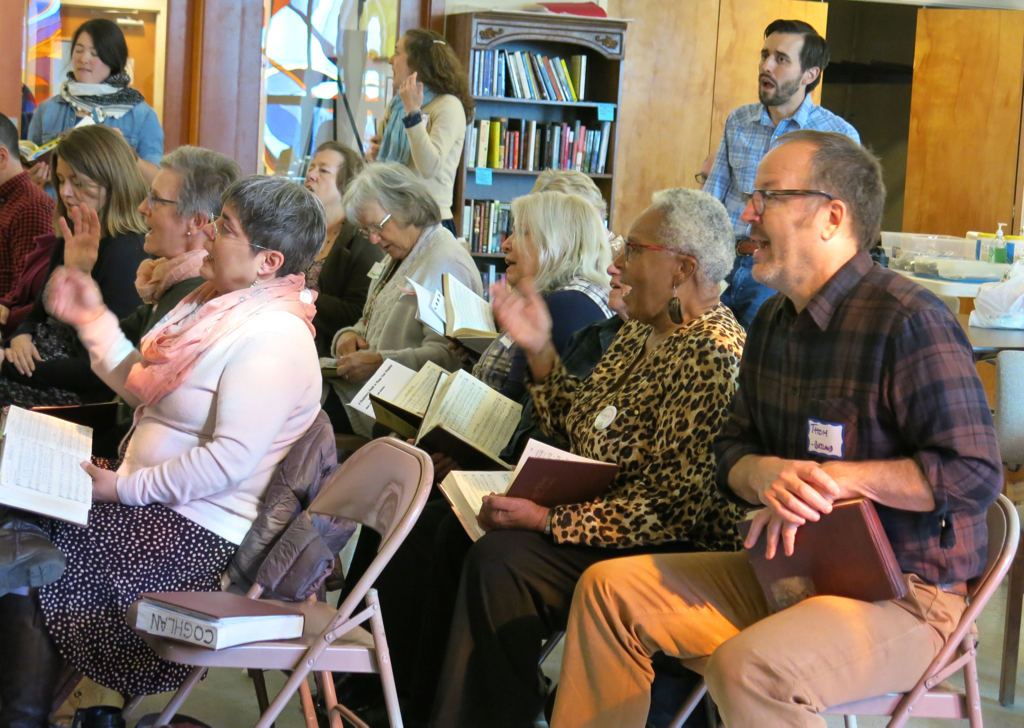
You are unlikely to see people looking like this when they sing hymns at a Unitarian Universalist church:

I took this photo at today’s Sacred Harp singing in Davis, California. Everybody, even the people who are new to this kind of singing, are in full voice, not holding back, letting the song carry them away even if they disagree with the lyrics.

Unitarian Universalists, by contrast, tend to be of three types: Trained Singers, Overly-polite Singers, and Timid Singers. Many of the Trained Signers will be in the choir, and the rest of the congregation defers to them because they have at least some training. The Overly-polite Singers are the inheritors of Lowell Mason’s Better Music Movement, which swept both Unitarians and Universalists in the mid-nineteenth century: this movement expunged American composers and singing styles and replaced them European composers and bel canto singing. The Timid Singers, usually the majority of people at any given Unitarian Unviersalist worship service, having been cowed by the Trained Singers and the Overly-polite Singers, assume they can’t sing.

Sacred Harp singers don’t fit into any of these categories. Sacred Harp singing is an American tradition (there are both black and white versions, but they’re closely related) that does not sound like bel canto singing. Sacred Harp singers may get carried away with the music. Sacred Harp singers know that they should sing as well as they can for every song, even if they don’t like it, so that everyone else sings along on their favorites. Sacred Harp singing is a distinctly egalitarian tradition that says everyone can sing. And Sacred Harp singers let themselves be carried away with the music, as in the photo above.

(There might also be a fourth type of singer in some Unitarian Universalist congregations: the Popular-music Singer. These are the folks who sing along to various types of popular music. They may not read music, but once they hear a song they can generally sing it. They tend to be more egalitarian than the other three types of singer, and they tend to be more passionate singers. However, they are generally outnumbered by the Better Music Movement Singers.)

I wish more Unitarian Universalist congregations sang as if they were being carried away with the music. I wish we were less polite singers. But I suspect that music feels a little too uncontrolled, too irrational: we want to keep it carefully under control.

Below are some videos of faith communities that let their singing get ecstatic. Probably the majority of Unitarian Universalists will find these recordings unpleasant, and disturbingly passionate. Besides, we don’t want to look funny while we sing. That’s who we are; we don’t want to sing like our lives depended on it.

(Just to be clear, on some songs we sing like we mean it out in my own congregation in Palo Alto; we may not have quite the urgency of Sacred Harp singers in full cry, but we’re not too bad!)

Skimmer

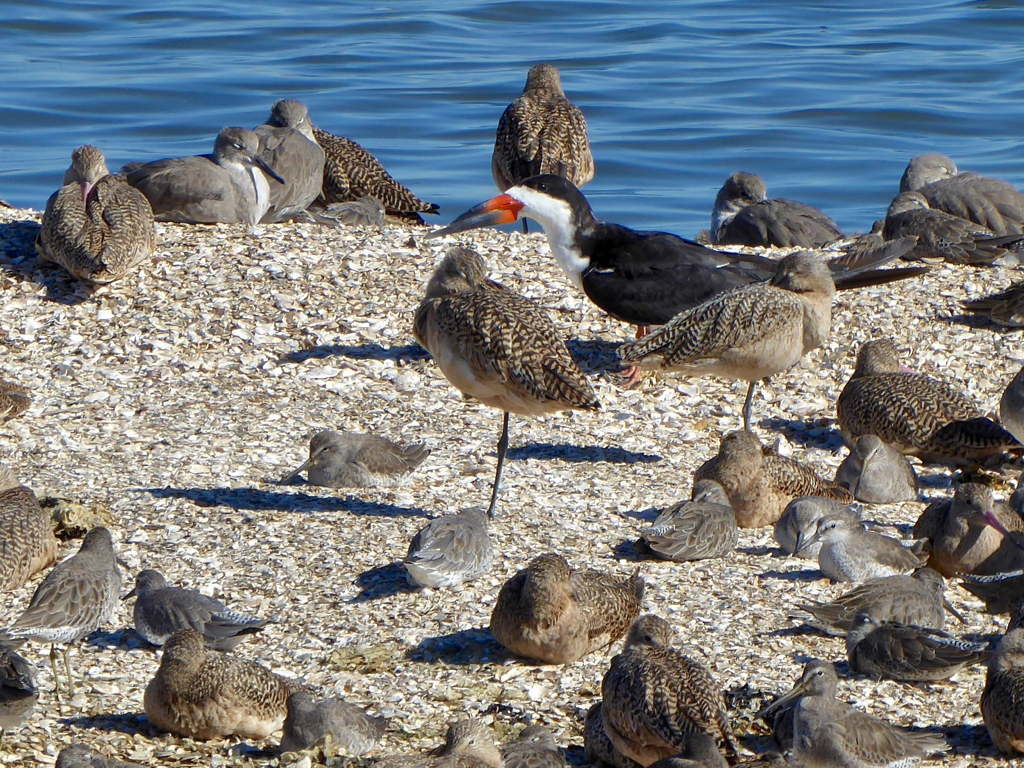
While my laundry was in the machines at the laundromat, I took a walk along the bay. High tide pushed the shorebirds in close to the bike path, so it was easy to sort out dowitchers, Willets, Marbled Godwits, and Black-bellied Plovers. There were also half a dozen Black Skimmers spaced out along the water, each one making a striking contrast to the mixed flock of shorebirds.

Tree of Life

Early Sunday morning, I got the announcement from Multifaith Voices for Peace and Justice: “Local synagogues will be gathering TODAY, Sunday 10/28 at 7PM at Congregation Beth Am for mourning, prayers and mutual support after the tragedy at the Tree of Life Congregation in Pittsburgh, PA. Other congregations are warmly welcome to join them.”

Several of us from the Unitarian Universalist Church of Palo Alto (UUCPA) decided to join them. Just in case there were a lot of people, we decided to carpool over. We left the UUCPA parking lot and drove down Charleston Rd., and by the time we crossed Foothills Expressway we realized we were in a line of cars headed to Congregation Beth Am. Even though we were fifteen minutes early, there were no parking places left, and we wound up parking off the road under a tree.

When we got inside the synagogue, the sanctuary was already filled, and they had begun opening up the sliding doors into the social hall. We helped set up more chairs, then sat down. The woman next to me was checking the score of the ball game; she was rooting for the Dodgers, but said her daughter was rooting for the Red Sox. When she found out that I came with some Unitarian Universalists, she thanked us and warmly welcomed us to her synagogue.

More people kept arriving. They brought out even more chairs. I told the woman sitting next to me that I was perfectly able to stand, so if anyone wanted to sit down, she should give the chair to them. I stood near the door, and watched people stream in. There were a few women wearing hijabs. I saw a couple of clerical collars. Not everyone was white. People just kept coming in, and when I finally turned to look behind me I saw that now the entire social hall was filled, too, and there were dozens of us standing along the walls.

The best parts of the service were the songs we sang together. I couldn’t see the words projected on the screen at the front, but I hummed along as best I could. There were good speakers, too, but how much could you say about the senseless murders of eleven people? One of the speakers who touched me most was a Muslim woman; I don’t remember what she said, but I remember her tone of voice which said she knew viscerally what it was like to be a target, and that we all had to look out for one another. The other speaker who touched me deeply was the rabbi who said that her ten year old daughter didn’t want to go to temple on Saturday morning because it wasn’t safe; her rabbi mother insisted they go, and that touched me because that’s what we have to do: we can’t hide from this kind of terrorism, we must face up to it somehow.

It took a quarter of an hour to get out of the parking lot. While we sat in line, Laurel told us about the door-to-door canvassing she was doing in the Central Valley to turn out the vote. I couldn’t help thinking that politicians need to back off with their divisive rhetoric, even if divisiveness wins votes; I couldn’t help thinking that it’s mostly Republican candidates who are making statements that incite violence — Republicans, the party of Abraham Lincoln! We can’t hide from this kind of divisive rhetoric, we must face up to it somehow. Door-to-door canvassing might be one of the best ways to do this; we learned this during the successful campaign for same-sex marriage: demonstrably the strategy that worked best in moving people towards tolerance was face-to-face conversations.

UPDATE 11/2/18: According to the Palo Alto Weekly, there were a thousand people in attendance (in the photo accompanying the article, I’m the tall guy standing in the back).

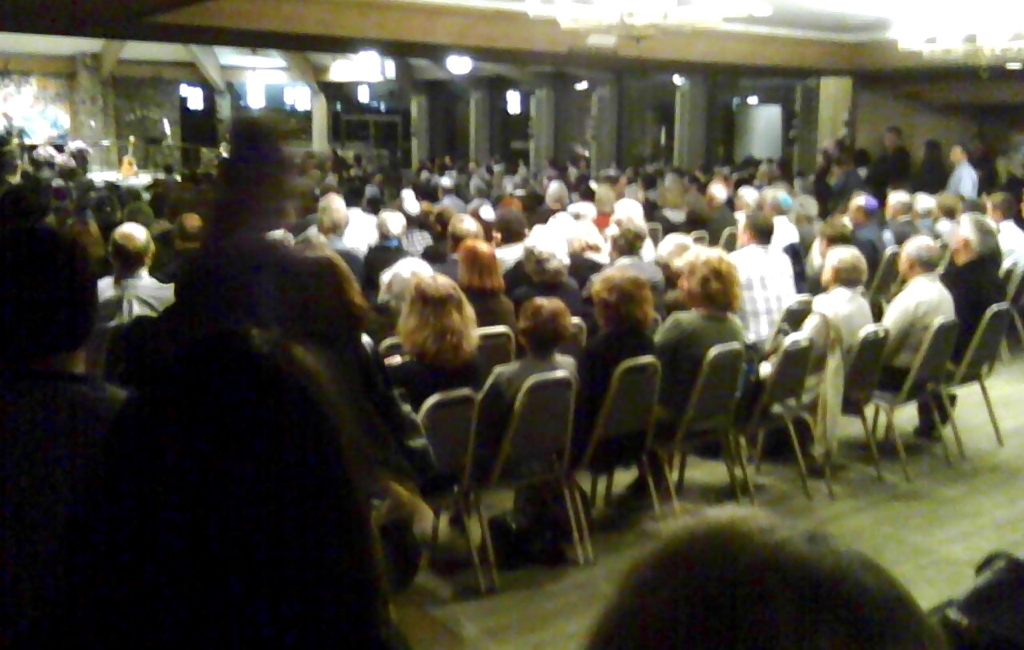
Above: The view from halfway back in Congregation Beth Am (blurry, because I couldn’t hold the phone steady).

Moonlight in St. John’s Cemetery

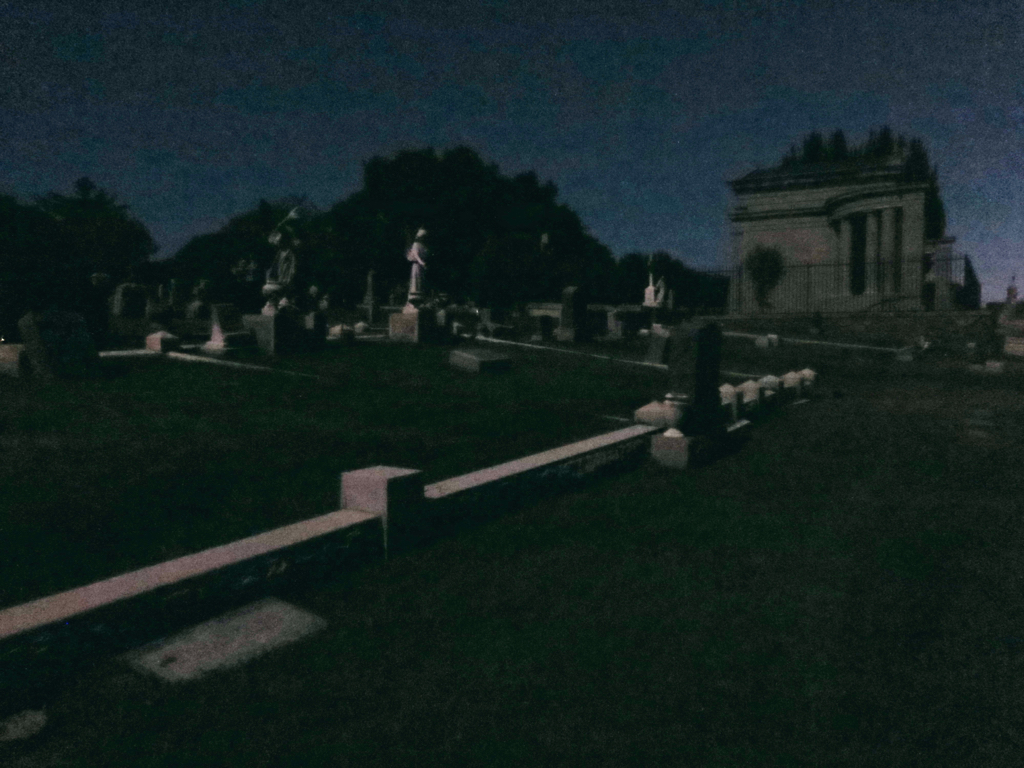
One of the nice things about living in the old caretaker’s house in St. John’s Cemetery is being able to be in the cemetery after hours. It’s a lovely place on a night like tonight, the night before the full moon: peaceful, with a feeling of quiet transcendence. You feel a quiet connection with all those people who were buried here, and with the people who loved them and wanted a calm place to remember them.

Just as I finished taking this photo, Carol said, “Watch out!” I turned around in time to see a skunk walk past, its tail raised in warning. We retreated back into the house, leaving the cemetery to the moonlight.

Nests

It was the first day of Sunday school, and our middle school ecojustice class took a tour of the various projects the class works on — small-plot gardens, rain barrels, composters, and so on. It is well past the end of nesting season for birds, so one of the things we were able to do is check on the nesting boxes the class built a couple of years ago.

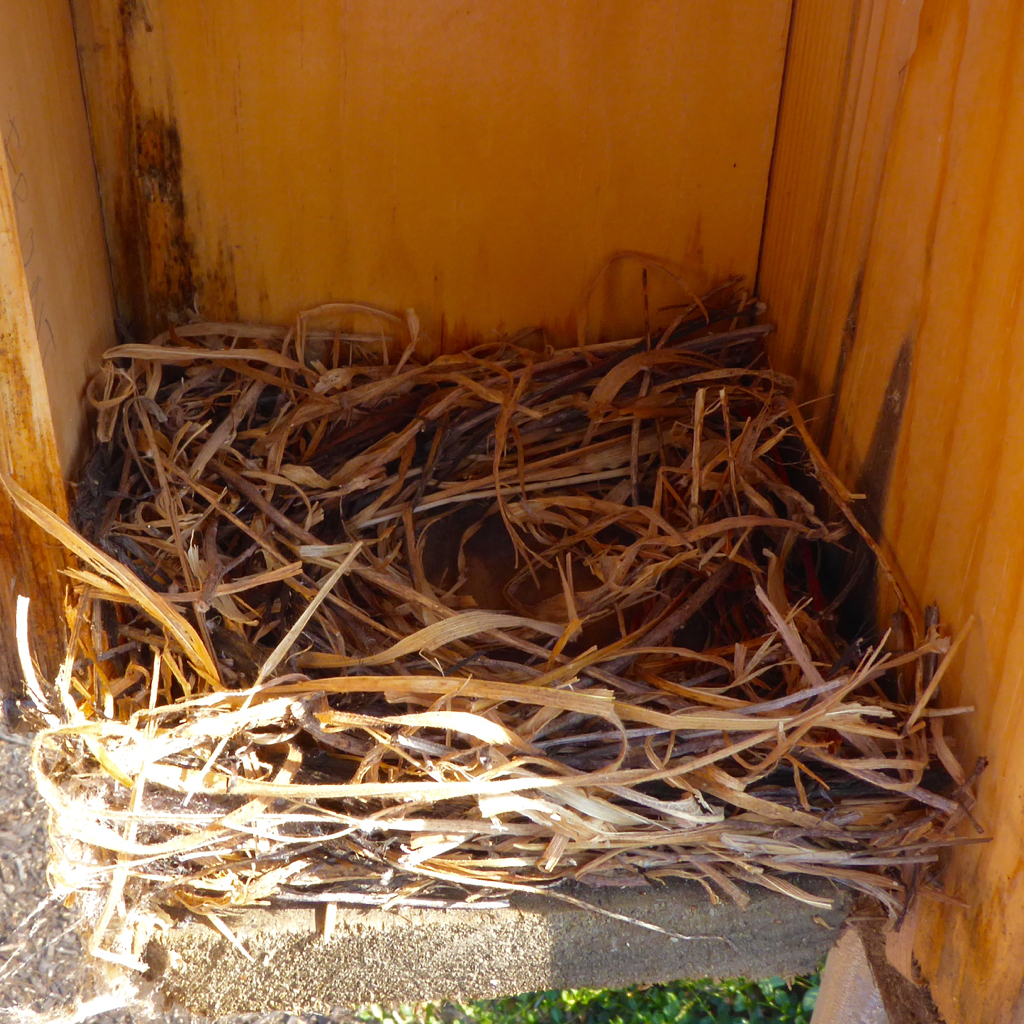
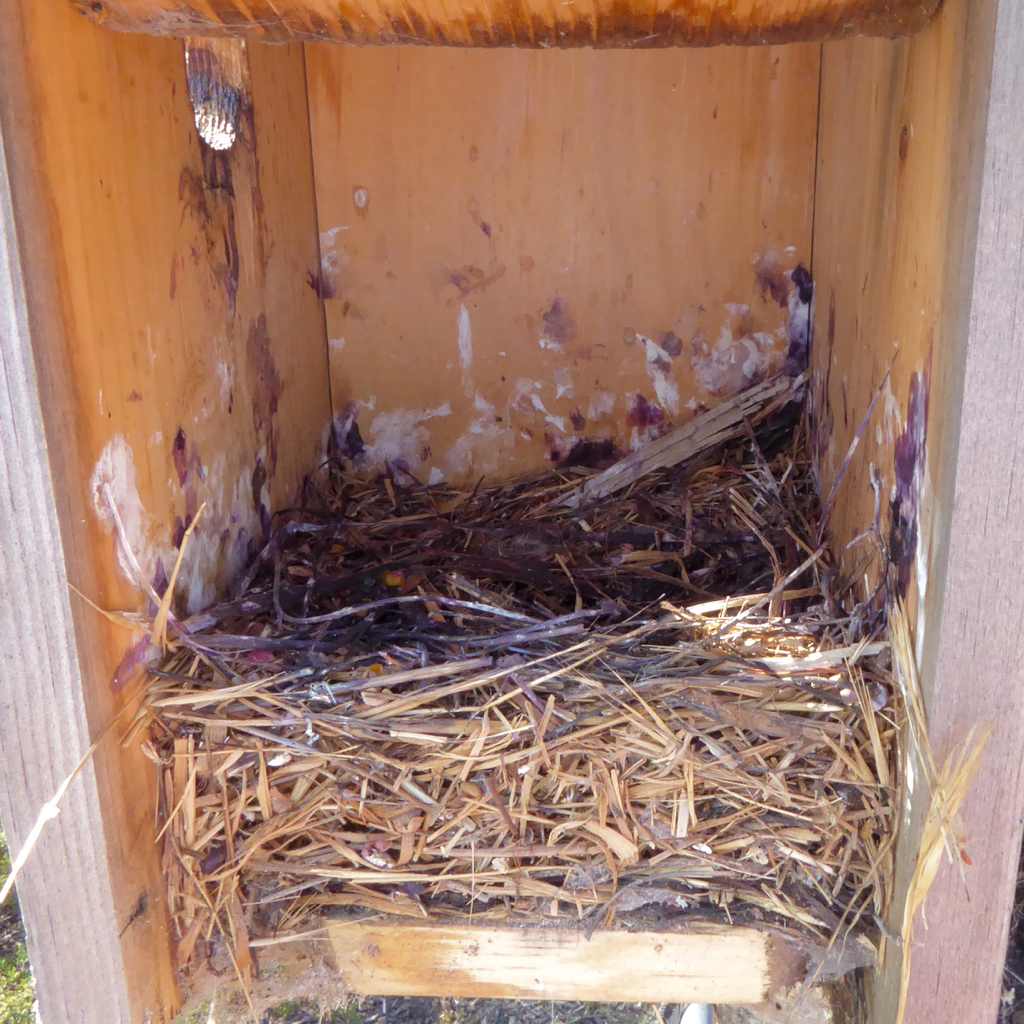
Both the nesting boxes in the front yard of the church campus had been occupied. One of the nesting boxes did not have a great deal of nesting material in it, and if there was an active nest, the eggs wound up sitting on wooden floor of the box:

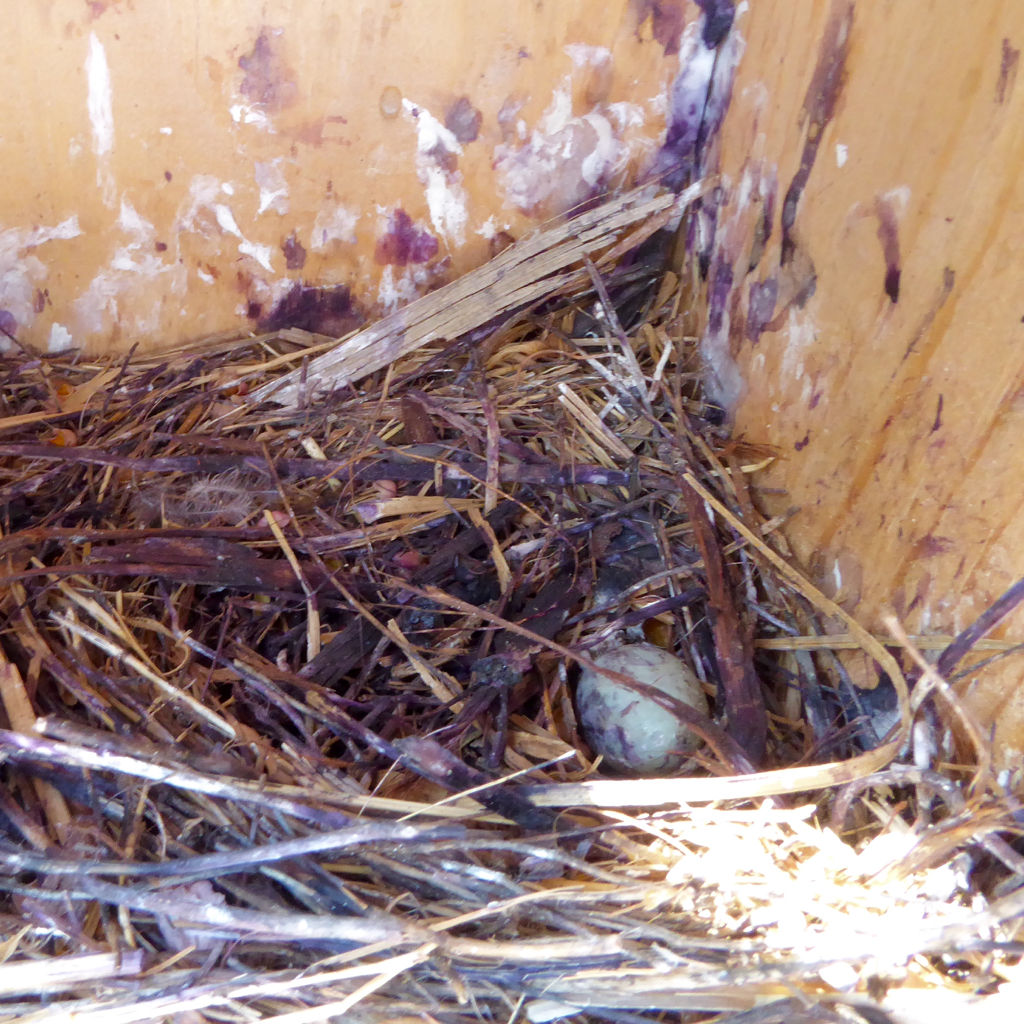
The other nesting, box, however, had clearly been occupied — probably for more than one year, as there appeared to be at least two layers of nesting material. Evidence of occupation included fecal matter, and one of my co-teachers, Francesca, found an infertile egg, with some black mold on it, buried in the nesting material:

I had seen Western Bluebirds active around the nesting boxes during nesting season, though I never saw any nestlings. The appearance of the nests and egg corresponds well with the description given of Western Bluebird nests and eggs in Nests, Eggs, and Nestlings of North American Birds (Baicich and Harrison, 2nd ed., Princeton Univ. Press, 1997): “Nest: A slight cup in a cavity. Of dry grasses and a few feathers. … Eggs:… Subelliptical to short subelliptical….Blue and unmarked. 21 x 16 mm.” I would characterize the blue as light blue, or sky blue.

The nesting boxes are showing signs of wear; the front of one split in two while we were opening it for inspection. So one project for the class this winter will be to make new nesting boxes.

Fanzines

From 1995 to 1998, I published a science fiction fanzine. This was before people published their fanzines on the Web, so it was photocopied, stapled, and mailed out. What eventually killed it off was the cost of printing and mailing two or three dozen copies; I didn’t have much money in those days.

It’s hard to explain the whole subculture which surrounded science fiction fanzines in the days before the Web. It’s important to know that there were several different types of fanzines: genzines, with multiple authors writing on topics of general interest to all science fiction fans; personalzines, written by a single person who wrote about whatever interested them; newszines, with news of science fiction fandom. Most fanzines were personalzines; genzines and newszines required a higher level of skill. Fanzines were distributed in several different ways: apazines were distributed through an APA, or Amateur Press Association, where fanzines of APA members were collated and distributed to all the members; a clubzine was distributed to the members of a science fiction club; but most fanzines were made available for the “The Usual,” which meant there were three ways to get a copy: send a letter of comment (LoC), send some modest sum plus a self-addressed stamped envelope; or send your own fanzine in trade. I started a fanzine primarily because I needed something to trade for other fanzines. Other science fiction fans, called “letterhacks,” fed their fanzine habit by writing innumerable letters of comment. And many fanzines carried reviews of fanzines they had received, along with the editor’s address. Fanzine subculture was really a social network organized around the written word; in a very real sense it can be seen as a precursor to today’s online social networks, because a significant proportion of the users of the earliest social networks — BBSs, Usenet, etc. — were science fiction fans, and those early users shaped later social networks. It is not a coincidence that one of the very first web logs, or blogs, was written and hand-coded by Poul Anderson, a science fiction author.

The other part of science fiction fandom’s social network was, and still is, conventions. A science fiction convention was where you met face-to-face the people that you had come to know through reading fanzines and writing letters of comment. Or maybe you didn’t meet those other people: many science fiction fans were (and are) strongly introverted, and a feature of some of the science fiction conventions I attended were sessions in which a whole bunch of people sat in a room together and read books; no one talked. To those of you who are extroverted, this will sound crazy, but for those of us who are strong introverts, this sounds like the perfect way to be social, and even though I never attended one of those sessions it was comforting to know they were an option. Science fiction conventions also attracted a fair percentage of people whom we would now call neuroatypical; it was normal to be neuroatypical at a science fiction fan, just as it was normal to be socially awkward, or to be socially adept, or to be neurotypical. Science fiction fans, in my experience, could be a very tolerant group of people; though at the same time, science fiction fandom has always been subject to intense feuds and violent arguments (to read about a recent science fiction kerfluffle, do a Web search for “rabid puppies hugo”). These conflicts, of course, made wonderful material for several months’ worth of fanzines and letters of comment, and a regular feature of most fanzines was “convention reports,” where someone would tell in excruciating detail all about their experience at some science fiction convention; and the next issue there would be letters commenting on the convention report, and later more letters commenting on the comments, and so it could go on for months. And of course the WordCon — the annual world science fiction convention — was the biggest convention of all, the one which generated more fanzine column inches than any other.

This year’s WorldCon is in San Jose, and it going on right now. I thought about going. I’ve only been to one WorldCon, in 1980, and it would be fun to go one more time. Then I thought of the crowds of science fiction fans mobbing the San Jose Convention Center. I don’t like crowds, even crowds of tolerant people who do things like sit in a room together reading books and not talking. And I remembered years ago, when I was still publishing my science fiction fanzine, I wrote a con report which said, in essence, “I didn’t go.” So this is my con report telling you why I didn’t go to the WorldCon that took place a short drive from where I live.