UU history trivia

Rev. Felix Danforth Lion was the first settled minister of the Palo Alto Unitarian Church in 1947. His daughter-in-law just stopped by to donate his doctoral robes to us, and while she was here she happened to mention that Dan Lion (as he was known then) officiated at the California wedding of folk musicians Richard Farina and Mimi Baez.

This wedding, in the summer of 1963, would have been the second ceremony for Mimi and Richard. They had married secretly in Paris in April, 1963. Mimi was only 18, and reportedly her parents didn’t like the fact that she had married an older man, a man who had been married when she met him at age 16. But it is not clear to me why Dan Lion performed this second marriage ceremony. The Baez family had raised their daughters as Quakers, so why get a Unitarian minister?

(Coincidentally, on Sunday at the Unitarian Universalist Church of Palo Alto, we’ll be singing a Mimi Farina’s tune for “Bread and Roses” at the 9:30 service.)

What I did with my Saturday

“The punk rock of choral music” — that’s what some people call Sacred Harp singing. It’s loud, highly rhythmic, often with fast tempi. And that’s what I did with my Saturday: I went to an all-day Sacred Harp singing. We sang nearly 90 songs out of a tunebook called The Sacred Harp, including a tune called “Rainbow,” originally composed in 1785 by Timothy Swan:

And this one, called Zion, composed in 1959:

Like punk rock, this is music that can be cathartic, ecstatic, raucous. Or just plain fun.

Process art: veggie printmaking

For summer Sunday school today, I wanted to do some process art. (In process art, you have fun with the process and don’t worry about the final product.) I decided to do veggie printmaking, using cut vegetables dipped in thick paint to make prints. One of the children today said it’s like stamping, except you use veggies instead of rubber stamps.

veggieart007

In the end, 14 children showed up, ranging in age from 3 to 13. It was a little challenging to keep the three preschoolers supplied with paint and veggies, although ultimately some of them stuck with it longer than the big kids. For paint, I bought a ten-pack of Crayola Washable Kid’s Paint. It’s thick enough to use for this project. The children liked some of the colors better than others. The dark blue and the light blue were especially vivid and fun to print with, and today we used up most of each of those 2 oz. bottles.

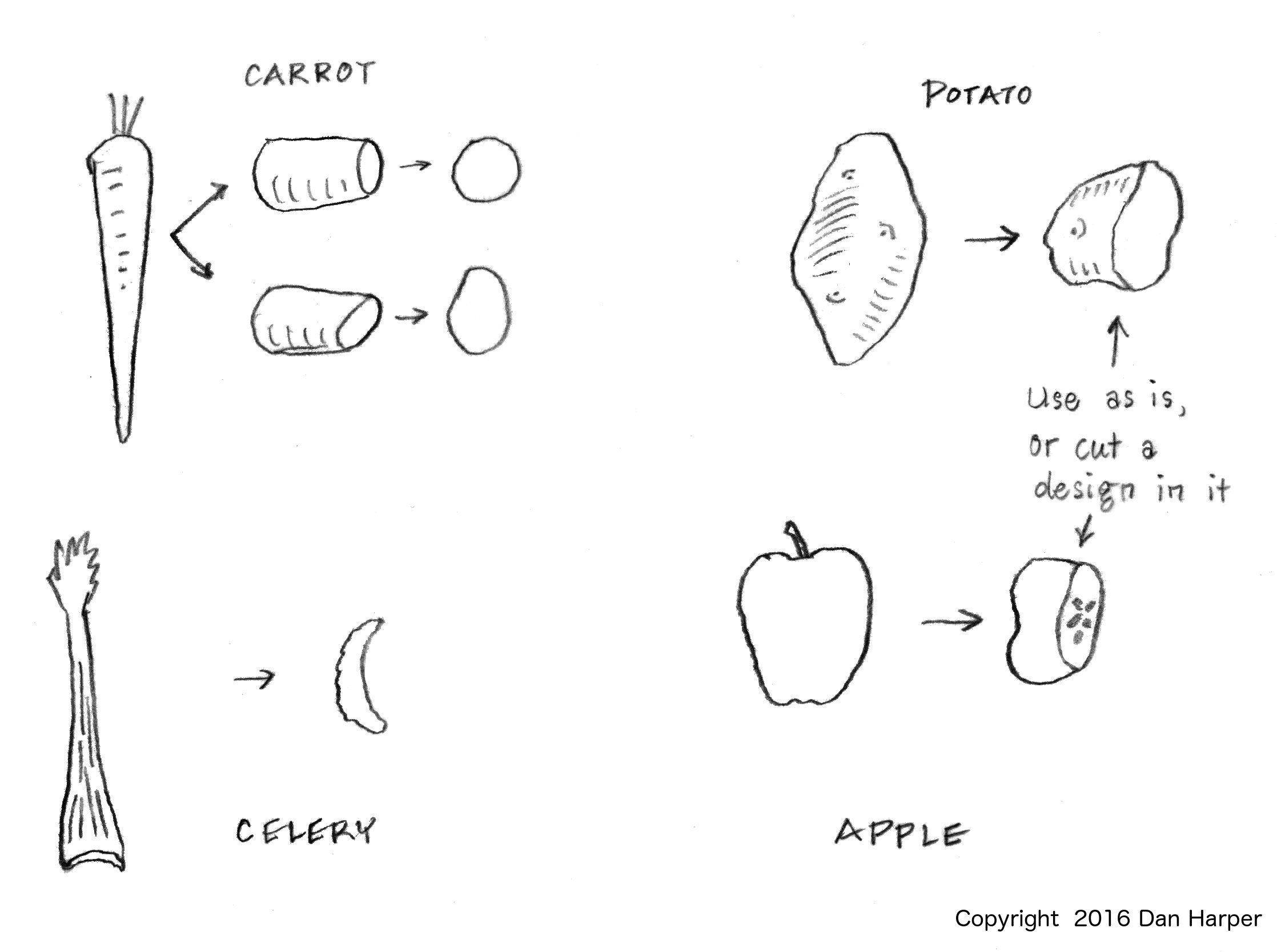
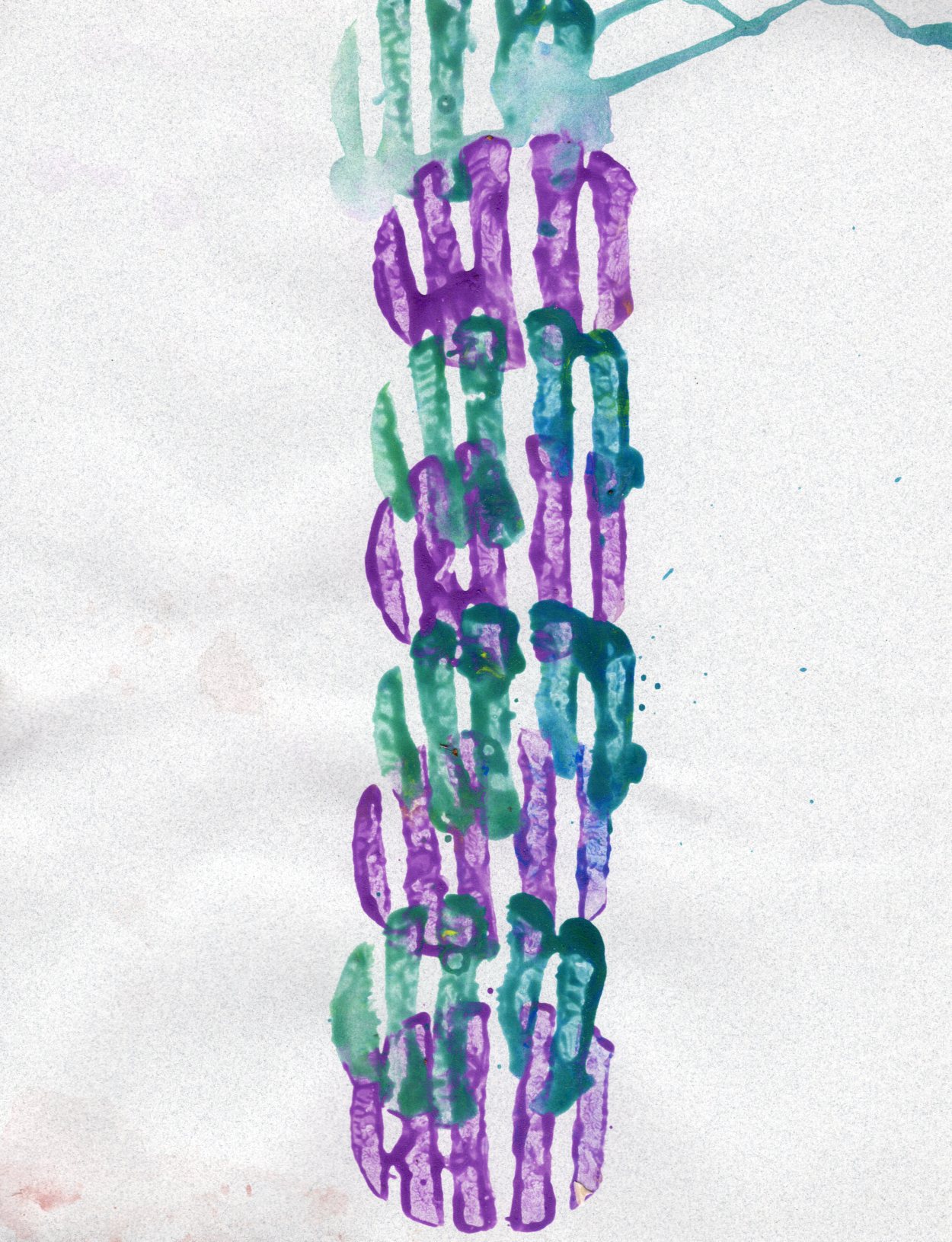
For veggies, I had a 5 lb. bag of potatoes, 3 apples, 4 carrots, 2 stalks of celery, and an eggplant. We used almost all the veggies today. I also had blunt-tipped serrated steak knives that the big kids could use to cut designs into the apples and potatoes. Some of the big kids tried elaborate designs like hearts and stars, but a third grader made the design I liked best: simple stripes:

veggieart006

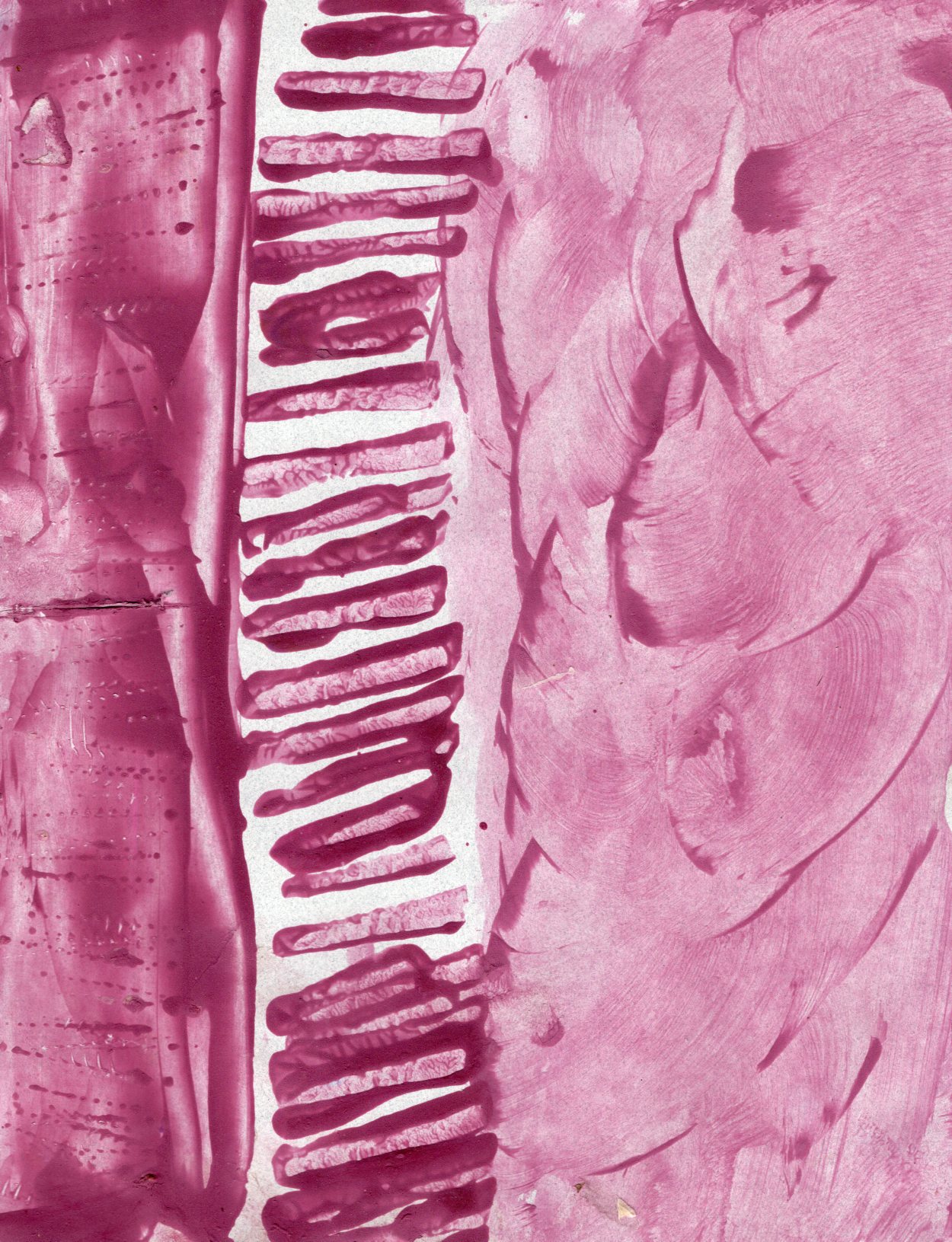
The apples proved to be a lot of fun to print with. They were pretty juicy, so they diluted the paint. Some of the children loaded them up with paint, and then rubbed them around on the paper. Here’s a print where a child did just that:

veggieart004

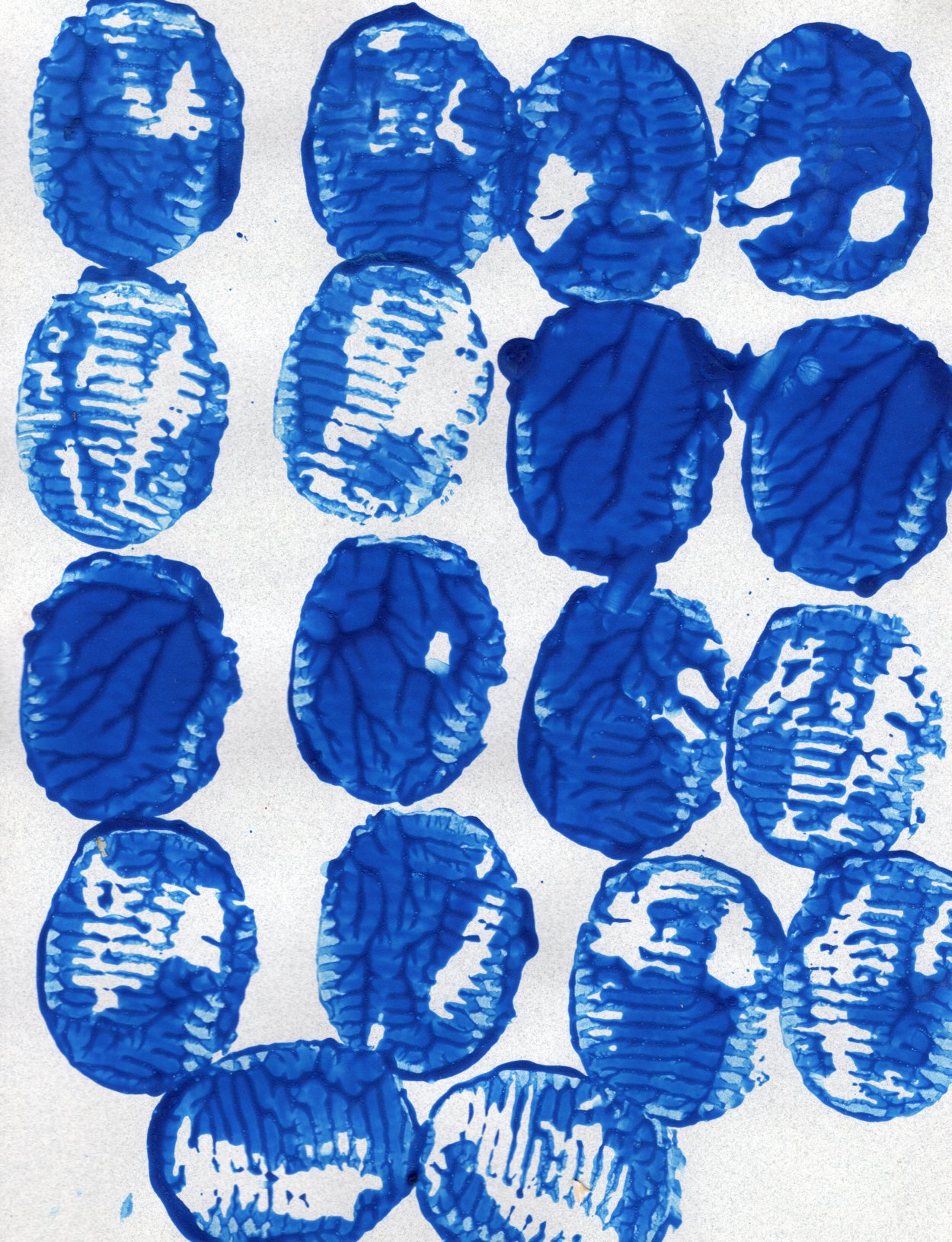
Another fun thing to do was to use the serrated knife to cut a potato in half. This leaves a textured surface, which makes really interesting images:

veggieart005

Printmaking lasted about thirty minutes, and then we transitioned into a game of tag. Most of the prints were pretty forgettable, and most of the children did not bother to take their prints home. Of course, that was the point: the fun was in the process.

Alexandria, Va., to Washington, D.C.

We left Alexandria and drove up to Washington, D.C., in time to have lunch with my old friend Rabbi Michael and his wife Lawyer Julie.

Michael and I hadn’t seen each other in almost a decade, and now his children are no longer children; two of them are older than I was when I met Michael. I was in the first few weeks of college, feeling a little bit adrift, when the fellow in front of me in the dinner line started talking to me about science fiction. Next thing I knew, he got me to go to Washington, D.C., to participate in a political rally in support of the Equal Rights Amendment (ERA) on the law of the Capitol building. That was my first trip to Washington, as well as the furthest south and the furthest west I’d ever been in my life. I guess it is not entirely surprising that two geeky, politically committed teenagers wound up as middle-aged progressive clergy committed to peace and social justice.

Capitol Hill Books

After lunch, Carol and I wandered over to the Capitol Hill Bookstore, a maze of books on shelves and books in stacks on the floor. The woman sitting at the front desk was listening to audio of the Congressional hearings on gun control. After dinner, my friend E took us over to East City Bookshop, a new bookstore near Capitol Hill. E pointed out the substantial number of books on politics and political figures, and said something to the effect that you’re just going to find more politics in a D.C. bookstore.

Carol and I went for a walk this morning while it was still relatively cool (that is, under ninety degrees). We came across this “Little Library” — not an official Little Free Library, or at least it is not listed on the official Web site — which Carol wanted to examine more closely because it has a green roof.

Little Library with green roof

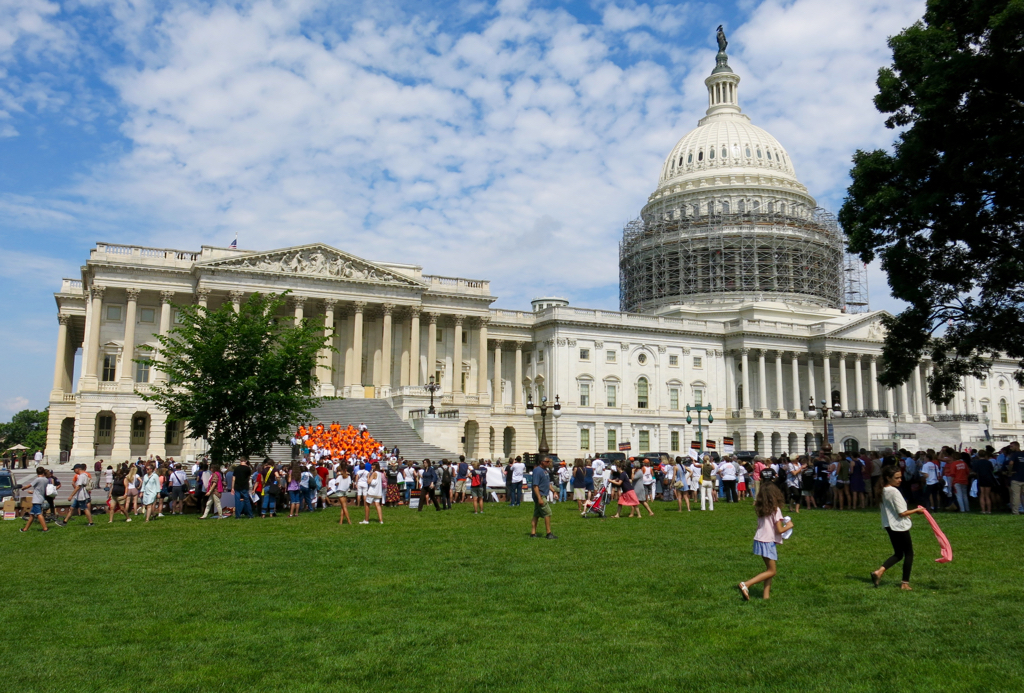
We walked as far as the Capitol building, where a political rally was in progress. About 75 people in bright orange t-shirts stood on the rear steps of the Capitol building in the hot sun. Perhaps a hundred people stood directly in front of them in the hot sun, and another couple of hundred stood further back in the shade. We could hear the amplified voice of a woman telling about how her son was permanently disabled by stray gunfire. Several of the people in the shade held signs that said “Disarm Hate.”

I am glad that we still have the right to freely assemble in the United States — more or less, with significant restrictions on public assemblies, and generally with a significant police presence. But I’ve changed my mind about protest politics since the days I protested on the lawn of the Capitol building for the Equal Rights Amendment; protest politics is easier and more exciting than face-to-face door-to-door political organizing, but I now believe protest politics simply polarizes opposition while it’s the face-to-face one-on-one conversations that actually work best.

Gun control rally, Capitol, DC

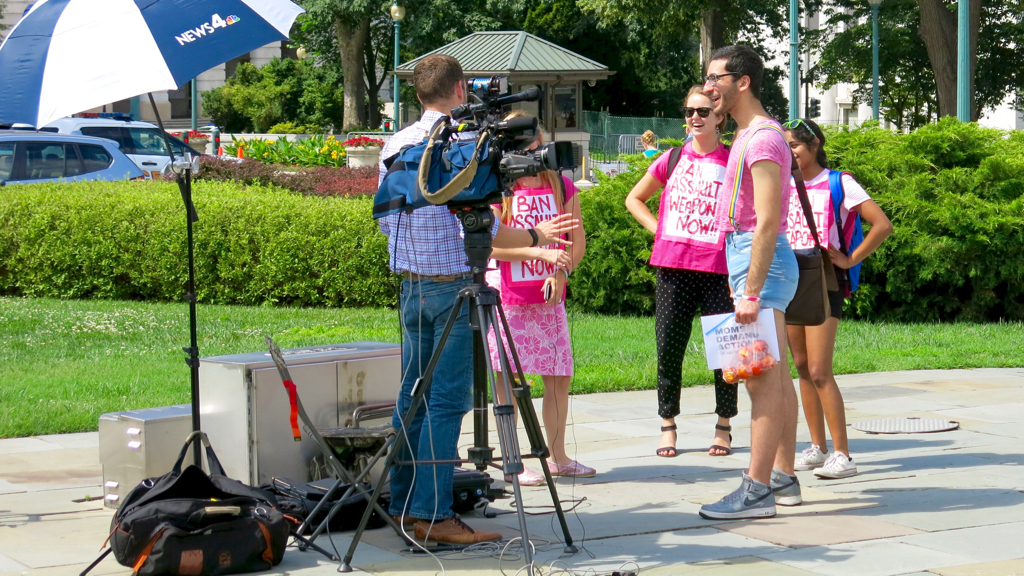
From a pragmatic standpoint, I suppose protest politics might work, a little, if you can get some media coverage. Carol and I saw several young protestors, dressed in bright pink shirts and signs, talking with a television news cameraman; their signs read “Ban Assault Weapons Now.” Perhaps they will get a five-second slot on the evening TV news. Perhaps someone will watch that five seconds on TV, and change their mind about gun control. But I doubt it….

Gun control rally, Capitol, DC

Marion, Va., to Alexandria, Va.

Carol found us a hotel in Marion, Virginia, of a better quality than we have been staying at: this hotel provided breakfast; and the breakfast was not just microwaved eggs (“eggs-in-a-bag”) and cold cereal and stale bagels, it was eggs and waffles cooked for you by a pleasant young woman in a small restaurant open to the public. This is high luxury for us, so we settled in to enjoy it.

At the table next to ours sat a man and woman who were somewhat older than us. She was one of those forthright Southern women in upper middle age who are polite and unafraid to say what they think about the world. These women remind me of my mother, for there is a type of New England woman who become equally forthright in upper middle age, with much the same polite-but-firm manner.

When I got to breakfast, she and Carol were having a lively conversation about fracking, while the woman’s husband sat between them, mostly listening. This forthright Southern woman did not like fracking. What you learn in Real Estate 101, she said, is that you own your property, but these fracking companies can come in and do what they want on your property and there’s nothing you can do about it. Carol said that out where we live, some counties were organizing to ban fracking, but our new friend told us that in many eastern states, the state government has said that counties and municipalities cannot ban fracking. She said she had been taught that ours is a government of the people and by the people, but not when it comes to fracking. She was funny and articulate, and clearly very angry. The companies that engage in fracking, and the elected representatives that kowtow to those companies, had better watch out: it is not wise to anger women like this. They may appear to be polite older ladies, but they do not forget, they do not forgive, and they do not give up.

Most of the rest of the day involved driving in the rain, with too many cars on the road, and too many drivers who had abandoned all common sense once it started to rain. The less said about this part of the day the better.

It was raining when we arrived in Aleaxandria, Virginia, where we are staying with an old friend of Carol’s, someone she knew in college, and his wife. He is a principled and very knowledgeable Republican who used to work for the Congressional Quarterly, and I always enjoy look forward to hearing his views on politics. But none of us wanted to talk about politics very much. None of us like Donald Trump very much though we all agree that he speaks some truths, particularly about the effects of globalization and free trade agreements on average workers. And none of us felt that Hillary Clinton is particularly trustworthy, though aside from that she might make a capable administrator.

We went out to dinner, and on the drive back we saw the fireworks display through the rain and mist. Our host remarked that today is the 240th anniversary of the Declaration of Independence. Only ten years to the 250th….
Happy Watergate Day

A friend from high school reminded me that yesterday was Watergate Day. On Saturday, June 17, 1972, five burglars paid by CREEP (Committee to Re-Elect the President) broke into the Democratic National Convention headquarters at 2600 Virginia Avenue, Washington, D.C., in the same building as the Watergate Hotel. They placed hidden microphones — bugs — and took photos of sensitive material. It eventually turned out that then-President Richard (“I Am Not A Crook”) Nixon authorized and had direct knowledge of the burglary; he resigned rather than face impeachment proceedings.

The Watergate scandal shaped the political consciousness of my immediate age cohort. People a few years older than my age cohort talk about the assassination of Robert Kennedy and Malcolm X as defining moments in their political awareness, but for us the defining moment was criminal activity by the President of the United States.

A few years after the Watergate scandal, I think in 1977, some friends of mine and I re-enacted the Watergate break-in in our high school: we walked in to the office of one of the principals, dumped dead insects on his desk, and informed him that we were bugging his office. I don’t remember suffering any punishment for this act of street theatre. At least we weren’t selling drugs, one of the things our high school was known for (the school had its own undercover narcotics agents), and at least we showed that we knew something about U.S. history.

I have never commemorated Watergate Day since then. But maybe I should, under the theory that those who forget history are condemned to repeat it. The current presidential election campaign has already descended to mud-slinging and name-calling, and outright criminal acts may be following close behind.

Grumpy old white guys

I feel qualified to speak about grumpy old white men, because (depending on how you define “old”) I qualify as a grumpy old white man myself.

Now, I’m a big fan of being grumpy. There’s plenty to be grumpy about: endless wars, people out of work, terrorists, the list goes on and on. I say: if you’re not grumpy, you’re not paying attention. But as a grumpy old white man, if I want anyone to take my grumpiness seriously, there are some things I should not do.

If I start sounding angry, then even though I may be right my grumpiness loses much of its persuasive force. This is Donald Trump’s problem. When he says we should cut military adventures overseas and do something to protect U.S. jobs, I think he gets it right. But when he goes on one of his angry tirades, all I can think is: “Another grumpy old white guy who bores you to tears telling you everything he’s angry about.”

And if I refuse to acknowledge it when someone gets the best of me, then I lose the high moral ground that grumpiness requires to be effective. (This holds true even when I happen to be right, and others wrongly disagree with me.) This is Bernie Sander’s problem. When he says we need to further reform the health care system and we shouldn’t trust Wall Street, I think he gets it right. But when he refuses to acknowledge that Hillary Clinton has a lock on the Democratic nomination, all I can think is: “Another grumpy old white guy who won’t admit he’s been beaten by a woman.”

Pfeh. All I can say is that these two guys are making the rest of us grumpy old white men look bad; which is too bad, because grumpiness combined with persuasive force, that takes a high moral ground, has the potential to be an enormous force for good.

“Down to the Valley To Pray”

The first known publication of “Down to the Valley To Pray” was in 1867, under the title “The Good Old Way,” in the book Slave Songs of the United States, ed. William F. Allen, Lucy M. White, and Charles P. Ware. In 1872, the Fisk Jubilee Singers included a different version of the melody in their songbook, under the title “The Good Old Way. In the mid-twentieth century, Leadbelly sang it for a Library of Congress recording

The song has also been taken up by white country and bluegrass singers. Flatt and Scruggs played it now and then, and Doc Watson did a lovely recording. In 2000, Alison Kraus popularized the song under the title “Down in the River To Pray,” which was part of the soundtrack to the movie “O Brother, Where Art Thou.”

For this version, I went back to the words and melody recorded in 1867. The melody begins and ends on the dominant, not the tonic, and both white and black musicians have sometimes emphasized that musically ambiguous ending; the final chord for this arrangement is D5 (dominant), not G (tonic).

Down in the Valley To Pray thumbnail

Down In the Valley To Pray (PDF, 5-1/2 x 8-1/2 in. for order of service inserts)

Performance notes: Because this song is so widely sung, you can safely sing it any way you want: blues, country, gospel, bluegrass, R & B, rock ‘n’ roll. Punk rock version, anyone? Or how about a hip hop version, with samples of Leadbelly’s classic rendition?