Intestine seaweed

There’s a species of seaweed that grows along the coast here in Cohasset with the scientific name Ulva intestinalis; so named because it looks like intestines. A common English name for it is Gutweed, though I’d rather call it Intestine seaweed.

Anyway, it’s one of my favorite seaweeds. How could I not like something that looks like little green intestines?

Strands of green tubular seaweed lying on a rock.

Asian American poetry books

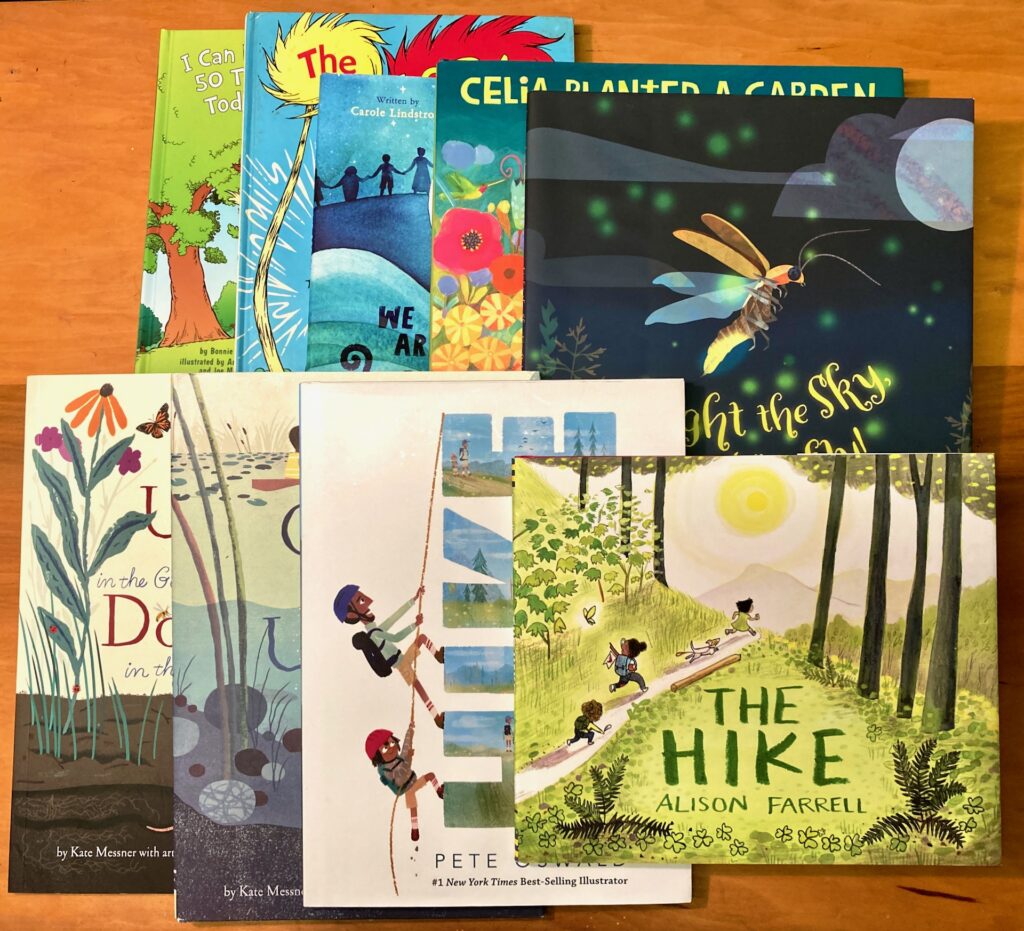
It’s Asian American Pacific Islander Native Hawaiian heritage month, and to celebrate I’ve been reading poetry — mostly by Americans of East Asian and South Asian descent (I had to narrow things down a bit, so left off West Asia and all the Pacific Islands). I’ve also been dipping into some Asian poetry. Here are some comments on two books I’ve been looking into:

They Rise Like a Wave: An Anthology of Asian American Poets

ed. Christine Kitano and Alycia Pirmohamed (Blue Oak Press, 2022) — I’m really enjoying this collection. No, I haven’t liked all the poems. But I have felt that even the ones I didn’t care for were worth reading. And there are some real gems in this book, like Mai Nguyen Do’s poem “Ca Dao,” which begins:

The rice field is the oldest concert hall.
I’ve sung for four thousand years
here: in my mother, my grandmother,
the mother goddess, God. I’m already dead
when I’m singing….

Do gives the feel of folk poetry, as you’d expect from the title (“ca dao” is a term for Vietnamese folk poetry). Yet the poem itself is very contemporary. The combination makes for a haunting and memorable poem.

I also liked Mary-Kim Arnold’s poem “Forgotten War” very much. At first, it might sound a little didactic in places, but the total effect is not at all didactic. Arnold takes us from scenes of the Korean War to a scene in a U.S. bar, and a few other places along the way. In the powerful last stanza, she says:

You can stay up all night counting corpses and still not know who you are.
You can open your mouth to speak but still not know your own name.

Overall, it’s a high quality collection with a wide range of contemporary poets, from a wide range of Asian backgrounds — West Asia, South Asia, East Asia, Pacific Islands. Highly recommended.

Your Emergency Contact Has Experienced an Emergency

Chen Chen (BOA Editions, 2022) — I liked Chen Chen’s first book of poems, and had high hopes for this new book. There some good poetry here, but the collection doesn’t have the energy and humor which marked the first book. And lines like this one made me lose interest: “I mean, is ‘shit,’ is ‘scat’ more or less literary than ‘poop’?” — that kind of line in the midst of a love poem just sounds academic and self-indulgent. Yet as I say, there’s some good poetry here. For example, I like the first stanza of “The School of Australia”:

Your emergency contact has called
to quit. Your back-up plan has backed
away. Your boyfriend has joined a boy band
named All Your Former Boyfriends….

The rest of the poem doesn’t live up to the promise of that first stanza. But it’s worth reading through this book to find little gems like that. And there’s no doubt that Chen Chen is a poetic talent worth watching. Worth reading.

“Rethinking Weeds”

The spring/summer issue of the Harvard Divinity School Bulletin features a number of essays on ecological spiritualities. I turned first to the essay by Vanessa Chakour titled “Rethinking Weeds.” As someone deeply interested in urban and suburban ecology, I was curious to see how someone might reassess the presence of weeds.

Unfortunately, the article starts off badly. In the very first paragraph, Chakour writes:

“With the combined increases of deforestation for agricultural purposes, suburban sprawl, and mass consumption of unsustainable food sources, the presence of invasive species and so-called weeds simultaneously increases. However, negative perceptions of these plants and the ‘war on invasive species’ contribute to greater ecological damage and exacerbate an adversarial relationship with the living earth by ignoring the needs of a diverse, functioning, and abundant ecosystem.”

Well… no.

Chakour claims that the “war on invasive species” (not a phrase I’ve heard widely used by field biologists and land managers) somehow contributes to “greater ecological damage.” In my experience, this simply isn’t true. As an example, consider the invasive species Yellow Star-thistle (Centaurea solstitialis). In Edgewood Natural Preserve, San Mateo County, California, Yellow Star-thistle began to dominate several grassland areas in the preserve, crowding out endangered endemic species. Biologists and land managers developed a control protocol that involves mowing at specified times of the year, then hand-pulling remaining plants to keep them from re-seeding. The end result has been to greatly reduce the numbers of Yellow Star-thistle and to help repair a highly damaged ecosystem, leading to a rebound not just in endangered native plant species but also native insect pollinator species. If Chakour considers this to be part of the “war on invasive species,” then far from contributing to “greater ecological damage” it has led to repair and regeneration of a unique grassland ecosystem. I know some of the people who have worked for years to control invasive Yellow Star-thistle at Edgewood Preserve, and for Chakour to claim that these people “contribute to greater ecological damage and exacerbate an adversarial relationship with the living earth by ignoring the needs of a diverse, functioning, and abundant ecosystem” is both ignorant and insensitive.

Part of the problem is that Chakour does not adequately define what she means by “invasive species,” “introduced species,” or “weed.” Ecological scientists might define an invasive species as an introduced (non-native) species that seriously upsets the balance of an existing ecosystem, i.e., that is ecologically destructive on a wide scale. Chakour and I both live in Massachusetts. In our state, we have about 2,200 plant species, of which about 725 are introduced species; of the latter, just “72 … have been scientifically categorized by the Massachusetts Invasive Plant Advisory Group (MIPAG) as ‘Invasive,’ ‘Likely Invasive,’ or ‘Potentially Invasive’,” according to Mass Audubon; only 36 species, or 5% of introduced species, are actually invasive in Massachusetts. Of the ten taxa of plant Chakour discusses in her essay, only one species is invasive here. The other 9 taxa she discusses include both native and introduced species that may or may not be classed as weeds, depending on who you talk to.

Chakour would have done better to discuss what we mean by “weeds.” We could define “weed” quite simply as a plant that a human being does not want growing where it happens to grow. To the homeowner who has been sold on the idea of a perfect green lawn, Dandelions (Taraxacum officianale) are weeds (T. officianale is not considered an invasive species here in Massachusetts). And yes, there are homeowners, golf course groundskeepers, and city parks departments who use toxic chemicals to get rid of weeds like Dandelions. Once you realize Chakour is actually writing about weeds, not invasive species — and if you remember that she’s writing about ecological spirituality, not science — then her essay makes sense.

Considered in that light, Chakour’s essay boils down to two main ideas. First, the word “weed” represents one human’s judgement, and thus may not be an accurate evaluation of a plant’s value to the wider ecosystem. Second, Chakour makes the interesting point that plants can be resources for physical and spiritual healing. Here she’s speaking as an herbalist, with what appears to be a deep knowledge of herbalism. Herbalism may be considered as a kind of ecological spiritual practice that heals both the body and the soul. So Chakour is arguing that if more people could know the health physical and spiritual benefits of some of the plants perceived as “weeds,” humans would be less likely to use toxic chemicals to get rid of those “weeds.”

It’s worth reading “Rethinking Weeds” to learn about one talented herbalist’s ecological spirituality. However, given the errors it contains, this essay should not be cited in any pragmatic discussion of land management or invasive species. This is unfortunate, because I believe ecological spiritualities could provide pragmatic help for addressing some of the big threats to Earth’s life supporting systems — but in order to do so, ecological spiritualities need to pay attention to the work of the ecologists, field biologists, climatologists, and other scientists, along with the land managers and other people who are actually out in the field working hard trying to save our planet before it’s too late.

Ecospirituality at Harvard

The spring/summer issue of the Harvard Divinity School Bulletin features essays on ecological spiritualities. Dan MacKanan, the Ralph Waldo Emerson Senior Lecturer in Divinity, provides the introduction, “Making a Space of ‘Alternative Spiritualites’,” saying in part:

“When the Divinity School committed to offering a fully multireligious master of divinity curriculum about 20 years ago, we expected to see an increasing number of Buddhist, Jewish, Muslim, and Hindu students. That has certainly been the case. But we have also been blessed by a steadily growing number of pagans, animists, readers of the Urantia Book or a Course in Miracles, practitioners of entheogenic or queer or African diasporic spiritualities, seekers, and people who affiliate with two, three, or more traditions. This diversity … invites us to reimagine both religion and the practice of ministry.”

In other words, religion in American has expanded beyond Christianity, and beyond those “world religions.” I’m putting “world religions” in scare quotes because these were the religious traditions that were judged to be the equal of Christianity, the religious tradition which until recently was assumed by many Western scholars to be the paradigm of all religion.

So McKanan and some others at Harvard Divinity School formed the Program for the Evolution of Spirituality to explore how religion was changing (or maybe to find out how our perception of religion has expanded beyond considering Christianity as the paradigm of all religion). I think I’d want to gently critique the name of this program for using the word “evolution” in the title. That’s not a value-free word, and comes freighted with all kinds of assumptions that may not be intended by the people who formed the program. In spite of that, the Program for the Evolution of Spirituality appears to be A Good Thing; I’ll be following their future work with interest.

Their first conference, held in 2022, was on ecological spiritualities. And the bulk of the spring/summer issue of the Harvard Divinity School Bulletin is devoted to essays that apparently grew out of that conference. I’ll have more to say about some of those essays in later posts….

A cultural phenomenon

Focused as I am on my favorite obscure corners of popular culture, I usually miss the really big worldwide trends. So I was completely unaware of The Wiggles until I read about them on a science fiction fandom blog.

If you too have remained blissfully unaware of The Wiggles, they’re an Australian band that released their first album in 1991. The Wiggles write and perform songs for preschoolers (and their parents); three of the four of original members of the band had degrees in early childhood education.

I did a deep dive into Wiggles subculture today. I listened to a bunch of their music. I read about how children would come to live shows dressed as Emma, the Yellow Wiggle, complete with yellow dress and yellow bow in their hair. More importantly, while watching their videos, I saw how they create developmentally appropriate live performances and videos. Yes they’re primarily entertainers (not educators), yes there are problems with what they do, but on the whole I’m impressed with the way they treat young children with respect.

As one small example of what I mean about treating young children with respect: When they begin a live performance, they do not say, “Hello, boys and girls” — a vaguely condescending formula that leaves out parents — they say “Hello, everyone.” That’s really thoughtful.

I’m also impressed with the way they’re changing with the rapidly chaning culture around them. Take, for example, their video “Di Dicki Do Dum” released last August. In the dance routine, Tsehay Hawkins, the yellow Wiggle, and Simon Price, the Red Wiggle, combine Euro-folk dance with urban dance moves. This kind of cultural mash-up is A Big Thing in the obscure world of folk dance. The venerable Cecil Sharp House in England, center of the universe for many who do Anglo-American Euro-folk-dance, now mixes all kinds of folk dance traditions:

“‘Hip-hop is the folk dance of today,’ said Natasha Khamjani…. They’re both social dances created for crowd participation, both also existing on the fringes of the mainstream, she added. Khamjani was taking a quick break during a rehearsal of a high-energy performance blending Bollywood moves and English country dancing with the unmistakable bounce of hip-hop moves.” [As reported by the BBC]

The Wiggles also make pretty darned good music. Both the singing and the accompaniment in the “Di Dicki Do Dum” video are really well done. The music has to be good. Preschoolers are going to listen to recordings of the sings over and over and over and over again. If the music sucks, parents are going to tear their hair out, and never buy any more Wiggles music or go to any more Wiggles shows.

Looking at The Wiggles videos makes me think about what we do in our Unitarian Universalist religious education programs and in our worship services. Unlike The Wiggles, we’re not in the entertainment business. But if we really want to welcome families with young children, I realized I can learn a lot from them: awareness of developmental appropriateness, respect for audiences, use of dance and movement, respectful cultural mash-ups, and so on.

Having said that, I’m now done with The Wiggles. And trying desperately to forget their songs.

A screen grab from the video, showing a young woman wearing yellow and an older man wearing red dancing, while off to one side a man wearing blue and a man wearing purple play musical isntruments.

Clearly I’m in the wrong job

The Trinity Foundation, a religious watchdog organization, recently released its list of “100 Highly Paid Christian Ministry Executives.” The Foundation based their salary information on IRS Form 990. However, since churches, synagogues, and mosques aren’t required to file Form 990, they don’t have to provide any salary information. Thus, highly paid clergy like Joel Osteen do not appear on this list.

The top earner? David Cerullo, the CEO of Inspiration Ministries (radio and television stations) earned $7,319,371. No. 3 on the list is J.C. Watts, Jr., the CEO of Feed the Children, who earned $1,870,000 (I do wonder how many children you could feed with $1.8 million).

Franklin Graham earned $740,704 as CEO of Samaritan’s Purse, a relief organization. But he is also president of the Billy Graham Evangelistic Association, which claims to be a “church,” which means his salary there is not reported to the IRS. I’d bet his total income is well over a million a year (see Mark 10:23).

It’s not just conservative Christians who earn the big bucks. Andrea Kelly, the Head of School at Friends Academy in Locust Valley, N.Y., earned $635,702.

For comparison, the most recent UUA salary guidelines recommend about $113,000 as the top salary for a Unitarian Universalist minister, serving one of our largest congregations in an area with the highest cost of living. I serve a small congregation is a less expensive region, so guess what — my salary is well below that.

Dang. I should have ditched Unitarian Universalist ministry and gone into Christian broadcasting or Christian relief work.

Clearly I’m in the wrong religion

The Trinity Foundation, which monitors religious fraud, has a project called “Pastr Planes” where they track the use of private jets by mega-church pastors, “ministry executives,” and staff of Christian universities.

As far as I know, the best you can do as a Unitarian Universalist minister is to get a plane ticket paid for under an IRS-approved accountable reimbursement plan (often incorrectly called “professional expenses”). I guess I’m in the wrong religion.

On the other hand, flying coach is sinfully bad for the environment. Flying in a private jet, therefore, is a super huge mega-sin. I would not want to be them when the Last Judgement (or whatever their theology calls for) comes and they are called to account for their sinning.

A new way to do social media?

A couple of weeks ago, The Verge published an article by David Pierce that asks the question, Can ActivityPub Save the Internet?

As David Pierce points out in his article, the ActivityPub protocol has the potential for making social media more like email (in a good way). Email is an open protocol. If social media ran like that, you could post on Facebook and your friends on Twitter, Youtube, Instagram, and TikTok could all see your posts; they could also react to your posts and respond to them.

This could change the way websites work, including this website/blog.

Especially now that WordPress is working on implementing the ActivityPub protocol. Since something like a third of all websites are based on WordPress, that’s a big portion of the web that could wind up being compatible with the ActivityPub protocol. WordPress is also looking at a few other, similar open protocols such as Nostr and the AT protocol, so it seems likely that they will implement some kind of open social media protocol.

This makes me think seriously about installing the ActivityPub plugin on this blog. If I do, you’ll be able to follow this blog from Mastodon, and also from Medium, Tumblr, and Flipboard, all of which are integrating with ActivityPub protocol in various ways.

So… when I can find the time… I’ll install ActivityPub on this blog and see how it goes….

Deconstructing “covenant,” pt. 2

…My point in the previous post was to deconstruct “covenant.” But why do we need to deconstruct “covenant”?

Unitarian Universalists today love to talk about covenant as if it has a long history. I’m arguing that covenant was a mid-twentieth century invention by Conrad Wright and James Luther Adams. It does not have a long history. And that’s a good thing. The history that Conrad Wright invented for covenant has too many negatives for me to feel comfortable.

When we deconstruct in the Conrad Wright conception of covenant, here are some of the things that we begin to understand:
— Historically, covenant was designed to promote theocracy;
— it was dependent on patriarchy;
— it was rooted in enslavement of Africans and Natives;
— and it supported British imperialism and colonialism.
Plus the Wrightian history of covenant ignores our Universalist heritage.

These are some of the things that Wright either wasn’t aware of or ignored. I don’t think we can remain unaware of these things, or ignore them, any longer. We have to deconstruct “covenant” so we can reconstruct it without quite so many negative aspects.

Since the time of Wright and Adams, others have tried to articulate a vision for Unitarian Universalist covenant, most notably Alice Blair Wesley in her Minns Lectures from the year 2000. But all these visions for covenant start with the assumptions laid out by Conrad Wright and James Luther Adams, and don’t really question those assumptions. I feel that none of these new visions for covenant adequately addresses theocracy, patriarchy, enslavement, or colonialism. And in my opinion, none of the visions for covenant takes Universalism seriously enough. To put it succinctly — none of these new visions of covenant adequately deconstructs the underlying assumptions of “covenant.”

Deconstructing “covenant” in this way has helped me to understand why I’ve been feeling increasingly uncomfortable when Unitarian Universalists talk about “covenant.” When we talk about “being in covenant,” we have to start listening for echoes of patriarchy, colonialism, enslavement, and so on. When we accuse others of “breaking covenant,” we have to start have to listening for echoes of the old Puritan practice of public shaming of church members. When we think of covenant as an organizing principle, we have to ask ourselves why we are ignoring the Universalist tradition.

If we’re unwilling to deconstruct “covenant” — how are we going to reconstruct “covenant” to remove the lingering taint of sexism, enslavement, anti-democratic theocracy, and colonialism? Perhaps deconstructing and then reconstructing “covenant” would allow us to make some much-needed progress in our anti-racism work, our ongoing efforts to get rid of patriarchal structures, and our beginning efforts to understand the role of religion in colonialism

If we’re unwilling to deconstruct “covenant” — how are we going to include Universalism once again in our central organizing principles? I’m afraid the answer here might well be that most of us don’t care about Universalism any more. Perhaps it would be better if we’d openly acknowledge this, because we’re “sitting on the franchise,” getting in the way of other groups trying to spread the happy religion of universal salvation. Or perhaps it would be best if we re-engaged with our Universalist heritage, with its incredible diversity of belief and practice; perhaps that would help us more than an attempt to unify ourselves with a tainted vision of “covenant.”

Deconstructing “covenant,” pt. 1

Unitarian Universalists talk a lot about “covenant.” We didn’t used to talk about covenant. As near as I can tell, our mild obsession with covenant came about during the merger of the Unitarians and the Universalists, a process which began in the 1950s and continued for years after the legal consolidation of the two groups in 1961. We were thrashing about trying to find something that held us together. The Universalist professions of faith weren’t acceptable to the Unitarians, and the Unitarian affirmations of faith (like James Freeman Clarke’s Five Points of the New Theology) weren’t acceptable to the Universalists.

Two Unitarian scholars, James Luther Adams and Conrad Wright, had long been talking about the importance of covenant to their Unitarian tradition. Wright was a historian who interpreted the entire history of Unitarianism in the United States as centering around covenant. This was a problematic interpretation, since by the early twentieth century many Unitarian congregations didn’t have written covenants. I’m not sure, but Wright may have felt that the Unitarians kind of forgot covenant, and that forgetfulness led to the decline of Unitarianism in the 1930s. In any case, he saw the re-establishment of covenant as central to the revitalization of Unitarianism in the mid to late twentieth century.

Wright continued to trumpet covenant after consolidation with the Universalists. While his primary area of expertise was in Unitarian history, he dipped into Universalist history and claimed to find that the Universalists were pretty much like the Unitarians when it came to congregational polity and the centrality of covenant.

I don’t find Wright’s interpretation of the historical facts to be terribly convincing. Covenant was in fact central to most Unitarian congregations that began life as Puritan churches in New England. Covenant was also important to some nineteenth century Unitarian churches which had been founded by New England settlers moving west. But in my research in the archives of local congregations, covenant becomes less important as an organizing principle beginning in the nineteenth century and through the early to mid-twentieth century.

In many eighteenth century New England congregations, there were two parallel organizations, the church and the society. The society owned the real property and managed the finances; the church consisted of the people who signed the church covenant and stood up in front of the congregation and confessed their sins. Membership in the society was typically through buying a pew and contributing annual rental for your pew (often restricted to males, since there were legal limitations about females owning property), and generally speaking only males could take on leadership roles in the society. It appears that on average significantly more women than men signed the covenant to become a part of the church. People of African or Native descent could join the church, but may have been barred from owning pews or serving in leadership roles in the society.

Thus the entire system of covenant was bound up with discriminatory distinctions between males and females, and between persons of European descent as opposed to persons of African or Native descent. Nor is this an accident. Covenant in the New England Puritan tradition was a means for upholding a theocracy that placed white males at the top of the social hierarchy (note that I’m being sloppy here by including the Pilgrims in the umbrella term “Puritan”). Today, some might call this racism or white supremacy, though some historians would argue that these are anachronistic concepts when applied to the seventeenth and eighteenth centuries; a better way to put this is to simply say that the New England Puritan tradition was inextricably linked to enslaving people of African and Native descent. On the other hand, we can say with some certainty that this Puritan social hierarchy was patriarchal and sexist. In addition, Puritan theocracy was also tied in with the larger project of British colonialism; not quite as blatantly as in the resource-extraction economies of the southern plantation colonies, but the British empire clearly say the value of exporting religious dissidents to “tame the wilderness” thus opening up the area to somewhat “softer” economic exploitation by the empire.

In short, covenant was bound up with patriarchy, colonialism, and slavery. This is not to say that covenant is forever tainted by its origins. But these are parts of the story that Conrad Wright passes over. If we’re going to put covenant at the center of our religious tradition, at the very least we need to acknowledge that covenants were part of a theocratic political structure that was rooted in the oppression of the majority of people in the society.

During the nineteenth and early twentieth centuries, the distinction between society and church seems to have slowly been forgotten; along the way, covenants often seem to have disappeared as well. So, for example, when I was doing research for the 300th anniversary of the Unitarian church in New Bedford, Mass., I found evidence for the existence of a covenant in the congregation’s eighteenth century archives, now stored at the New Bedford Whaling Museum. By the late nineteenth century, during the long ministry of William Potter, one of the leaders of the Free Religious Association, I found no evidence for the existence of a covenant. The distinction between society and church continued into the 1940s, since the ministers were not allowed to attend the annual meeting of the congregation — it appears that in the eighteenth century the minister was charged with oversight of the church, the lay leaders with oversight of the society — but with the end of pew ownership in the 1940s, that distinction finally dissolved. By the early twenty-first century, there was no distinction between church and society, or more precisely the church withered away leaving only the society.

In another congregation I researched, the Unitarian church in Palo Alto, Calif., which existed from 1905 to 1934, I found no evidence at all for the existence of a covenant. From the research I’ve done in local congregational archives, I’ve mostly found no evidence for a covenant in the early twentieth century. The only exception is the Unitarian Society of Geneva, Ill., which still maintains the covenant originally written and signed by the founders of that church — who were all emigrants from New England to what was then the frontier. That covenant was substantially revised circa 1900, to shorten it, and to remove all mentions of God or the Bible. The church almost went moribund in the early twentieth century, until Charles Lyttle, professor of church history at Meadville Lombard Theological School, stepped in to rebuild the church for use as a training congregation for his Unitarian theological students. Perhaps it is due in part to Lyttle’s academic influence that the Geneva covenant remained active (and one wonders if the historian Charles Lyttle helped draw the attention of the later historian Conrad Wright to covenant).

Thus covenant appears to have mostly disappeared from Unitarian congregations in the nineteenth century. But Conrad Wright also argued that Unitarian churches were bound to each other through congregational polity, which was another sort of covenant. The most important document here was the Cambridge Platform, a seventeenth century Puritan document that outlined how Puritan churches were supposed to relate to one another. The Cambridge Platform looked to the Bible as revealed scripture (the Word of God) to determine how churches related one to another. The Cambridge Platform was outdated almost as soon as it was written — it called for every church to support both a preaching minister and a teaching minister, which proved to be economically impossible — but it also simply didn’t apply to some Unitarian congregations.

Take, for example, King’s Chapel in Boston, which became Unitarian in 1785. It was originally affiliated with the Church of England, but became independent during the American Revolution; at which point, it removed all references to the trinity from its Book of Common Prayer, and became Unitarian in theology. King’s Chapel came from a tradition of episcopal polity, and the Cambridge Platform formed no part of its history until, at the earliest, it affiliated with the American Unitarian Association sometime after 1825. Or take the Icelandic Unitarian churches of Canada, which came out of Lutheranism, another religious tradition based on episcopal polity. Perhaps we could argue that the Unitarian tradition of covenant in North America is syncretic, taking in various influences, and transmogrifying them.

But I think it’s more accurate to say that twentieth century Unitarian covenant was something that Conrad Wright made up, using historical materials. Covenant is not an old tradition among us, it’s a newly made-up tradition. That being the case, I’m not sure I want to use a made-up kind of covenant based on Puritan theocratic patriarchal concepts rooted in colonialism and slavery.

Furthermore, as someone who thinks of myself as more of a Universalist than a Unitarian, I’m trying to figure out why we should use a made-up kind of covenant that pretty much ignores Universalism. Conrad Wright did extensive research in Unitarian covenant, but it’s clear from his writings that his knowledge of Universalist history was not very deep. James Luther Adams, the other co-creator of twentieth century Unitarian covenant, knew his Unitarian tradition quite well but did not know Universalism nearly as well.

Whether or not the Unitarians were always actually unified by covenant (or if it was something that Adams and Wright invented in the mid-twentieth century), it’s quite obvious that the Universalists were not unified by covenant. The Universalists were unified by a common theology of universal salvation, which was expressed in affirmations of faith. Because the Universalists differed so radically in the details of their universalist theologies, their affirmations of faith had to be very broad, and mostly were quite brief. Unitarian documents, such as church covenants and the Cambridge Platform, tended to be quite wordy — the Cambridge Platform fills up a small book — but the Universalists’ “Winchester Profession” of 1803 comes in at fewer than 100 words. Not that the Winchester Profession, or any later profession of faith, actually served to unify the Universalists; they’ve been an almost anarchistic group from the start; the point is that they did not have covenants in the way Unitarians had covenants. Thus the concept of covenant, as promoted by Adams and Wright, was a Unitarian thing, but it was not important to Universalism.

My point here is to deconstruct “covenant.” More on this tomorrow….