
Documents on Eliza Tupper Wilkes in Palo Alto

The documents below tell the story of Rev. Eliza Tupper Wilkes and her efforts to start a Unitarian organization in Palo Alto, in the years 1895-1896. (Though a Universalist, she was at that time working for the Unitarians.)

Wilkes first came to the Bay area in 1890: “By the early 1890s, as heart problems and a hectic schedule caught up with her, Wilkes began to spend the winter months in California. During the winter of 1890-91 she served the Alameda, California, Unitarian Church.” [Article on ETW, http://www25.uua.org/uuhs/duub/articles/elizatupperwilkes.html accessed Oct. 10, 2013, 14:32 PDT]

———

In 1893, she began serving as Rev. Charles Wendte’s assistant in Oakland. “It should be added that when, in 1893, Mr. Wendte reassumed the Unitarian superintendency for the coast for two years more, he invited Rev. Mrs. Eliza Tupper Wilkes to become his assistant and substitute during his absence. Mrs. Wilkes greatly endeared herself to the congregation during her eighteen months of earnest and efficient service.”

— The Unitarian (collected ed., Boston: George Ellis), March, 1897.

———

Since hiring Wilkes allowed Wendte to hold down another paying job, as the Pacific Coast superintendent for Unitarians, he had to pay her out of his own pocket. She was charged with overseeing the Sunday school, pastoral calling, adult organizations, and she was asked to do occasional preaching. Wilkes resigned from Oakland in March, 1895. “Her health had not improved, and Wendte could not afford to pay her.”

— Arnold Crompton, Unitarianism on the Pacific Coast (Starr King Press / Beacon Press, 1957), p. 151.

———

By November, 1895, the Pacific Unitarian reported that the Women’s Unitarian Conference voted to continue its support for Wilkes’s missionary work. At that time, she was living in Berkeley.

— “Notes,” November, 1895, vol. 4, no. 1 (San Francisco: ), p. 6.

———

According to Doug Chapman, Wilkes “was the first woman to preach at the Stanford University Chapel — in May, 1895. Her sermon was titled ‘Character in the Light of Evolution’.”

— “Dakota Territory’s Eliza Tupper Wilkes: Prairie Pastor,” paper delivered at the Dakota Conference on History, Literature, Art, and Archaeology, Augustana College, 2000. [For an account of this sermon, see this blog post.]

———

The Woman’s Club was addressed, at its last meeting, not by Miss Holbrook as advertised, but by Rev. Eliza Tupper Wilkes, of the First Unitarian Church, Oakland. Not having a special address prepared, she was asked to speak of Woman’s Clubs. She said they were in no sense an achievement but a prophesy: the worst use to make of them is as a mutual admiration society, as has been done. That they are needed is an advertisement to the world that women have not yet found their place. Until this is accomplished and men and women stand on the same plane in our meeting Woman’s Club will be a necessity as a means to an end. Separate clubs are a training school for women. In these they hear their own voices, learn executive ability, and gain experience. Yet such clubs are one-sided, disjointed affairs.

As a mother of six children she spoke from experience when she said that mothers needed relief from their home duties, hence she would not have the club a mother’s meeting but a meeting of mothers; a place where they should not hear so much of their own duties, but something of the duties of fathers, if need be. but particularly of outside things, of literature, science, art, that they might take home with them some thought to brighten the daily routine.

— The Palo Alto Times, vol. 3, no. 18, May 10, 1895, p. 2.

———

Mrs. Wilkes will hold Unitarian services at Parkinson’s Hall, Sunday afternoon, November 3rd, at 4 o’clock. All are invited.

— The Palo Alto Times, vol. 3, no. 44, November 1, 1895, p. 3.

Continue reading “Documents on Eliza Tupper Wilkes in Palo Alto”
Sermon by Eliza Tupper Wilkes, Stanford, 1895

This sermon by Rev. Eliza Tupper Wilkes (1844-1917), preached at Stanford, comes from “The Sunday Sermon,” a weekly summary of the sermon preached at Stanford printed in the Daily Palo Alto of Stanford University, vol. 7, no. 78, Monday, May 6, 1895, p. 1. This reads like someone’s careful notes of the sermon; it is too awkward, and far too short, to be an actual reading text. Nevertheless, it gives a good sense of how Wilkes preached late in her career.

The sermon also gives a opportunity to see one way an experienced evangelist made herself known in a community. She doubtless chose to address the topic of evolution because it would be a topic of interest in a university chapel. In less than six months, Wilkes had gathered a group of Unitarians and other liberals, who then formally organized as a Unity Society (not a full church, but a lay-led society) in January, 1896. The Unity Society did not last long, but it laid the groundwork for the Unitarian Church of Palo Alto, which was organized in 1905, and lasted until the Great depression.

———

The sermon Sunday morning was preached by Mrs. Eliza T. Wilkes of the First Unitarian Church of Oakland. The subject was “The Forgiveness of Sins in the Light of Evolution.”

Do not think I do not realize the awful presumption of speaking to you on such a subject. A short time ago a minister asked me if I believed in evolution. I said most certainly I did so far as I had gone. Sin has been considered the choice of the imperfect for the perfect. Today most of us regard it as a crime against life. Your body, complete in every function, is a model body. Violating anything which retards this, is sin; retarding life is immorality and bin. Dying to live is full complete life. A criminal has more to hope for than the licentious person. We see all around us the results of sin. It is as much a sin to think wrong as it is to do wrong.

Evolution, with its awful fact of heredity, emphasizes the old law that the father’s sins descend upon the children. Children suffer for sins not only of the father but of the third and fourth generations. It emphasizes the curse against wrong-doers. We are not living in a universe of goodness. Hell cannot be put off. “Whatever a man soweth that he reapeth.” Are we held hand and foot in the inexorable grip of vice? Cannot we get free? Must the prodigal son be stricken from the gospel’s pages? True, there are no longer any punishments left in our philosophy, only consequences. Are there no evangelists for us to see? Are there none to save the captive and to help the lost?

A few months ago I was preaching in a room over a saloon. A friend who always waited to see me home was standing in the doorway. I preached on the well known subject, “Salvation Through Character.” My sermon sounded void and empty, but when I reached the door my friend, who drinks, gambles, and according to the old saying, “whose worst enemy is himself,” said, “I like those sermons on character, but how about us poor devils who haven’t any?” We must ask that question or stop preaching. If the philosopher can not help those poor ones who need help we had better stop and tell again the old, old story.

Life has in it a re-creating force. Life brings to us sweetest results: it takes the scar and destroys every sign. Every great thought clearing the brain gives new re-creative force, puts new life into the very scum of things. Through intellect and affection, new life comes to fainting souls. Every new burst of emotion arouses the will, and it is through action alone that character arises. We change our lives by our wills. Our destinies are in our own hands. “What thou lovest thou bccomest.” Moral power has in it the life principle of re-creating. The worst consequences of sins are the breaking down of intellect and character. When one’s soul has come to sin, all the beauty of the present time is left behind. The great power is a loving power. But how docs one know it? Only through the touch of human love. You may talk to some who know not of love, but every soul forgives sins. The consequence of sin is distrust in other hearts.
Some one spoke to me of the fate of poor women who had sinned. I could not think how to help them. I was influenced by another’s sin. One of them came to me. At first I could say nothing, but my own soul helped me. Though our hearts hasten to Calvary, shall we pass by those who want us to help them?

I stood by a poor girl who was suffering for her own and another’s sin. I said, “God will forgive.” “Yes,” she answered, “God will forgive, but women won’t.” There are sins which can never be forgiven in this world or the world to come; but out of this loss come new hope and spiritual gain. They become monuments of love, faith, and trust in fellow men.
As I finished talking to her, they sent for me to go and see a man. I found him in a dark, gloomy corner of our beautiful city — a wreck, apparently. He had sown to the wind and was reaping the whirlwind, he had done what many young men are doing — he had “sown his wild oats.” He was what we should call a delicate man; used the vernacular which learned men use; he was a college man. “I got off the wrong way,” he said, “I want to know how to get hold of life anew. I can’t see a clear way.” He told me that all through these years his one true friend had been his little wife, and now for her sake he wanted to begin life again. I said: “My friend, I can’t help you to begin life anew. Reap what you have sown. There is no power in Heaven or on earth that can give you back these years. But God isn’t in a hurry; there is plenty of time. Take hold of that wife’s faith in you and it will help you. And in after years you will say you have gained much, you have been helped to carry character to a higher level. Remember this — the universe is before you waiting to raise the will of man when he is ready.” When I had finished I thought it would have been better to say, “Except ye become as a little child, ye cannot enter into the kingdom of heaven.”

Mystics and Transcendentalists

Below is the uncorrected text of the talk with which I began a class on the mystical tradition within Unitarian Universalism, focusing (of course) on the Transcendentalists. A fascinating discussion followed, in which participants offered corrections where I was vague or in error, amplified things that needed to be amplified, and added lots of good thinking. So if you read this, remember that you’re missing the most interesting part of the class. Also, I diverged from the text at several places, so the talk you heard may not be the talk you read here.

Yes, liberal religion has a mystical tradition!

It seems odd that I have to assert this so vigorously. But our Unitarian and Universalist traditions, and Unitarian Universalism today, have not been particularly hospitable towards mystics. Throughout our history, and into the present day, the rationalists dominate our theological conversations — and I include both the theistic rationalists and the atheist rationalists. Our faith tradition clings to its belief in a rationalism inherited from the Enlightenment; we believe in carefully reasoned arguments; we have a tendency to focus on the brain and mind and ignore the heart and the rest of the body; we are most likely to use logical thought, and we are inclined to ignore other ways of knowing and interpreting the world.

However, by the same token, the mystics among us been not been kind towards their non-mystical co-religionists.

Emerson against religious formalism

Back in 1838, Ralph Waldo Emerson gave what is now known as the Divinity School Address; he spoke to the graduating class of Harvard Divinity School, supplier of most Unitarian ministers of the day, and told them how to be good ministers. Do not be coldly rational formalists, he warned. And then, speaking of the minister of his Unitarian church in Concord, Massachusetts, a man by the name of Barzillai Frost, Emerson said:

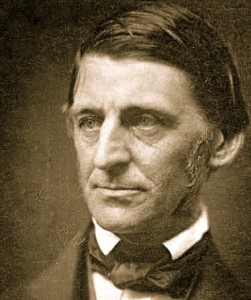
photo of Ralph Waldo Emerson“Whenever the pulpit is usurped by a formalist, then is the worshipper defrauded and disconsolate. We shrink as soon as the prayers begin, which do not uplift, but smite and offend us. We are fain to wrap our cloaks about us, and secure, as best we can, a solitude that hears not. I once heard a preacher who sorely tempted me to say, I would go to church no more. Men go, thought I, where they are wont to go, else had no soul entered the temple in the afternoon. A snow storm was falling around us. The snow storm was real; the preacher merely spectral; and the eye felt the sad contrast in looking at him, and then out of the window behind him, into the beautiful meteor of the snow. He had lived in vain. He had no one word intimating that he had laughed or wept, was married or in love, had been commended, or cheated, or chagrined.”

Emerson was prone to really bad puns, and here he indulges himself in a hidden pun: It is Barzillai FROST who is speaking in a SNOW STORM; bad as this pun may be, it points up a difference between two kinds of coldness: there is the coldness of the snow, which is real and can be experienced; and there is the coldness of religious formalism. Continue reading “Mystics and Transcendentalists”

Progressive religious education in 1912

During an email exchange with a colleague regarding the history of early twentieth century Unitarian religious education, I came across a 1912 report from the Unitarian Sunday School Society.

This brief report gives an interesting look into the beginning of the Progressive era of religious education. Based on the insights of the new science of psychology, the Progressives were implementing closely graded classes, an improvement over older ungraded, or three-grade, classes. The Progressives felt that key outcomes of religious education included providing children with religious knowledge inculcating children with the ideals of social service, and teaching “religion itself.” And, although still focused on the Bible, the Unitarian Progressives were introducing non-Biblical and non-Christian topics to Unitarian children.

For me, the most interesting part of this essay is the penultimate paragraph. With some rewriting, this Progressive statement could serve as a pretty good summary of what we’re still trying to do in our Sunday schools today — something like this:

“We should teach our children about religion — they should know religious history, literature, and theology.

“We should teach our children how to apply religion — they should know that as a tree bears fruit, so religion should produce good works.

“Finally, we should teach our children religion itself. Knowledge about religion points towards religion itself; and religious service grows out of the high ideals of religion itself. But when we teach religion itself — as opposed to knowledge about it, or service based on it — we won’t teach it through classroom instruction. Like all our best knowledge, religion is transmitted by contagion and inspiration, not by instruction; it is caught, not taught. To reach and quicken the child’s religious nature is the highest task of religious education.”

The full text of the essay appears below.

  Continue reading “Progressive religious education in 1912”

Each in his own tongue

William Herbert Carruth was a poet, a professor of literature and writing at Stanford where he taught John Steinbeck (more about Steinbeck in a moment), and a member of the old Palo Alto Unitarian Church. One of his signature poems strikes me as quite characteristic of early twentieth century west coast Unitarianism:

Each in His Own Tongue

A fire-mist and a planet,
   A crystal and a cell,
A jelly-fish and a saurian,
   And caves where the cave-men dwell;
Then a sense of law and beauty
   And a face turned from the clod,—
Some call it Evolution,
   And others call it God. Continue reading “Each in his own tongue”

Marriage as a religious act

I received an interesting and thoughtful comment via email on a sermon titled “Marriage as a Religious Act” which I recently posted on my main Web site. I realized that this sermon relates to some issues you, dear readers, and I have addressed on this blog — most importantly, the sexual revolution within Unitarian Universalism, and the theological basis (if any) for marriage in our tradition. Since this is something we have talked about here, and since I greatly value the comments I get from you, I decided to post this sermon and see what you might have to say about it. The sermon beging below the fold.

Continue reading “Marriage as a religious act”

More on Thoreau

Lecturette from the second and final session of a adult RE class on Thoreau — typos and all.

At the end of last week’s session, you asked me to address a number of points about Henry David Thoreau. In no particular order, you asked me to talk about the following:

(1) Thoreau’s notion of civil disobedience
(2) How Thoreau was affected by Eastern religions
(3) The circle of writers and thinkers who came and went in the town of Concord during Thoreau’s life
(4) Why Thoreau left his Unitarian church, and place his departure in the context of wider trends in Unitarianism
(5) Thoreau’s later influence on Unitarianism, and then on Unitarian Universalism Continue reading “More on Thoreau”

A heretical introduction to Henry Thoreau, pt. 1

Opening talk from a class on Henry David Thoreau, given at the UU Church of Palo Alto on 18 April 2012.

Henry Thoreau is one of those literary figures that everyone likes to think they know. But having read him (and even studied him in a desultory way), and having read a good deal about him, and having lived the first forty years of my life in the very landscape of Concord, Massachusetts, in which he lived, and having been licensed as a tour guide in Concord, and having preached about him, and having in short devoted rather too much attention to Thoreau — the more I know about him, the more I feel that we tend to impose our sense of what we want Thoreau to be onto who he actually was.

What I would like us to do is to try to understand Thoreau as he really was, not as we would like him to be. That means that we cannot understand him as an environmentalist, because that is not a term he would have known, nor am I convinced that he would have been comfortable with that term. That means that we cannot claim Thoreau as a Buddhist, or a Unitarian, or an atheist or humanist, as various people have done over the years, for as an adult he would not have accepted any of those labels. That means that we should not think of him as one of the key figures in nineteenth century American literature, for in his own lifetime and throughout the nineteenth century he was spectacularly unsuccessful as a writer, especially as compared with his mentor, Ralph Waldo Emerson; and while Thoreau may today be considered a key figure in American literature, arguably he remains misunderstood primarily because his gifts in broad humor and the telling of tall tales are rarely acknowledged.

So who was Thoreau? Continue reading “A heretical introduction to Henry Thoreau, pt. 1”

Happy 375th birthday

My home congregation, First Parish in Concord, Massachusetts, the Unitarian Universalist church I grew up in, just celebrated its 375th birthday. My dad, who is still a member of that congregation, attended the festivities. In fact, he was one of the honored guests at the birthday banquet last night:— he was one of 16 people who have been members of the congregation for 50 or more years. He and my mother joined First Parish not long after I was born, and there’s a story behind that.

My mother had grown up Unitarian, had been the Superintendent of the Junior Department of the Sunday school of the Wilmington, Delaware, Unitarian church back in the 1950s when they had something like 600 kids in their Sunday school, but when she and my father moved to Concord, she did not go to church. The minister at that time called on her to find out why she wasn’t coming to church, and she told him it was because she had an infant (me) and a toddler (my older sister Jean), and there was no child care during the Sunday services. So the minister recruited a woman named Betsy Connelley, along with some other people, to serve as volunteer staff in a child care service they called “Pooh Corner” (and before the wiseacres in the audience ask, it was named after Winnie the Pooh, and the name had nothing to do with the diapering process). Once there was child care, my parents could attend Sunday services, and 50 years later, my dad is still a member there. Moral of the story: provide great child care in your congregation.

Dad told me that one of the honored guests sitting with him last night was none other than Betsy Connelley. She still remembers me, and asked me dad to say hi. One of the best things about congregations is the sense of continuity they can provide; they are communities in which human connections can be held for generations.

So here’s to First Parish in Concord on its 375th birthday!

Robert Gould Shaw, liberal religious patriot

For Independence Day, here’s the story of Robert Gould Shaw to inspire you. Excerpted and slightly modified from a sermon I delivered yesterday at the Palo Alto church.

Robert Gould Shaw was born in Boston in 1837 to a wealthy Unitarian family. His parents were Francis George Shaw and Sarah Sturgis; they had inherited money from Francis’s father, and Francis was involved in business and philanthropy. When Robert was five, the family moved to West Roxbury, near the famous Brook Farm community; and when Robert was in his teens, they moved to Staten Island, where the family helped found the Staten Island Unitarian church. The Shaws were abolitionists, and they may have been active in the Underground Railroad, helping escaping slaves to flee to the northern states.

Given the wealth and influence of the Shaw family, Robert surely could have avoided military service during the Civil War. But he chose to enlist. On April 19, 1861, Shaw joined the private Seventh New York Volunteer Militia. That short-lived unit disbanded after a month or so, and he joined the Second Massachusetts Volunteers (Infantry), and was commissioned as Second Lieutenant on May 28, 1861. He became First Lieutenant on July 8, 1861, and Captain on August 10, 1862. While with the Second Massachusetts, he took part in several battles, including the battle at Antietam. In late 1862, he was offered the chance to command a regiment made up entirely of free African Americans from the north. He became Colonel of Fifty-fourth Massachusetts Volunteer Infantry on April 17, 1863.

A small volume titled Memoirs of the War of ’61, published in 1920 by George H. Ellis (who was the printer for Unitarian tracts and books), tells the story of Shaw’s military service through excerpts from his lettersBelow are the excerpts relating to the 54th Regiment, which show his courage, and his growing realization that the men under his command were indeed his equals; for even though he was an abolitionist, like most white people of his day, he began by thinking African Americans his inferiors:

[Upon accepting command of the 54th Regiment, February 5th, 1862. Shaw wrote:] “There is great prejudice against it — at any rate I shan’t be frightened out of it by unpopularity.” March 25: “The intelligence of the men is a great surprise to me.” March 30: “The mustering officer who was here to-day is a Virginian, and he always thought it was a great joke to make soldiers of ‘n——s’ [African Americans], but he tells me now that he has never mustered in so fine a set of men, though about 20,000 have passed through his hands since September. The skeptics need only to come out here to be converted.” Morris Island, July 18: “We are in General Strong’s brigade. We came up here last night in a very heavy rain. Fort Wagner is being heavily bombarded. We are not far from it. We hear nothing but praise for the Fifty-fourth on all hands.”

Shaw was offered the post of greatest danger and greatest honor in the assault on Fort Wagner, and accepted immediately. Here is a contemporary account of what happened, written from South Carolina on July 22 by an unidentified person attached to General Strong:

The troops looked worn and weary; had been without tents during the pelting rains of the two previous nights. When they came within six hundred yards of Fort Wagner they formed in line of battle, the Colonel heading the first and the Major the second battalion. With the Sixth Connecticut and Ninth Maine and others they remained half an hour. Then the order for ‘charge’ was given. The regiment marched at quick, then at double-quick time. When about one hundred yards from the Fort the rebel musketry opened with such terrible fire that for an instant the first battalion hesitated; but only for an instant, for Colonel Shaw, springing to the front and waving his sword, shouted, ‘Forward, Fifty-fourth!’ and with another cheer and shout they rushed through the ditch and gained the parapet on the right. Colonel Shaw was one of the first to scale the walls. He stood erect to urge forward his men, and while shouting for them to press on was shot dead and fell into the fort.

Thinking to humiliate Shaw and his family, the Confederate Army, shocked that a white man would serve with African Americans, buried Shaw in a common grave with his soldiers. But his parents were pleased by this, and wrote:

We can imagine no holier place than that in which he lies, among his brave and devoted followers, nor wish for him better company — what a body-guard he has!

The story of Robert Gould Shaw is a classic story of patriotism. He gave his life in service of his country; more to the point, he gave his life while serving the highest ideals of his country, the ideals of freedom and equality for all persons. And in this case, the ideals of his country, and the ideals of his Unitarian faith, were clearly aligned. It is a classic story of patriotism, yet even so, Shaw’s patriotism questioned a dominant notion of his day: that African Americans could not serve with distinction in the military. So you see, this is a story of how a religious liberal pushed the boundaries of patriotism.

Notes:

Quote from Shaw’s parents from Seeking the One Great Remedy: Francis George Shaw and Nineteenth-century Reform, by Lorien Foote (2003: Ohio University Press). Other quotes by and information about Robert Gould Shaw from Memoirs of the War of ’61 (1920: George Ellis); the online biography of Shaw at the UU Historical Society Web site; and other online and printed sources.