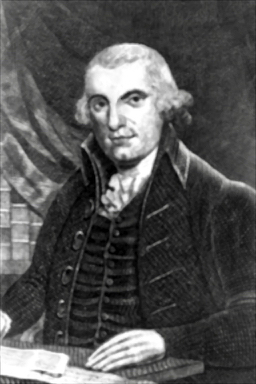
I first encountered Philip Gulley a couple of decades ago in the book he co-wrote with James Mulholland titled If God Is Love: Why God Will Save Every Person. In that book, Gulley and Mulholland set forth a Quakerly approach to universalism.
The current U.S. war in Iran has prompted me to seek out other pacifists. This is not an easy time to be a pacifist. While I’m hearing quite a few people who are opposed to the war, I’m not hearing people who are opposed to all war — only to this war. Or maybe they’re just opposed to the current administration.
“…We have mastered the ability to number the war dead with great precision. 175 schoolgirls killed when we bombed the school in Iran. Thirteen American soldiers dead thus far, thousands of Iranians and Israelis, the numbers growing every day. We have perfected the science of counting bodies. What we do not count, what we conveniently forget are the parents, siblings, and friends whose lives are also shattered when their loved ones die. What we do not count are the lives haunted by grief, those yet unborn who will one day bear the scars of their ancestors’ wars. And bearing those scars, are more likely to perpetuate and multiply the pain of war. We are never able to fully count the eventual casualties of war….”
And he adds a pacifist statement that is both Quakerly and Universalist:
“Friends, resist with all your heart the temptation to love only some.”
If you’re a Universalist pacifist like me, you might find Gulley’s post worth reading in its entirety.
As a follow up to my recent post on Unitarian groups in the U.S., I thought I’d look at a few religious groups that promote or support the doctrine of universal salvation. There are a great many Universalists out there, some of whom belong to a few small Universalist denominations, though many individual Universalists remain affiliated with existing denominations.
Christian Universalist Church of America
The Christian Universalist Church of America (CUCA) claims it was founded in Florida in 1964 by Universalist congregations who decided to opt out of the new Unitarian Universalist Association. By 1967, the new denomination ceased to exist (this story is briefly told in Russell Miller’s history of Universalism, The Larger Hope). The present organization was incorporated in 2001 in Indiana. Given the 34 year gap, it’s tempting to call the present CUCA a new organization. However, they still use the 1803 Winchester Profession as their statement of faith, so in that sense they are an inheritor of classic U.S. Universalism.
Their website contains almost no information about their current activities.
Primitive Baptist Universalists
The Primitive Baptist Universalists (PBU) grew out of the Primitive Baptist movement. PBU churches and people were well documented in Howard Dorgan’s book In the Hands of a Happy God (Univ. of Tennessee: 1997). Dorgan believed, but could not document, that early Primitive Baptist Universalists were led to Universalism by Hosea Ballou’s Treatise on Atonement.
PBU churches gradually separated from other Primitive Baptists over the doctrine of universal salvation in the early twentieth century. (In fact, next year, 2024, will be the centenary of the formation of the PBUs.) PBU churches are located almost entirely in the Appalachians. Like all Primitive Baptists, no musical instruments are used in their churches; their churches are plain and unadorned; preaching is the center of the worship service, and is always extemporaneous.
(I admit to real fondness for all Primitive Baptists. Quite a few Primitive Baptists sing at Sacred Harp conventions, where I have enjoyed meeting them and singing with them. Some day, I hope to visit a PBU church and meet some PBUs.)
Universalist Christian Association
The Christian Universalist Association (CUA) holds to a belief system they name “Christian Ultimate Reconciliation theology.” This theology appears to be similar to Restorationism, an important theological strand of the Universalists who later became part of the Unitarian Universalist Association. The CUA statement of faith is fairly detailed, with long-ish statements on “divine justice and life after death,” “universal salvation,” and “the Golden Rule.”
The CUA aims to cast a broad net, welcoming all Christian Universalists, including “Pentecostals, Evangelicals, Mainline Protestants, Catholics, Eastern Orthodox, Unitarian Universalist Christians, and non-denominational Christians.” Several Unitarian Universalists have served on their board of directors.
Considered as a denomination, the CUA appears to be fairly small. Their website currently lists just four in-person congregations as formal affiliates of the CUA. However, they describe themselves at times as an ecumenical organization, and they make a deliberate effort to include clergy and laypeople from many different denominations. They have ordained about 32 clergy since their founding in 2007.
Universalism and Universalists in other denominations
Universalists may be found in many denominations. For one example, I met a Rellyite Universalist in Alabama who has remained a member of his Methodist church. Evangelical Quaker ministers Phillip Gulley and James Mulholland have written books laying out their Universalist beliefs. Carlton Pearson left his Pentecostal denomination when he professed a belief in universal salvation, and has since found a home in the United Church of Christ (though he also retains a connections to a Unitarian Universalist congregation).
There are a number of Christian denominations which seem most likely to tolerate Universalists. This is especially true of denominations that use some form of congregational polity, where congregations have greater autonomy than in more hierarchical polities. More liberal congregations in the United Church of Christ, the American Baptist Church, and the Religious Society of Friends (Quakers) seem most likely to be welcoming to individual Universalists. Some local Pentecostal congregations may be receptive to Universalists.
There are also denominations which appear to affirm some view of universal salvation. Unity Church (formally known as Unity), a New Thought group, is one such organization. The Latter Day Saints (Mormons) tend towards universalism. Connections with Universalists may also be found through several websites; the Wikipedia page on Christian Universalism provides links to several such groups.
Universalism today is both diffuse and diverse. It’s probably impossible to find out how many people in the U.S. believe in universal salvation. Calling yourself “Universalist” can still cause certain amount of social stigma, and there are probably many Christians who believe in universal salvation who simply won’t use the term.
Non-Christian Universalism
Although Universalism is usually associated with Christian or post-Christian beliefs, there are non-Christian religious groups that affirm some sort of universal salvation. Some Pure Land Buddhists maintain that everyone may reach enlightenment. Some Muslims affirm universal salvation. There are Jews who call themselves Universalists, e.g., the Jewish Spiritual Leaders Institute.
A blog post by historian John Fea alerted me to a new history of Christian universalism by Prof. Michael McClymond, The Devil’s Redemption: A New History and Interpretation of Christian Universalism, and pointed me to an essay by McClymond that summarizes some of the book’s arguments. I turned to this essay with high hopes, because I would love to see a scholarly history of both organized universalism, and universalist theology.
And indeed, in the essay, McClymond makes what I think is an important argument: “Twenty-first-century Christian universalism may be interpreted as a form of [a] religion of humanity, minimizing humanity’s ineradicable spiritual divisions and annexing the biblical God to a secular affirmation of total human solidarity…. Universalism admits that the first-century Jesus was crucified, but it insists that the twenty-first-century Jesus will be crowned by the crowd. Universalism is the Gospel narrative frozen at the moment of the triumphal entry, when everyone stands in solidarity applauding Jesus.” In other words, Universalism is linked to rationalism, and more specifically to a rationalist interpretation of Biblical texts that selectively ignores any texts that disprove the idea of universal salvation.
Also of great interest to me was the way McClymond traces recent belief in universal salvation through twentieth century theologians such as Karl Barth, Hans Urs von Balthasar, and Jurgen Moltmann, up into twenty first century authors David Hart and and Richard Rohr. McClymond doesn’t mention my favorite twenty first century Quaker Universalists, Philip Gulley and James Mulholland — but why should he? — they are marginal figures at best, especially compared to Richard Rohr who, according the McClymond, hobnobs with Oprah and Bono.
So far, so good.
But even though McClymond has an important argument to make, his essay reads more like an apologetic for traditional “limitarian” theology, rather than careful history. Indeed, I’d say his history comes across as slapdash. For example, his essay includes several inaccuracies just in the first two sentences:
“Not until the nineteenth century did any Christian body make universal salvation its official teaching. The first to do so, the Universalist Church, later merged with another to form the Unitarian Universalist Association.”
Organized Universalism dates to the late eighteenth century: the General Conference of Universalists was organized in 1793 (according to David Bumbaugh, former professor of history at Meadville Lombard Theological School). And New England Universalists organized themselves as early at 1785, so there is an argument to be made that organized Universalism in North American began in that year. The General Conference changed its name to the Universalist Church of America in 1942, less than twenty years before it consolidated (not merged; there is a legal difference) with the American Unitarian Association.
Elhanan Winchester (1751-1797) was one of the founders of the General Conference of Universalists.
Minor details, but not unimportant details. Universalism did not originally call itself a “Church,” but rather named itself a “General Conference.” Theologically, this was consistent with Universalists’ emphasis on what historian Stephen Marini calls “Gospel liberty,” which in turn is important because there were multiple theologies of universal salvation among eighteenth and nineteenth century Universalists. Compare Hosea Ballou, Elhanan Winchester, John Murray, and James Relly, all active in the eighteenth century, and you will find diverse universalisms: trinitarian and unitarian, ultra-universalism (the belief that the soul goes immediately to heaven upon dying) and restorationism (the belief in punishment after death, but not for all eternity), and many other diversities of belief. This internal diversity in organized Universalism could actually strengthen McClymond’s argument that Universalism depended on rationalism, for each of these universalisms was argued on the basis that God gave humans rationality and expected them to use it to find out answers for themselves; thus these organized Universalists of the General Conference of Universalists placed rationality at least on a par with scriptural authority, and it could be argued that some of them placed rationality as superior to scriptural evidence.
There is even more theological diversity once you get outside the General Conference of Universalists, especially once you get into the twentieth century; by the mid twentieth century, the real strength of Universalism lay outside that denomination. The Great Depression caused the Universalist General Conference to shrink rapidly; changing the name to Universalist Church of America in 1942 was what we’d call today a rebranding effort, but rebranding didn’t work; according to some old Universalists I knew, the Universalists didn’t consolidate with the Unitarians, they were taken over by them; and perhaps a misinterpretation of these historical facts is why McClymond makes this unhistorical pronouncement: “Once human reasoning had deconstructed the divine mysteries of election and eschaton, it applied its tender mercies to the Trinity and Incarnation as well…. No election, no hell, no atonement, no divine Son, no divine Spirit, and no Trinity — all that remained was moral uplift and human solidarity, or, as one wit put it, the Fatherhood of God, the Brotherhood of Man, and the Neighborhood of Boston.” Oops: that last epigram was directed at the Unitarians, not the Universalists. But it’s simply wrong to conflate the Universalists and the Unitarians: Bob Needham, an old-time Universalist I once knew, is probably turning over in his grave to hear McClymond conflate Universalism and Unitarianism, for that kind of sloppy thinking infuriated him.
In truth, at the time of consolidation in 1961, the Unitarian Universalist Association (UUA) retained very little of Universalism, and retained less and less as the years went by. By the twenty first century century, there are very few actual Universalists within the UUA, and the real strength of universalism lies outside the UUA — and also outside the Primitive Baptist Universalists (PBUs), the other main denominational home of the doctrine of universal salvation in North America. Today, Universalism is barely a footnote within the UUA; and the UUA and the PBUs are barely footnotes in the religious life of the United States.
Judith Sargent Murray published a Universalist catechism in 1782, which taught a “triune God.”
I still want a good solid history of universalism (small “u,” i.e., not restricted to the General Conference of Universalists and its successor bodies) that extends from at least the eighteenth century up through the present day. I’d like to see both an intellectual history, and a social history. I’d like to see a history that recognizes the diversity of beliefs within universal salvation — and there’s a great deal of diversity amongst Judith Sargent Murray, Karl Barth, Gulley and Mulholland, the Primitive Baptist Universalists, Richard Rohr, and Jurgen Moltmann. I’d like to see a history that pays careful attention to facts, even seemingly insignificant ones. Sadly, I don’t think I’m going to get any of that from McClymond’s book. And I’m not willing to pay ninety bucks to buy his book to find out.
Oh well.
Any other scholars out there interested in writing a history of the doctrine of universal salvation?
Update, Nov. 13: revised captions and added parenthetical note defining ultra-Universalism; numerous minor edits for clarity.