
A new history of Universalism

A blog post by historian John Fea alerted me to a new history of Christian universalism by Prof. Michael McClymond, The Devil’s Redemption: A New History and Interpretation of Christian Universalism, and pointed me to an essay by McClymond that summarizes some of the book’s arguments. I turned to this essay with high hopes, because I would love to see a scholarly history of both organized universalism, and universalist theology.

And indeed, in the essay, McClymond makes what I think is an important argument: “Twenty-first-century Christian universalism may be interpreted as a form of [a] religion of humanity, minimizing humanity’s ineradicable spiritual divisions and annexing the biblical God to a secular affirmation of total human solidarity…. Universalism admits that the first-century Jesus was crucified, but it insists that the twenty-first-century Jesus will be crowned by the crowd. Universalism is the Gospel narrative frozen at the moment of the triumphal entry, when everyone stands in solidarity applauding Jesus.” In other words, Universalism is linked to rationalism, and more specifically to a rationalist interpretation of Biblical texts that selectively ignores any texts that disprove the idea of universal salvation.

Also of great interest to me was the way McClymond traces recent belief in universal salvation through twentieth century theologians such as Karl Barth, Hans Urs von Balthasar, and Jurgen Moltmann, up into twenty first century authors David Hart and and Richard Rohr. McClymond doesn’t mention my favorite twenty first century Quaker Universalists, Philip Gulley and James Mulholland — but why should he? — they are marginal figures at best, especially compared to Richard Rohr who, according the McClymond, hobnobs with Oprah and Bono.

So far, so good.

But even though McClymond has an important argument to make, his essay reads more like an apologetic for traditional “limitarian” theology, rather than careful history. Indeed, I’d say his history comes across as slapdash. For example, his essay includes several inaccuracies just in the first two sentences:

“Not until the nineteenth century did any Christian body make universal salvation its official teaching. The first to do so, the Universalist Church, later merged with another to form the Unitarian Universalist Association.”

Organized Universalism dates to the late eighteenth century: the General Conference of Universalists was organized in 1793 (according to David Bumbaugh, former professor of history at Meadville Lombard Theological School). And New England Universalists organized themselves as early at 1785, so there is an argument to be made that organized Universalism in North American began in that year. The General Conference changed its name to the Universalist Church of America in 1942, less than twenty years before it consolidated (not merged; there is a legal difference) with the American Unitarian Association.
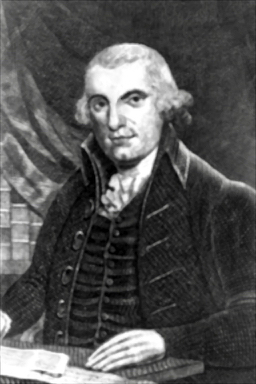
Elhanan Winchester (1751-1797) was one of the founders of the General Conference of Universalists.

Minor details, but not unimportant details. Universalism did not originally call itself a “Church,” but rather named itself a “General Conference.” Theologically, this was consistent with Universalists’ emphasis on what historian Stephen Marini calls “Gospel liberty,” which in turn is important because there were multiple theologies of universal salvation among eighteenth and nineteenth century Universalists. Compare Hosea Ballou, Elhanan Winchester, John Murray, and James Relly, all active in the eighteenth century, and you will find diverse universalisms: trinitarian and unitarian, ultra-universalism (the belief that the soul goes immediately to heaven upon dying) and restorationism (the belief in punishment after death, but not for all eternity), and many other diversities of belief. This internal diversity in organized Universalism could actually strengthen McClymond’s argument that Universalism depended on rationalism, for each of these universalisms was argued on the basis that God gave humans rationality and expected them to use it to find out answers for themselves; thus these organized Universalists of the General Conference of Universalists placed rationality at least on a par with scriptural authority, and it could be argued that some of them placed rationality as superior to scriptural evidence.

There is even more theological diversity once you get outside the General Conference of Universalists, especially once you get into the twentieth century; by the mid twentieth century, the real strength of Universalism lay outside that denomination. The Great Depression caused the Universalist General Conference to shrink rapidly; changing the name to Universalist Church of America in 1942 was what we’d call today a rebranding effort, but rebranding didn’t work; according to some old Universalists I knew, the Universalists didn’t consolidate with the Unitarians, they were taken over by them; and perhaps a misinterpretation of these historical facts is why McClymond makes this unhistorical pronouncement: “Once human reasoning had deconstructed the divine mysteries of election and eschaton, it applied its tender mercies to the Trinity and Incarnation as well…. No election, no hell, no atonement, no divine Son, no divine Spirit, and no Trinity — all that remained was moral uplift and human solidarity, or, as one wit put it, the Fatherhood of God, the Brotherhood of Man, and the Neighborhood of Boston.” Oops: that last epigram was directed at the Unitarians, not the Universalists. But it’s simply wrong to conflate the Universalists and the Unitarians: Bob Needham, an old-time Universalist I once knew, is probably turning over in his grave to hear McClymond conflate Universalism and Unitarianism, for that kind of sloppy thinking infuriated him.

In truth, at the time of consolidation in 1961, the Unitarian Universalist Association (UUA) retained very little of Universalism, and retained less and less as the years went by. By the twenty first century century, there are very few actual Universalists within the UUA, and the real strength of universalism lies outside the UUA — and also outside the Primitive Baptist Universalists (PBUs), the other main denominational home of the doctrine of universal salvation in North America. Today, Universalism is barely a footnote within the UUA; and the UUA and the PBUs are barely footnotes in the religious life of the United States.
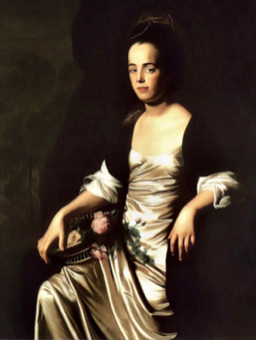
Judith Sargent Murray published a Universalist catechism in 1782, which taught a “triune God.”

I still want a good solid history of universalism (small “u,” i.e., not restricted to the General Conference of Universalists and its successor bodies) that extends from at least the eighteenth century up through the present day. I’d like to see both an intellectual history, and a social history. I’d like to see a history that recognizes the diversity of beliefs within universal salvation — and there’s a great deal of diversity amongst Judith Sargent Murray, Karl Barth, Gulley and Mulholland, the Primitive Baptist Universalists, Richard Rohr, and Jurgen Moltmann. I’d like to see a history that pays careful attention to facts, even seemingly insignificant ones. Sadly, I don’t think I’m going to get any of that from McClymond’s book. And I’m not willing to pay ninety bucks to buy his book to find out.

Oh well.

Any other scholars out there interested in writing a history of the doctrine of universal salvation?

Update, Nov. 13: revised captions and added parenthetical note defining ultra-Universalism; numerous minor edits for clarity.

Family tree for Unitarian Universalism

Drew asked about a “family tree” for the Unitarian Universalism, and as it happens I had drawn one back in 2003, so I revised it and sent it to him. It might be of interest to others:

Simplified family tree of the Unitarian Universalism

This family tree is based on a revisionist interpretation of Unitarian Universalist history, and therefore some explanation is in order.

First, this family tree shows Transylvanian Unitarianism as quite separate from North American Unitarianism. This is based on my reading of Earl Morse Wilbur’s history of European Unitarianism; Wilbur dearly wanted to connect Transylvanian and North American Unitarians, but the few connections he documents may be summed up as: maybe a few English-speaking Unitarians read a few books about Transylvanian Unitarianism. When you look at the two Unitarian groups today, some of the differences are more pronounced than the vague theological similarities: the Transylvanians have bishops, their religion seems more narrowly ethnic, etc. Thus, I depict the two groups as quite separate.

I understand North American Unitarianism and Universalism as being reactions against aspects of Calvinism. Thus I show both groups as having roots in Calvinism.

North American Unitarians came in large part from the New England Standing Order churches; there wasn’t enough room to show the small but important influence of Joseph Priestley and a few other early Unitarians who brought their Unitarianism from England, rather than getting it from Boston. Thus I show the major event in the beginning of North American Unitarianism to be the split between the conservatives — people like Jonathan Edwards — and the liberals — people like Charles Chauncy, a split which took place after the Great Awakening. However, the first openly Unitarian congregation in North America was King’s Chapel; originally affiliated with the Church of England, it became Unitarian in 1785, long before any of the Standing Order churches openly declared themselves to be Unitarian.

The beginnings of North American Universalism are a little more tangled. John Murray and George DeBenneville brought their Universalist beliefs from England when they came to live in the coastal cities of the New World; that history is well known. But there’s another history, well documented by scholar Stephen Marini and others, of how Universalism also arose in central New England, often in formerly Baptist churches. Thus I show Universalism as having some roots in Baptist traditions; this is perhaps most evident in the institutional structures (or lack thereof) of early Universalism. Then too, it is important to mention John Murray’s marriage to Judith Sargent; she came from a prominent and wealthy New England family, and both her family connections and her own intelligence contributed a great deal to John’s eventual success as a Universalist standard-bearer.

By about 1825, both Unitarians and Universalists were well established in North America. But the boundaries of both denominations remained somewhat porous. In the early nineteenth century, Unitarians sometimes cooperated with the Christian Connexion denomination (not show in the family tree). In the late nineteenth century, a small group of ministers split from the Unitarians to form the Free Religious Association, and in a few cases they brought their congregations with them; some of those congregations reportedly never rejoined the Unitarian denomination (though I’ve never been able to document that myself). Then around 1900, some Icelandic Lutheran churches in the prairie provinces of Canada switched to the Unitarian denomination; at least one other formerly Lutheran church, Nora Church in Hanska, Minnesota, also joined the Unitarians.

However, Unitarian boundaries were not completely porous. When William Jackson, an African American Baptist minister, tried to join the American Unitarian Association in 1860, bringing his congregation with him, he was carefully kept out.

In Universalism, the porous boundaries become most evident in the late nineteenth century, a time when many Universalists became enamored with spiritualism. Then spiritualism became an organized religion, and some Universalists, such as minister John Murray Spear, left Universalism to become Spiritualists. But again, the boundaries of Universalism were not completely porous. A splinter group of Primitive Baptists (Baptists who, among other things, refuse to have musical instruments in church, relying instead on a capella singing) adopted Universalist beliefs, probably after having read books by Hosea Ballou, the great Universalist theologian. But there has been very little interest in exploring the commonalities between Primitive Baptist Universalists (PBU) and Universalists, or for that matter Unitarian Universalists (the PBU-UU connection between may seem more robust theologically than the connection between Transylvanian and North American Unitarians; but the class difference is far greater).

As for the racial boundaries of Universalism, they were slightly more porous than those of the Unitarians. The Universalists accepted Joseph Jordan, an African American and former Baptist minister, into fellowship and ordained him in 1889. However, the racial boundaries were not all that porous: there remained little denominational support for African American Universalists outside of a couple of congregations in Virginia, and individual Universalist congregations in the South remained explicitly segregationist up into the mid-1960s.

The late nineteenth century saw a growing number of connections between Unitarians and Universalists ; this is symbolized on the family tree by Eliza Tupper Wilkes; she was ordained a Universalist minister, but worked for both groups at different times, and founded both Universalist and Unitarian congregations. There were also strong connections between both the Unitarians and the Universalists with the Congregationalists. During the early twentieth century, there were Universalist congregations that merged into Congregationalist congregations, and both Universalist and Unitarian congregations that federated with Congregationalist congregations. Some of the federated congregations still exist; they are one congregation in real life, but on paper they also exist as two separate congregations, and when you join a federated congregation you decide if you’re joining as, e.g., a Congregationalist or a Unitarian.

In 1961, the Unitarians and the Universalists consolidated (the legal term is “consolidated,” not “merged”). This now seems inevitable to us here in North America, but groups like the Khasi Hills Unitarians in India, or the Universalist churches in the Philippines, had no corresponding group to merge with.

Finally, it is worth remembering that several features of contemporary North American Unitarian Universalism which today seem diagnostic in helping to identify who’s a Unitarian Universalist are actually recent innovations. The “seven principles,” the widespread use of the flaming chalice in worship services, the water communion service — all these grew out of the feminist revolution of the 1980s, a revolution led by people like Natalie Gulbrandsen. Feminist theology has helped drive us further away from groups like the Primitive Baptist Universalists, while driving us closer to the United Church of Christ (UCC), a very liberal Christian group that is the inheritor of the old conservative New England churches from which the Unitarians split in the early nineteenth century. The UCC and the UUA today are close religious relatives, sociologically, politically, and demographically. The UCC and the UUA cooperated to produce the innovative “Our Whole Lives” comprehensive sexuality education program; politically, UCC churches are often to the left of UU churches; demographically both groups a dominated by white college-educated professionals. The only big difference today is that more UCC members believe in God than do Unitarian Universalists; though that too may be changing, as a friend of mine who’s a UCC minister says that most of the children and teens in her church are professed atheists.

PDF of the family tree.