
UU congregations with other religious affiliations

Back in 2010, Scott Wells came up with a list of congregations that claimed an affiliation with both Unitarian Universalism and some other religious tradition. 15 years later, we’ve seen many small congregations close, so I decided to revisit Scott’s list and see how many of the congregations in his post were still in existence.

Below is my list, grouped together by U.S. state, and in alphabetical order within each state grouping. Except where noted, I’ve given religious affiliations as garnered from congregational websites.

Update, 13 Oct. 2025: Thanks to commenter Gabriele Simion, added several congregations; cleaned up some typos, and fixed names of denominations / religious groups. Update, 23 Oct.: Added Free Congregation of Sauk City, thanks to Gabriele again.

The list

The list has all multi-religious congregations I was able to find that are formally affiliated with the UUA. I determined formal affiliation based on the congregation’s appearance in the UUA’s online directory. (N.B.: I haven’t included affiliations with the new North American Unitarian Association, because they don’t publicize a list of their member congregations.) If you know of multi-religious congregations formally affiliated with the UUA that I’ve missed, please mention them in the comments.

Key to religious affiliations: ABC = American Baptist Churches USA; AEU = American Ethical Union; AHA = American Humanist Association; CUA = Christian Universalist Association; DOC = Christian Church (Disciples of Christ); ProgC = Progressive Christianity; UCC = United Church of Christ; UMC = United Methodist Church; UUA = Unitarian Universalist Association.

District of Columbia

Georgia

Illinois

Massachusetts

New Hampshire

New York

Michigan

Pennslyvania

Rhode Island

Vermont

Wisconsin

Others

There are other congregations that may have had a Unitarian or Universalist affiliation in the past, but no longer do. Trying to research such congregations seems incredibly difficult, so I haven’t included them. But here are three examples from Scott’s 2010 blog post:

The Community Church of Pepperell, in Pepperell, MA, is formally affiliated solely with the UCC. On their website they say that they formed as a merger between the Unitarian church and the Congregationalist church in Pepperell.

First Church in Belfast, Maine, was formerly affiliated with the Unitarians and the Congregationalists, but is now solely affiliated with the UCC. (The history section of their website states that “Congregationalists believed in the complete autonomy of the local church; Unitarians did not”; this is incorrect, as both Congregationalists and Unitarians share the same polity).

The Federated Church of Hyannis is an “independent” (i.e., nondenominational) congregation that claims both Universalist and Congregationalist roots. It would be interesting to learn more specifics of their history; there were other Universalist churches which left the Universalist General Convention and affiliated with the Congregationalists in the first half of the twentieth century.

If you know of other multi-religious congregations with a Unitarian or Universalist history, please mention them in the comments. If possible, provide a link to their website or social media presence.
Ecospirituality at Harvard

The spring/summer issue of the Harvard Divinity School Bulletin features essays on ecological spiritualities. Dan MacKanan, the Ralph Waldo Emerson Senior Lecturer in Divinity, provides the introduction, “Making a Space of ‘Alternative Spiritualites’,” saying in part:

“When the Divinity School committed to offering a fully multireligious master of divinity curriculum about 20 years ago, we expected to see an increasing number of Buddhist, Jewish, Muslim, and Hindu students. That has certainly been the case. But we have also been blessed by a steadily growing number of pagans, animists, readers of the Urantia Book or a Course in Miracles, practitioners of entheogenic or queer or African diasporic spiritualities, seekers, and people who affiliate with two, three, or more traditions. This diversity … invites us to reimagine both religion and the practice of ministry.”

In other words, religion in American has expanded beyond Christianity, and beyond those “world religions.” I’m putting “world religions” in scare quotes because these were the religious traditions that were judged to be the equal of Christianity, the religious tradition which until recently was assumed by many Western scholars to be the paradigm of all religion.

So McKanan and some others at Harvard Divinity School formed the Program for the Evolution of Spirituality to explore how religion was changing (or maybe to find out how our perception of religion has expanded beyond considering Christianity as the paradigm of all religion). I think I’d want to gently critique the name of this program for using the word “evolution” in the title. That’s not a value-free word, and comes freighted with all kinds of assumptions that may not be intended by the people who formed the program. In spite of that, the Program for the Evolution of Spirituality appears to be A Good Thing; I’ll be following their future work with interest.

Their first conference, held in 2022, was on ecological spiritualities. And the bulk of the spring/summer issue of the Harvard Divinity School Bulletin is devoted to essays that apparently grew out of that conference. I’ll have more to say about some of those essays in later posts….

Theatre

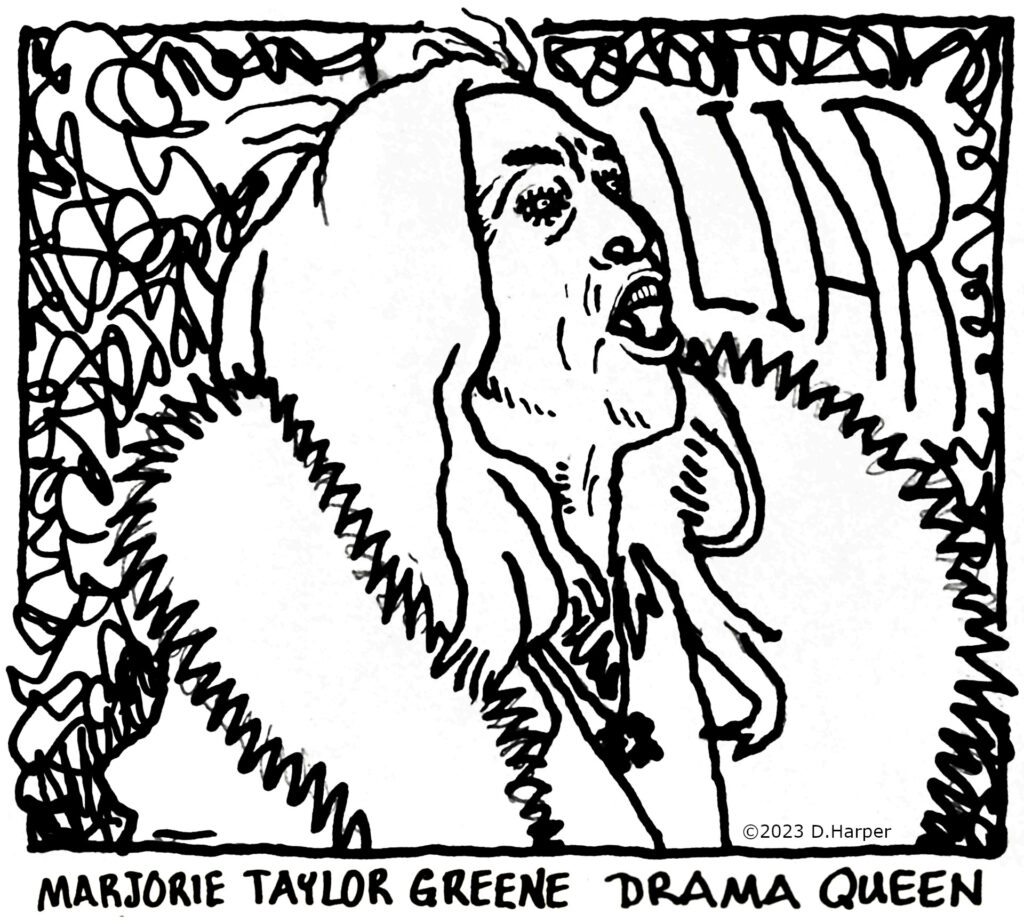
I finally watched the BBC’s video clip showing the moments when the Republicans heckled Democratic president Biden’s “State of the Union” speech. Looks like heckling has now become a normal part of the “State of the Union” speech.

What interests me is the hecklers shouting about lies and lying. The first such heckler, if you remember, was the fellow who shouted out that Obama lied. This tradition was upheld this year by the Christian nationalist shouting “Liar!” at Biden.

Knowing what is true is a major concern for U.S. society right now. And those who are within a traditional Christian worldview seem to suffer most from a sense that truth is under attack. Traditional Christians who believe that non-Christians will go to hell are often troubled by the multi-religious landscape of the United States today; those non-Christian people are going to hell, and yet our legal system protects them. This must be extremely disconcerting to certain traditional Christian worldviews.

So it is no surprise that one of the people shouting about lies during this year’s “State of the Union” speech was Christian nationalist Marjorie Greene. I suspect that Greene, who’s a bit of a drama queen, prepared herself in advance for her moment in the spotlight: she wore a dramatic white coat with a big furry ruff, which must have been dreadfully hot but was clearly meant to set off her blonde good looks. And she so obviously enjoyed the moment when she made the audience turn and look at her. She seems to have forgotten, however, that when you shout, it distorts your mouth and face and throat, and it brings out all the little lines in your face making you look older than you are. (This is why I hate seeing videos of myself preaching.) No matter: she made her truth claim in a very public manner, that she knows the truth, and unless the rest of us agree with her she will shout us down as liars.

Cartoon of Marjorie Greene shouting "Liar" during the State of the Union speech.

Back in 2005, philosopher Richard J. Bernstein argued that there were two prevailing mentalities in the United States. On the one hand there is a “mentality that neatly divides the world into the forces of good and the forces of evil.” On the other hand, there are those of us who “live without ‘metaphysical comfort,’ … live with a realistic sense of unpredictable contingencies” (The Abuse of Evil: The Corruption of Politics and Religion Since 9/11 [Malden, Mass.: Polity Press, 2005], pp. 12-13).

Greene and other Christian nationalists belong to the mentality that neatly divide the world into good and evil; they long for comfort and fear the unpredictability that pervades the world. Because of their fear, they cling to whatever certainties they can manufacture, and call those manufactures divine revelation.

But they should remember that when they shout, it distorts their faces….

New upper elementary curriculum

I’ve been working on developing a curriculum for upper elementary children. The basic idea comes from the old Beginnings: Earth, Sky, Life, Death curriculum developed in the mid-twentieth century by Sophia Fahs. However, much of the content is new, the theological framework has been updated, and the curriculum has been designed to be extremely user-friendly. And now almost the entire curriculum is online for you to use — but before I get to that, let me tell you about several key features of this curriculum.

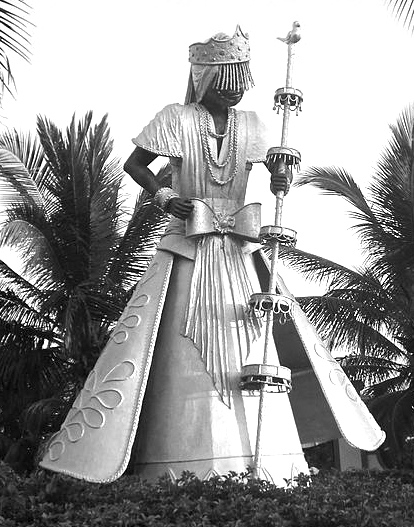
First, much of the content is completely new. I have included some of the stories from the old “em”Beginnings book, but I have always gone back to primary sources and/or scholarly commentary, and written these stories from scratch. I have also included completely new material, such as the story from the Yoruba tradition — a religious tradition that wasn’t even recognized by most Westerners when the old Beginnings book was written.

Second, the theological framework has been updated. Many UU curriculums of the past have been rightly criticized for assuming that all other religions are not as “advanced” as Unitarian Universalism; this curriculum attempts to avoid that trap of neo-colonialism. A companion curriculum is in development that will present Unitarian Universalist myths and stories in exactly the same way that these stories from other religions are presented. This curriculum also assumes that the possibility of significant diversity, of children coming from multi-religious households; i.e., the children in this UU Sunday school class might also have household members or close relatives who participate in another religious tradition such as Hinduism, Yoruba traditions, Judaism, Christianity, Chinese popular religion, etc. Thus I have tried to avoid any implication that another religion is less “true” or less important than our own religion.

This curriculum is also designed to provide some foundation for our version of the old “Church across the Street” curriculum, in which middle schoolers visit other faith communities. Thus, in some of the sessions, reference is made to religious practices that are related to the story for that session, to relate the mythic or narrative dimension of a religion with the ritual dimension (to use two of Ninian Smart’s seven dimensions of religion). Additionally, the illustrations include some photographs of the material dimension of religion.

Finally, and most importantly, the curriculum is designed to for today’s volunteer teachers. Sunday school teachers today need a curriculum that they can pick up ten minutes before class, and teach successfully with little or no prep time. At the same time, some experienced teachers may want the possibility of going more deeply into the lesson. So this curriculum is designed to provide maximum flexibility for teachers. After two years of use in our congregation, teachers seem to like the curriculum pretty well.

By putting this curriculum online, my goal is to make the curriculum even more user-friendly. The Web site uses responsive design, so that the curriculum will display equally well on a smart phone, tablet, laptop, or even a Web-enabled TV. No need for a book or a three-ring binder: all you need is your smart phone (though the illustrations will be easier to show to kids on a bigger screen). Having the curriculum online should also make it much easier for teachers to let parents know what children are doing in Sunday school.

I would love to hear your comments and reactions to this curriculum.To look at the online version of this curriculum, go here.


An illustration from the curriculum:

Obatala

A statue of Obatala, an orisha common to many of the Yoruba traditions. This statue was photographed in Costa do Sauipe, Bahia, Brazil. Public domain photo from Wikimedia Commons.