Odonates

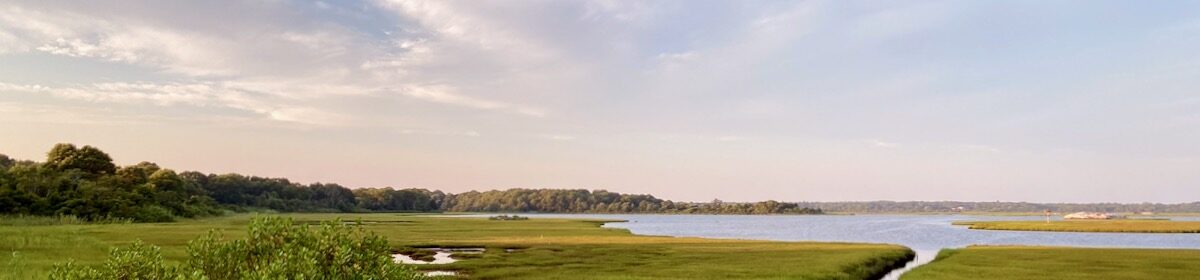
Just before noon, Abby and I took a walk along the recently-opened Bruce Freeman Rail Trail that runs from Chelmsford, Mass., through Acton. The part of the trail we walked, around the Route 2A crossing, passes through several wetlands, with a few small areas of open water and some nice cattail stands. I was mostly looking (and listening) for birds, and even in the heat of the day there was a nice variety of birds, from Red-winged Blackbirds, Common Yellowthroats, and other swamp-loving birds to forest-nesters like American Robins and Chipping Sparrows. Abby was most interested in the Red Squirrel population. However, it was hot enough that there weren’t enough birds or Red Squirrels to keep us occupied, and we both began noticing insects in the order Odonata (dragonflies and damselflies) along the trail; I do not know much about about Odonates, but it sure looked like there were quite a few different species flying around us.

I am intimidated by the challenges of identifying Odonates; I find them hard to track in my binoculars, and I find it difficult to observe the level of detail required for identification down to the species level (sometimes you have to be able to see the shape of the male sex organs to get a definite identification). But my new camera has a really good zoom lens, and I find it easier to try to make an identification from a photo. I managed to get one reasonably good photo of an Odonate. A tentative identification might place this insect in the Aeshnidae family, or Darners, according to A Field Guide to the Dragonflies and Damselflies of Massachusetts by Blair Nikula et al. (Westborough, Mass.: Massachusetts Division of Fisheries and Wildlife, 2003), p. 69. Unfortunately, the photo does not show how the insect’s eyes come together, a key identification point for this family.


Later the same day:

After taking care of some business we had to deal with, Abby and I went for a short walk at Great Meadows National Wildlife Refuge, one of our father’s favorite places to go for a walk. I did a little birding, until Abby and I both became fascinated by the dragonflies and damselflies flying around us. I was able to get pretty good photos of a few of these odonates.

The photo above shows, I believe, a young female Eastern Forktail (Ischnura verticalis); I’m fairly certain about the genus, less certain about the species. I’m basing my tentative identification on the species account in Nikula et al., p. 56. And I’m somewhat more confident of this identification because on p. 30, Nikula et al. state that the Eastern Forktail “is probably the most widespread and common odonate in Massachusetts.”

And above is a photo is of an older female of, I think, the same species; older females of this species, according to Nikula et al., “become extensively pruinose blue-gray.”

The photo above shows one of the many Blue Dashers (Pachydiplax longipennis) patrolling the marshes and the edge of the river in Great Meadows. I’m fairly certain of this identification, and this is quite a common dragonfly in Massachusetts.

We also saw a couple of Monarch Butterflies, and an unidentified sulphur butterfly. I didn’t find many birds today, but the spectacular Odonata and Lepidoptera we saw more than made up for the lack of birds.

Gravestone, Salem, Mass.

In Salem, Massachusetts, yesterday, we spent a half an hour wandering around the old burying ground. There are some seventeenth and eighteenth century stones there, and I could have spent a couple of hours looking at them. While I’m most interested in the carving, the inscription on one of the stones caught my attention:

In Memory of
Miss SALLY GRANT,
daughter of Cap. SAMUEL
& Mrs. ELIZABETH GRANT,
who died Sept. 16th 1789:
in the 26th year of her age.

I long[,] she faintly cries[,] to lose my breath
And gently sink into th’embrace of death
Adiue [sic] vain World[,] a long adiue[,] I go
Where joys that have no bound forever flow.

I have been unable to find a source for the short verse on this gravestone. It sounds like it might be a verse from a late eighteenth century spiritual song or hymn, perhaps remembered not quite accurately.

Memorial

We went up to Swampscott today to see the memorial at the train station for the 1956 Swampscott train wreck. The memorial reads:

IN MEMORY OF THOSE WHO DIED IN THE
SWAMPSCOTT TRAIN WRECK
FEBRUARY 28, 1956
WALTER D. ALLEN     WALTER B. LEE
RUTH F. BEAN      PAULINE PAVLO
FRANCIS E. BOETTNER    GEORGE S. SILLARS
ALBERTA L. HALEY     DONALD K. TAYLOR, JR.
RAYMOND F. JONES     ERNEST A. TOURTELOTTE
PENELOPE KOTSOVILLIS    GARDNER S. TRASK, SR.
GEORGE V. WARREN, JR.
DEDICATED NOVEMBER, 2005

The memorial is relatively small, and sits at the bottom of the wheelchair access ramp that leads from the parking lot up to the train platform. The actual wreck took place about a half mile farther up toward Salem, along an inaccessible stretch of track.

Our grandfather’s name is the first one on the list: Walter D. Allen. He died before my mother had children, so neither my sisters nor I knew him. Even so, I found it affecting to see his name there.

Tide pool

Tide pool at East Point Sanctuary near Biddeford Pool, Maine. Tentative identifications of organisms in this tide pool: Common Periwinkle (Littorina littorea), a snail that is an invasive exotic species introduced in North America in the nineteenth century; limpets (mollusc spp. in family Lottiidae); Blue Mussel (Mytilus edulis); barnacles (crustacean spp. in subclass Cirripedia); Knotted Wrack, a seaweed (Ascophyllum nodosum).

Ecojustice Camp principles and learning goals

(Handout for a workshop at Ferry Beach Religious Education Week)

ECOLOGY + JUSTICE = ECOJUSTICE
Ecology means making sure all living things are in balance
Justice means making sure humans treat each other, and other organisms, fairly

Learning category — Sample camp activity

8 Core Ecological Concepts
Diversity — Tide pool field trip to look at marine invertebrates and other organisms
Cycles
Energy Flow — Food Chain Game; “Energy from the Sun” song
Interdependence — Web of Life game; “Every Living Thing” song
Change — Lynxes Hares Plants game; “Ballad of Adobe Creek” song
Community — Field trips to 3 ecological communities: redwood forest, marshlands, beach
Adaptation — Bird Beak game; “The Adaptation Song”

Observation skills:
Sensory awareness activities — Wary Wolf; Cautious Coyote; One Fish Two Fish; listening to concert of bird song
Focusing or narrowing perception — Insect observation; Giant magnifier (water lens); binoculars
Recording observations — Field notebooks

Outdoors skills:
Group cooperation — various group building initiatives (Project Adventure games)
Ability to be alone — Alone Time Hike
Food — cooking on overnight; cooking with solar ovens, rocket stoves, open fires
Shelter — learn to set up tent; camping overnight
Travel — hiking; map and compass skills

For photos and more information, visit the Ecojustice Camp Web site.

Principles behind Sunday school Ecojustice class

Here are some of the principles behind the Ecojustice class taught at the Unitarian Universalist Church of Palo Alto (UUCPA) for the past five years.

Ecojustice class is a Sunday school program for gr. 6-8. Ecojustice class is a learner-centered program, with a flexible curriculum that can follow the interests of the teens and the teachers. We have a firm commitment to making the class as hands-on as possible — an emphasis on doing, rather than discussion. Rather than just projects done by one individual and intended for themselves, our projects tend to be done as a group and intended for use by the class, congregation, or a wider community. Ecojustice class can best be described as a “emergent curriculum,” meaning we’re often making it up as we go along; nevertheless, we have evolved some pretty firm organizing principles which may be of use to others.

Our definition of “ecojustice”:
A sign is posted in the classroom which gives our definition of “ecojustice”:

Ecojustice =
— humans treating other humans with dignity & respect
AND
— humans treating other organisms & the whole ecosystem with dignity & respect

If teens ask: “Why can’t we just say ‘Ecojustice means humans treating each other and the rest of the ecosystem with respect’?” — we can explain that white environmentalists have been criticized because they worry more about non-human organisms than they worry about humans who have a different skin color. So we want to make sure we always remember that environmental action cannot be separated from human justice.

Basic class plan is the same every week:
I/ Attendance & chalice lighting (typically indoors)
II/ Check-in (typically indoors)
III/ Reading (typically indoors)
IV/ Project for the week (most often outdoors)
V/ Closing circle (often outdoors)

Reading: Each reading is related in some way to ecojustice. We adults can read the reading, or ask the teens if one of them would like to read it. Then maybe have a brief conversation about what the reading tells us about ecology, ecojustice, or the natural and human worlds.

Project for the week: Projects may last from 1-4 weeks. Teachers pick projects based on their interests and abilities. We try to include a conversation with each porject about why we are doing the project: “what does this project have to do with ecojustice?” This can take place while we’re working, or as part of the closing circle.

Closing circle: During closing circle, have the teens say one thing they learned, or one thing they’re taking away from this class. End with the UUCPA unison benediction (used in all classes); the unison benediction is posted in classrooms in 4 languages, reflecting languages spoken by people in our congregation (English, Spanish, German, Hindi; working on a Mandarin version).

Topic areas:
We relate any project that we develop to one of seven topic areas. Those topic areas are listed below, along with sample projects that we have either completed or plan to carry out (in parentheses).

1. Food
Tire Garden — based on the UUSC Haiti tire garden project
Ongoing Gardening — digging, planting, weeding, watering, etc.
Cooking projects — using, e.g., organic ingredients

2. Energy
Rocket Stoves — based on a design by Larry Winiarski
Solar Cooking — using various solar ovens (solar s’mores esp. popular)

3. Water
Rain Barrel — installed a rain barrel; use the water to irrigate the gardens
Clay Pot Irrigation — low-water use irrigation method
(Bucket Drip Irrigation — low-water method for irrigating garden)

4. Waste
Composting — assembled two composting bins; maintain them
(Build a composting toilet)

5. Habit and Shelter
Wildlife — “tracking pit”; invertebrate observation; building birdhouses
Native Plants — tour of church’s native plant garden
Habitat for native pollinators — making “bee houses”
Support local homeless shelter which stays at our church in Sept.
(Using Natural Herbs — planned visit from a local herbalist)
(Natural Dyes — tie-dye using redwood cones and fennel)

6. Earth and Air
Disaster Plans — making a personal “go-kit” in case of wildfire evacuation
(Global climate change project — but how to make it hands-on?)

7. Toxics in the Environment (new category added in 2018)
(E-waste)
(Phytoremediation — using plants to remove toxics from the soil)

More info about each of these topic areas is below.

Update, June, 2022: See the updated curriculum online here: http://kj6zwr.org/ecojustice/. The curriculum has been completely restructured, based on several years of teaching.

Continue reading “Principles behind Sunday school Ecojustice class”

Beams, Concord, Mass.

Carol and I went to the Robbins House, an early nineteenth century historic house at the Minuteman National Historic Park in Concord, Mass. The house was originally occupied by Susan and Peter Robbins, two grown children of Caesar Robbins, and perhaps by Caesar Robbins himself; I say perhaps, because the history and chronology of the house, as set forth on the Robbins House Web site, is not entirely clear to me. This is not surprising, given how poorly documented African American lives of the early nineteenth century were. What’s important to know is that Caesar was an African American man who won his freedom from slavery by serving in the American Revolution, and the house was occupied by his descendants and extended family until about 1870.

We got an excellent tour from one of the interpreters, who told us a great deal about the people who lived there, and about the social history surrounding the house. But I have to admit what interested me was the construction of the house. I was particularly interested in the exposed roof beams in one room, which included both hand-hewn beams and sawn joists. The sawn lumber was manufactured using a vertical saw, not a rotary saw. Why the mix of hand-hewn and sawn lumber? The hand-hewn beams could have been salvaged from an older structure, something that was often done in the early nineteenth century, or they could have been made for that house; the sawn lumber could have replaced older joists, or they could have been original, though sawn lumber would have been more expensive than hewing one’s own beams. When the house was being restored, there were archaeology, dendrochronology, and other architectural studies were carried out; I hope the non-profit organization that operates the house publishes the tests and tells us why there are two kinds of beams.

The Bible on immigrants

Rabbi Michael Feshbach of the Hebrew Congregation of St. Thomas, Virgin Islands, made a strong statement on June 29. In his opening words, he said:

“Bottom line: he was afraid of the immigrants. They looked different, they spoke another language, they carried on with strange customs, followed a different faith, had a totally new way of looking at the world. Even casual contact, even letting them pass through his country would bring change. And God knows, it might threaten the way things were. And so, we read, that Balak, the Moabite king for whom this week’s portion is name, ‘was alarmed.’ ‘Vayagar Mo’av.’ The root word for being ‘alarmed’ is related, is seems, to the word for ‘ger,’ ‘stranger.’ The ‘other.’ The very one which our Torah and our tradition teaches, time and again — 36 times in the Torah itself — who we are supposed to welcome, who we are to feel compassion towards, against whom we are forbidden to discriminate or persecute or oppress.

“That… that is the heart of Biblical values. No actual and honest reading of the Bible… none… could miss that point.”

In other words, those who are using the Bible to justify the forcible separation of children from their parents at the U.S.-Mexico border have misinterpreted the Bible.

This is a message that quite a few other religious progressives have been giving over the past couple of weeks: the Bible clearly states that we should welcome the “other,” not demonize them.

Dusk

The past couple of evenings, the wildfires north of here have given us sunsets that are more colorful than usual. Tonight I went out and walked around the cemetery at dusk; the light was rosy with a yellowish tinge. I went up to where you can look out at San Francisco Airport, and watched a couple of jetliners land. A bank of fog was stretched from the Golden Gate across the Bay towards Oakland; an avalanche of fog curled over the top of San Bruno Mountain; here in San Mateo, the fog was several hundred feet above me, pushed upwards as it moved up the Crystal Springs Gap. Then I happened to look up, and there was a pair of White-tailed Kites hovering overhead, silhouetted against the bright low clouds; they worked their way down the hill, and for a few minutes I watched them come to a hover every minute or so, until they disappeared farther down the hill behind some trees. The rosy glow from the sunset really was lovely, even with the realization that a good bit of that lovely redness came from wildfire smoke.