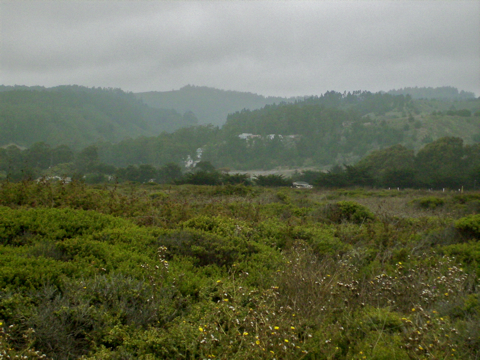
I took a drive coastside with E and Eric today. This is what we saw looking back towards San Mateo.
Yet Another Unitarian Universalist
A postmodern heretic's spiritual journey.
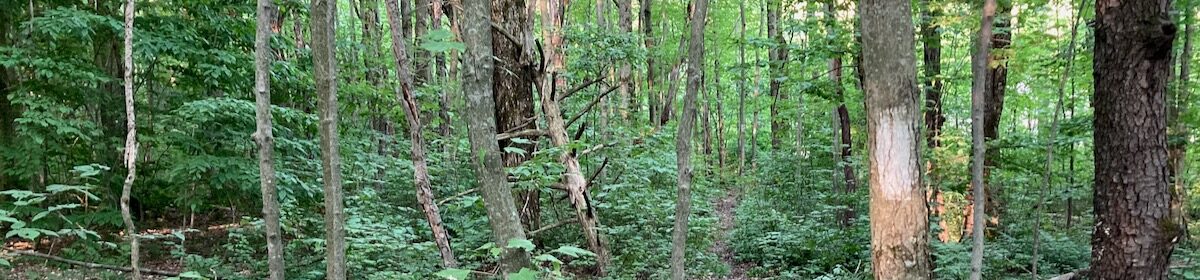
I took a drive coastside with E and Eric today. This is what we saw looking back towards San Mateo.
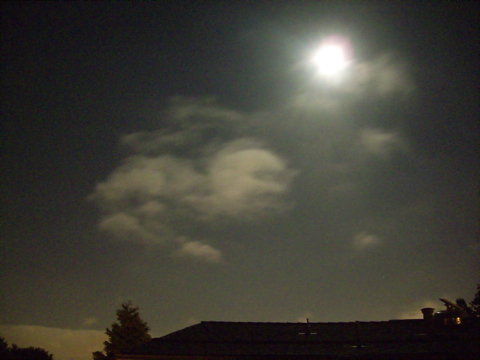
Once every two and a half years or so, the moon becomes full twice in the same month. The second of these full moons is called a “blue moon.”
Tonight Tomorrow night* is the second full moon this month:
*Thanks to E and Eric for the correction.
While we were away at General Assembly back in June, some of the plants we had growing on our little balcony shriveled up for lack of regular water. So today we went to the little nursery down the street from our apartment and bought a couple of drought tolerant plants — a good-sized lavender, and a small aloe vera. At home, I dug up some garlic chives and put them in a large pot, repotted an aloe vera plant we already had, and planted some nasturtiums in the planter box. It is remarkable how good this made me feel: I find taking care of plants to be enormously satisfying. I am only a few generations removed from a time when most of my ancestors grew or raised or hunted or gathered a significant portion of their food. We did not evolve to be “knowledge workers.”
I heard a funny sound on the roof a couple of minutes ago. “That sounds like rain,” I thought to myself. But it couldn’t be rain, because it doesn’t rain in the Bay area in the summer time. The sound on the roof continued: it really was rain.
I opened the door to our little balcony, and stuck my hand out. I had to feel the rain. A rain drop hit my hand, then another drop. There were low clouds overhead. A few more raindrops hit the balcony, and then it stopped.
Public radio station KALW ran a short piece recently on Sacred Harp music recently, calling it “the punk rock of choral music.” I was one of the people interviewed for the piece, and you can hear it or read it on KALW’s Web site here.
And for the last in a week’s worth of classical music videos….
Just 26 years old, Mohammed Fairouz (b. 1985) is already on his third symphony and recently premiered his first opera. His published music also includes art songs and works for small ensembles; these compositions have the kind of instrumentation we can use in our congregations. In this concert footage, Imani Winds perform “Mar Charbel’s Dabkeh” — and yes, there is something of a middle-eastern sound in this piece: Farouz straddles the worlds of Western art music and Mid-eastern music; but in his case, instead of breaking genre boundaries, I think of him as twisting and reshaping genre boundaries.
A bright red Ducati Hypermotard bike was parked on the street in front of us. Next to it was some kind of Harley, and behind them in the same parking space was another bike, but I couldn’t see what it was without getting up from the table where we sat in front of the coffee shop. A short man with white hair and a wizened face strolled up the sidewalk smoking a cigarette, and stopped to look at the Ducati.
Three guys walked out of some store somewhere, all similarly dressed in black protective nylon or Kevlar jackets and trousers, two of them carrying their motorcycle helmets under their arms, while the third was wearing his. The short man with white hair started talking to the guy who got on the Ducati.
I expected the three motorcyclists to leave as quickly as possible, but they talked to the white-haired man, easily old enough to be their father, for a good ten minutes. I heard the white-haired man talking about a motorcycle he once owned, one with a two-cycle engine. Interested, the guy on the Harley said, “Must have taken a lot of oil.”
Carol started listening to their conversation too. At last the three motorcyclists backed their bikes out of the parking space and drove towards Oakland, and the man with the white hair walked into the coffee shop behind us. “I expected them to blow that guy off,” I said, “but they just kept talking to him.” Carol said of the guy on the Harley, “He had such a sweet expression on his face.”
In the most recent issue of California Northern: A New Regionalism, D. Scot Miller sums up his experience of Occupy Oakland in his essay “The Hungry Got Food, the Homeless Got Shelter: The First Days of Occupy Oakland.” It’s worth tracking down a copy of this magazine just to read Miller’s essay. He gives one of the best summaries yet of what Occupy Oakland was trying to do, written by someone who was there from the beginning:
The hungry got food, and the homeless got shelter. The street kids who smoked and drank at the plaza before Occupy arrived continued to smoke and drink — and now they passed around books from the free library. People were helping each other, looking out for one another, and turning their backs on the stresses of foreclosed homes and benefit cuts. I saw people being radicalized by conversation and generosity….
If that’s what Occupy Oakland stood for, Miller also provides one of the best summaries I’ve yet heard of what Occupy Oakland stood in opposition to: Continue reading “Another view of Occupy”
It all started on the drive back from General assembly in Phoenix. We turned off Interstate 5 to head up over the Pacheco Pass, and soon Carol turned the car into a roadside fruit stand. “This is the one,” she said. Some of the apricot trees hung over the parking area, and the owner of the stand charged just fifty cents a pound for fruit she picked from the parking lot. She must have picked ten or fifteen pounds of apricots. I’m vaguely allergic to apricots; I ate half a dozen, got the beginnings of a little itchy rash, and that was then end of my apricot season. But Carol’s apricot season was just beginning.
When we got home, the kitchen was soon dominated by jam-making. On the counter near the stove were pectin, canning jars, jar lids, and bags of sugar. On the stove sat a big pot for cooking fruit and another big pot for sterilizing jars. On the counter on the other side of the sink was the big bag of fruit waiting to be processed. Before long, all that fruit had been cooked into jam, and Carol got some more cheap apricots at a farmer’s market, and made more jam. Jars full of deep orange apricot jam sat cooling on the kitchen counter, and every once in a while one would make a little “tink” sound as the lid sealed into place.
Apricot season is coming to an end. Soon there will be no more bowls full of apricot pits in the kitchen, waiting to be put on the compost pile; there will be no more jars cooling on the counter, and no more “tink” sounds at unexpectedly moments; no more orange drips of jam in odd places. The kitchen will return to normal. Two or three dozen jars of jam now sit quietly in the kitchen closet waiting to be given away and eaten. And we’ll wait for apricot season to return again next year.
I’m taking a break from work here at the Palo Alto church, and watching the transit of Venus. I’m projecting an image of the sun using a pair of 7×25 binoculars mounted to a tripod. I have a white card set up about six feet from the binoculars, resulting in an image that’s approximately five and three quarters of an inch in diameter. The optics in the binoculars are not particularly good, and there’s enough chromatic aberration that I don’t get a particularly crisp image. Nevertheless, I can clearly see the shadow Venus is casting as it crosses the sun; on this projection, it’s approximately three-sixteenths of an inch in diameter, and at this time about one and three sixteenths inches from the nearest edge of the sun. The card I’m projecting the image on is eight and a half by eleven inches oriented horizontally; the earth moves such that I have to readjust the binoculars every sixty or seventy seconds in order to keep a complete image on the card.
Venus does not appear to be moving in relation to the sun. I suppose if I sat out here long enough, I’d be able to see some relative motion; but the transit is going to take four hours, and I don’t suppose I can take that much time away from work.
And yes, the transit is a pretty amazing phenomenon to watch, even with my crude projection device.

Corrected per Erp’s comment.