If you live south of Boston, I want to invite you to a workshop I’ll be giving on Sat., Jan. 31:
Woody Plants in Winter: An Intro to iNaturalist
Saturday, Jan. 31, 10-12 noon. Led by Dan Harper, sponsored by the Cohasset Conservation Trust.
Come explore the winter woods using iNaturalist, a nonprofit online platform that helps you learn about nature while connecting you with other nature lovers. We’ll start indoors with an introduction to iNaturalist. Then we’ll head outdoors, to identify trees and shrubs in Great Brewster Woods and Dean’s Meadow, a 25-acre tract of woodland next to Cohasset Common.
10 a.m., Introduction to iNaturalist, Carriage House Nursery School, 23 N. Main St. Cohasset. Learn the power of the iNaturalist platform, which offers computer vision identification suggestions that are checked by human experts who volunteer their time. If possible, install the iNaturalist app on your smartphone in advance.
11 a.m., Woody Plants in Winter, start at Carriage House Nursery School, 23 N. Main St. Cohasset. After an introduction to identifying woody plants in winter, we’ll go out and find some plants to identify. We’ll use the classic field guide Woody Plants in Winter by Earl L. Core and Nelle P. Ammons, as well as other field guides. If you have a 10x hand lens, or a macro lens for your phone, please bring it along.
All ages are welcome, but persons under age 18 must be accompanied by an adult. Please note that iNaturalist users under the age of 12 must obtain parental permission to use the platform here.
Weather cancellation: Major winter storm cancels. Otherwise, dress for the weather. If it’s super cold or wet, we’ll spend minimal time outdoors, and bring samples indoors to identify in comfort.
As a professional educator for 25 years, Dan Harper developed curriculum for a weekly ecojustice class (gr. 6-8), a week-long ecology day camp (gr. 2-8), and week-long half-day workshops for children and adults. He currently is co-director of Ecojustice Camp South Shore.
The Cohasset Conservation Trust is a volunteer, non-profit organization whose mission is the protection of areas of ecological importance, such as marshes, woodlands, and seashores; the promotion of public interest in conservation and smart development; and the preservation of properties of unique historic interest or unusual beauty.
I went for a walk at Black Rock Beach late this afternoon. A large quantity of seaweed had been left behind by the ebbing tide, mostly Sugar Kelp (Saccharina latissima), but also some wrack (Fucus spp.), some Sea Lettuce (Ulva lattuca), and a few other odds and ends.
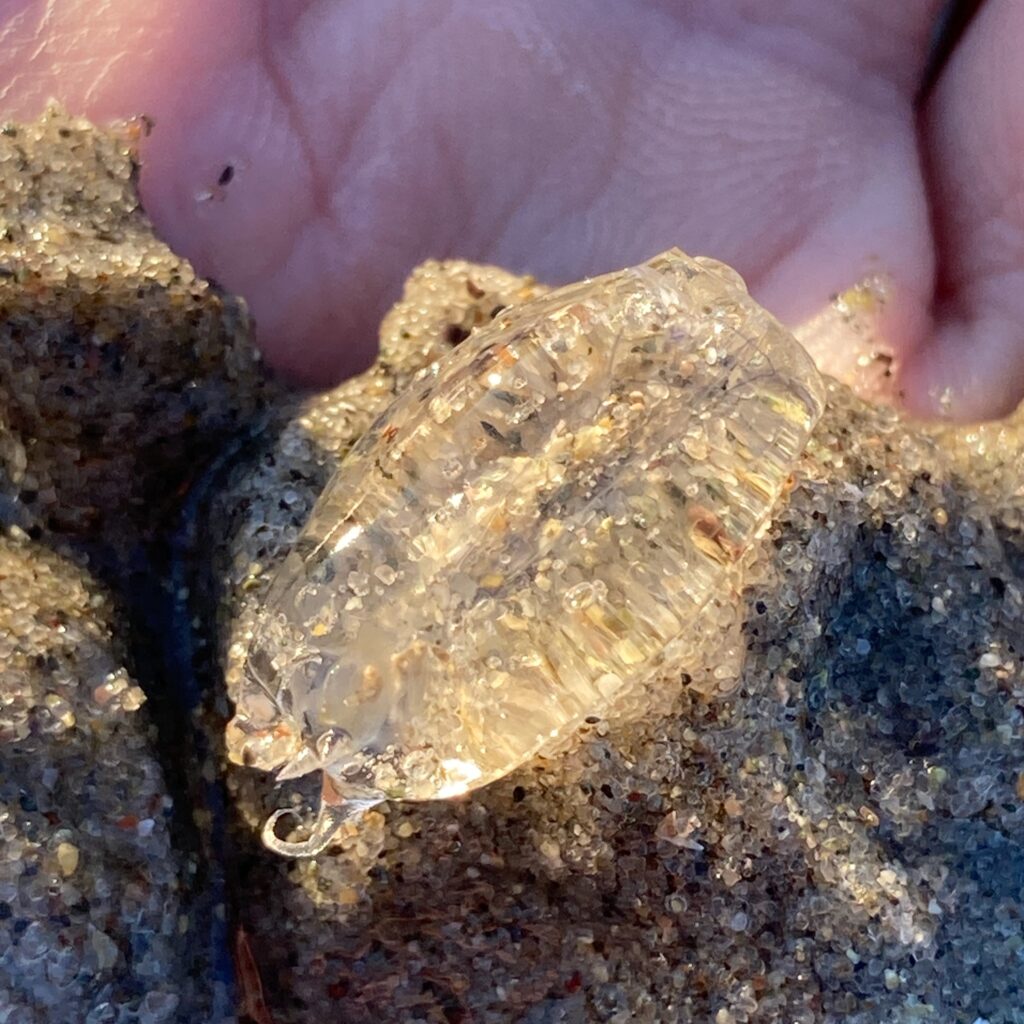
There were also hundreds of small (2-3 cm long), almost transparent jelly-like objects washed up above the line of seaweed. At first glance I thought they were Sea Gooseberries (Pleurobrachia pileus), a species of comb jellies. But when I put my photos on iNaturalist, user ja-fields corrected me — they were salps.
What is a salp, you ask? It’s an organism in Family Salpidae. The Salpidae are in Subphylum Tunicata, which is a part of Phylum Chordata — animals with spinal cords. Human beings are also in Phylum Chordata, so this odd little animal is more closely related to us than are crabs, sea urchins, or starfish.
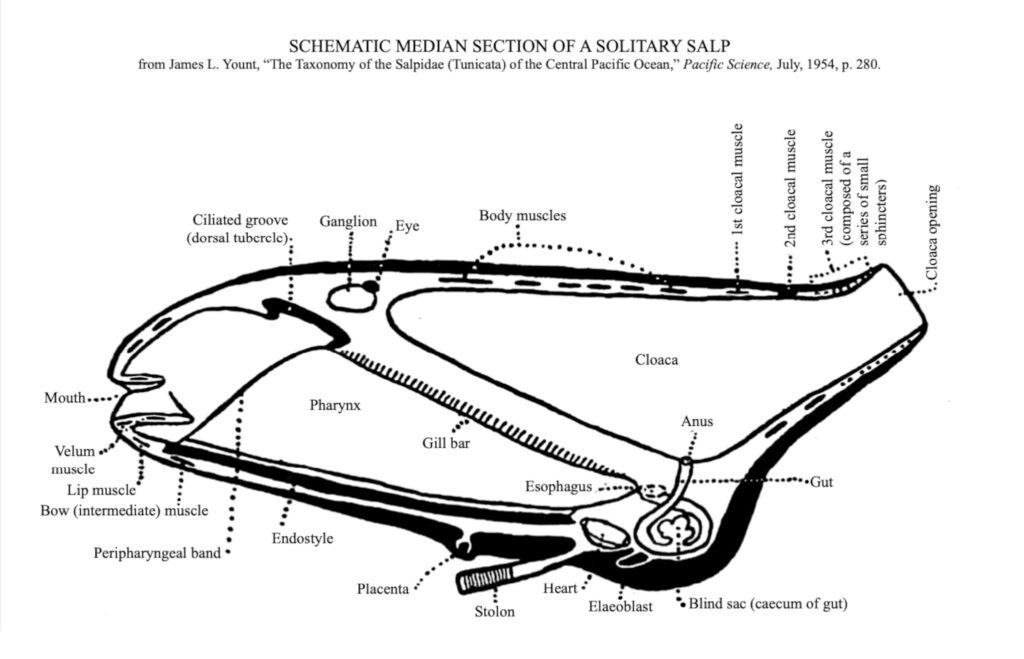
This made me curious — how does one identify Salpidae, if not to species level, then at least to genus? James L. Yount, “The Taxonomy of the Salpidae (Tunicata) of the Central Pacific Ocean,” Pacific Science, July, 1954, has a “Key to world species and reproductive forms of Salpidae,” pp. 280 ff. Identification requires looking at the internal structures, and Yount provides a “Schematic median section of a solitary salp (after Ihle, 1935).” I digitally enhanced his sketch, and identified the body parts in easy-to-read type:
After Yount (1954).Click the image above for a PDF version.
At some point, perhaps I’ll type up Yount’s key. In the mean time, you can find it yourself here.
“Hammer dyeing” is a technique where you transfer the shape and color of leaves and flowers to cloth or paper by hammering. The process is fairly simple: you place plant material on cloth or heavy paper; cover with cloth, heavy paper, or plastic wrap; then hammer the plant material to release its juices which stain the cloth or paper. This article covers hammer dyeing projects that are intended for inclusion in nature journals.
The technique goes under several different names: “flower pounding,” “hammer printing,” “hammer staining,” “leaf hammering,” “tataki-zome,” “hapa-zome,” “Cherokee leaf pounding,” etc.; but I prefer to call it “hammer dyeing.”
Origins of hammer dyeing
I found no well-documented source giving the origins of hammer dyeing. I suspect the technique arose independently in several cultures.
Some online sources call this technique tataki-zome or hapa-zome, and claim it’s an “ancient Japanese art form,” but without citing any sources. A search on Google Books turns up many references to tataki-zome from 2000 on, but I could find only one reference prior to that date: Rita Buchanan, in Dyes from Nature (Brooklyn Botanical Garden Record, Plants and Gardens, vol. 46 no. 3, autumn 1990), p. 79, says that students learning how to dye in Japan practice tataki-zome: “Using their own plants, they learn dyeing techniques such as batik, itajime — a sort of variegated effect made with wood chips, and tataki-zome, a way of mashing plants on the cloth.” More research is needed to determine if tataki-zome is actually a traditional Japanese art form.
Alabama quilter Bettye Kimbrell (1936-2016), named a National Heritage Fellow by the National Endowment for the Arts, used a hammer dyeing technique she called “Cherokee leaf pounding.” It’s not clear this technique was actually used by the Cherokee people, so it’s best to consider this an American folk art with uncertain historical roots. Kimbrell used this technique in her quilts: “Cherokee leaf pounding is a technique where a fresh green leaf is taped to the backside of muslin fabric with masking tape. Using a hammer, gently pounding the leaf allows the chlorophyll to stain the fabric. After transferring each leaf to the fabric, the stain is set with a vinegar and water solution. The fabric is then dried and entirely hand quilted.” (Kristin G. Congdon and Kara Kelley Hallmark, American Folk Art: A Regional Reference, vol. 1 [Bloomsbury Publishing, 2012], p. 226.) More about her process here.
Screenshot from a PBS video on Bettye Kimbrell, showing her hammer dyeing a quilt. Click on the image to watch the video on the PBS website.
Books and references on hammer dyeing
For a comprehensive reference book on this technique, see Laura C. Martin, The Art and Craft of Pounding Flowers (Mt. Kisco, NY: QVC Publishing, 2001; Rodale Press, 2003). Martin covers which types of flowers, and which types of leaves, produce the best results; mordanting fabrics so the image is perhaps more light-fast; setting the image with a hot iron; etc. Unfortunately the book is now out of print. Used copies can be found on Thriftbooks (please do not buy from evil Amazon). The Internet Archive has a copy online that can be borrowed. The first 32 pages of the book are available on Google Books.
I’ve found references to two other books about the process: (1) Ann Frischkorn and Amy Sandrin, Flower Pounding: Quilt Projects for All Ages (Concord, Calif.: C & T Publishing, 2001); and (2) Linda Rudkin, Flower Pounding (London, U.K.: A & C Black Publishers, 2011). I haven’t seen either book, so can’t comment on them.
My curriculum website has instructions for doing flower pounding with children, using inexpensive watercolor paper. Scroll down to “V/Printmaking,” then go to project “D/Pounding flowers.” The technique I describe has been extensively field tested with children from grade 1-8, and produces reliable results. However, this technique is more focused on process than product (“process art”), and is not suitable for use in a nature journal curriculum.
Hammer-dyed fern on bleached cotton muslin, 36 inches wide. No mordant or scouring, but the image was set using a steam iron. The darker places are plant material deliberately left on the finished image. Image copyright (c) 2025 Dan Harper.
Hammer dyeing process
Earlier this month, during a week-long family conference at a Unitarian Universalist summer camp, I was leading an ecology workshop that centered around participants recording thoughts, feelings, and observations about the nature in journals (i.e., nature journaling). My co-leader, Rebecca, who is a middle school teacher, contributed to the development of this activity (thanks, Rebecca!). During this workshop, we field-tested a procedure for hammer dyeing. The process, outline below, is easy to set up, and is designed to help participants become more aware of the details of leaves and flowers.
Tools needed
Hammer, at least 1 for every 2 participants (see discussion of hammer types below)
Disposable foam ear plugs
Table with a hard flat surface
Materials
Thin cotton muslin cloth, 36 or 45 inches wide
Leaves, flowers
A rule of thumb for collecting leaves and flowers: Collect just 1 out of 20 similar leaves/flowers.
A note about fabric: I used to go to Joann Fabric to buy cloth for class projects, but they went out of business this year. Michael’s purchased Joann Fabric intellectual property, and one of the local Michael’s stores does carry 45″ cotton muslin in stock. My preferred online source for fabric is Dharma Trading Post, but as of this writing their popular 45 inch cotton muslin is out of stock.
Not many blog posts recently, as my spare time has been taken up with revising religious education curriculum.
I just completed a version of my full-year middle school “Ecojustice Class” curriculum for southern New England. Congregations in similar climates in the eastern U.S. should probably be able to use this curriculum as well. This is a beta test version — entirely teachable, but the curriculum is still a little rough around the edges.
Much of this is adapted from the northern California version of the curriculum, which we developed over ten years at the UU Church of Palo Alto. For New Englanders, I adapted this curriculum to a four-season climate. I added several proven session plans which have been adapted from Ecojustice Camp, as well as from my summer eco-spirituality workshops that I’ve led off and on since 2006 (mostly at Ferry Beach Conference Center).
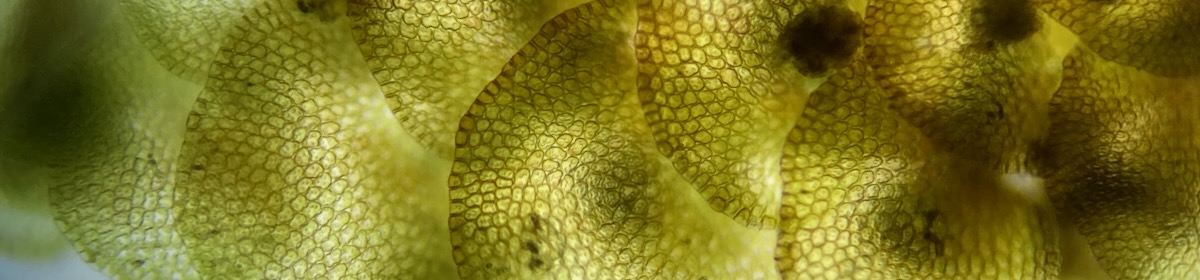
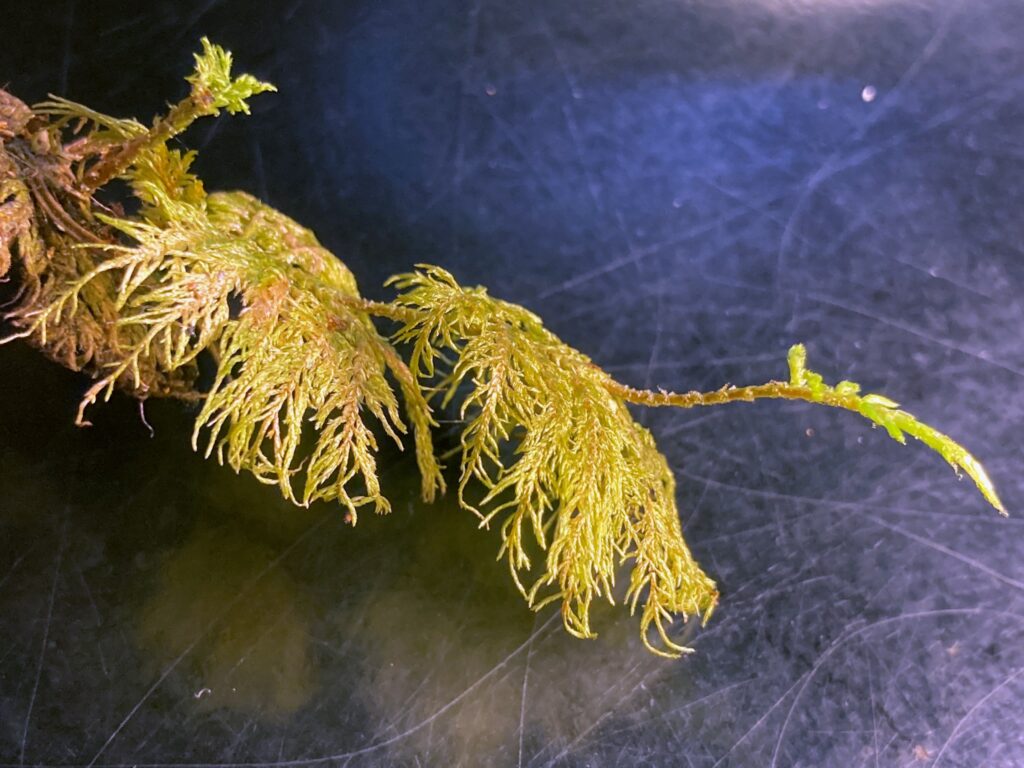
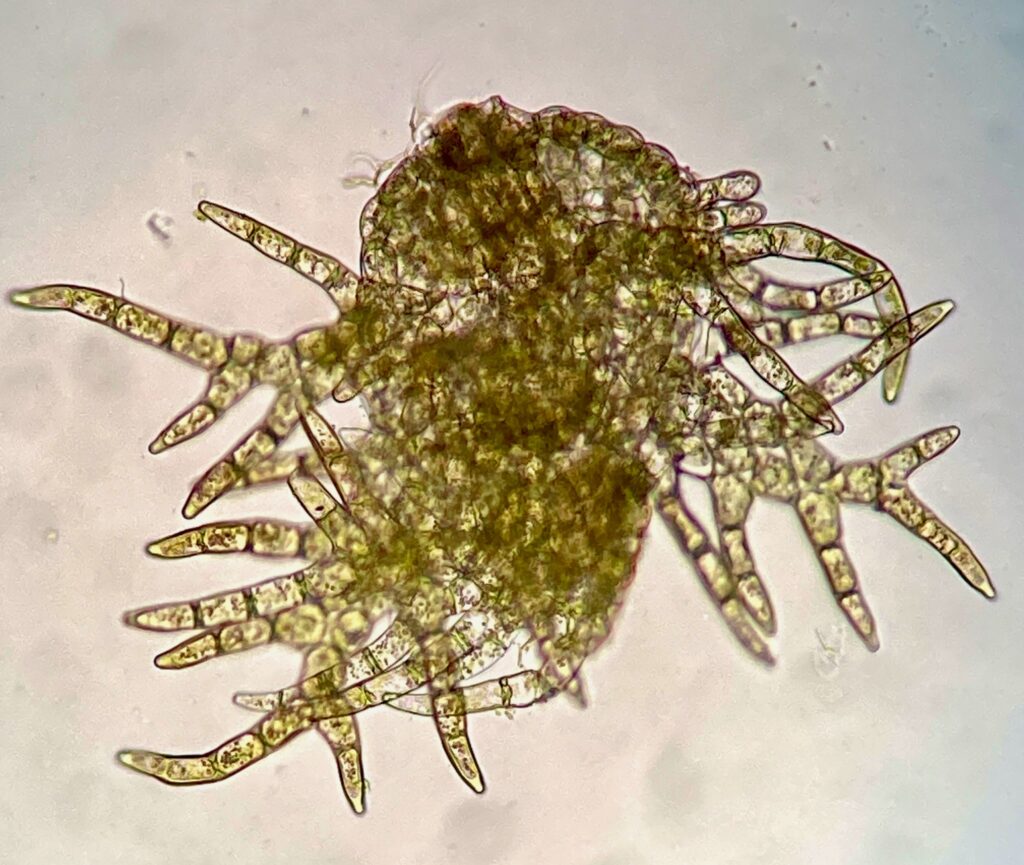
I’m attending a week-long seminar on bryophytes at a natural history institute in coastal Maine — which I like to refer to as “moss camp.” We go out collecting for an hour or so, then spend the rest of the day in the lab trying to figure out what we’ve collected. I spend about equal amounts of time staring through a microscope, and poring through dichotomous keys.
Identifying bryophyts has proved to be challenging. To begin with, the dichotomous keys can be frustrating. They use terms like “complicate-bilobed” and phrases like “Leaves keeled and conduplicate.” Different dichotomous keys sometimes use different terms for exactly the same characteristic. Then there are taxa which are frustrating — to identify Sphagnum moss to species, our instructor told us to make slide preparations of a stem leaf, a branch leaf, the stem stripped of leaves, and a section of the stem; and then after an hour or so of staring through microscopes, three different keys gave three different answers because the taxonomy isn’t settled. Usually by mid-afternoon, the three of us in the class have to get up and walk out of the lab to clear our heads.
The beauty of the bryophytes makes up for the frustrations of taxonomy and morphology. It’s another whole world….
Hylocomium splendensA folded leaf of Ptilidium pulcherrimum, showing cilia
“Effect of the Edge on Eastern Cottontail Density: Urban Edges are Harder than Agricultural” studies Eastern Cottontail density in urban preserves in Mexico City, and concludes that this species of rabbit avoids the edges of urban preserves (perhaps due to noise, light, etc.). This effectively reduces the amount of land habitable by these rabbits in an urban preserve.
“The Bee (Hymenoptera: Apoidea) Fauna of a Transmission Right-of-Way in a Highly Developed and Fragmented Landscape of Central New Jersey” sampled bee populations in a power line right-of-way. The authors conclude that power line rights-of-way probably offer habitat for bees that would otherwise be lacking in a highly developed landscape. Unfortunately, 13% of the species found by the researchers were introduced or invasive bees. I was also struck by the observation that highways result in high bee mortality: “Roads can be substantial barriers to the movement of bees, and can cause high mortality that increases as roadway speed and traffic volume rises….”
As urban areas increasingly dominate our landscapes, obviously this kind of research is increasingly important. Since most of you reading this live in an urban or suburban area, it’s worth dipping into this journal to learn about some of the unforeseen effects our urbanized lifestyle has on other organisms…if we’re gonna feel guilty about eating meat, maybe we should also feel guilty about contributing to worldwide bee decline every time we drive on a highway.
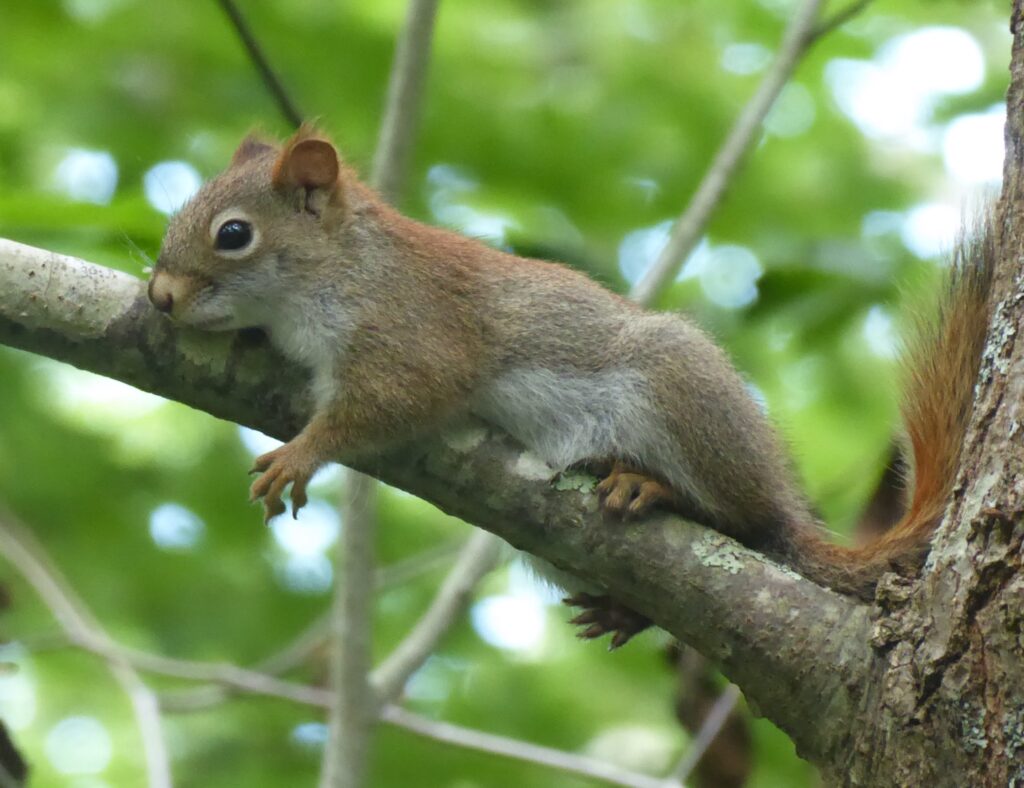
In the 90s today, with a heat index of over 100 degrees F. Walking along the Whitney Spur Rail Trail, I noticed a Red Squirrel (Tamiasciurus hudsonicus) relaxing on a tree branch about 15 feet above the ground. It looked so relaxed, I wonder if the squirrel was enjoying the cooling breeze blowing down the trail. It looked totally relaxed, something that’s unusual for Red Squirrels.
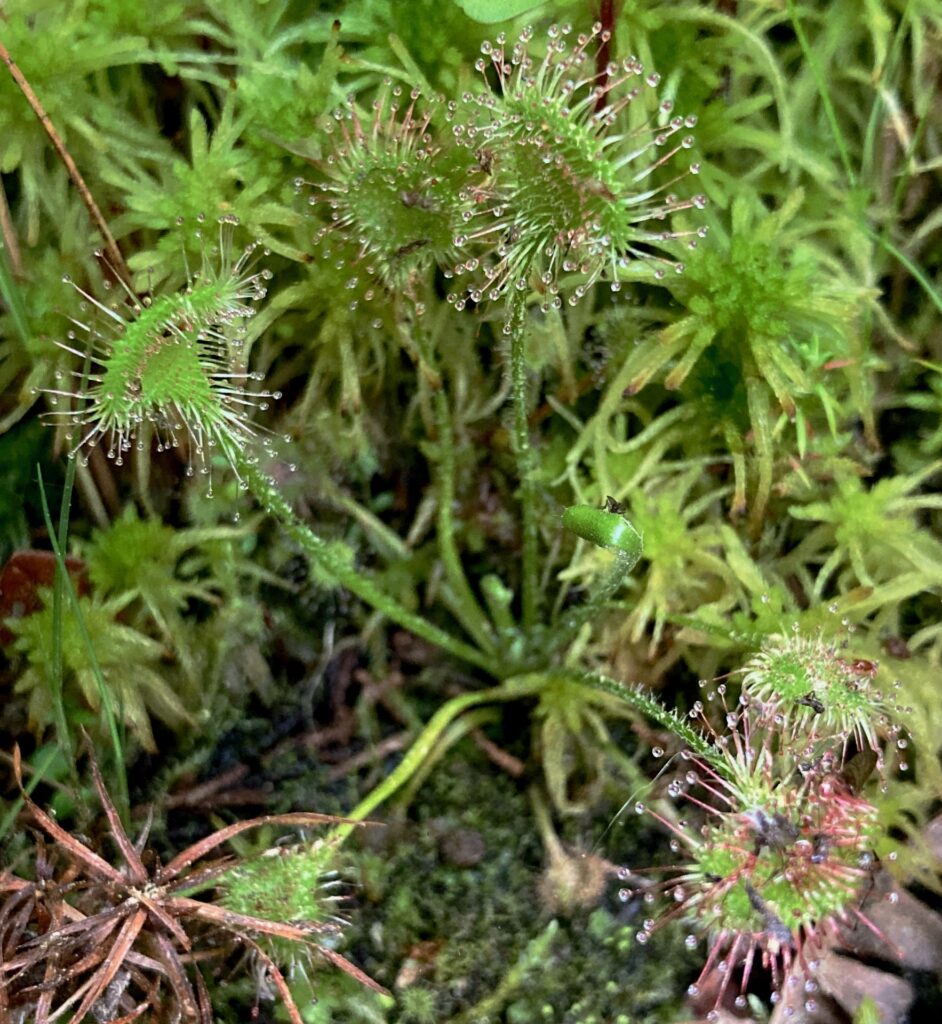
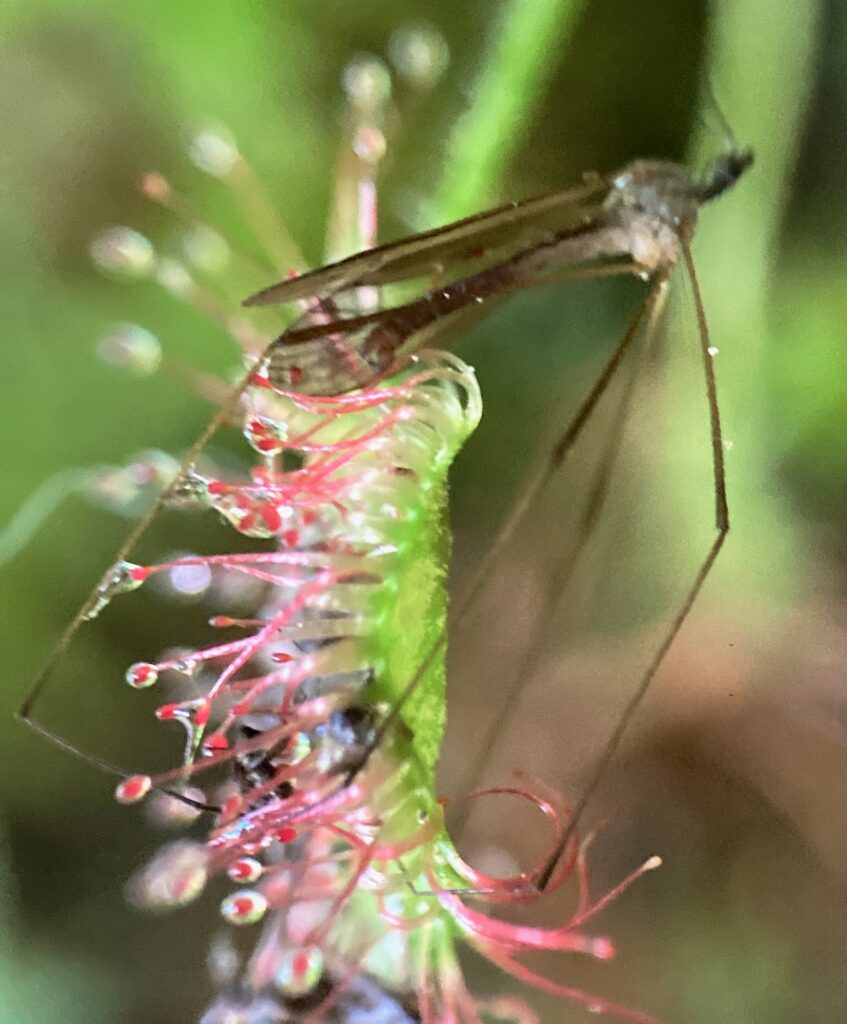
Yesterday, I came across a round-leafed sundew (Drosera rotundifolia). This plant was tiny, not much bigger than the individual sphagnum moss plants amongst which it was growing. I thought I saw some movement on one of the lower leaves.
Drosera rotundifolia
Sure enough, one of the sticky leaves had ensnared several insects, including a small crane fly that was still struggling feebly.
The body of the crane fly is far enough away from the leaf that I suspect the plant’s enzymes won’t be able to digest most of the insect. Not that the crane fly’s corpse will go to waste; something else will decompose it, and keep its nutrients cycling through the interdependent web.
I’m still recovering from COVID — still feeling woozy and strange — but taking walks outside makes me feel better. (Vitamin D? exercise? partial cure for COVID-boredom? who knows….) And today was one of those perfect June days that we still get sometimes here in New England despite climate change — cool, dry air, puffy white clouds in the sky, gentle breezes to blow the black flies and gnats away. Carol and I walked for nearly two hours in Whitney Thayer Woods. Since we were walking slowly, I had plenty of time to look at the forest floor for spring wildflowers.
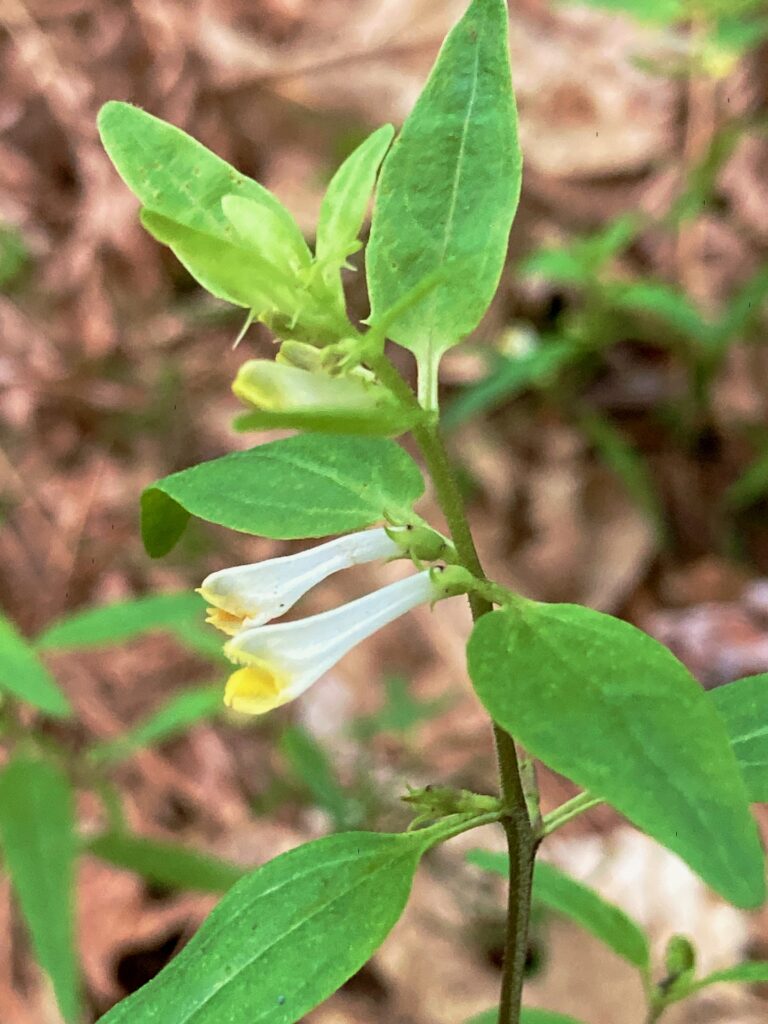
Sometimes it was an exercise in close observation, since some of the flowers I saw were quite small, like these tiny blossoms on a Narrowleaf Cow Wheat plant:
Narrowleaf Cow Wheat (Melampyrum lineare)
Don’t ask me why this plant is called “Cow Wheat.” I have no idea.
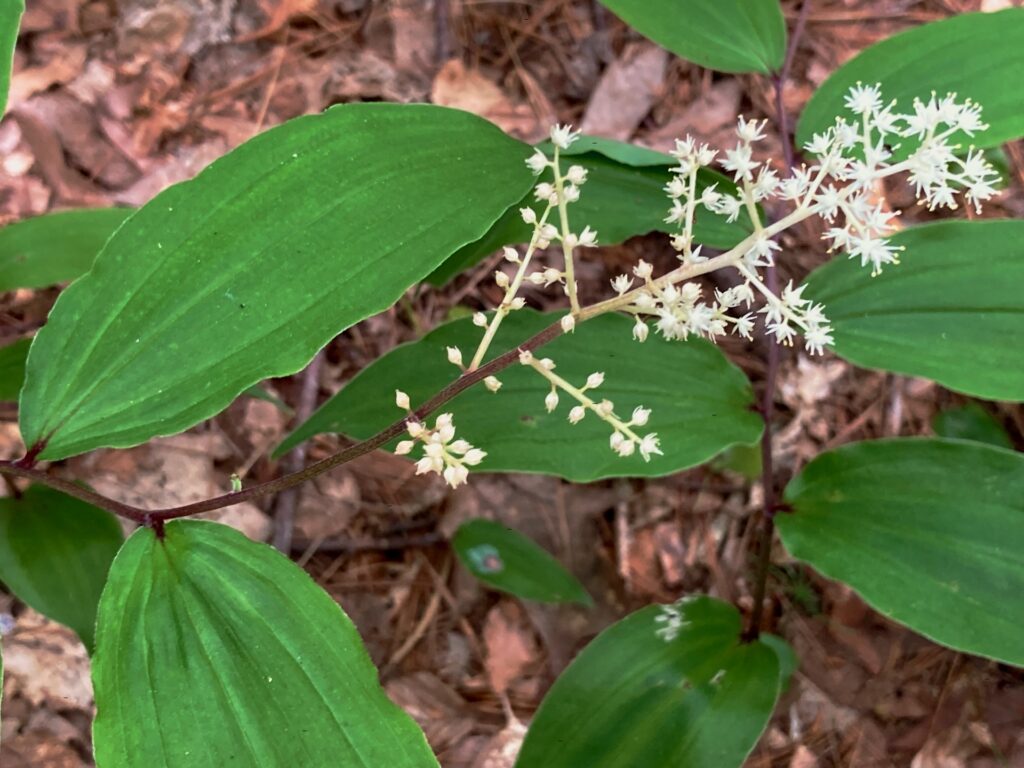
Then there were the tiny flowers that came in clusters. These are easier to see, like the blossoms on this Solomon’s Plume:
Solomon’s Plume (Maianthemum racemosum)
I think this plant is called Solomon’s Plume, first because the flowers are in a plume, and second because the leaves sort of look like a different genus of plants known as Solomon’s Seal (Polygonatum spp.), which are called Solomon’s Seal because some of the plants in the genus have tubers that when broken are said to resemble the Seal of Solomon of the mystical traditions of Judaism and Christianity. The common names of plants often seem nonsensical. Actually, this plant is closely related to the Canada Mayflower, so perhaps a better common name for it would be “Mayflower Plume” or something like that.
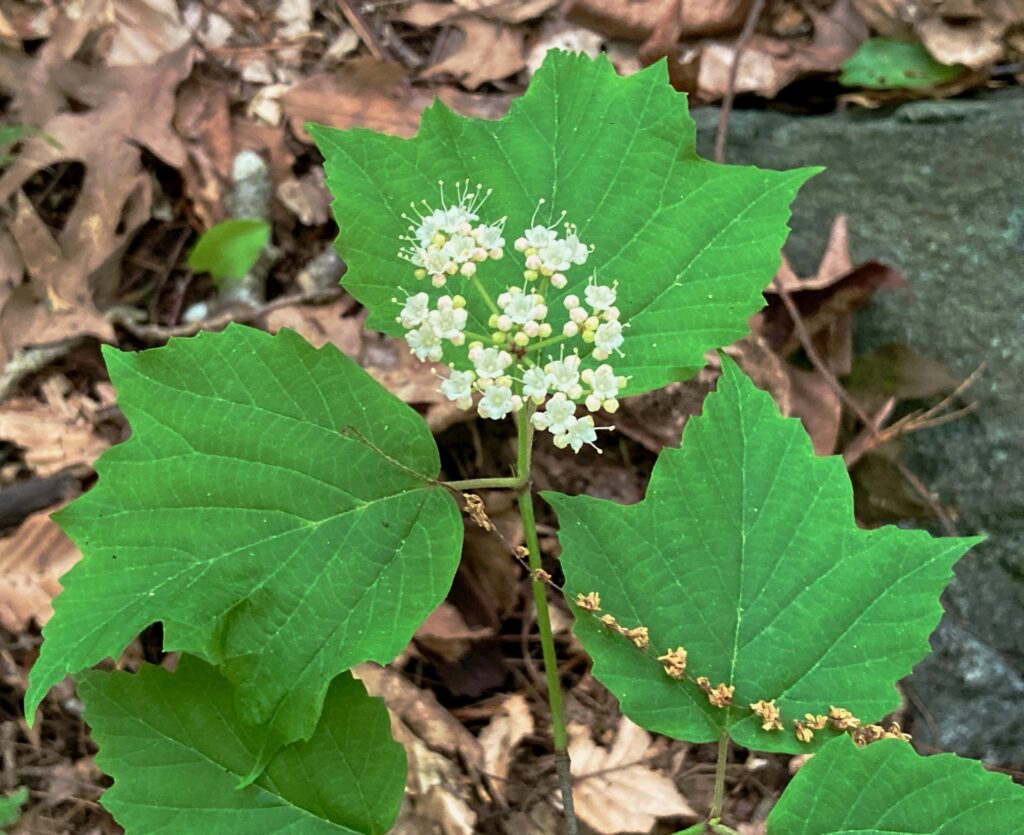
Another plant that was in bloom today also had tiny flowers in clusters — Mapleleaf Viburnum:
Mapleleaf Viburnum (Viburnum acerifolium)
At least it’s obvious where this plant’s name comes from: it’s a viburnum that has leaves that are shaped like the leaves of maple trees.
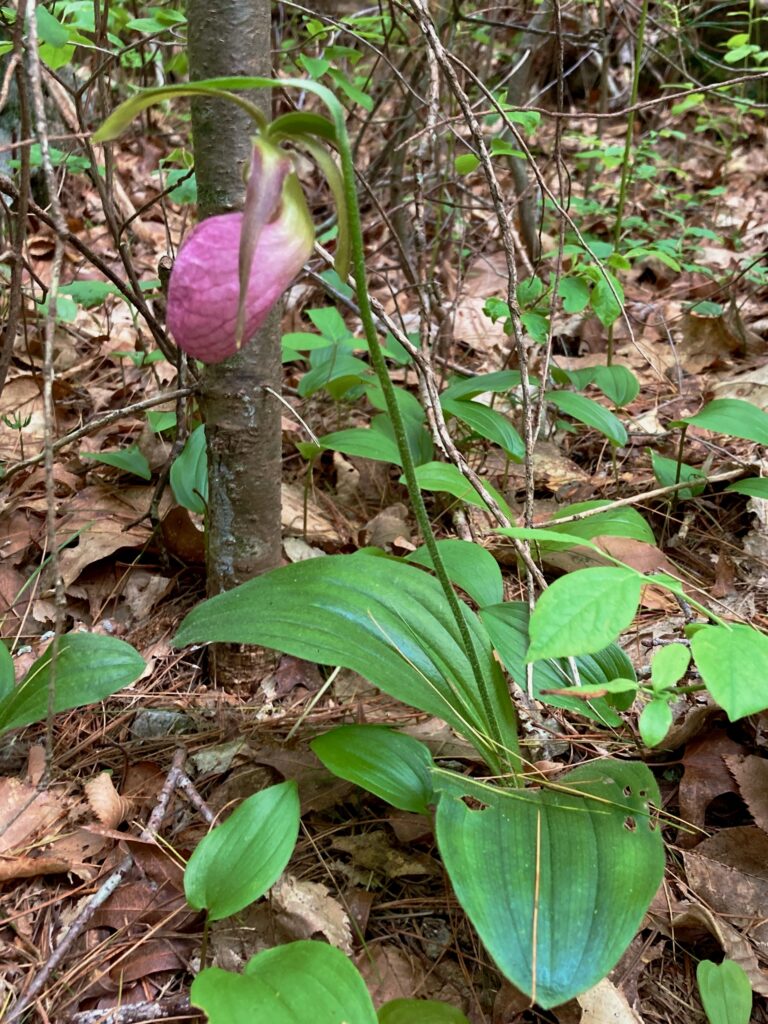
We were also lucky enough to see two or three Pink Lady’s Slippers, one of our native orchids:
Pink Lady’s Slipper (Cypripedium acaule)
You’d think that it would be easy to see such a showy flower, but I’ve found it’s actually quite easy to walk right past them.
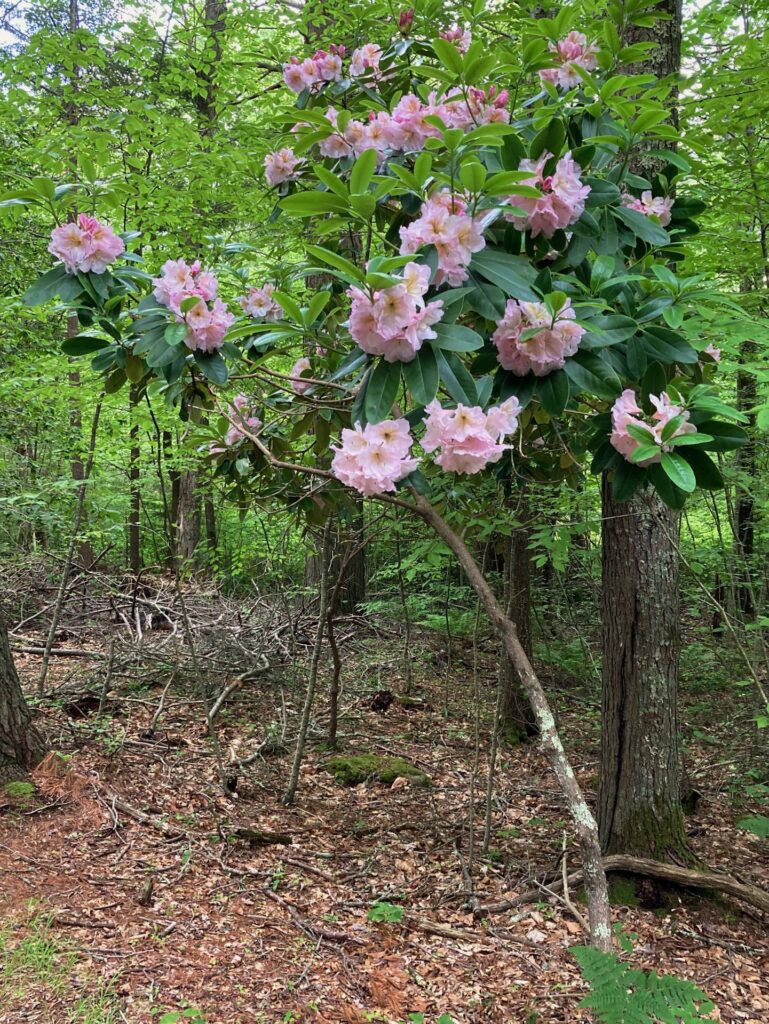
Some flowers that were impossible to miss were the rhododendrons that Whitney Thayer Woods are known for. The wealthy people who owned the land in the 1920s had various kinds of rhododendrons plants along one of the woodland paths. Descendants of those original plants still bloom each year. Several of the plants were covered in blossoms that you simply could not miss:
Rhododendron sp. (possibly R. maximum)
Even if you’re not paying attention, you’d find it difficult to miss a shrub taller than you are, covered with big clusters of light pink blossoms growing right at eye level.
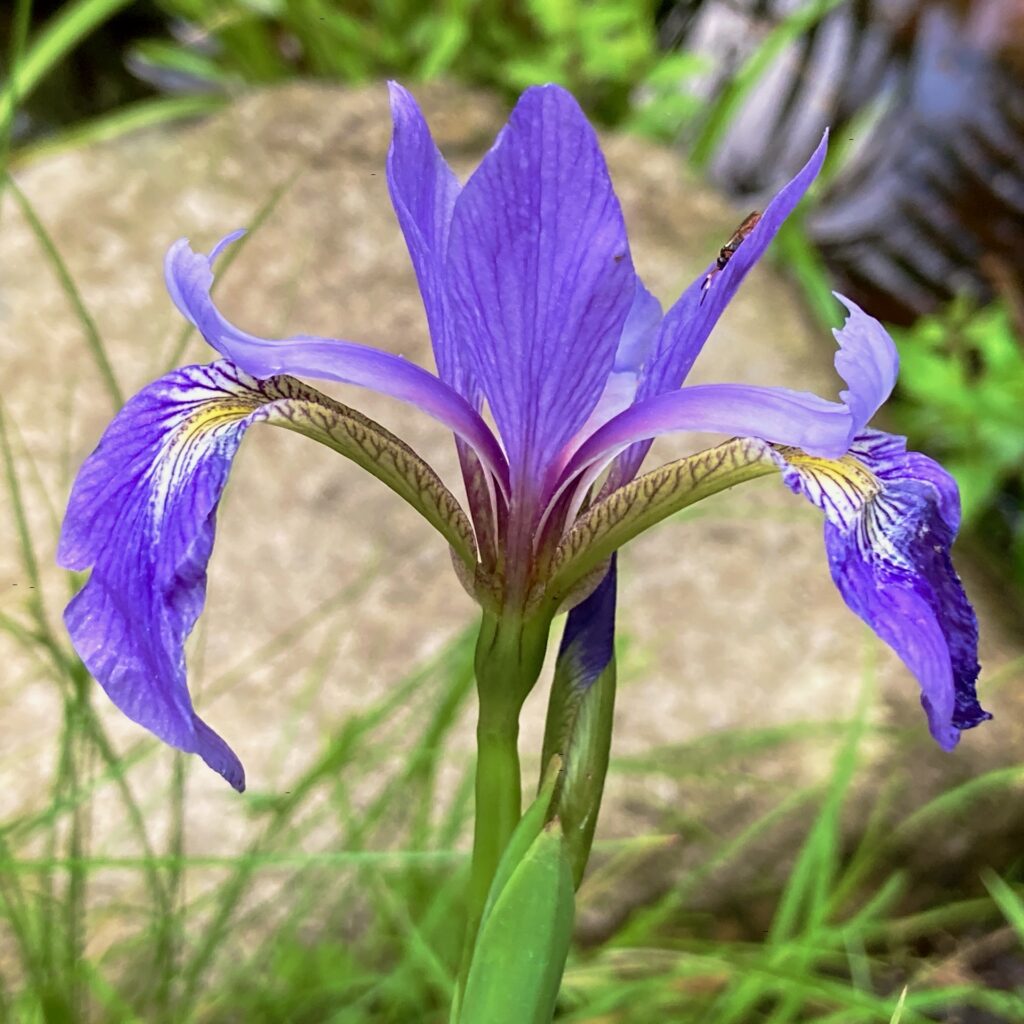
Also hard to miss, though much shorter, was the iris growing next to a boardwalk over a stream:
Iris spp. (possibly I. versicolor, Northern Blue Flag)
While the soft pink of the Pink Lady’s Slipper can blend in among the warm brown leaves on the forest floor, the brilliant purple color of the iris does not blend in to the predominant colors of the woodlands.
It’ blew up on TikTok’s blowing up on social media right now. Women are asked if they’d rather be stuck in the woods with a man or a bear. Most women answer, A bear. Which apparently has annoyed some male human beings. But the women are correct.
When I hada class in backwoods safety many years ago, we were asked to guess which was the most dangerous animal we’d encounter in the backwoods of New England. Of course we all answered, A bear. Not so, our (male) instructor replied. The human being is the most dangerous animal in the backwoods of New England, by far. Humans are big, smart, strong, and potentially vicious. Second to human beings, he said, we should be wary of moose. Why a moose, someone in the class asked. Because moose are big, near-sighted, stupid, and easily annoyed. If they’re annoyed, they might charge you. But if they charge you, just duck behind a tree. Free-roaming dogs can also be major dangers, and should be avoided. Bears, on the other hand, were unlikely to be a problem. The only bears in the New England backcountry are black bears. Black bears are bigger and stronger than humans, they might steal your food when you’re not around, but they are mostly peaceful, shy, and retiring. — So said our instructor.
Obviously, the original intention of the #manvsbear debate is to draw attention to the problem of male violence against women. And everything I’ve just said simply confirms that original intention. Of course women should fear a male human more than a bear. Human beings are way more dangerous than bears, and statistics show that male human beings are way more dangerous than female human beings. By the same token, however, just remember that if you’re a man who decides to go out backpacking in the backcountry alone, the animal that you need to fear more than any other is — another male human.