Down by the docks

This afternoon, I went down to the marina, and stood on one of the docks. Plodding along the dock came a tall, strong, heavy man with a tarry pigtail falling over the shoulder of his soiled blue coat, muttering under his breath and occasionally breaking out into song:

  Fifteen men on the dead man’s chest,
      Yo, ho, ho, and a bottle of rum…

He sang in a high, old tottering voice that sounded like it had been tuned and broken at the capstan bars. As he came closer, I could see a scar across one cheek, an old sabre cut that now showed a dirty, livid white on his nut-brown face. Continue reading “Down by the docks”

Labor Day, LGBTQ rights, and the 1963 March on Washington

We’re all hearing a great deal about how the 1963 March on Washington featured Martin Luther King, Jr.’s “I Have a Dream” speech. But I’ve been thinking about jobs and LGBTQ rights.

With Labor Day just around the corner, I’ve been thinking about how it was billed as a “March on Washington for Jobs and Freedom.” Shannon sent me a link to the Organizing Manual (you can view it online here) — and the Organizing Manual contained this passage about jobs and labor:

Why We March

“We march to redress old grievances and to help resolve an American crisis.

“That crisis is born of the twin evils of racism and economic deprivation. They rob all people, Negro and white, of dignity, self-respect, and freedom. They impose a special burden on the Negro, who is denied the right to vote, economically exploited, refused access to public accommodations, subjected to inferior education, and relegated to substandard ghetto housing.

“Discrimination in education and apprenticeship training renders Negroes, Puerto Ricans, Mexicans, and other minorities helpless in our mechanized, industrial society. Lacking specialized training, they are the first victims of racism. Thus the rate of Negro unemployment is nearly three times that or whites.

“Their livelihoods destroyed, the Negro unemployed are thrown into the streets, driven to despair, to hatred, to crime, to violence. All America is robbed of their potential contribution. …

“The Southern Democrats came to power by disfranchising the Negro. They know that as long as black workers are voteless, exploited, and underpaid, the fight of the white workers for decent wages and working conditions will fail. They know that semi-slavery for one means semi-slavery for all.”


That’s something to think about on this Labor Day weekend. Maybe we haven’t come as far as we think we have in the last fifty years — with the salaries of the CEOs rising, and the middle class disappearing, these days many white workers are also entering semi-slavery….

And then one of the two names listed on the front page of the Organizing Manual is that of Bayard Rustin. He was crucial to making the March on Washington become a reality. But because he was openly gay, the others who were in charge felt they had to keep Rustin in the background. At least we’ve made some progress in the area of LGBTQ rights; today, they might even have let Rustin speak, or at least show his face on the speaker’s platform [but see Erp’s correction to this statement in the comments below].

Independence Day, Acton, Mass.

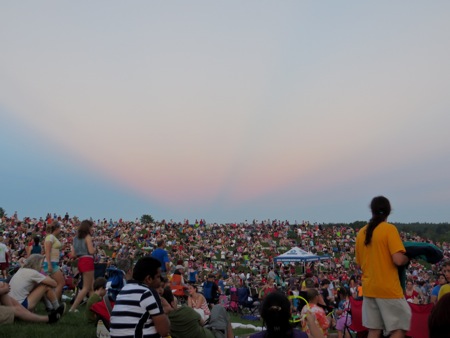
Independence Day in Acton, Massachusetts: It was blazing hot and the sky was a perfect New England blue with a few clouds. We went to Nara Park. The chair of the Board of Selectmen read a proclamation. Someone read the Gettysburg Address, then a color guard in Civil War uniforms fired their rifles. I ate a pulled pork sandwich I got from the Lions, Abby had fried chicken from a food truck, Jim ate a hotdog, Carol ate some of my potato chips. A Beatles cover band played. We left before the fireworks so we could sit in Abby and Jim’s living room and watch “Little Britain.” We went to bed late.

BlogJul0413

Above: Independence Day sunset, Acton, Mass.

Altoona, Iowa, to Auburn, Indiana

Carol had to do some business last night after I went to bed, so I got up before her and went to the truck stop restaurant next to our motel to buy a protein-filled and fat-filled breakfast of bacon and eggs. While I ate, I read The Des Moines Register. The 90 point headline proclaimed: “A BANNER DAY FOR GAY RIGHTS”. Three quarters of the front page was devoted to articles on Monday’s Supreme Court rulings. Four of the inside pages, and half the editorial page, were devoted to gay marriage. The Des Moines Register made sure to point out the important role Iowa has played in the recognition of equal marriage rights:

“In 2009, Iowa became the third state to legalize same-sex marriage, when the Iowa Supreme Court ruled that a state ban on same-sex marriage violated equal rights embedded in the state constitution.

“The Iowa case, Varnum v. Brien, helped pave the way for Wednesday’s Supreme Court decisions, said Randall Wilson, legal director of the American Civil Liberties Union of Iowa.

“It was only after (Varnum) that we saw that opinion was starting to change around much of the country,” Wilson said. “And it’s the Iowa tradition of being on the forefront of civil rights.”

It was so green in Iowa! I couldn’t get over how green the gently rolling hills looked as we drove through the Iowa landscape. The trees were astonishingly green; the grass by the side of the road, although it showed just a little bit of summer gold, was green; the corn, not quite knee-high, filled the cultivated fields with deep green; the soybeans were green; everything looked green except for the occasional white farm house, silver silo, gray-brown weatherbeaten and collapsing barn, and the white cement roadway stretching in front of us. The great drought of the past few years is over; and the open water standing in the bare, low corners of the fields showed that an excess of rain, while making everything green, has given the farmers the opposite problem: wet and flooded fields.

We decided to stop in Iowa City to buy lunch at the coop. We didn’t know where the coop was, nor if there even was one any more; when we made this trip in the opposite direction ten years ago, we thought that there would be a coop in a college town, and we navigated to it by instinct; but now Carol just consulted her phone, which gave the address and phone number of the coop. We decided to call the coop for directions, and a nice young man asked if we were coming from the east or the west, and then told Carol to take exit 249. Exit 249 was a good five miles east of the main Iowa City exit, but we took it anyway, thinking that a polite young man who worked at the coop would have local knowledge that we should take advantage of. The directions he gave us had us drive in on Rochester Avenue and turn left on Jefferson, but we discovered that Jefferson paralleled Rochester. We gave up on the directions. By instinct, we found the Unitarian Universalist church, and parked beside it. New Pioneer Food Coop was just behind the church parking lot; this was not unexpected, since fifty years ago there were many Unitarian Universalists were involved in helping to start food coops.

We stocked up on lunch food at the coop, and then drove to the next Iowa rest stop, where we ate at a shaded picnic table, while watching clouds building up to the north. The clouds kept building as we drove through Illinois and then entered Chicagoland, the vast sprawling mix of suburbia, industry, and occasional fields of corn and soybeans that extends nearly halfway across Illinois from Chicago itself. It was nearly rush hour. Traffic started getting heavy, and the drivers started getting more aggressive and ruder. We thought of pulling off the highway and eating dinner somewhere. We took the exit to Minooka, Illinois. There was nothing in Minooka; nothing, that is, except for sprawling housing developments with big stone gates inscribed with the name of the housing development. One development was called Indian Ridge; the name was a blatant lie, for the Indians had all been killed off in the Blackhawk War of the 1830s, and this particular housing development stood on a particularly flat stretch of ground.

We gave up finding food in Minooka, and braved Chicagoland rush hour. Chicagoland was so soul-suckingly dreary that we drove clear through to Chesterton, Indiana, where we stopped to have dinner at a Round the Clock restaurant, where our waitress called us “sweetie,” and where we had free wifi and apple pie.

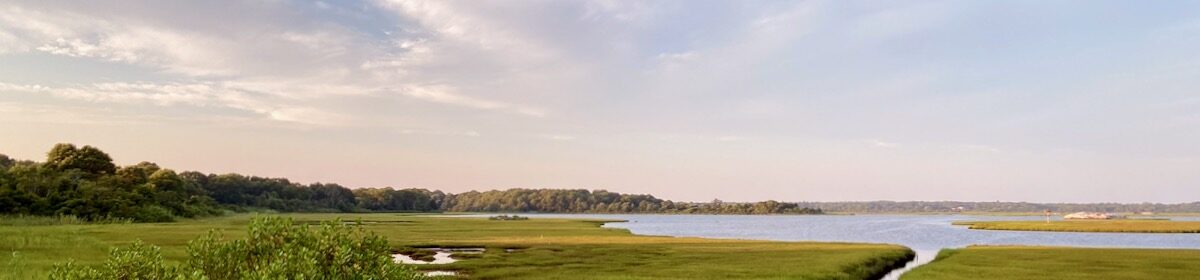
By now it was dark, and we drove through intermittent rain and darkness until at last we reached Auburn, Indiana. We had hoped my sister could drive up an meet us here for breakfast, but she came down with Clostridium difficile, one of those very unpleasant illnesses which makes you want to stay close to home, and which makes your friends and relatives choose not to visit you just in case you forget the sterilization protocols. We decided to wave to her from here: Hi, Jean!
Sidney, Nebraska, to Altoona, Illinois

We left Sidney, Nebraska, at about ten in the morning. Our first stop was the Buffalo Bill Ranch State Historical Park out side North Platte, Nebraska. Buffalo Bill’s house was set up the way I remember historical houses being set up when I was a child, with no influence from the cadre of trained museum professionals. No trained museum professional would have a life-sized mannequin dressed as Buffalo Bill greeting you from the parlor on the right as you entered the door of the house; no trained museum professional would have a slightly moth-eaten buffalo head hanging in one of the horse stalls in the barn; no trained museum professional would let you wander around in the hay loft without any signs explaining exactly what you were seeing. We ate lunch at some picnic tables in the shade of tall trees, within sight of four young buffalo the state arranges to have living in a pen a hundred yards from Buffalo Bill’s house. The entire state historical park was utterly delightful, and I got the sense that Buffalo Bill’s ghost (if he has one) must like the whole arrangement very much.

We tried to stop for dinner in Lincoln, Nebraska, but got lost, and finally just grabbed a cup of coffee and a sandwich to go at a bookstore that seemed to sell more tchotchkes and coffee and snacks than books.

As we drove further, everything began looking so very green. It is not green this time of year in California, it is brown. And the air began to feel humid. We were approaching the midwest.

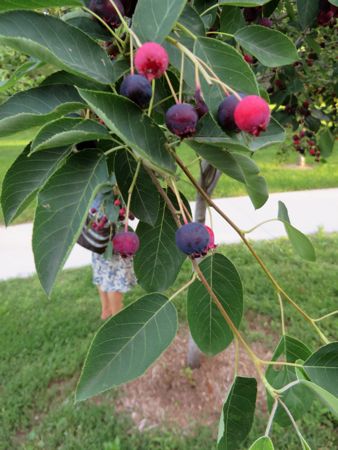
We stopped again at the Pottawattamie rest area in Iowa. From a display on the wall, I learned about the 200 foot high loess hills of Iowa, amongst which the rest area was sited, and which are a geographical marvel. I found a mulberry tree which, by the evidence of the stains on the sidewalk, had dropped all its ripe fruit. Carol found something that looked like blueberries, though the plant was a definite tree, and the leaves didn’t quite look like blueberry leaves:

BlogJun2613

But the rest area attendant assured her that he and the local FedEx delivery man ate lots of the fruit, so Carol did, too. What a great rest area — a geology lesson, fruit for the picking, a clean and pleasant rest area, with free wifi to boot — and it made me think that Iowa must be an enlightened state, to treat passing strangers as honored guests. Somehow this reminded me that Iowa is one of the states that ratified same-sex marriage. Then Carol got email from one of the people with whom she sells solar panel leases: the Supreme Court struck down Prop 8, and same sex marriage is now legal in California.*

Then we drove and drove until we reached Altoona. And here we are, late at night, in another Motel 6.

———

*Though the BBC Web site reports that “the San Francisco appeals court has said it will wait at least 25 days before allowing same-sex marriages to resume in California.” But that delay means I will be back in California in time to perform weddings — Amy, the senior minister at the Palo Alto church, and I have talked about doing free weddings for anyone of any gender who wants one, probably on the first day that they are allowed. More on this as the situation develops….

Finding a new direction

Sara Horowitz, founder of the Freelancers Union (my union!), published an edited conversation she had with Gar Alperovitz, professor of political economy at the University of Maryland. Horovitz is one of the more interesting people out there trying to make the world more humane for workers, so it’s an interesting, albeit short, conversation. Here’s one interesting comment by Alperovitz from this conversation:

“I come out of liberalism. That whole movement is largely over — and that needs to be said. I say that with one caution: they’re holding the line in certain areas, importantly, against a lot of pain. But it’s not the way of the future. It’s a decaying and dying system of politics. It needs to be said.”

This is an important critique for religious liberals to think about, because (for better or worse) religious liberalism has tied its wagon to the horse of political liberalism. Like political liberals, religious liberals favor social tolerance (not a bad thing) coupled with a highly regulated form of consumer capitalism. But liberalism, whether religious or political, seems unable to move forward in the face of global climate change and an increasingly exploitative economic system. This is not to diminish the efforts of political liberalism or religious liberalism, for both forms of liberalism are striving mightily to keep us from moving backwards into worse exploitation, and moving backwards into global climate disaster. But we’re in a place in history where just holding steady is not going to be good enough.

Speaking of political liberalism, Alperovitz says, “A whole new direction needs to grow” — a new direction that is not conservatism, nor that offshoot of conservatism, libertarianism. But neither Alperovitz nor Horowitz can yet say what that new direction will be. I think this is true for religious liberalism as well — what we’re doing now isn’t moving us forward, we don’t want to go back to dogmatic religion, nor do we want that offshoot of dogmatic religion, individualistic religion. But what our new direction will be is not clear to me.

What squirrels want

As we walked past the little plum tree this morning, heading towards the car to drive to the church, Carol pointed to the ripe plums that lay on the ground. “The squirrels have been getting to them,” she said.

“You know what I’m going to say,” I said.

“What?” she said, somewhat warily.

“Squirrels just want to have plums,” I said.*

Despite herself, Carol laughed.

We got into the car, and she began singing, “And squirrels they want to have plu–ums / Oh, squirrels just want to have plums….”

———

*If you were lucky enough to miss the popular music of the 1980s, that’s a reference to a 1983 hit song, with vaguely feminist lyrics, performed by Cyndi Lauper.