There’s no doubt that today’s armed insurrection was driven by white supremacy. The well-publicized photo of a white man smiling as he carried a Confederate battle flag through the Capitol building makes that clear, if we hadn’t already figured it out.
There’s also no doubt that today’s treasonous actions were driven by the idolatrous heresy known as Christian nationalism. This New Religious Movement — maybe we should use the pejorative term, and call it a cult — followers of this cult of Christian nationalism believe that their god is somehow specially aligned with the United States.
The white supremacy, and the heretical idolatry, helped drive these white terrorists. But I think economic desperation is also driving the broader movement that thinks the election was stolen from their populist hero Donald Trump. There’s too much economic desperation, and that desperation is increasing as the pandemic drags on. There’s a growing number of people who can’t work from home, whose businesses have gone under, whose jobs have disappeared. The divide between the haves and the have-nots has been getting bigger for decades; the pandemic has accelerated this trend.
If we’re going to turn our country away from the treasonous armed terrorists, we absolutely have to address white supremacy. We absolutely have to address the idolatry of the cult known as Christian nationalism. And we also must deal with the economic desperation in the U.S.
Let’s hope today will be the end of Trump’s influence. But even if Trump goes away, the underlying problems will still be there. We have learned that white supremacy, idolatry, and economic desperation are a toxic mix, and we must address all three.
The Bay Area Sacred Harp (BASH) singing community has been using Jamulus to sing together online, in four part harmony, in real time. The big problem with trying to sing online together is that the Internet has built-in “latency,” or lag time. Jamulus is free open source software that minimizes latency to allow people to make music together in real time.
Last night, we had eight singers logged in to our Jamulus server, including two singers from Southern California. And it finally felt like we’re getting the hang of how to do this.
We started experimenting with Jamulus back in June, and since mid-August we’ve been singing twice a month, so this is our seventh regular meeting. Singing online requires several adjustments on the part of singers. First you have to get used to the Jamulus platform, including watching your volume level, adjusting the volume levels of other singers, etc.
Beyond the technical learning curve, there’s also a musical learning curve. You have to get used to the fact that you have no visual cues, so instead of watching someone beating time you have to maintain a very sure sense of the tempo. You also have to get used to the fact that there’s more lag time than when singing in person; in person, you can rely on another singer by listening to them and following a split second behind, but singing online has just enough lag time that you have to be exactly on the beat (or even the tiniest bit ahead). In short, you have to be very confident of your part.
No, it’s not as good as singing in person. But because of the pandemic, singing in person simply isn’t possible. This is the best alternative; and really, given how good it feels to be able to sing with others, it’s a pretty good alternative.
I’ll continue after the jump with more technical details.
Of course I had to try it. I’m always a sucker for trying out new forms of social media, especially when they’re designed for educators. And Flipgrid advertises itself as a video making Web site that can be used from preK to PhD — how cool is that?
But then I logged in — you can log in using your Google account — and Flipgrid told me it only supports Google Chrome and Microsoft Edge. Seriously? no support for Firefox or Safari? Oh, right, it’s a Microsoft company. At least they allow video uploads, so I recorded a quick-and-dirty video and uploaded it. But I won’t be using Flipgrid with kids, because what about that kid who doesn’t have Chrome or Edge….
Aside from that fatal flaw, Flipgrid seems like it has potential. You as teacher can post a video, kids can respond to it, Flipgrid gives you a QR code that you can send to parents so they see the video responses. Although, uh oh, what about media releases to show videos of legal minors? Given the safety policies in our congregation, that’s another fatal flaw if I want to use it with kids.
Even though Microsoft has incorporated at least two fatal flaws in Flipgrid, the basic idea still has potential. And it still could work with adult programs.
The report by the Unitarian Universalist Association’s Commission on Institutional Change puts it starkly: if Unitarian Universalists don’t figure out how to become less white, we will die out (because: demographics).
Fair enough. But we’re seeing rise of the “nones,” people who have no religious affiliation, and so maybe it’s time for organized religion to die. If it’s time for organized religion to die, why should we care?
In a recent article titled “White Christian America built a faith-based safety net. What happens when it’s gone?”, Religion News Service has an answer to this question:
“The growth of the so-called nones doesn’t mean that belief is disappearing, but ‘loosely organized spirituality’ among people who have few ties to each other lacks precisely the organization that can marshal thousands of key volunteers.
“‘They don’t congregate,’ [Brad] Fulton [associate professor of nonprofit management at Indiana University] said. ‘And that is the key thing.’
“Religious congregations, on the other hand, he said, ‘ask people to give once a week, week after week. They tell people about volunteer opportunities once a week, week after week. There is no other social institution like them.’
“In some ways, the infrastructure of religion matters more than the spiritual part. The so-called nones, at least for now, can’t replace that.
“‘There is some upside to organized religion that has very little to do with religion,’ he said. ‘They have a great mechanism to bring people together. It is really hard to identify an organized secular equivalent.'”
This is not far from what Unitarian theologian and sociologist James Luther Adams said in the mid-twentieth century: congregations function as voluntary associations. And congregations provide real and tangible benefits to society.
Another point worth noticing here: Fulton, a scholar of management, says that what congregations do — that no one else does — is to congregate, “week after week.” The loose networks created by social media (so far at least) don’t do this, so unfortunately we can’t expect social media networks like Black Lives Matter to fill this void.
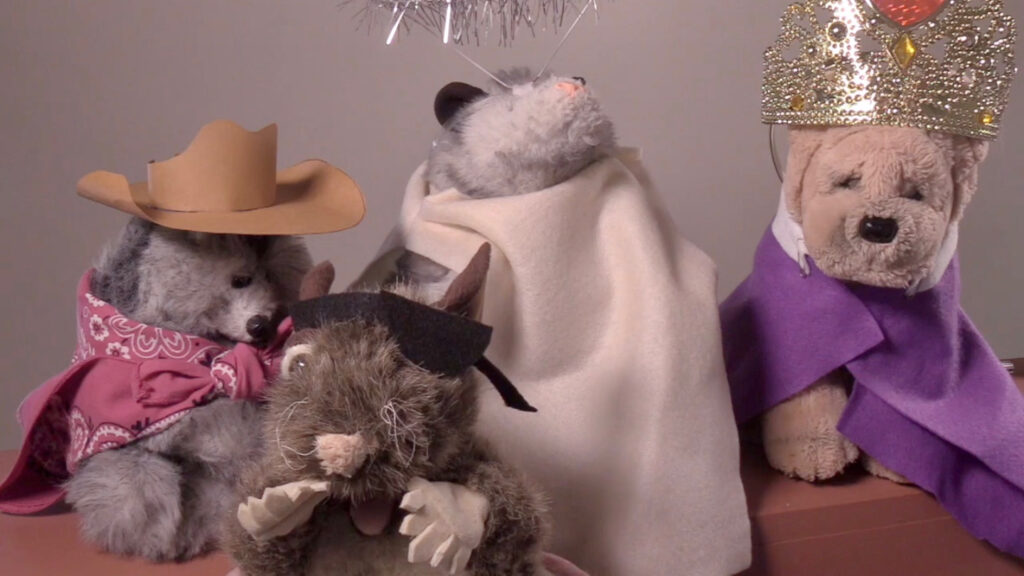
If you can’t go out trick-or-treating this year, or go to a Halloween party, how about making costumes for your stuffed animals? You could even hold a costume party for stuffies. Here’s a video with some idea on how to make easy, effective costumes for your stuffed animals:
Click on the image above to take you to the video on Youtube.
In the video, you’ll see Dr. Sharpie Ann get costumed as a queen (Queen of the Universe, of course), Packie the Dusky-footed Woodrat as a pirate, Possum as an angel, and Hedgehog as a cowboy.
Once you dress up your stuffies, take their photos and post them on social media.
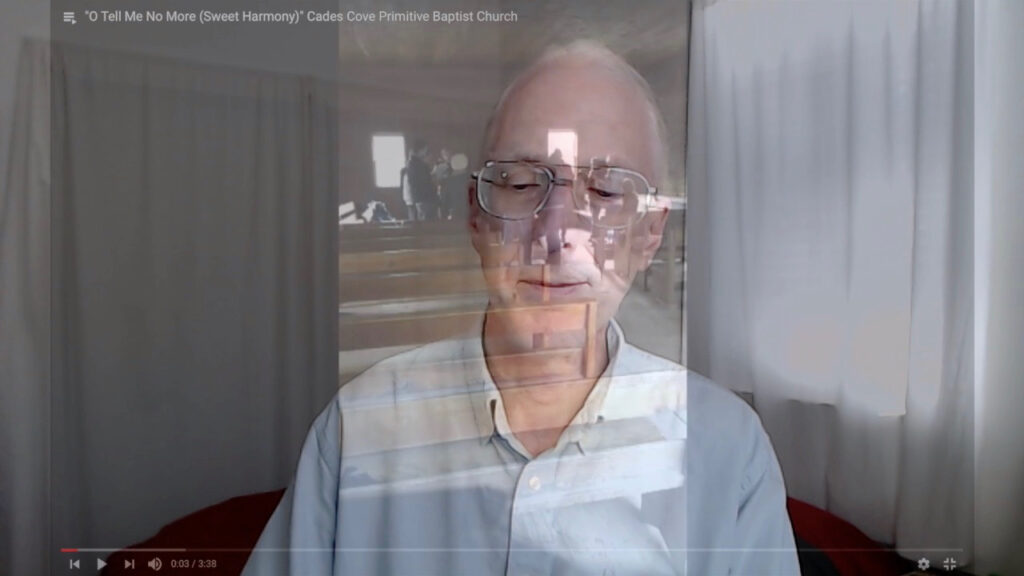
This second video in the two part series explores Christian diversity in the U.S. through Christian music, touching on everything from Christian K-pop to Primitive Baptist hymns to Mainline Protestant choral music to an AME Zion hymn choir — and more. The people who write, perform, and listen to this Christian music come from widely divergent religious perspectives, and very different cultures and ethnicities, and the musical diversity covered in this video should challenge anyone who thinks Christianity is a monolith.
(A disclaimer that will be obvious to my Unitarian Universalist readers: I’m looking at Christianity from the outside; Unitarian Universalism can no longer be considered a Christian religion, it is now quite firmly post-Christian — and whatever that means, it definitely isn’t Christian, though it is related historically.)
Click on the image above to go to the video on Youtube.
Below is the text I was looking at while making the video (but I deviated from the script more than once). The videos from the associated Youtube playlist are embedded below.
Questions that are implicit in the video: How do you define the boundaries of a religious tradition? What makes a piece of music Christian — Christian text, Christian performers, Christian context, Christian intent behind the music, Christian musical genre, or more than one of the above, or all of the above? What are the boundaries between culture and religion? — or are culture and religion somehow intertwined? How can we listen across religious and cultural boundaries? — what do we have in common, and how do we get past what we don’t have in common?
A short (5 min.) talk for an adult class in which I talk about some stereotypes of Christians, and then suggest listening to the wild diversity of Christian music as a way to get past the stereotypes to begin to understand something of the wild diversity of the Christian religion….
Click on the image above to take you to the video.
Below is the uncorrected text that I was reading from (I diverged from the text a bit, but this is most of it):
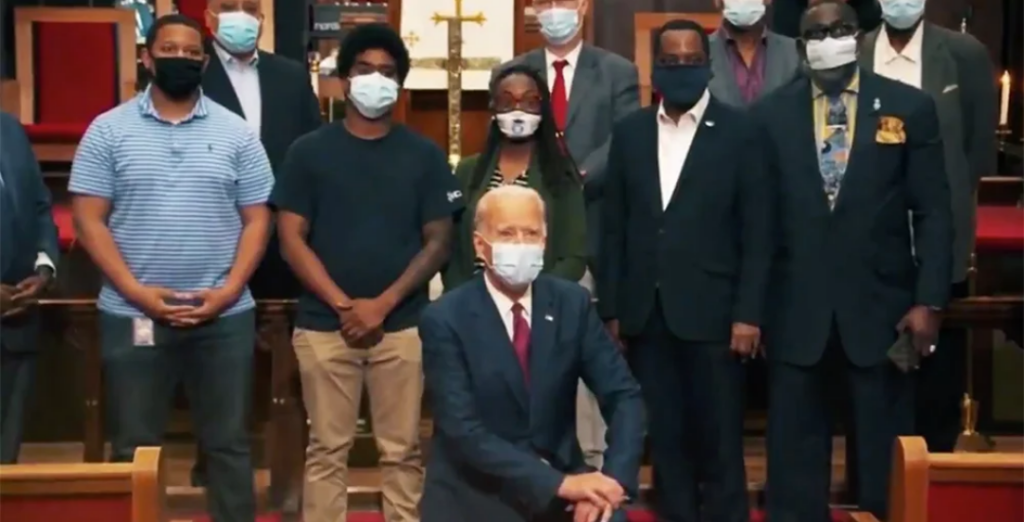
At the literal level, here’s what I see: a White presidential candidate kneeling in front of half a dozen Black men, at least one Black woman, and another White man. I see pews and a crucifix, so I assume that this is in a church, probably a Black church. It looks like a standard presidential campaign photo opportunity. I do wish they had practiced adequate social distancing, to set a good example.
As it turns out, according to Religion News Service (RNS), this is a video still from a video taken when Joe Biden visited Bethel African Methodist Episcopal Church in Wilmington, Del., not long after the death of George Floyd. According to RNS, Biden was at the church to talk about “racial injustice and police brutality before praying with those assembled.” So my literal reading of the photo wasn’t far wrong.
Campaign staffers for the Donald Trump presidential campaign would like to have you see this image in a different light. RNS reports that this video clip has been used to conclude a Trump campaign video which equates Joe Biden with civil unrest. I didn’t have the stomach to watch the video myself, so I will trust RNS when they tell me that immediately following the video clip showing Biden in a Black church, “words appear on the screen reading ‘stop Joe Biden and his rioters’ as Mike Pence declares ‘you won’t be safe in Joe Biden’s America’.”
Thus it appears that what the Trump campaign staffers who created this ad would have you see is something rather different from what I saw. It appears that what they want you to see is that Joe Biden and Black church leaders are dangerous. However, when the RNS asked this question of Donald Trump’s press secretary, this interpretation was categorically denied:
“Asked whether the ad meant to suggest there was something unsafe about Black churches or meeting with Black leaders in a church, Trump campaign deputy national press secretary Samantha Zager replied, ‘That’s absurd and it’s shameful to even make the allegation.’ When Religion News Service followed up to ask what, exactly, footage of the church visit was meant to imply, Zager did not respond.”
In spite of Zager’s denial, it’s clear to me that the intent of this advertisement is to allow people to complete an equation in their mind: dangerous rioters equals the Black church equals Joe Biden. There is also a clear effort to equate Joe Biden with rioters, and with those athletes who kneel during the national anthem. It also seems likely that this advertisement wants to imply that this White man, Joe Biden, will kneel down before Black men and women.
I had quite a few years of training in the visual arts, and I’m always impressed at the multi-layered messages that visuals in political campaign ads can evoke. And I’m cynical enough that it doesn’t surprise me that the Tump campaign is using racial fears to motivate voters; American politicians have been doing that for centuries now, often with great effect; why would a politician who’s hungry to be re-elected give up a tried-and-true campaign strategy?
But I am troubled that a good portion of the American electorate is still so susceptible to political manipulation through their racial fears that it makes it worth the while of unscrupulous politicians to manipulate the emotions of susceptible voters in this way. Someone thinks this may be a winning strategy for the Trump campaign, and they may well be right. All the elegant theories of White privilege and White fragility and White supremacy — these theories haven’t change the emotional make-up of a great many White Americans. Anyone with training in the visual arts knows that a few well-crafted images can easily bypass the most elegant of theories….
I suspect there’s a role here for artists, illustrators, film makers, video game designers, and other visually skilled people. The visual impact of a movie like “Black Panther” may make more of a difference than your average street protest. There may be a role for amateur artists, too, in flooding the interwebs with imagery that equates Black Americans with patriotism, honor, intelligence, serving the public good, and other politically positive messages.
Over the past few months, I’ve been writing and producing videos nearly every week for the online worship services at the UU Church of Palo Alto. For my own reference, I just created blog posts for each of the videos I’ve done so far, including a still from the video, a link to the video on Youtube, and a full script. The posts are backdated to the Sunday on which the video appeared in the worship service.