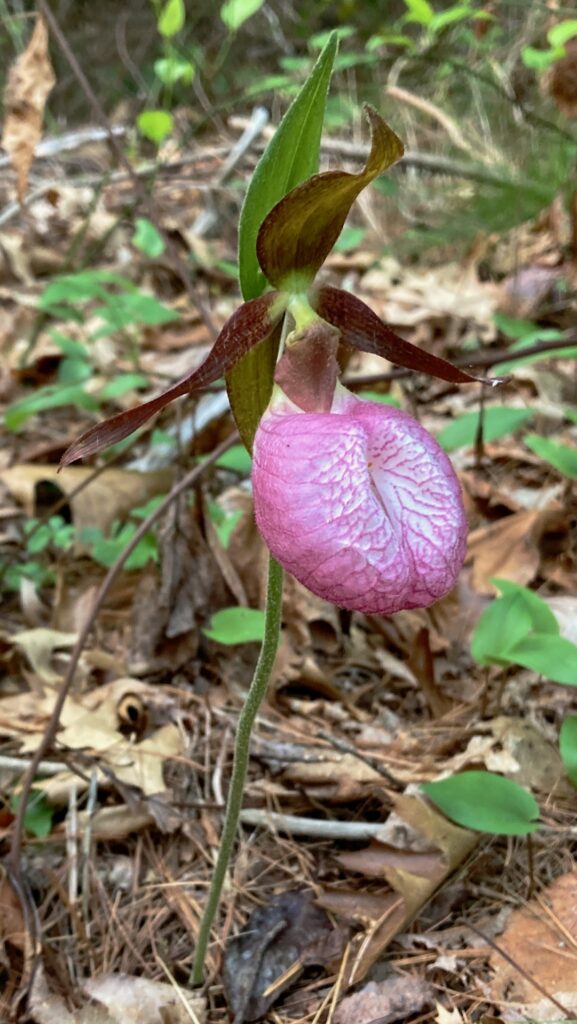
Ngoc, Matt, and I are gearing up to offer a week of Ecojustice Camp here on the South Shore beginning August 14. I’m looking forward to translating the California Ecojustice Camp curriculum, which I helped develop, to southeastern Massachusetts.
We still haven’t figured out how much we’re going to charge, or what ages we’re going to include. But we’re hoping to keep rates below average for this area, and the ages will probably be much the same as the California camp. Watch the camp website for updates!
Update, April 20: The camp website now has rates and age groups.
Carol and I went for a day trip to Cape Cod. The first place we went was Sandy Neck in Barnstable. As we walked from the parking lot to the beach, someone said, “Are you here for the whales?”
About 80 North Atlantic Right Whales have been hanging out around Cape Cod. The Cape Cod Canal has been closed once or twice because one or more whales have entered it — a primary cause of North Atlantic Right Whale mortality is vessel strikes. Since there are only about 370 of these whales left in the whole world, it’s worth closing the canal to keep them safe.
We didn’t see any whales, so we walked up the marsh side of Sandy Neck, where we saw the carcass of a pilot whale that had died on the bay side and had been hauled over to this side to rot. After an hour of walking, we crossed back over to the beach. When the ocean came in view, I got my binoculars and started to scan for whales. Almost immediately, I saw two — no, three of them — just at the limit of visibility, where the ozone started to blur things.
Just as I told Carol, one of the whales breached. Given the visibility and the distance, mostly what I saw was the huge black mass of its body coming up out of the water, the water foaming white around it, and what looked like white patches on one side of the animal’s body — right whales do have white markings on their bellies. Carol got her binoculars up in time to see the huge splash it made when it re-entered the water.
We watched for a while longer. We could see the surging water around the whales, and maybe we glimpsed a sight of the black heads. Then they disappeared. Maybe we saw them for 60 seconds, or even two minutes — not a long time, but a very memorable time.
An interesting essay by Tolkien scholar Robin A. Reid points out that the beloved author’s works are also loved by neo-Nazis, white supremacists, etc. Why? Perhaps because Tolkien’s fictional universe sets up a fictional racial hierarchy similar to the real-world racial hierarchies promoted by neo-Nazis, white supremacists, etc. The essay’s title is, in of itself, interesting: “Why White Supremacy No Longer Provides Cover for White Academia.”
Reid also cites a recently-published article that uncovers the racism in Tolkein’s fictional world: “[I]n 2022, those of us working on racisms and Tolkien were amazed to discover a newly-published essay in The Southern Journal of Philosophy: Charles W. Mills’ “The Wretched of Middle-earth: An Orkish Manifesto.” … It turns out that this 2022 publication is over thirty years old: Mills wrote it at some point during the late 1980s and could not get it published….” Reid goes on to say that the simple fact that Mills could not get his essay published in the 1980s helps reveal how Tolkien scholarship has been dominated by white viewpoints and by white privilege.
I was out for a walk at dusk in nearby Wheelwright Park, and heard a strange sound coming from a nearby tree — a sort of whiny “cheep” kind of sound. I looked up, and there was a juvenile Great Horned Owl about 10 meters up.
The fading light made it hard to see much, but the bird appeared to have well-developed flight feathers. The prominent ear tufts which are characteristic of adult Great Horned Owls were just starting to form. And the plumage was a lighter color than adult plumage. So my guess is that this was a young owl out for one of its first forays from the nest.
As I stood watching it — and trying to take photos with my smartphone — I thought I heard another owl cheeping from a tree farther away. It seems like there were two young owls out trying out their new wings.
Someone I know was worried when I said I hadn’t bought Carol an Easter gift. I immediately felt guilty. Is that what one is supposed to do these days?
It turns out this is in fact a growing cultural trend. Religion News Service asked recently: “Is Easter the new Christmas?” They reported that there are now elaborate Easter gifts for children, along with Easter egg hunts for adults: “…at a time when fewer people are identifying as Christian and church attendance has been slow to recover from the pandemic, celebrations of the most sacred day on the Christian calendar are becoming bigger and more detached from their religious roots. In their place, events like the Adult Eggstravaganza Egg Hunt… the Boozy Bunny Egg Hunt, hiding plastic eggs containing candy and little bottles of alcoholic beverages for residents over the age of 21… [and] kiddie pools full of summery gifts….”
Gag me, as the Valley Girls used to say, with a spoon.
I’ve come up with a name for this growing movement: Consumer Capitalism As a New Religious Movement, or CCANRM (pronounced “kanrum”). No, this is not the Secular Age — this is the age when CCARM takes over from Christianity as the biggest baddest religion — when CCARM takes over from Buddhism as the most effective proselytizing religion among the Cultured Despisers of Religion.
Anyway.
I did not get Carol an Easter gift. She was happy that I did not. We did not have a special meal. We just had our usual cook-it-when-you-feel-like-eating meals. We went to the Sunday service at First Parish, we spent an hour at social hour talking with people, we took a long walk in Whitney-Thayer Woods. It was a good way to spend a nice spring day.
If you’re interested in early American sacred music (as I am), you might be interested in a new website being developed by Nym Cooke, a well known scholar and practitioner in the field. A friend forwarded me Cooke’s introductory email, which says in part:
“I invite you to explore a new website, Early American Sacred Music, at earlyamericansacredmusic.org. This constantly growing resource includes: — a searchable database with extensive information on over 2,100 American printed and manuscript sources produced before 1821 (the complete holdings of 22 libraries), and over 10,000 manuscript music entries; —600 pages of transcriptions from ca. 300 New England town and church histories, containing all that those sources have to say about early sacred music, and farmed out into 22 searchable subject files — with an index of the ca. 1,138 musicians those histories document….”
I’ll point out that this last item implies that anyone doing research on history of 18th century American congregations might find useful information on this website.
Also of interest to me was this statement: “Current inventorying plans include the collections of the Beinecke Rare Book and Manuscript Library and the Irving S. Gilmore Music Library at Yale University; the Newberry Library in Chicago; the William L. Clements Library at the University of Michigan; the Boston Public Library; the New York Public Library; and a number of town historical societies in New England.” Again, this could make the site a very useful resource for historians as well as musicologists.
For some years now, this blog has used a WordPress plugin called “CaptchaBank.” This plugin forced you to solve an arithmetic problem before you could comment (and I have had to solve an arithmetic problem before I could login). It was a great plugin that kept the spammers at bay. And it wasn’t based on Google’s horrible “reCaptcha” which steals your data and has an appalling user interface.
Alas, Captcha Bank is no longer being maintained. I finally had to deactivate it.
Fortunately, Cloudflare has released a new form of Captcha which they call “Turnstile.” You can read about it here. They don’t steal your data. And Cloudflare is a company that I have at least a moderate amount of trust in (as opposed to Google, which sadly I can no longer trust at all). So I installed a plugin that runs Turnstile on WordPress.
With luck, everything will run smoothly and you won’t notice a difference. But if anything goes wrong, this will explain why you’re unable to comment. If that happens, please let me know (you can find my email on the About page).
At First Parish in Cohasset, where I serve as minister, 10-15% of our Sunday congregation each week attends online. This percentage is probably typical of most Unitarian Universalist congregations.
A recent study shows that in Black churches, the percentage is much higher. As reported by Religion News Service (RNS): “According to the Pew Research Center, Black Protestants outrank all other U.S. religious groups in choosing to worship outside of brick-and-mortar locations, with 54% saying they took part in services online or on TV in the previous month.”
African Americans were hit hard by the COVID pandemic, and many remain wary of in-person worship services. Although J. Drew Sheard, a bishop with the Church of God in Christ who was interviewed by RNS, points out, “That fear does not seem to prevail when they go to sports activities or the mall…. But they have been invoked with fear that you can catch COVID at church.” I can relate. I still have many COVID-related fears, and I’m still wearing my mask in church; the fear is still there. I completely understand why some Black churchgoers don’t want to show up for in-person services
Besides, I really do like online services. I like being able to attend Sunday services while sitting on a couch in my jammies drinking tea. That’s about as good as it gets. On the other hand, my favorite part of Sunday morning is social hour, and I don’t care for online social hours. So personally, I like having both options available: both online and in-person services.
I’m betting that online access to worship services is here to stay. W. Franklyn Richardson, pastor of Grace Baptist Church in New York, puts it this way: “The impact [of the pandemic] is not over yet but we see signs of church being normal…. [But] normal is a fluid word. Normal is change. Change is normal.”
I particularly appreciate their wide selection of mid-twentieth century pulp novels. I was just in MKE a week and a half ago, and bought a 1960s paperback reprint of Ian Fleming’s thriller Casino Royale from 1953. Casino Royale, the first James Bond novel, is a wonderful example of mid-twentieth century pulp fiction: you simply can’t believe the amount of sexism and implicit racism, the plot creaks, and there are weird dominance and submission games going on throughout the novel. It reveals the strange paranoiac Zeitgeist of the 1950s better than any history book. But I digress.
Basically, it’s a bookstore that should not exist. So it kind of feels like Spider Robinson’s fictional Callahan’s Crosstime Saloon, except that it’s not a fictional place. Here are some key excerpts from the Twitter thread to explain:
“On my way home from Milwaukee yesterday I did a triple take when I saw an ancient used book store, IN THE AIRPORT!!! I felt like I walked through a portal to a world where everything was a little bit cooler. I was so enthralled I went up to the register and was like ‘hey, I’m fascinated by this place, can we chat?’ A man with an orange hat, orange glasses, and an orange shirt pushed aside his laptop and said ‘oh, heavens yes.’ His name is Orange Mike, and he’s worked here since 1979. Every employee of the shop, including Orange Mike, makes exactly ‘8.125 dollars’ an hour to keep this place going. They are also all in their 60s. Orange Mike himself comes from the local pen & paper community, and used to review games for Dragon magazine. The stock here is eclectic and weird and not remotely curated. Half of it is giant history books that have probably been here since the 80s….
“The store’s existence comes down to the airport taking bids from local bookstores to occupy the space, and accidentally including used bookstores in the list. The owner shrugged and submitted the high bid. The airport tried to stop it but after six months of legal spats failed…. This store just shouldn’t exist. The airport doesn’t want them there, it makes no revenue, they have a hard time moving product, and all of its underpaid employees are at retirement age. And yet it persists. AT A MAJOR AIRPORT. I am blown away by this place existing. If you’re ever at MKE, go check it out while you can. It seems like something way too good for this world, which means it may not be there next time if you skip it.”
I spent four hours at Renaissance Books one day last year, due to travel plan complications. That bookstore turned what was an otherwise unbearable trip into something almost enjoyable. I was so grateful that now every time I’m in MKE (which is not very often), I spend as much money there as I can (the limitation always being: How many books can I fit in my carry-on luggage?).
Me holding a reprint of a mid-twentieth century pulp classic in Renaissance Books. God, I love that place.