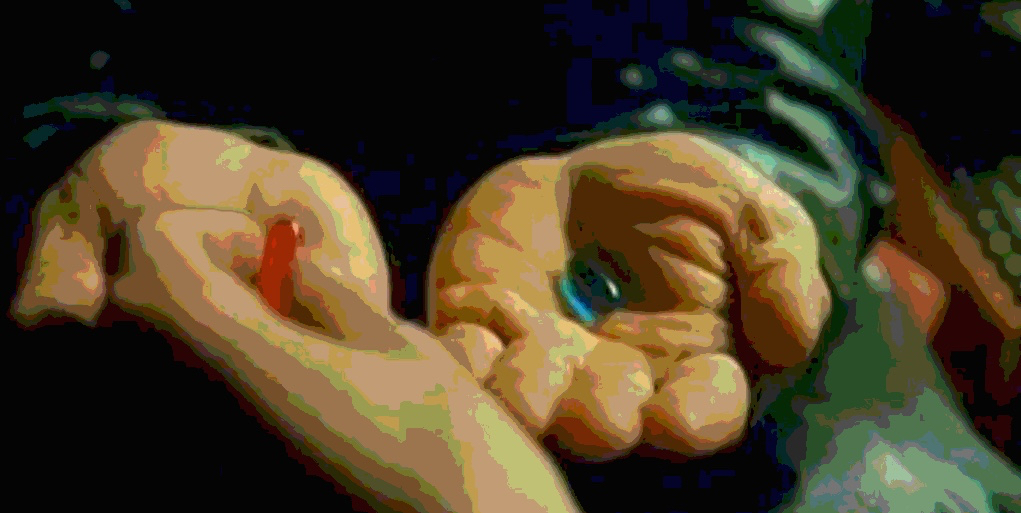
Mindfulness and the elite

From my files: Three years ago, the New York Times Magazine published an article by Virginia Heffernan on the craze for mindfulness (“Mind the Gap,” 19 April 2015, pp. 13-15). Citing a Time magazine cover story that called the craze a “revolution,” Heffernan comments:

“If it’s a revolution, it’s not a grass-roots one. Although mindfulness teachers regularly offer the practice in disenfranchised communities in the United States and abroad, the powerful have really made mindfulness their own, exacting from the delicate idea concrete promises of longer lives and greater productivity. In January [2015], during the World Economic Forum in Davos, Switzerland, [mindfulness popularizer Jon] Kabat-Zinn led executives and 1 percenters in a mindfulness meditation meant to promote general well-being.” But, notes Heffernan, “what commercial mindfulness may have lost from the most rigorous Buddhist tenets it replaced: the implication that suffering cannot be escaped but must be faced.”

Three years on, mindfulness is even more firmly entrenched among the elites. I recognize that there are serious Buddhist practitioners out there who teach authentic Buddhist mindfulness practices, and I also recognize that there are those who use mindfulness-stripped-of-Buddhism for benign ends. But when I think about how the 1 percenters have adopted mindfulness, I am curious about how it became so widespread among the “cultured despisers of religion.” Is the ongoing craze for mindfulness an example of how consumer capitalism can strip all the authentic weirdness out of religion, turning authentic religious practices into “opiates for the masses”? Or is mindfulness similar to the Christian “Prosperity Gospel,” that is, authentic religious teachings co-opted to promote consumer capitalism? except where the Prosperity Gospel is used to control lower middle class suckers, Prosperity Mindfulness is to control professional class suckers.

I am also curious whether authentic Buddhist mindfulness will survive being co-opted by the 1 percenters and consumer capitalism. What Heffernan calls “commercial mindfulness” really is nothing but an opiate: a pill that numbs us to the stress and horror and absurdity of an increasingly unjust economic system, but doesn’t actually cure the underlying illness of injustice.

To paraphrase Morpheus in the movie The Matrix: “If you swallow the blue pill of mindfulness, you wake up in your bed and believe whatever you want to believe; but if you take the red pill of skepticism, you can see the wool that has been pulled over your eyes to blind you from the truth….”

Still more Old Time Religion

I’ve collected a few more parody verses of Old Time Religion, which might be of interest to religious liberals:

Flying spaghetti monster:

If we laugh ourselves unsteady
And keep criticism ready,
Flying monsters of spaghetti
Will be good enough for me!

Atheism:

I am quite sure there are good odds
All who see God are just drunk sods,
So I’d rather worship no gods,
Nothing’s good enough for me!

Science:

There are those who worship science
‘Cause they value our reliance
On electrical appliance-es
It’s good enough for me!

In a subsequent post, I’ll post a PDF including these and 27 other verses I’ve collected….

Even more Old Time Religion

Recently I came across a couple more parody verses for “Old Time Religion”:

We will pray to blue-skinned Rama,
After far too long a drama,
He at last killed old Ravana
And that’s good enough for me!

We will pray to Hanuman, a
Monkey whose strength is uncommon,
Cause he dines on curry ramen,
And that’s good enough for me!

Finally, here’s one I came up with for Unitarian Universalists — and as much as I dislike the abbreviation “UUs” (pronounced “you-youse,” which always sounds to me like someone from New York telling how to form the second person plural possessive), it’s fun to rhyme:

We will worship like the UUs
And believe whatever we choose
As through sermons gently we snooze,
And that’s good enough for me!

(And yes, this is my post for April Fool’s Day.)

Why my blog will leave Facebook

For several years now, I have linked my blog posts to Facebook. I’ve decided to end that arrangement.

I’m not doing this because Facebook helped Cambridge Analytica meddle in the 2016 U.S. presidential election. There is nothing new in that ongoing news story. We have long known that Facebook steals information about us and uses that information to make money. We have long known that as a corporation, Facebook has no moral scruples; if corporations were really persons, as the U.S. Supreme Court asserts, Facebook would be a psychopath. Psychologist Michael Tompkins of the Sacramento County Mental Treatment Center describes psychopaths as “skilled actors whose sole mission is to manipulate people for personal gain”; a phrase that accurately describes Facebook. Facebook lost 14% of its capital value in the last couple of weeks, astonishing that psychopathic corporate entity; and now that entity is trying to figure out how to pretend to be moral, thus allaying our fears so that it can continue to lie and cheat and steal even more from us. But this is a long-standing pattern of behavior; the Cambridge Analytica debacle is nothing new, and there’s nothing in that debacle to make my change my ideas about Facebook.

What has changed for me is I’m beginning to see clearly how Facebook makes its users mean-spirited, unreasonable, and rigid. Facebook reduces public discourse to meme graphics, rage porn, and incestuous conversations among people who already agree, worsening the political and social polarization of the United States. I’m particularly troubled by the effect Facebook has had on the thought processes of Unitarian Universalists.

In particular, I’ve watched Unitarian Universalist ministers re-post meme graphics that play fast and loose with facts; these are ministers who are careful to fact-check their sermons, and it troubles me that they won’t fact-check re-posted meme graphics. I’ve watched Unitarian Universalist ministers re-post rage porn — graphics, videos, or text designed to induce rage, rather than to promote dialogue — these are ministers who would actively resist inciting rage in committee meetings, or in sermons, or in pastoral counseling sessions, and again I am troubled that they feel it is acceptable to induce rage through a social media platform. And I have watched as Unitarian Universalist ministers expel from their Facebook “conversations” anyone who disagrees with whatever narrow conception of “truth” that prevails in that particular conversation; by so doing, they erase nuance, leaving behind only binary, either-or thinking.

It’s not just Unitarian Universalist ministers who do this. Unitarian Universalist lay people are just as bad. I don’t like what Facebook is doing to Unitarian Universalism. To me, one of the strengths of Unitarian Universalism is that it encourages tolerance of other people’s thoughts and feelings, even if I happen to disagree with them. Another strength of Unitarian Universalism is the insistence of the importance of reason, a human faculty that is disengaged by rage porn. Facebook is designed to get you to spend as much time as possible staring at it — that’s how they sell advertising — and to do that, Facebook disengages your reason and erases your sense of tolerance.

There are other horrible aspects of Facebook: it induces feelings of isolation; it is addictive, and interferes with other activities; it is destroying public discourse, and thus directly attacks democracy. These results are not side effects of Facebook; these are direct results of the way Facebook is designed. Obviously, other social media platforms, with socially-manipulative designs similar to Facebook, produce similar results. I abandoned Twitter some time ago. I stay away from Snapchat. And now it’s time to pull back from Facebook.

I’ll still use Facebook to find Sacred Harp singing events. But I no longer want to link my blog directly to what I can only describe as a psychopathic corporate “person” that turns otherwise reasonable people into mean-spirited, unreasonable, intolerant, ill-mannered destroyers of democracy. If you want to read my blog, from now on you’ll have to go directly to my blog.

(Something I should make clear: Amy, the Unitarian Universalist minister I work with, is a responsible user of Facebook.)


Don’t trust video any more

You’ve probably seen the news about “deepfake porn,” in which the face of a porn actor can be replaced by the face of anyone for which you have a photoset. You can now download software to create deepfake porn, and you can run the software at home. As this technology becomes more widespread — very soon, in other words; in a matter of months or weeks — you’re going to see its use spread well beyond porn:

— Faked video is going to make the 2018 election cycle very interesting. You can pretty much visualize what the candidates are going to do to each other, to say nothing of their partisan followers. Next, start thinking about what Russia is going to do with this technology. You thought fake news dominated the 2016 elections? You ain’t seen nothing yet.

— People are going to be framed for crimes using faked videos from surveillance cameras. The cops and the courts will catch on before long, and soon video from surveillance cameras will lose evidentiary value. Someone will try to create secure video technology; someone else will hack it.

— Imagine what the Church of Scientology will try to do to its enemies; imagine what fundamentalist atheists will be tempted to do to denigrate religious figures; and surely faked video will spread throughout religion. It’s enough to make you want to convert to Old Order Amish and renounce technology.

You can spin out your own scenarios….

Yammer yammer

As I walked over to the science fiction section in the library, I could hear a resonant baritone voice in a far corner. Some idiot on their cell phone, I muttered under my breath. Let’s see, McCaffrey, nope further back, LeGuin, getting closer.

Yammer, yammer, yammer, said the resonant baritone voice, distracting me. Yammer yammer yammer.

Laidlaw, Laidlaw, Laidlaw, I repeated to myself, looking through the Ls. What, no Marc Laidlaw? Rats. OK, let’s try S.

yammer yammer give me seed money yammer yammer I’d be CTO yammer

I tried to shut the phone conversation out of my mind, but it was so full of Silicon Valley cliches that it leaked past my defenses. And every other word seems to be “I” or “me,” I said under my breath. I walked around the corner to get to the Ss, and there he was: a young white male, schlubbily dressed. I ignored him as best I could and looked for Stross, but the book I was looking for wasn’t there. Let’s try Matthew Hughes.

yammer what I want yammer I told the VC yammer I said I don’t let people quit my company yammer

The Hs were just around the corner from where the young man was talking. It took some effort to shut the loud self-important voice out of my head. No Hughes on the shelf, but I got distracted by an old Harry Harrison novel. Though I studiously paid no attention, I could sense the young man’s back looking at me with annoyance; I had entered his private space. He walked away, still talking loudly, his self-important voice fading to a distant but resonant whine.

The Harrison novel was not nearly as good as I remembered, so I left it on the shelf and went to look for Pratchett. It occurred to me that the young man with the self-important loud voice was very much like a character from a Terry Pratchett novel: one of those self-involved narrow characters who is certain he is saving the world (from something it doesn’t need saving from) and who is bewildered when he makes a giant mess out of everything.

May the gods preserve us from such people, I muttered to myself as I checked out my books, and then realized I was talking to myself a bit too much. Not a good sign.

The singularity as atheist religion

In a talk titled “Dude You Broke the Future,” science fiction author and atheist Charlie Stross takes on Ray Kurzweil and other advocates of the “singularity,” the moment when all our problems will be solved with the emergence of transhuman artificial intelligence:

“I think transhumanism is a warmed-over Christian heresy. While its adherents tend to be vehement atheists, they can’t quite escape from the history that gave rise to our current western civilization. … If it walks like a duck and quacks like a duck, it’s probably a duck. And if it looks like a religion it’s probably a religion. I don’t see much evidence for human-like, self-directed artificial intelligences coming along any time now, and a fair bit of evidence that nobody except some freaks in university cognitive science departments even want it. What we’re getting, instead, is self-optimizing tools that defy human comprehension but are not, in fact, any more like our kind of intelligence than a Boeing 737 is like a seagull. So I’m going to wash my hands of the singularity as an explanatory model without further ado — I’m one of those vehement atheists too — and try and come up with a better model for what’s happening to us. …”

I find it delightful to see a self-proclaimed “vehement atheist” calling out other atheists for doing religion. This is especially admirable, since those other atheists would doubtless insist that they are not doing religion at all; they would claim that they are doing science. Not only that, those other atheists are doing bad religion — transhumanism is as bad as the Prosperity Gospel, insofar as both types of religion are barely believable, have no redeeming social worth, do not engage in worthwhile cultural production, assert that the vast majority of humanity will not be “saved,” spread fear, and are stupid and hard to believe.

This is just a parenthetical remark in a much longer talk — and the rest of the talk is definitely worth reading, particularly for Charlie Stross’ take on corporations as AIs that are making global climate change accelerate.

Political statement for geeks

You’ve seen those bumper stickers that some political progressives have, right? You know, there’s the word “Resist!” and under it or beside it the circuit diagram symbol for a resistor. (Though there’s a part of me that wants to know how many ohms of resistance I’m supposed to provide.) Now here’s a version of that meme aimed at geeks who are also politically progressive…

The middle two statements are nonsensical (is “capacitate” the opposite of “incapacitate”?). But the last statement is actually my preferred slogan for action in today’s political climate: I don’t want to resist, I want to transform (though let’s be clear that I do not mean this literally: I don’t want to transfer electrical energy through coupled inductors via a magnetic field, OK?).

“We Still Live Here”

Deneva has been researching Thanksgiving curriculum materials for our congregation, and she sent me a link to an online video titled “We Still Live Here: Black Indians of Wampanoag and African Heritage”:

Still from "We Still Live Here" video

This video poses a nice challenge to neat and tidy racial categories: if you look black, and grew up in a Wampanoag family, and speak Wampanoag, and identify more with your Wampanoag heritage than your African heritage, what are you? Obviously, from the point of view of the U.S. criminal justice system, you’d be non-white. But in terms of your racial and ethnic identity, surely you are a Wampanoag Indian. Such a conclusion challenges typical racial categories in the U.S., where there is a popular myth that both White and Indian are recessive genetic traits, swamped by even the slightest amount of non-white DNA — which implies that even the slightest bit of African heritage means you’re of African descent. And many of us in the U.S. cling to that old myth, even if we’ve taken a high school biology class and have basic knowledge of genetics. This reveals the power of myth over rationality.

But the best part about the video for me was listening to the regional accent. I miss speaking Eastern New England dialect.

Non-traditional holiday traditions

This afternoon, after the Sunday services, we had a panel discussion about non-traditional traditions for Unitarian Universalist families celebrating the holidays. As I listened to the other panelists tell about their family holiday traditions, it became clear that your ethnic background has a big influence on how you celebrate holidays. With that in mind, here is my contribution to the panel discussion:

I grew up a New England Yankee, and a Unitarian Universalist. My Uncle Dick claimed that my mother’s family were Unitarians since Unitarianism began in North America, though Uncle Dick was notoriously unreliable on such things. My father’s side was Pennsylvania Dutch, and they were definitely Christian, members of the Evangelical United Brethren (EUB), a German language Methodist group. When my father announced that he was going to marry a Unitarian, that sent his mother into a dither. She was the daughter of a EUB minister, and her husband, my father’s father, served as an EUB minister for two years before he became a newspaperman. So my grandmother was in a dither, and she went to her minister with the news that her eldest son was going to marry a Unitarian. “Don’t worry, Mrs. Harper,” he said, “the Unitarians are weak on doctrine, but they are good people.” This reveals the most important thing about Unitarian Universalists and traditions: we are good people who don’t pay much attention to doctrine.

When I was a child, my family’s traditions were mostly dictated by my New England mother. Dad didn’t stand much of a chance, since we lived quite close to my mother’s twin sister, and my mother’s mother, and they were the ones who came over for holidays; whereas Dad’s family lived way down in New York City and southeastern Pennsylvania, and didn’t drive up for holidays. So many of our family traditions derived from New England Yankee culture.

Thanksgiving provides a good example of how we did family traditions. As New England Yankees, we knew we were descended from the Puritans, which we confused with the Pilgrims, so we felt a direct connection with the Thanksgiving story. As it turns out, there wasn’t much of a connection; our ancestors were indeed religious dissidents, they just didn’t happen to be Pilgrims. The important point is that we thought we were connected to the Pilgrims. Because of this supposed Pilgrim influence, I think we took it for granted that we could do what we wanted with Thanksgiving; nothing was sacred, except what we decided was sacred.

Or maybe that was the Unitarian Universalist influence. We didn’t always say grace before Thanksgiving dinner, and I don’t remember God being mentioned very often. When I was quite young, my Unitarian mother made sure I knew that public prayer was not very nice, and that Jesus himself had told his followers that if they went out and prayed on the street corners, they were hypocrites. By the same token, Mom also taught me that Unitarians don’t have to bow their heads when they pray; in fact, bowing one’s head might be making too much of a public demonstration of one’s supposed piety. We might hold hands while saying grace, but we didn’t have to bow our heads, and the few graces I remember were short and to the point.

Then my eldest cousin started attending youth group meetings at her Unitarian Universalist church, and she brought back a grace from her youth group. She had us hold hands, then she said, “Rub-a-dub-dub, thanks for the grub, yay, God!” So God was mentioned at least once at our Unitarian Universalist Thanksgiving dinner. And humor was allowed and even encouraged. Another time, one of the cousins suggested we go around the table and each say something we were thankful for. This non-traditional grace stuck for a few years, then disappeared. Our family traditions continually changed and evolved.

As we and our cousins got older, several of us experimented with vegetarianism. My mother and her twin sister did the cooking, and I’m sure they rolled their eyes at the fervor with which some of us expressed our vegetarian convictions. I can’t remember any special vegetarian dishes; what got cooked was what got cooked, and you ate it or you didn’t. Besides, we vegetarians knew that if we asked for a vegetarian dish, we might well be told to cook it ourselves; this was more Unitarian influence, straight from Ralph Waldo Emerson’s essay on “Self Reliance.” Another result of the Unitarian influence was that we were committed to social justice, and since we had all read France Moore Lappe’s book Diet for a Small Planet, there was more than one lecture from the vegetarians on the ethics of eating meat: it takes 16 pounds of grain to make one pound of beef! This was another result of our combined New England Yankee and Unitarian heritages: there was always plenty of guilt to go around.

Christmas for our Unitarian Universalist family was interesting, if somewhat confusing to a young child. When I was young, our Christmases had little mention of God; Jesus was referred to as Jesus, which made some of the familiar Christmas carols sound odd; and I was a little unclear on the Christmas story. We always went to our Unitarian Universalist church for the Christmas eve candlelight service, a service with great music, lots of carol singing, an opportunity to light candles, and a brief sermon which always seemed to focus on social justice rather than a re-telling of the Christmas story.

Back at home, we followed the long-standing New England tradition of lighting a bayberry candle on Christmas Eve, just before you go to bed. Mom said, “A bayberry candle, Burned to the socket, Brings health to the house, And money to the pocket.” One year I asked what this had to do with Christmas. My mother gave a confusing answer to the effect that the candle helped light the way for Jesus and his family on their way to the inn. I’m not sure if she made that story up on the spot, or if that was something her Unitarian mother had once told her. Yet another principle of Unitarian Universalist holidays is that you get to make things up on the spot.

Christmas got more interesting as we children got older. One year I studied the Frankfurt School of Marxism at college, and realized that much of Christmas is a product of consumer capitalism. This Marxist analysis annoyed my family less than you might expect; as Unitarian Universalists, we were used to questioning everything; my sisters and cousins all challenged some aspect of just about every holiday or tradition we had. I guess we were lucky that we were all Unitarian Universalists; I think it must be very annoying for non-Unitarian Universalists when they have to put up with our incessant critiques and challenges. Although for me, such challenges are half the fun of holidays and traditions.

One last thing I should mention: The combination of Unitarian Universalist values and New England Yankee culture has made me very doubtful about all holidays. Those old Puritans thought the only holiday should be Sunday, the weekly day of rest. To celebrate anything else was to be idolatrous; idolatry consists of placing an undue importance on something which is not all that important. As I get older, I am surprised at how strong that feeling is in me. My partner and I do not exchange gifts on Christmas, and the main way we celebrate is we go out for Chinese food. Thanksgiving is a good excuse to have a meal with family. The important part of holidays for me is to maintain connections with family and friends, and to keep alive cultural traditions; engaging in a supernatural or metaphysical interpretation of holidays is placing an undue importance on something that is not important.

To sum up, then, here’s what I know about Unitarian Universalist holiday traditions:
1. we are weak on doctrine, and as a corollary we can make things up on the spot;
2. we are influenced by regional cultures;
3. we challenge everything and are critical of everything;
4. a sense of humor is required.