
BUYING A UKE
1. What’s a Good “First Ukulele”?
For your first instrument, expect to pay about $100. Yes, you can get cheaper ukes, but you want something that’s playable and doesn’t sound bad. If you can spend a little more than $100, you’ll get a better-sounding uke that’s easier to play.
a. What size to get
There are 3 main sizes of ukulele: soprano, con-cert, and tenor. Despite their names, they all play exactly the same pitches. The big difference between them is size:
Sopranos are the smallest of the three. It’s a great size for kids. Adults with large hands may find them too small. They have that classic jangly uke sound.
Concert ukes are the next size up. Most adult beginners find this size the easiest to play. Sound is midway between tenor and soprano.
Tenor ukes are still larger. Usually more expensive. May be big for small hands. Bigger, mellower sound.
Baritone ukes are the largest. They also use a different tuning. Because they use a different tuning, instiructional videos and books for the smaller sizes do not apply to them — so they are not recommended if you’re new to the uke.
b. Four suggestions for beginner ukes
Here are five ukuleles I’ve actually played. All sound pretty good and play in tune. In order of increasing price (2025 prices).
Makala Dolphin Soprano — ~$80 on Reverb (plastic back, wood laminate soundboard). Cheap and durable, and has been the uke of choice for many school uke programs.
Flight UTS-35 Soprano — ~$80 on Reverb (all plastic). I own several, and use them to teach kids how to play.
Outdoor Ukulele: Soprano — ~$205; Tenor, ~$225; buy direct — www.outdoorukulele.com (all poly-carbonate). I own a soprano and tenor; they are tough and durable, and I use them around the campfire or any place I don’t want to use my good all-wood ukes.
aNueNue Color Concert — ~300 from World of Ukes (all wood and solid wood top). I have owned several, loved them, but sold them on to beginners.
Fluke Concert — ~$300; buy direct — magicfluke.com (plastic back, wood laminate soundboard). I’ve never owned one, but have played the. They sound great, are durable, and are used by professional uke players (Jim Beloff has done recordings with his Flukes).
c. Review sites
The Got a Ukulele website is the most trustworthy source for online reviews. Unfortunately, Baz is no longer updating the site. Plus, reading his reviews teaches you what to look for in a good uke. Listening to his videos allows you to compare ukes fairly (he always plays exactly the same thing for a sound sample). — www.gotaukulele.com/p/ukulele-reviews.html
2. Where To Buy a Ukulele
Look for a dealer who does a basic quality check. A good dealer will check over every ukulele they sell for quality issues. Some dealers also do adjustments called “set-up” to make the uke easy to play.
a. Reputable online dealers
This is not an exhaustive list, just some ideas to get you started.
Mim’s Ukes: Full range of ukes. She is known for her excellent set-up, and sets up every uke herself. As a result, she takes limited numbers of online orders. (I have not purchased ukes from her, but know people who rave about her customer service and set-up.) — mimsukes.com
World of Ukes: English company, wide range of ukes, he does a full set-up, ships to U.S. (I have purchased ukes from him, and was very happy with the customer service and the set-up.) — worldofukes.co.uk
The Ukulele Site: This used to be my go-to online uke seller, but in the past couple of years they’ have focused ‘ve turned most of their efforts to selling their own brand, ‘Oli. However, if you don’t want a ‘Oli uke, they do still sell a small range of high-end ukes; probably the best place to buy, e.g., a Kamaka. Basic quality control on all ukes, more extensive set-up comes standard with high-end ukes. — theukulelesite.com
Aloha City Ukes: Reputable dealer, wide range of ukes, basic quality control and set-up. (I have purchased ukes here, and got good customer service.) — alohacityukes.com
b. Other online sellers
Reverb: Online marketplace for musical instruments. Wide range of new, used, and collectible ukes. Their “protection plan” promises you won’t get stiffed by one of their online sellers. No set-up. — reverb.com
Sweetwater: Reputable online music store selling mostly cheap ukes. They don’t do a full set-up, and may not do quality control, but they have excellent return policies and great customer service. (While I haven’t purchased ukes from Sweetwater, I’ve purchased other music supplies from them, and they have great customer service and very competitive prices.) — www.sweetwater.com
Amazon: Buyer beware! Online uke forums carry sad tales from people who got unplayable ukes on Amazon. Plus, their prices are often higher than reputable dealers. Do NOT buy ukes from Amazon!
c. In-person music stores
Most in-person music stores carry a fairly limited selection of ukuleles, and often the salespeople don’t know much about ukes. If you buy in person at one of these stores (e.g., at Guitar Center), bring an experienced ukulele player along to check over the ukes.
There are a limited number of in-person stores specializing in ukuleles. Examples: England has World of Ukes and Southern Ukulele Store. Chicago has Aloha City Ukes. Hawai’i has several stores. Search the internet or ask on uke forums for suggestions near you.
STRINGS AND TUNING
1. Tuning Your Uke
Always tune your uke before you play it. Watch Youtube videos to learn how to tune.
Tuning apps on your phone work great. But if you’re playing in a group, your phone will pick up ambient noise, making it hard to tune. A clip-on tuner only picks up the sound of your uke, so you can use it to tune in a noisy room. Less than $20.
Standard tuning for a uke is: G for string closest to your chin as you hold the uke, then C, then E, then A for the string farthest from your chin.
2. How to restring a ‘ukulele
There are three types of ‘ukulele bridge — tie bridge, slotted bridge, or pin bridge. In addition, there are two types of ‘ukulele headstock — standard headstock (with tuning pegs that stick up from the headstock), or slotted headstock (with tuning pegs that stick out into the slots in the headstock). The three videos below show all these possibilities.
How often should you change ‘ukulele strings? Barry Maz of “Got a Ukulele” has common sense advice.
a. restring a ‘ukulele — tie bridge and slotted bridge
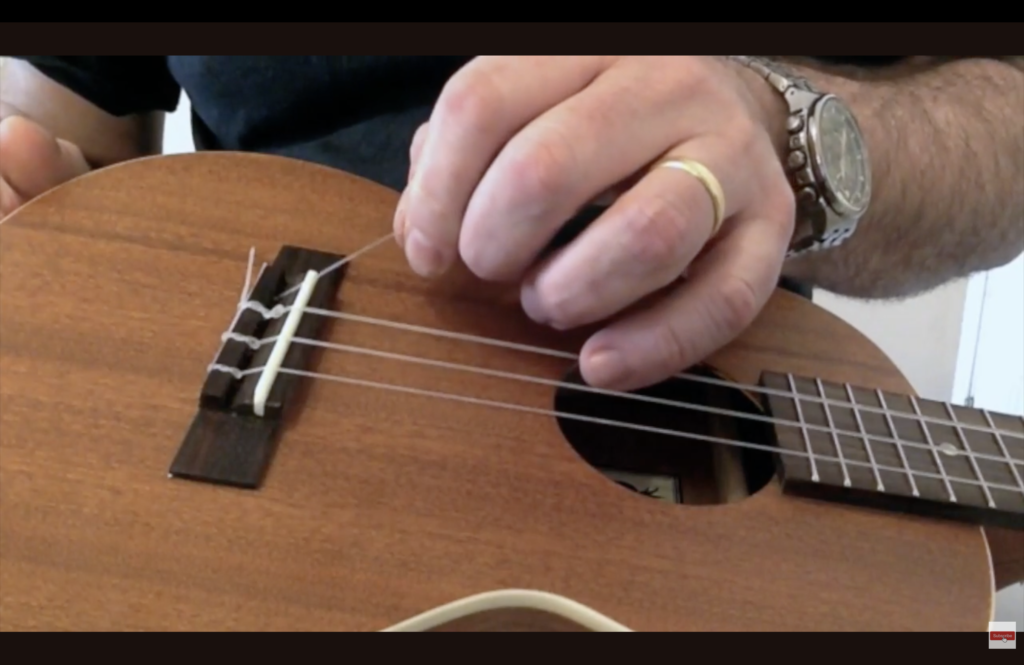
“How to change ukulele strings” with Barry Maz of Got a Ukulele (Youtube video). Includes both the tie bridge and the slotted bridge. With a standard headstock. If you want more info on slotted bridges, Barry Maz has a video showing just slotted bridges.
b. restring a ‘ukulele — tie bridge
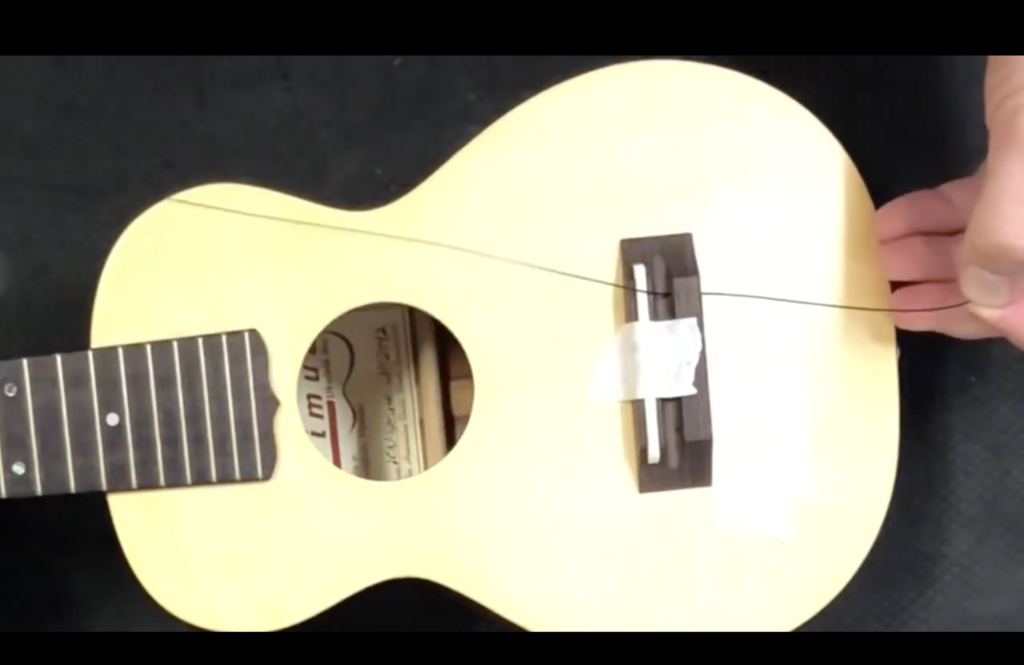
“How to restring a tie-on bridge ukulele” with Alex Beds of the Southern Ukulele Store (Youtube video). With a standard headstock.
c. restring a ‘ukulele — pin bridge
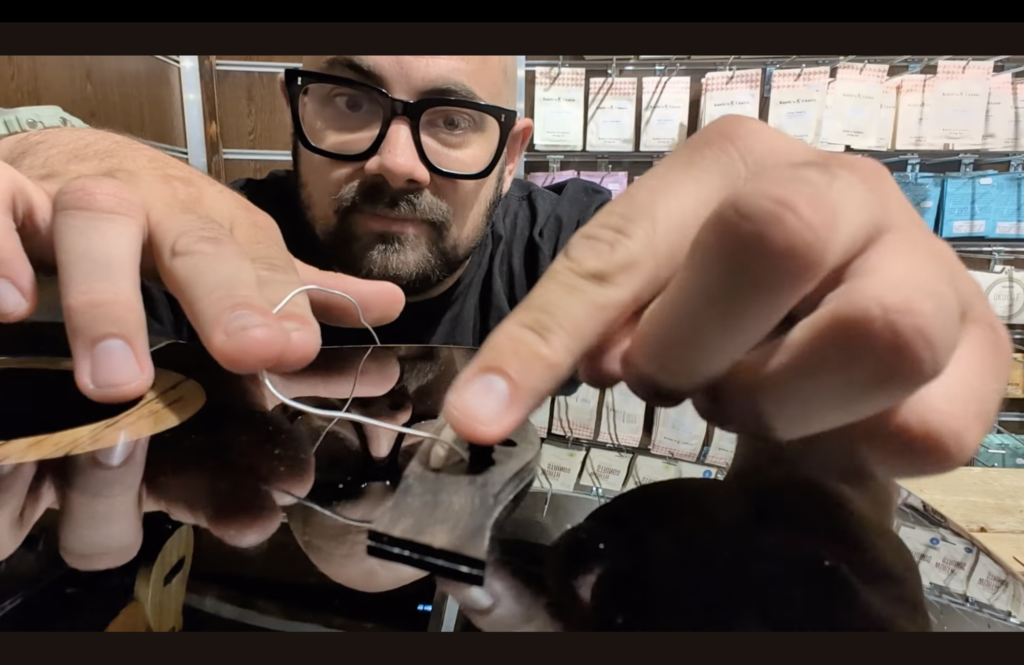
“How to restring a ukulele with bridge pins” with Alex Beds of the Southern Ukulele Store (Youtube video). With a slotted headstock.
3. Buying new uke strings
There are so many different brands of uke strings. How do you choose? Two good basic choices:
D’Addario Nylon EJ53 (Jake uses these)
Aquila Nylgut (widely used)
Strings by Mail is a reliable online seller with competitive prices — www.stringsbymail.com
ABOUT YOUR UKE
1. Naming the Strings
The string closest to your chin (as you hold the uke) is the G string, also called the 4th string.
The string beyond that is the C string, also called the 3rd string.
The string beyond that is the E string, also called the 2nd string.
And the string farthest from your chin is the A string, also called the 1st string.
2. Numbering the Frets
The frets are numbered from the nut down towards the sound hole. So the fret closest to the nut is the 1st fret, next one is 2nd fret, etc.
3. Cases and Gig Bags
These help protect your uke, make your uke easier to carry, and usually have a place to put things like a tuner, spare strings, etc.
Gig bags range from thin bags that provide little protection, to structured bags that are heavily padded.
Cases have a hard shell, and provide more protection for your uke. If you want to buy a case for your uke, the cheapest option is a canvas covered hard case; Uke Crazy is one brand — both Kala and Lanikai sell this case under their own brand name, and Sweetwater sells the Kala-branded version for about $50.
4. Straps and Strap Buttons
Straps are NOT necessary, but some players use them to provide more stability when playing.
Standard straps require a strap button — that’s a dingus at the end of the body to which one end of the strap attaches. The other end gets tied to the headstock just above the nut. It’s best to get a luthier or guitar tech to install the strap button for you. They can sell you a strap, too.
If you don’t want to install a strap button on your uke, there are ukulele straps with a clip that goes in the sound hole to hold them up. One example is the Fremont ukulele strap by Kiwaya, ~$20 from theukulelesite.com
The “Uke Leash” is another option that requires no strap button, but it’s sort of a partial strap, which not everyone likes. ~$20 from ukeleash.com
4. Caring for Your Uke
Store your uke in its case or gig bag when you’re not using it. Even if you have a plastic uke (which are quite durable), you’ll want to protect the strings.
Keep your uke away from temperature extremes, e.g. don’t leave it in a hot car in summertime. (One exception is the Outdoor Ukulele, which has been tested for temperature extremes.)
If you get an expensive all solid wood ukulele, get a hard case. Then learn proper care of wood instruments.
LESSONS AND VIDEOS
Regular lessons really help you progress. For in-person lessons, many guitar teachers can get you started with basic ukulele. For online lessons, you can find teachers who specialize in ukulele; one example in the Boston area is Anne Ku — www.anneku.com/classes
There are MANY uke tutorials on Youtube. Ukulele magazine has a great first ukulele lesson to get you started. Ukulele magazine— ukulelemagazine.com — also features topnotch teachers with their teaching videos. Check out the tutorials featured by the magazine, decide which teachers you like best, then search for them on Youtube. A few reputable online teachers include Cynthia Lin, Sarah Maisel, James Hill, Aaron Keim (Americana), and Samantha Muir (classical).