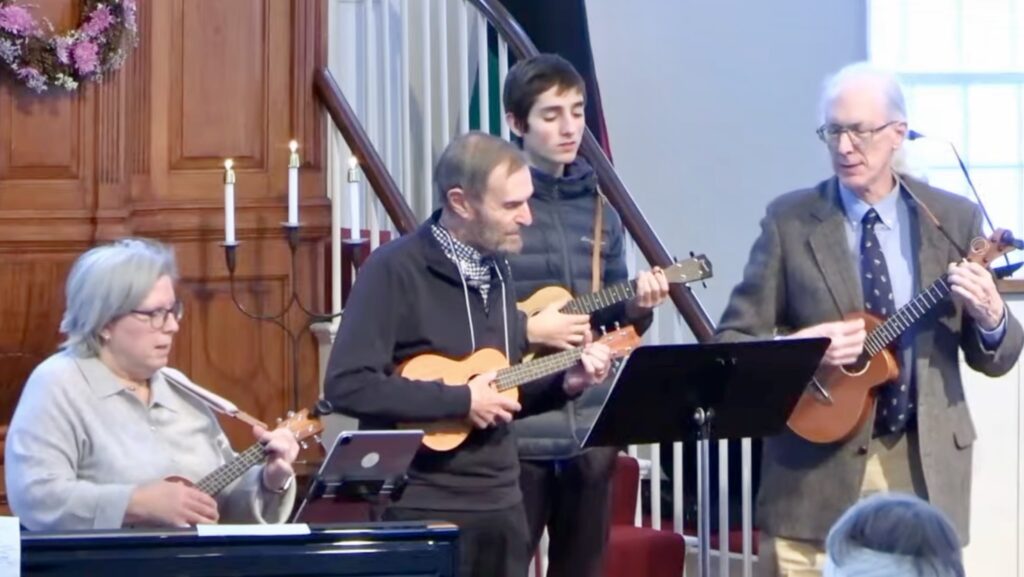
Actually, February 2 is World Ukulele Day. But Mary Beth, our music director, decided we would celebrate it today, by accompanying the first hymn in our Sunday service. We had maybe two minutes of rehearsal, which is why the photo below shows us all looking at the song sheets on the music stands. But we played it through, we didn’t totally suck, and we had fun.
Screen grab from the livestream. L-R: Mary Beth, Steve, Micah, me.
Mike Lynch, who organized the first World Ukulele Day, said the goal was simple: “Take your uke out of its case and play it.” Beyond that, he said you could use your ukulele to bring some fun and joy into the world. I don’t know how much joy we brought into our Sunday service, but we certainly brought some fun. Besides, Mike Lynch often played uke at his church, so what we did was very much in the original spirit of the day.
The real World Ukulele Day is tomorrow. Plan now to take your uke out of the case and play it….
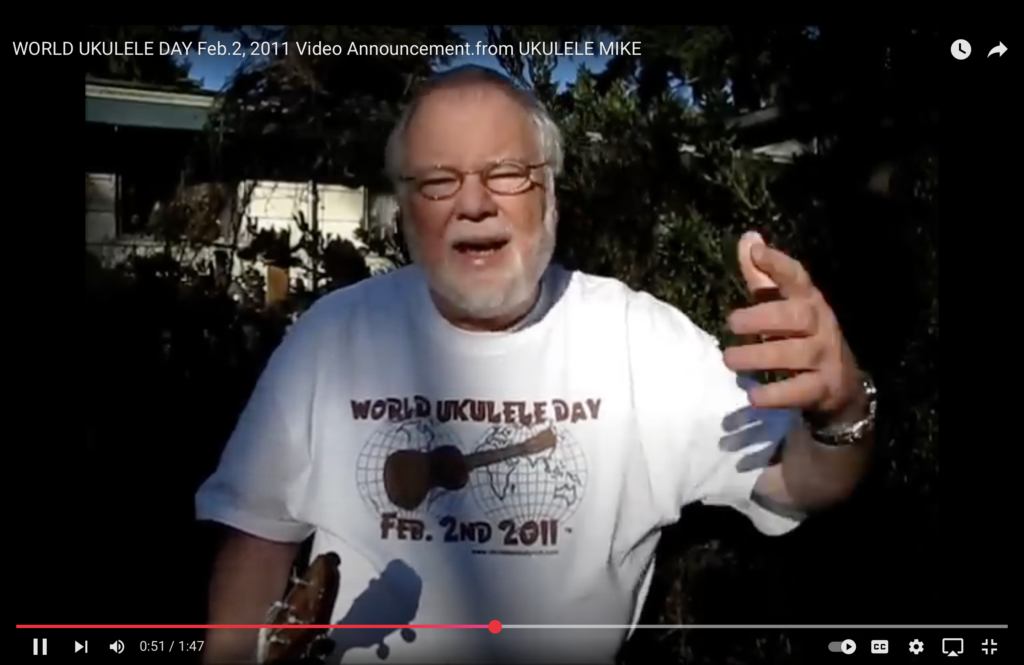
February 2 is “World Play Your Ukulele Day.” This holiday was established in 2011 by Mike Lynch (a.k.a. “Ukulele Mike”; see below). In the original announcement, Mike Lynch kept his expectations low. “Take your uke out of its case,” he said, “and play it.”
Simple enough.
Screen grab from Mike Lynch’s original Youtube video announcing World Ukulele Day. Click the image to see his video on Youtube.
OK. I did that.
What else can I do?
Mike had a suggestion: “Find someone who needs a smile. You might take it to an elder care, you might take it to a shut-in….” In other words, try to make the world a better place by playing your ukulele. But I went on a field trip with teens from our congregation’s youth group, which didn’t leave time for ukulele excursions. Maybe next year.
More about Ukulele Mike
Michael B. Lynch (1945-2018) was a career music educator and an accomplished ukulele player. As a youth, he played in a ukulele ensemble led by the legendary ukulele educator Chalmers Doane. Beginning in 2009, he produced a popular series of instructional Youtube videos under the name “Ukulele Mike.” He also published a number of instructional CDs and books, still available through his website that his wife continues to maintain.
But here’s my playlist for this year’s World Ukulele Day. It’s mostly instrumental, except for two pieces. Many of the performers are from Hawai’i, of course, but I tried to make this about world ukulele by including players from Thailand, Japan, the US mainland, Germany, England, and Canada. Musical styles range from traditional Hawai’ian to jazz to pop to folk and beyond.
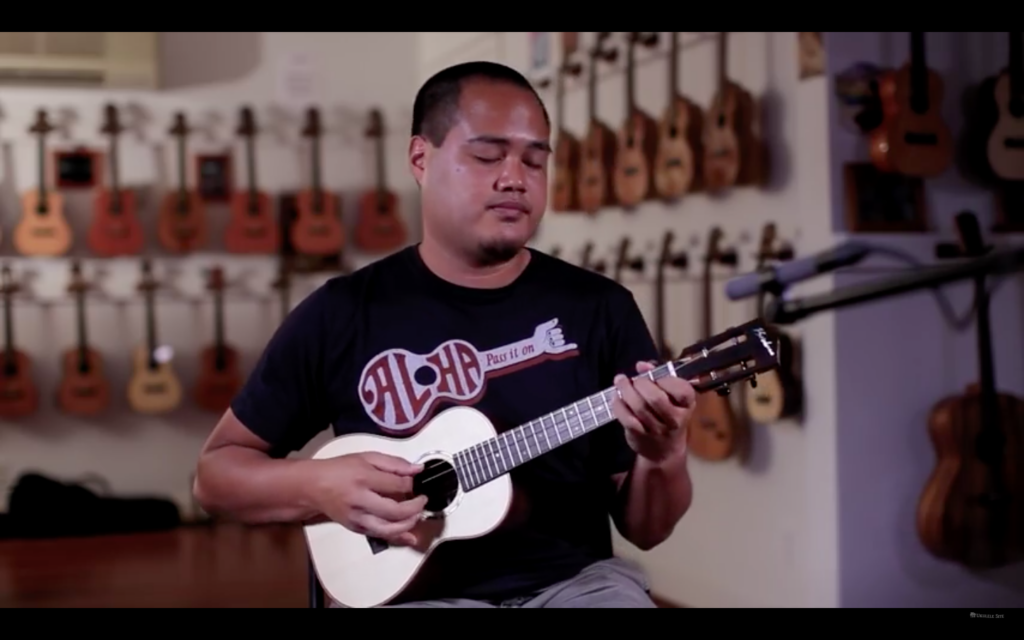
Corey Fujimoto may not be showy like some Big Name Uke Players, but his musicianship and technical prowess are top drawer. This Presto movement from a Bach sonata shows off both his technical prowess, and his excellent musical taste.
Screen grab from the Corey Fujimoto video
“Ukulele, I Love You” written and performed by Singto Numchok with the Ribbee Crew (Thailand)
The words to this song are both silly and sweet. The real joy in this video is watching five top-notch uke players, all doing different things with the same tune. If you have five really good uke players, you really don’t need any other instruments.
Japan has some of the best uke players in the world, and Natoyama is one of Japan’s best players. Enough said.
“Spain” performed by Andrew Molina, Kalei Gamaio, and Neal Chin (Hawai’i)
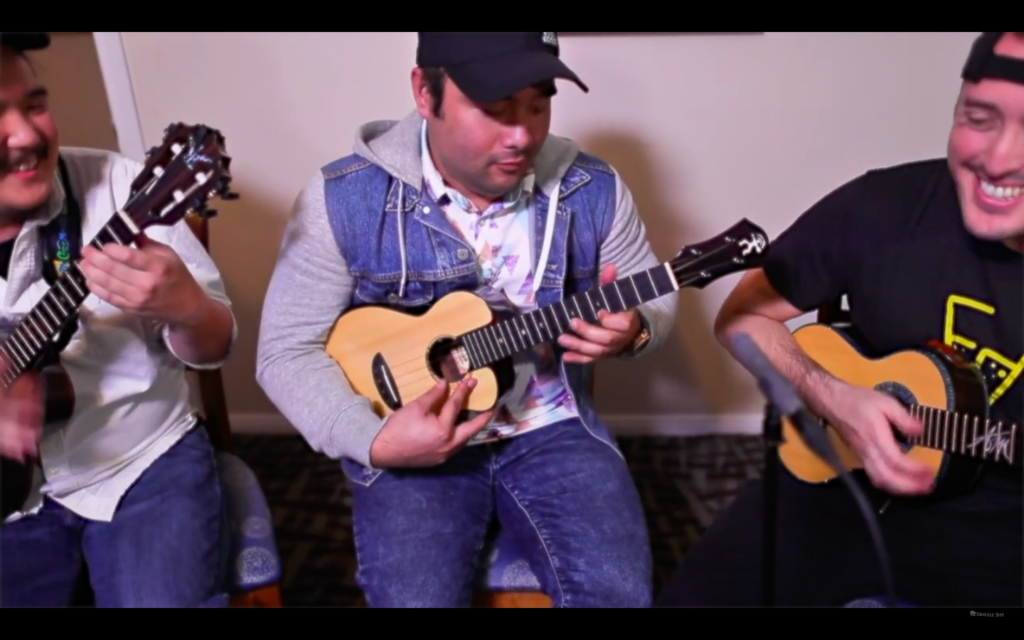
Three younger uke players trading improvised solos based on Chick Corea’s jazz standard “Spain.”The musical interaction between the three players results in sheer joy.
Screen grab from the video. L-R: Neal Chin, Kalei Gamaio, Andrew Molina
John King was trained as a classical guitarist in the campanella style, and he made his name in uke circles by performing classical music on the uke. His arrangements of melodies by Hawai’ian composers are less well known, but well worth listening to. Both his arrangements and his playing are understated, allowing the beauty of the melodies to shine through.
Pfeiffer is another player who trained as a classical guitarist then switched to uke. She is probably best known for her uke method books, but her performances are well worth listening to as well.
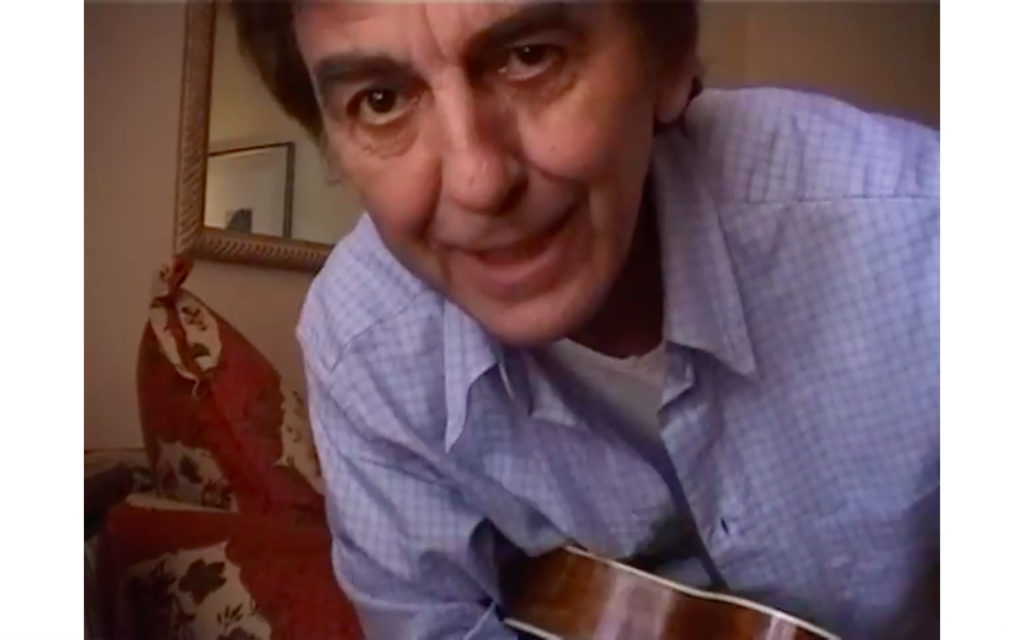
A video from the near end of Harrison’s life. Topnotch rhythm playing from a master guitarist and uke player. (Note the name “Keoki” on the headstock of the uke — that’s Harrison’s uke name.)
Screen grab from the George Harrison video.
“Swallowtail Medley” performed by John King (US mainland) and James Hill (Canada)
James Hill is a ukulele virtuoso, and he sometimes suffers from virtuoso-itis, making music more complicated than it needs to be. Not in this video, where Hill plays second fiddle, er uke, to John King.
“Neptune’s Storm” performed by Taimane Tauiliili Bobby Gardner (Hawai’i)
Taimane Gardner is another incredible uke player who sometimes suffers from virtuoso-itis. But in this performance, the high level virtuosity she displays is well matched to the requirements of the music.
For my money, Israel Kamakawiwo’ole was the best ukulele player ever. He doesn’t play with the virtuoso pyrotechnics of a James Hill, a Jake Shimabukuro, or a Taimane Gardner. But his playing is perfect. So is his singing.