Autumn watch

Even though the temperature got up to nearly eighty degrees today, it feels like fall. The sun is noticeably lower in the sky, and daylight is noticeably shorter than nighttime. I went for a walk up in the hills overlooking Half Moon Bay, and once you get out from under the redwoods into the chaparral, the plants look tired and dry and worn out, ready for the winter rains. Even the fall asters look faded now, with blossoms that are almost white instead of pale violet.

BlogOct1114

Above: Honeybee pollinating asters at Purissima Creek Redwoods Open Space Preserve; the asters are probably the Common California Aster (Symphyotrichum chilense)

During the long climb back up to the trail head, I kept stopping to admire the way the afternoon sun shone gently on the steep hills and canyons that descended to the ocean; admiring the view was also a good excuse to stop and catch my breath when the trail was steepest. After one particularly steep stretch, I turned and saw a Golden Eagle below me. This was a perfect excuse to stop for a moment. I watched the eagle ride the breeze down the canyon until it disappeared from my view behind a forested ridge.

Attitudes towards religious diversity

A paper published in the May-June, 2014, issue of Religious Education: The Journal of the Religious Education Association explores attitudes towards religious differences among adolescents in the United Kingdom. The authors used standard social science techniques and statistical analysis to find out if adolescents who attend faith-based schools, that is, day schools run by organized religions. They pose this research question: “whether students educated in schools with a religious character are more or less conducive to life in a religiously diverse society,” as compared to students in secular schools.

Their study indicates that the “individual religiosity” of adolescents, and other personal factors, has more influence on their attitudes towards religious diversity than the school they attend. Some of their findings:

— females have a more positive attitude towards religious diversity than males
— neuroticism correlates with a positive attitude towards religious diversity, and psychoticism with a negative attitude
— adolescents who pray regularly have a more positive attitude towards religious diversity
— adolescents who attend religious services regularly have a more positive attitude towards religious diversity
— however, “none of the variance in … attitudes toward religious diversity can be attributed to attending schools with a religious character.”

The paper is “Church Schools Preparing Adolescents for Living in a Religiously Diverse Society: An Empirical Enquiry in England and Wales,” by Leslie J. Francis and Andrew Village (in Religious Education, vol. 109 no. 3, May-June 2014, pp. 264-283).

Francis and Village address a fairly narrow question, in a cultural context different from most regions of the U.S.; I don’t think it would be wise to try to apply their findings to a U.S. context, or to try to draw larger conclusions from the findings. Nevertheless, I think this paper does suggest some interesting possibilities for research in the U.S. Wouldn’t it be interesting to research attitudes towards diversity among adolescents who are affiliated with mainline churches, evangelical churches, non-Christian faith communities, etc.?

And wouldn’t it be really interesting if the Unitarian Universalist Association or one of our seminaries funded similar research of adolescents who are affiliated with Unitarian Universalist congregations? If I were conducting such research, I think my initial hypothesis would be that a board sampling of Unitarian Universalist adolescents would not have significantly more positive attitudes towards religious diversity than adolescents affiliated with other faiths; though based on Francis and Village’s paper, I would definitely look for evidence that religious adolescents in general have a somewhat more positive attitude towards religious diversity than secular adolescents.

P. G. Wodehouse on individualism

P. G. Wodehouse, a novelist of ideas? How absurd!

And it is true that most of his dozens of novels are bits of fluff, with no more intellectual content than the brain of Bertie Wooster, one of his most famous characters. But in some of his earlier novels, Wodehouse occasionally gets philosophical — as in this passage from the 1918 novel Picadilly Jim, where Jimmy, the wealthy twenty-something protagonist, comes to the sudden and unpleasant realization that he has been pretty self-centered for much of his adult life:

“…Life had suddenly taken on a less simple aspect. Dimly, for he was not accustomed to thinking along these lines, he perceived the numbing truth that we human beings are merely as many pieces in a jig-saw puzzle, and that our every movement affects the fortunes of some other piece. Just so, faintly at first and taking shape by degrees, must the germ of a civic spirit have come to prehistoric man. We are all individualists till we wake up.” [chapter 6]

Of course, Wodehouse was writing nearly a century ago. We have progressed further in the development of civic spirit since then: the jig-saw puzzles of the wealthy and the rest of the world are no longer connected to one another. If he were alive today, Jimmy could enjoy his wealth without having ever to wake up.

Stiches

Thirty-six years ago, my mother called up her best friend Dorothy Lob, and asked Dorothy if she would come help with some sewing. I was about to head off to college, and my mother wanted to sew name tags into my clothing, and on all my sheets and blankets.

I was not allowed to help with the sewing. For all that she was a feminist, my mother never taught me to sew, never let me learn how to use her sewing machine, washing machine or dryer, or her iron or her ironing board. My sisters were allowed, even required, to learn how to use these things, but I was a boy, and boys mostly didn’t work with cloth and fabric. I was, however, allowed to hang out laundry to dry on the clothesline upon occasion, and in this I suspect that my mother was more progressive than her mother.

Although I was not allowed to sew, I did have to sit with Dorothy and my mother while they sewed on the name tags. We sat around the dining room table one bright summer day, and Dorothy was her usual cheerful self, chatting away and making my mother laugh and smile. Dorothy had a musical German accent; she had grown up Jewish in Germany, and had fled to America to escape the Nazis. I never heard her talk about it, but my mother said that was why she wanted nothing to do with organized religion, and that was why she could not believe in any god who could let something like that happen.

I vaguely remember helping fold clothes, and handing things to my mother and to Dorothy; mostly I probably just got in the way. I definitely remember that Dorothy was faster at sewing on name tags than my mother, and even I could see that she took less care at it. My mother took small careful stitches, securing each end of the name tag, while Dorothy sewed in big, bold stitches that quickly circled the entire name tag.

Although all the clothes I brought with me to college have long since gone to the rag bag, I still have some linens and bed clothes with those old name tags sewn in. I just found a comforter with a name tag sewn on by Dorothy:

BlogSep2914a

And I found an old towel with a name tag sewn on by my mother, so you can compare their stitches:

BlogSep2914b

Their sewing reveals something about each woman’s personality: Dorothy, bold and unafraid and exuberant; my mother, cautious and careful. After they had finished sewing and Dorothy had gone home, my mother looked at Dorothy’s sewing with with some disfavor, and worried aloud that the stitches would come out and the name tags would fall off; thirty-six years later, I can say with some assurance that her worries were unfounded.

With two children in college and another in middle school my mother never had time again to sew name tags on my clothes or linens. Both women are now dead, and the dining room in which we sat is gone because that house was torn down to put up a McMansion. I get a little catch in my throat sometimes when I catch sight of one of those old name tags: you can still see something of those two strong personalities in those stitches.

The mess at Starr King

The mess at Starr King School for the Ministry (SKSM) continues to be an absorbing topic of conversation among Unitarian Universalist (UU) ministers in the Bay Area. The mess can be summarized as follows: Someone sent an anonymous email to a number of people inside and outside SKSM alleging that the then-ongoing search for a new SKSM president was marred by “ethical violations.” Attached to that anonymous email were documents that the SKSM board alleges were confidential. The SKSM board responded by hiring a law firm and private investigators to determine which student sent this anonymous email, and demanded that all students turn over all their email some students turn over their email files files to this law firm. Two students who were about to graduate did not turn over their email files, and their diplomas have been withheld. (UU World magazine offered good coverage of the story here. Deletion and correction thanks to Lindasusan’s comment below.)

If you’re a UU minister it is also a fascinating topic for conversation. The ethical implications alone would fascinate any minister. On top of that, any minister is going to be interested in how a theological school is training new ministers — your future colleagues. And finally, given the decline and financial struggles of theological schools, this matter makes you wonder about the future of SKSM.

Ethical implications of securing electronic communications

Let’s start with the ethical implications. I was talking to D., another UU minister, and she made the obvious point: if confidential documents were truly “leaked,” the most obvious source for such a leak would be the search committee. I doubt that any member of the search committee played Edward Snowden and deliberately released documents. But I’m willing to bet that the search committee was naive, and had poor electronic security protocols in place (I mean, I seriously doubt that someone hacked into search committee members’ computers). So from an ethical point of view, the SKSM search committee is at fault for having poor security.

If you’re a congregational leader, you should pay attention to this. Email is not secure — it’s way too easy to choose the wrong address when you send email, too many spouses and partners have access to each others’ email accounts, too many people are careless with their passwords. Storing sensitive material on something like Dropbox or Google Drive may be slightly more secure — as long as everyone remembers to keep their password secure. Storing sensitive documents on a computer in the church office is only mildly secure — more than once I have seen a church computer sitting unattended, with the main user logged in, and a sensitive document open on the screen. Most congregational leaders and staff are just like the SKSM leadership — way too careless about how they use electronic communications. Continue reading “The mess at Starr King”

Classrom dynamics

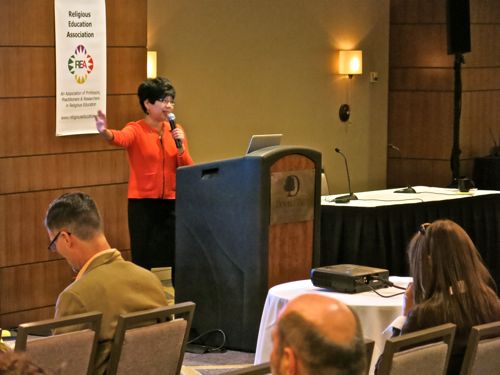
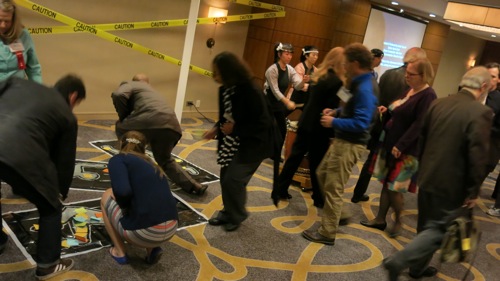
(At the Pot of Gold religious education conference today, I led a workshop on classroom dynamics. As promised to participants, here are three key concepts from the workshop:)

When we talk about classroom dynamics, we are talking about managing the relationships in a group of learners (i.e., classroom management). One of the key issues facing any teacher is the issue of classroom management — which is a nice way of saying, helping the participants behave well. To help minimize behavior problems, here are three key concepts to consider:

(1) Make sure each child (or teen, or adult) is noticed and is heard. We did this today in the opening: everyone said their name, and told a little bit about themselves. Especially when new to a class, kids need to feel that they are noticed, that their voice can be heard, and that they belong.

(2) Make sure all participants at least hear each others’ names. They don’t have to memorize all the names (though that would be best). They don’t have to be best friends with everyone (though having one friend is good). But they at least have to know the barest minimum about who else is in the room.

(3) Be clear about the purpose of the class. It makes a big difference if everyone knows why they are there. (For example, I did this in today’s workshop by stating the purpose of the workshop at the very beginning.) If there’s a stated purpose, most participants will buy into it — and those who don’t will at least understand when you reprimand them for deviating from the purpose.

Other notes from today’s class: Rules of the Grocery Store Game may be found here. Rules for Zip, Zap, Zoop may be found here. (Scroll up and down on this same Web page for more icebreakers.)

UU political priorities

I long ago figured out I’m not one of the UU cool kids. Here’s one example of what I mean:

My local UU congregation is participating in a week-long nationwide peacemaking campaign from September 21-18, sponsored by Campaign Nonviolence, a “new movement to mainstream active nonviolence and to foster a world free from war, poverty and the climate crisis.” Beginning on Sunday, Campaign Nonviolence will have events in all fifty U.S. states; they are one of the sponsoring organizations of the People’s Climate March, a nonviolent action taking place in New York City.

In Silicon Valley alone, our local organization Multifaith Voices for Peace and Justice is organizing a forum on poverty and structural violence, a youth workshop exploring conscientious objection, a film on climate refugees, a class on ecojustice and peacemaking (which I’m leading), participation in the Northern California People’s Climate Rally, a forum on gun safety with representatives from police and religion, a talk by the mayor of Sunnyvale on the city’s new gun control law, a nonviolent action against Lockheed Martin, and more.

But if you search the Web sites of the UUA or UU World, you will find no reference to Campaign Nonviolence. Because, you see, all the cool kids in the UU world are going to the People’s Climate March. I’m all about reversing global climate change, and environmental justice work more generally. I just wish Unitarian Universalism had a broader vision of social justice work.

Star Island RE handouts

Below are the handouts from the workshop on teaching I led at this summer’s Star Island religious education conference. (Yes, it took me almost two months to proofread these handouts and finally post them — this gives you an indication of how very busy this year’s church start-up has been.) These handouts are aimed at more experienced Sunday school teachers, religious education committee members, and religious education professionals.

Developmental stage theory handout

Educational philosophies handout

Multiple intelligences handout

RE theologies handout

Session plan form

Beyond average attendance

A recent blog post by David L. Odom, Executive Director for Leadership education at Duke Divinity School, argues that “average attendance is no longer a sufficient measure to predict congregational behavior. In the past, says Odom, if he were given average worship attendance he “could predict the size of the church staff, the informal patterns of decision-making, most of the stresses on the pastor’s time, the leadership required for small groups, and more.”

But this is no longer true, according to Odom, as congregational culture is quickly changing and evolving. So, for example, today when denominations mass-produce curriculum materials, “teachers are often dissatisfied with their options [and] obligated to write congregation-specific material for children, youth or adults, requiring a huge commitment of time and creativity.” This same problem holds true in other areas — average worship attendance is no longer an accurate predictor of a congregation’s needs for staffing and funding.

Odom recommends tracking “all the ways that a person engages a congregation — joining a small group, attending group meetings and social functions, contributing to social causes and to the church’s budget, reading semons or other resources online, volunteering in a missions project, teaching a class, and more.” Once you start tracking all the ways individuals get involved, Odom then suggests looking for patterns that lead to deeper engagement, and patterns that lead to great growth. Odom also suggests that engaging an outside marketing consultant would be a good way to start asking these kinds of questions, and organizing and tracking this kind of data.

In our congregation, we continue to track average Sunday attendance, although we track attendance at all Sunday programs, not just worship services, including Sunday morning Forum, children’s programs, and Sunday evening youth programs. I also find it useful to look at seasonal trends in attendance; this is useful information because if attendance drops off when there is no program offered for a given constituency (e.g., no Sunday school or Forum in summer), this appears to be the time when we lose newcomers to those programs. I also pay attention to space use on Sundays — how many rooms are used at a given time for congregational groups and events?

We also track attendance at non-Sunday events and groups, such as support groups, classes, lectures, etc. It is more difficult to collect accurate data for these events, especially since small groups and classes tend to change more quickly than Sunday morning programs. But at the same time, I’m seeing a growing importance of non-worship related activities. Our congregation has a number of programs that attract people who do not go to worship services, including a bias-free scouting program, our OWL sexuality education programs, the Sunday morning Forum, etc. Plus we are planning a week-long day camp next summer that will deliberately reach out to people not otherwise affiliated with the congregation.

The next big step for us will probably be to track patterns of engagement for individuals. We are in the process of moving to a new church database, ACS Realm, which has built-in small-group management software in it. We believe that we will be able to use Realm to track individual engagement across multiple ministry areas.

Odom’s blog post ends with him wishing that he “could go back to the good old days and track a couple of different numbers.” I don’t share his nostalgia — I’m fascinated by the ongoing evolution of congregations, and I love the opportunities for creativity we now have.

How about you? What metrics would you use to figure out how your congregation is doing?