More on A.B. Windom

In 2016, I wrote a post about gospel composer A. B. Windom, giving what little information I then had, and asking if anyone knew more. One or two people commented who actually knew Windom, and one or two others have added little tidbits of information.

Windom is the person who composed “Now Let Us Sing,” one of the great gospel hymns. It’s hard to believe that there’s so little information out there about him. I realized today that if you search Google for “A. B. Windom,” my post now appears as the top result. That’s how little information there is about Windom online.

So I thought I should do a little more research and try to add to that 2016 post. I did what I should have done from the start — researched Windom on one of the genealogy sites. And in fact I did find a little more information, including the name of his wife. What I found in three hours of online research today had been added to the original post. If you’re looking for a research project, maybe you could go to that original post, see what little information is there, then go see if you can find more!

Post script: Singing the Living Tradition, the 1993 UU hymnal, attributes “Now Let Us Sing” to “anonymous.” Nope, it was written and copyrighted by A. B. Windom. And predominantly white churches that sing this song by an African American composer without crediting him, while changing the words to remove the God from this gospel song? … Mmm, the phrase that comes to my mind is “cultural misappropriation.”

Legal personhood

Natalia Harrell shot and killed someone in Florida. She was six weeks pregnant. She was apprehended and put in prison. Now she has filed a petition with the Florida courts saying lack of prenatal care in prison is endangering the life of her fetus — or, to use Florida’s term for a fetus, her “unborn child.” In an interview, Harrell’s lawyer stated: “An unborn child has rights independent of its mother, even though it’s still in the womb. The unborn child has been deprived of due process of law in this incarceration.”

This is a logical outcome of the conservative Christian insistence that a fetus has rights. Of course we know what’s going to happen. The courts are going to twist things around so Florida does not have to provide prenatal care, nor in any way honor any putative rights the fetus has. In this conservative Christian ideology, a fetus is only considered a person when that serves to stop a woman’s right to abortion; but a fetus is not a person for any other purpose.

This makes me wonder if there are carpool lanes on some Florida highways. Because if there are, some pregnant woman should drive solo in a carpool lane, and if apprehended claim that there are actually two legal persons in the car: the woman herself, and the fetus. Of course, once again we know the Florida courts would rule that a fetus is not a person when it comes to carpool lanes. But I’m sure a lot of us would happily chip in to pay that woman’s traffic ticket and court costs, just to show up the hypocrisy of lawmakers who claim a fetus is an “unborn child” with full legal rights.

Song

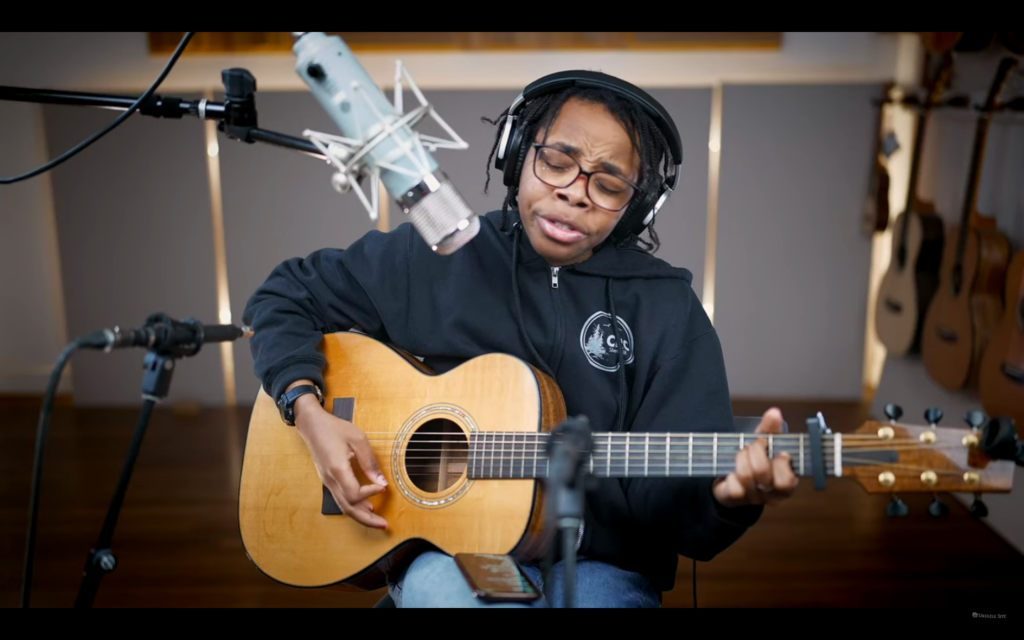
Best song I’ve ever heard about domestic violence: “Johnny’s Girl” by Spirit Artis. The music is not complex: mostly Artis’s expressive voice, with her understated guitar accompaniment, and a touch of overdubbed harmony singing. The song is powerful enough that it doesn’t need any more than that.

In a podcast, Artis said this is a song about toxic relationships as viewed by a third party. She had seen relationships where one partner subsumes themselves in the dominant partner, so that person isn’t even known by their own name; they’re just known as “Johnny’s girl,” or “Gwyneth’s boy,” or whatever. I’ve done a little bit of work with people in domestic violence situations, and Artis’s lyrics get at some uncomfortable truths:

“Johnny’s girl, she’s lost herself again,
She said, ‘He’s different, you don’t know him like I do,’
But Johnny-boy’s abusing on our friend,
She said, ‘He’ll change, just give him time, this bruise will fade’….”

In the same podcast, Artis added that she sang this song to someone she knew who needed to hear it, and that person got out of the toxic relationship that they were in. So I’m linking to this song on my blog — in case there’s someone else out there who needs to hear it.

Screen grab from the video podcast mentioned in the post, showing Spirit Artis singing and playing guitar
Screen grab from the podcast mentioned in the post

Online tools for finding religious diversity

Yelp.com used to be my go-to online source for finding religious communities in a given area. In the San Francisco Bay area, I could type in my location, plus the search term “Religious organizations,” and I’d get a fairly complete list of religious communities, including communities that had no other web presence.

But here in southeastern Massachusetts, Yelp has been failing me. A Yelp search for “Religious organizations” seems to miss a good many religious communities, and has incorrect or outdated information for quite a few others. I won’t say it’s useless, but it’s almost not worth looking at. YP.com, the “real Yellow Pages,” turns out to be somewhat better than Yelp, though you have to use search terms for specific religious groups.

Not sure what the significance of this is. It may simply be that Yelp’s user community in this area simply doesn’t pay much attention to religion. But I also think Yelp pays little attention to religious organizations these days. I claimed the Yelp page for First Parish in Cohasset, and have tried a number of times to get Yelp to change the name of our congregation from “Unitarian Church” to “First Parish in Cohasset,” but they just ignore me. I’m guessing Yelp gets no revenue from hosting religious organizations, so they just ignore us.

Long distance uke

I’ve picked up the ukulele again, but there’s not a lot of live ukulele happening in southeastern Massachusetts. So I’ve been getting my uke fix watching the weekly video podcast of Hawaii Music Supply, which you can find on their YouTube channel. Yes, they promote their high-end ukuleles. Yes, there’s a lot of pointless chit-chat, as on every podcast. But there’s also plenty of music, with some of the best of the newer ukulele players, sometimes playing songs and compositions they haven’t yet recorded. Players like Honoka, Neil Chin, Taimane Gardner, and many others, appear on the podcast and jam with regulars Corey Fujimoto and Kalei Gamaio.

For someone like me who’s trying to pick up the uke again, it’s really helpful to hear what really good ukulele playing sounds like. Plus ukulele players tend to be welcoming friendly people, and the ukulele itself is a gentle happy instrument. I put this podcast on while I’m cleaning the floor or doing laundry, and it cheers me right up even on a rainy windy winter day.

Separating the art from the artist

Science fiction author Charlie Jane Anders takes on the J.K. Rowling brouhaha in a post to her Buttondown newsletter. Anders asks, can we separate the art from the artist? Or, to be more specific, can we separate Hogwarts from notorious transphobe J.K. Rowling?

Anders reminds us that not every artists gets to have their art separated from the artist:

“…I don’t think marginalized creators, including trans creators, ever quite get that luxury. Our identities are always going to be bound up with the stuff we create, even if we aren’t explicitly writing about our own marginalizations, and we’re highly dependent on our own communities to support us. Someone like Rowling has a lot more leeway to behave like a jerk in public, because she belongs to most of the default categories: white, cis, straight, abled. If you are not viewed immediately as a ‘mainstream’ creator, your life is going to be scrutinized a lot more no matter what you do….”

Anders also points out that part of the problem with J.K. Rowling is that she’s been turned into a celebrity:

“We really need to stop turning authors into celebrities, y’all. It’s toxic and shitty, and leads to bad behavior at least some of the time. One of the many problems besetting the publishing industry is this star system, which turns a handful of authors into supergods, and keeps everyone else, even pretty successful authors, in a lesser category. Even if someone wrote books that are really, really good and they’re selling like hotcakes, let’s resist the impulse to turn this person into the One True Author To Rule Them All.”

Anders has a good point. If J.K. Rowling hadn’t been turned into a celebrity (acknowledging that she herself was eager to turn herself into a celebrity), we would not care what she thought about transgender people. Nobody pays much attention to Jane Yolen’s opinion about much of anything, even though she’s a successful writer who’s written a successful book about a wizard’s school (Wizard’s Hall), along with some 350 other books. While Yolen gets to check off the same identity boxes that Rowling checks off — white, cis, straight, abled — she’s not a celebrity like Rowling. (Parenthetical note admitting my bias: I love some of Jane Yolen’s books, and in my opinion, she’s a better writer than Rowling.)

So yeah. Maybe we really do need to separate the art from the artist.

Christian nationalists in the U.S.

Religion News Service (RNS) reports that a recent poll finds that 10% of United States residents are hard-core Christian nationalists, and another 19% are fellow travelers. On the other hand, 29% of U.S. residents reject Christian nationalism. Another 39% are skeptical of Christian nationalism. You can read a detailed report of the PRRI survey here.

Are you a Christian nationalist? If you’re reading this blog, I sincerely doubt you are. Nevertheless, if you strongly agree with all of the following statements, according to PRRI you are indeed a Christian nationalist:

  • U.S. laws should be based on Christian values.
  • If the U.S. moves away from our Christian foundations, we will not have a country anymore.
  • Being Christian is an important part of being truly American.
  • God has called Christians to exercise dominion over all areas of American society.

That last statement is the one that really creeps me out. Unitarians and Universalists got kicked out of the U.S. Christian club a century ago, when the National Council of Churches wouldn’t let us join. So even if you’re a Christian Unitarian Universalist, the Christian nationalists want to exercise dominion over you…tell you what to believe, probably.

This is worrying because the Republican party has become dominated by Christian nationalists. Last summer when RNS asked fifty prominent Republicans whether their party should become a Christian nationalist party, only two of them responded to say, contrary to Christian nationalist rhetoric, that they supported the separation of church and state (Senator James Lankford and Representative Nancy Mace). All the other Republicans refused to answer, probably because they were too scared to say anything.

Theatre

I finally watched the BBC’s video clip showing the moments when the Republicans heckled Democratic president Biden’s “State of the Union” speech. Looks like heckling has now become a normal part of the “State of the Union” speech.

What interests me is the hecklers shouting about lies and lying. The first such heckler, if you remember, was the fellow who shouted out that Obama lied. This tradition was upheld this year by the Christian nationalist shouting “Liar!” at Biden.

Knowing what is true is a major concern for U.S. society right now. And those who are within a traditional Christian worldview seem to suffer most from a sense that truth is under attack. Traditional Christians who believe that non-Christians will go to hell are often troubled by the multi-religious landscape of the United States today; those non-Christian people are going to hell, and yet our legal system protects them. This must be extremely disconcerting to certain traditional Christian worldviews.

So it is no surprise that one of the people shouting about lies during this year’s “State of the Union” speech was Christian nationalist Marjorie Greene. I suspect that Greene, who’s a bit of a drama queen, prepared herself in advance for her moment in the spotlight: she wore a dramatic white coat with a big furry ruff, which must have been dreadfully hot but was clearly meant to set off her blonde good looks. And she so obviously enjoyed the moment when she made the audience turn and look at her. She seems to have forgotten, however, that when you shout, it distorts your mouth and face and throat, and it brings out all the little lines in your face making you look older than you are. (This is why I hate seeing videos of myself preaching.) No matter: she made her truth claim in a very public manner, that she knows the truth, and unless the rest of us agree with her she will shout us down as liars.

Cartoon of Marjorie Greene shouting "Liar" during the State of the Union speech.

Back in 2005, philosopher Richard J. Bernstein argued that there were two prevailing mentalities in the United States. On the one hand there is a “mentality that neatly divides the world into the forces of good and the forces of evil.” On the other hand, there are those of us who “live without ‘metaphysical comfort,’ … live with a realistic sense of unpredictable contingencies” (The Abuse of Evil: The Corruption of Politics and Religion Since 9/11 [Malden, Mass.: Polity Press, 2005], pp. 12-13).

Greene and other Christian nationalists belong to the mentality that neatly divide the world into good and evil; they long for comfort and fear the unpredictability that pervades the world. Because of their fear, they cling to whatever certainties they can manufacture, and call those manufactures divine revelation.

But they should remember that when they shout, it distorts their faces….

Sometimes I need to shut my brain off. One way I can do that is by writing. But writing can also act as a stimulant, making my thoughts go round even faster.

People tell me meditation will shut my brain off. I meditated seriously for years, until I realized that I really disliked meditating, and that it made me detached and mean. I’m one of those people who gets “meditation-related adverse effects.”

Nope, prayer doesn’t work either. I want fewer words going around in my head, not more of them.

Walking is a sure-fire way for me to quiet my brain. Talking with my spouse will do it. Singing. Doing chores (sometimes).

But right now, I’m going to read a murder mystery. It’s too late to go for a walk or sing, my spouse is in Wisconsin, I’m sick of doing chores. A murder mystery, that’s just the ticket. It will engage my brain just enough, but it won’t require much concentration.

You do your spiritual practices, I’ll do mine. Erle Stanley Gardner, here I come.

Reading list: Red Flags

Red Flags, a novel by Juris Jurevics, was originally published in 2011, and reissued as a paperback in 2021 by Soho Crime. Soho Crime typically publishes mysteries, but this isn’t exactly a mystery. Maybe it’s a thriller, thought it’s not one of those thrillers that raises your blood pressure and keeps it high.

I’d say Red Flags is maybe a war novel. It’s set in Vietnam circa 1967 or 1968. Two noncommissioned officers in the U.S. Army Criminal Investigation Division are ordered to find who’s behind a large opium growing operation that’s netting huge amounts of money for the North Vietnamese. The two non-coms are sent to Cheo Reo, a backwater town in the Central Highlands of Vietnam that served as a provincial capital. Eventually they find out who’s in charge of the drug operation, and of course it turns out to be someone that was right in front of them the whole time.

Considered as a mystery, or even as a thriller, the plot is a bit thin. But really the genre elements are just there to support a portrait of what it was like to be in Vietnam in the Central Highlands. Jurevics actually served in Cheo Reo for more than a year, in 1967-1968:

“Juris Jurjevics deployed to Vietnam and was assigned to C Company, 43rd Battalion in the 1st Signal Brigade at Kontum, but spent very little time there before being assigned to a remote outpost in Cheo Reo, in what was formerly Phu Bon province, in the Central Highlands. Shocked by the austere defenses of his camp, he found the corruption staggering. Supplies intended for the troops or for Montagnard auxiliaries rarely reached their destination, or arrived in significantly reduced quantities. He noticed that everything in Vietnam was for sale, and extortion through tribute was widespread. While in Vietnam, he felt a bond with the Montagnards, but noticed the South Vietnamese disdain for the mountain people.” (from the introduction to an oral history video, West Point Center for Oral History)

Or maybe this is more of a history book thinly disguised behind an entertaining veneer of genre fiction. The level of detail in this 390 page book is almost overwhelming. You learn about the diseases, the parasites, the wildlife, and the beauty of the Central Highlands. You get portraits of people that are probably based in large part on real people (presumably suitably disguised to prevent lawsuits). You get a stunningly detailed look at corruption caused by the Vietnam War.

I would also say this book is a meditation on morals and ethics. There is no ultimate Goodness in this fictional/historical world. Even the essentially good characters have compromised morals. On the other hand, there is plenty of evil, but the evil grows out of the overall situation and can never be fully attributed to individuals.

The United States pulled out of the Vietnam War when I was fourteen years old. I spent my childhood listening to nightly body counts on the evening television news. I spent my teen years listening to adults argue about what happened in Vietnam, why we pulled out, whether it was a war we lost or a war we threw away. By the time I was a young adult, most everyone stopped talking about the Vietnam War. Every once in a while a Vietnam vet would talk a little bit about what they had seen. So Vietnam was a huge real-life mystery story for me. What had happened? People my age had to piece together clues. I’ve looked at any number of histories of the Vietnam War, but most of the histories turn out to be dry recounting of battle plans, with the human story mostly left out. I’ve read any number of Vietnam memoirs, but too many of them are gung-ho boring military porn. Because I’ve read so many bad books on the Vietnam War, I no longer go looking for books about it. Yet every once in a while I run across a good book that manages to give me a little part of the answers I’ve been looking for: Graham Green’s The Quiet American (1956); Tim O’Brien’s book If I Die in a Combat Zone, Box Me Up and Ship Me Home (1973); Robert Mason’s Chicken Hawk (1983)….

And now Juris Jerjevics’s Red Flags (2011) has just given me another little part of the answers.

Recommended. But only if you don’t mind a grim book with lots of killing that gives a depressing portrait of humankind.

Review on Kirkus Reviews

Screen grab showing a head and shoulders shot of an older white man with a beard.
Screen grab from the West Point oral history interview showing Juris Jurjevics