A comment by Axel D. Rodríguez, a musician and cultural researcher from Puerto Rico (his band on Spotify — Youtube), recently appeared on one of my old posts about the washtub bass. He gives some interesting information about the washtub bass that I wanted to highlight:
“For the past few years [he writes], I’ve been studying a Puerto Rican one-string bass known locally as the tumbandero. It appears historically in the northeast of the island — Loíza, Canóvanas, Río Grande, and Fajardo — and shares a clear lineage with African earth bows and the broader family of one-string, tension-controlled basses found across the Caribbean and the Americas.
“Through workshops, fieldwork, and conversations with older musicians, I’ve documented several Puerto Rican variants — the traditional washtub with stick and string, also a 5-gallon pail version used by plena musicians, and an older earth-bow-type form described in ethnographic literature. I’ve also traced connections with related instruments such as the Haitian mosquito drum (karolín/kalori-n), the Dominican gayumba, the Cuban tingo talango, the Makalapo y Seychells Islands, Gayumba Dominicana in the Dominican Republic….”
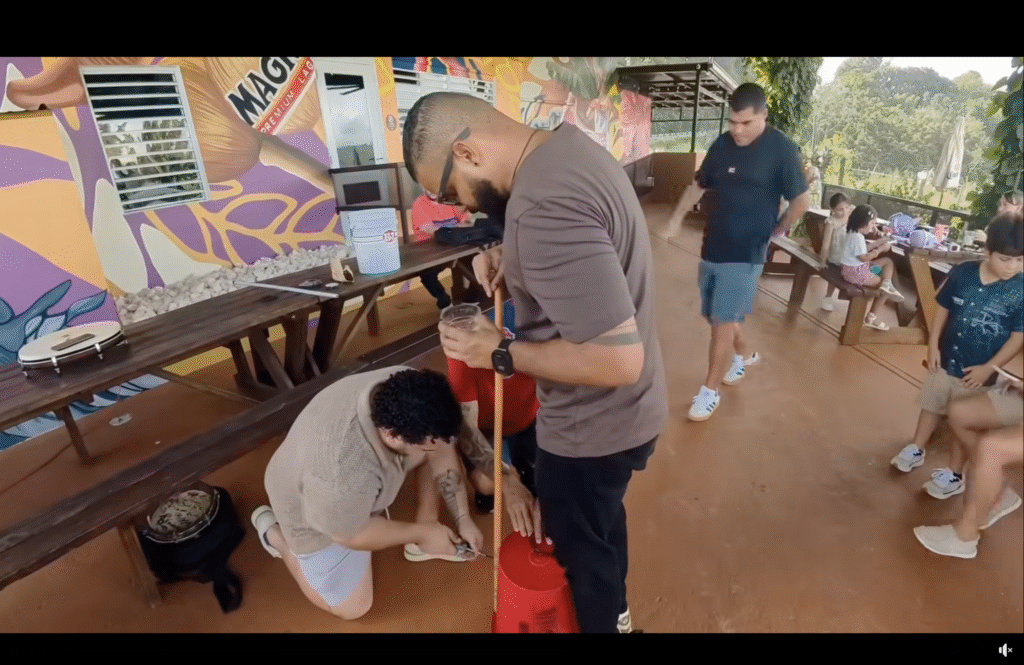
Rodríguez also writes that he has played the tumbandero himself on stage for several years. I found very little about the tumbandero on the web, but I did find one video on Youtube where it’s featured. There’s also a video on Facebook showing people making a tumbandero out of a five gallon bucket.
Since the washtub bass derives from the earthbow, an African instrument, it should be no surprise to find related instruments throughout the African diaspora. Nevertheless, I was fascinated to learn about the tumbandero.