
I was reading the chapter on mordants in the book Craft of the Dyer: Colour from Plants and Lichens (by Karen leigh Casselman, 2nd ed., Dover Publications, 1993), when I came across this: “Some dye plants are used in the pot as mordants. This is true with alder and with sumac leaves.” (p. 40). (In case you’re not familiar with the term, a mordant is a substance used to help fix dyes in the cloth; a mordant helps make the dye color more light-fast, and helps the color stand up to washing better.)
This summer, I got interested in hammer dyeing (also known as “plant pounding”). This process transfers plant colors to cloth by hammering the plant against the cloth (details on the process are in this blog post). One problem with hammer dyeing is that the colors are not always lightfast, and may not stand up well to washing. But if sumac leaves can act as both mordant and dye-stuff, I wondered if they might produce a more permanent color if used for hammer-dyeing.
So I hammer-dyed a t-shirt using sumac leaves. And yes, they did indeed stand up to washing. As for lightfastness, only time will tell.
To see photos and a description of the whole process, scroll down.
The process, step by step
Carol gave me an old t-shirt to hammer-dye. It was made of 100% cotton.
1: Taping the plant material
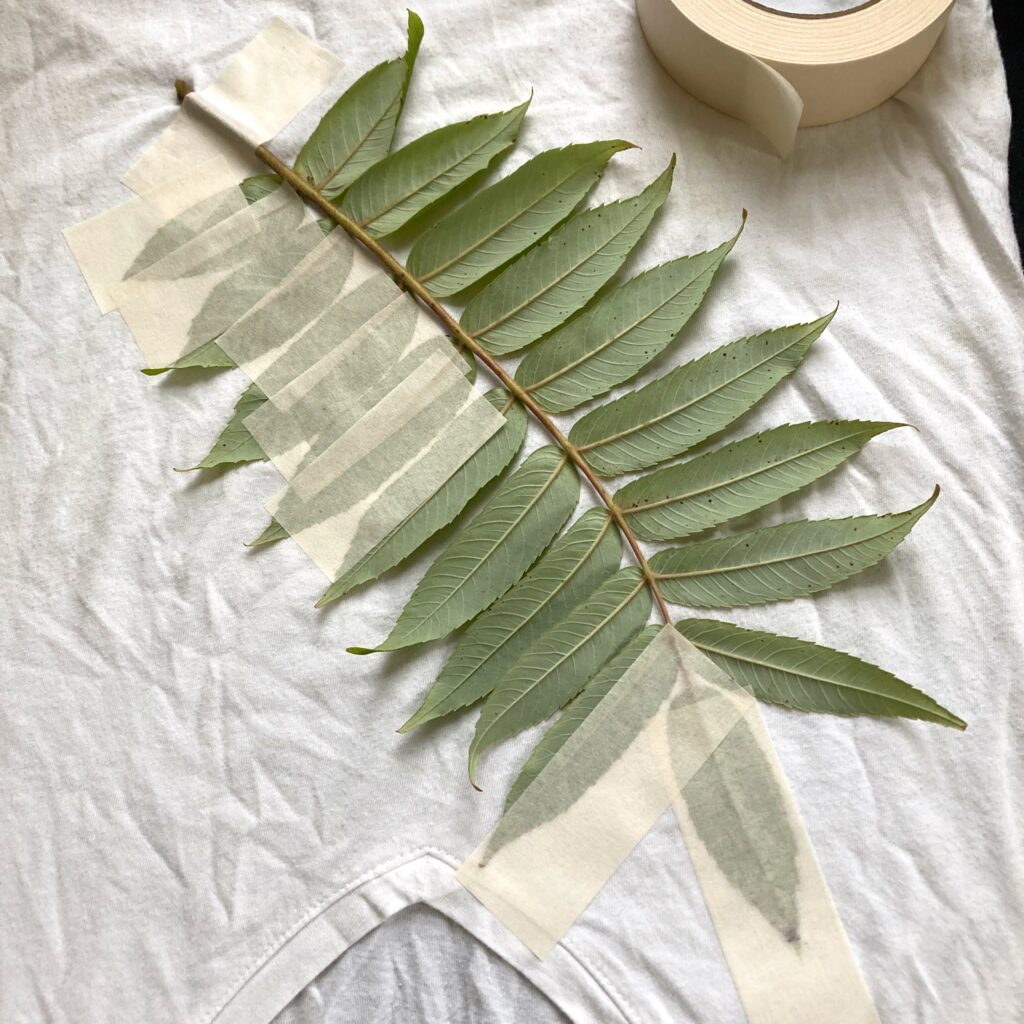
I turned the t-shirt inside-out, then used masking tape to stick the sumac leaves to the inside front of the shirt.
2: Hammering
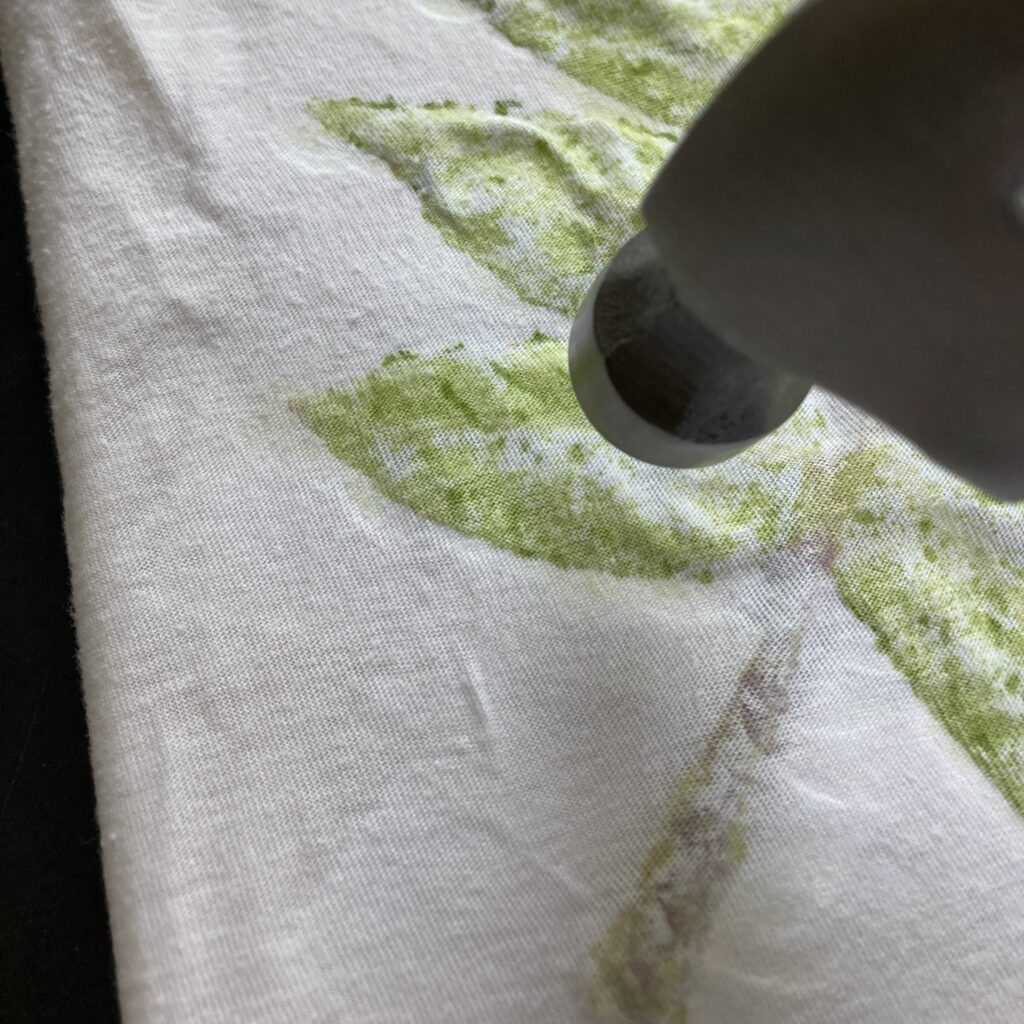
Once the leaves were fully covered by masking tape, I turned the shirt rightside-out. The cloth was thin enough that I could see roughly where the leaves were. I put a cutting board inside the shirt, and began hammering. The shape of the leaflets and stems became visible as I hammered. I kept hammering, one leaflet at a time, making sure I got a fairly even color. I used a 7 ounce hammer — the small head of this hammer worked best at getting all the detail of the sumac leaf.
3: Removing the plant material
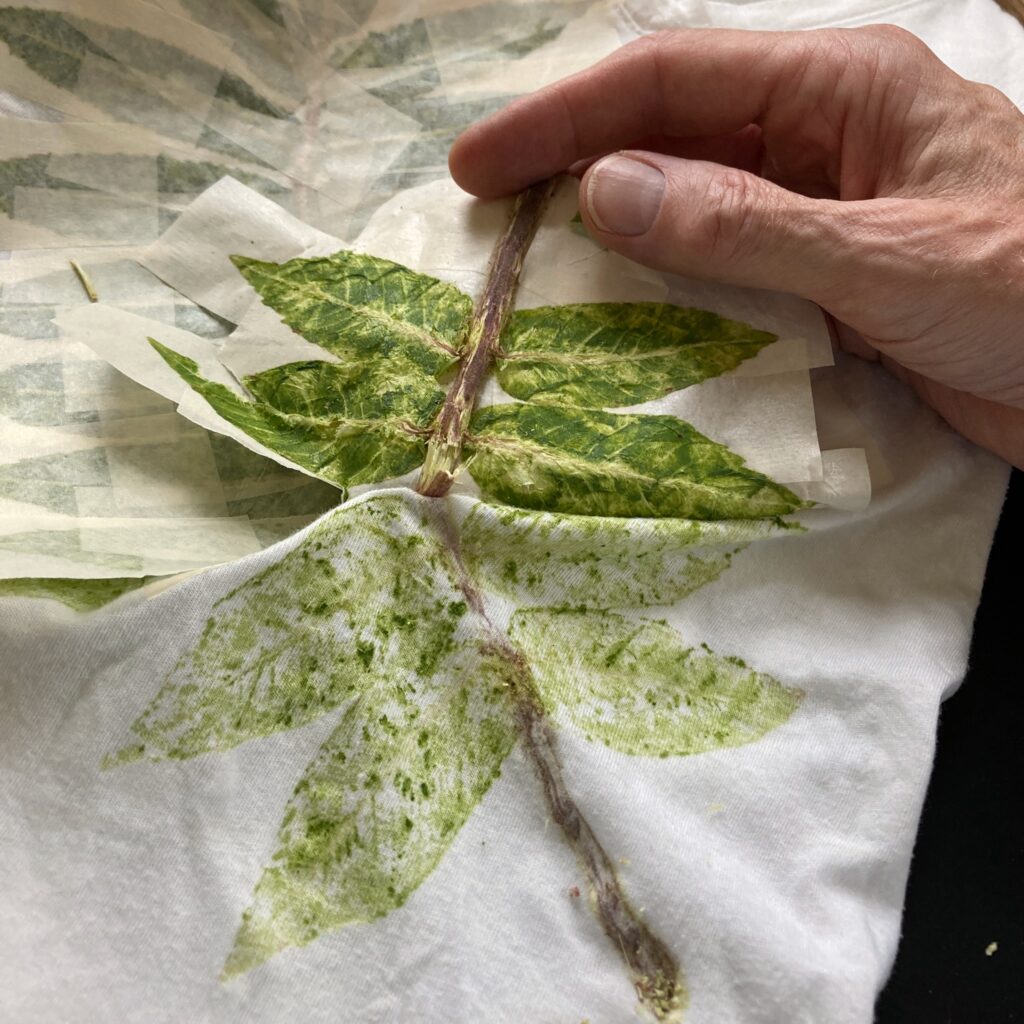
When I was satisfied that I had gotten enough color out of the leaf, I turned the shirt inside-out again, and removed the tape and the hammered leaf.
4: Setting the image with steam
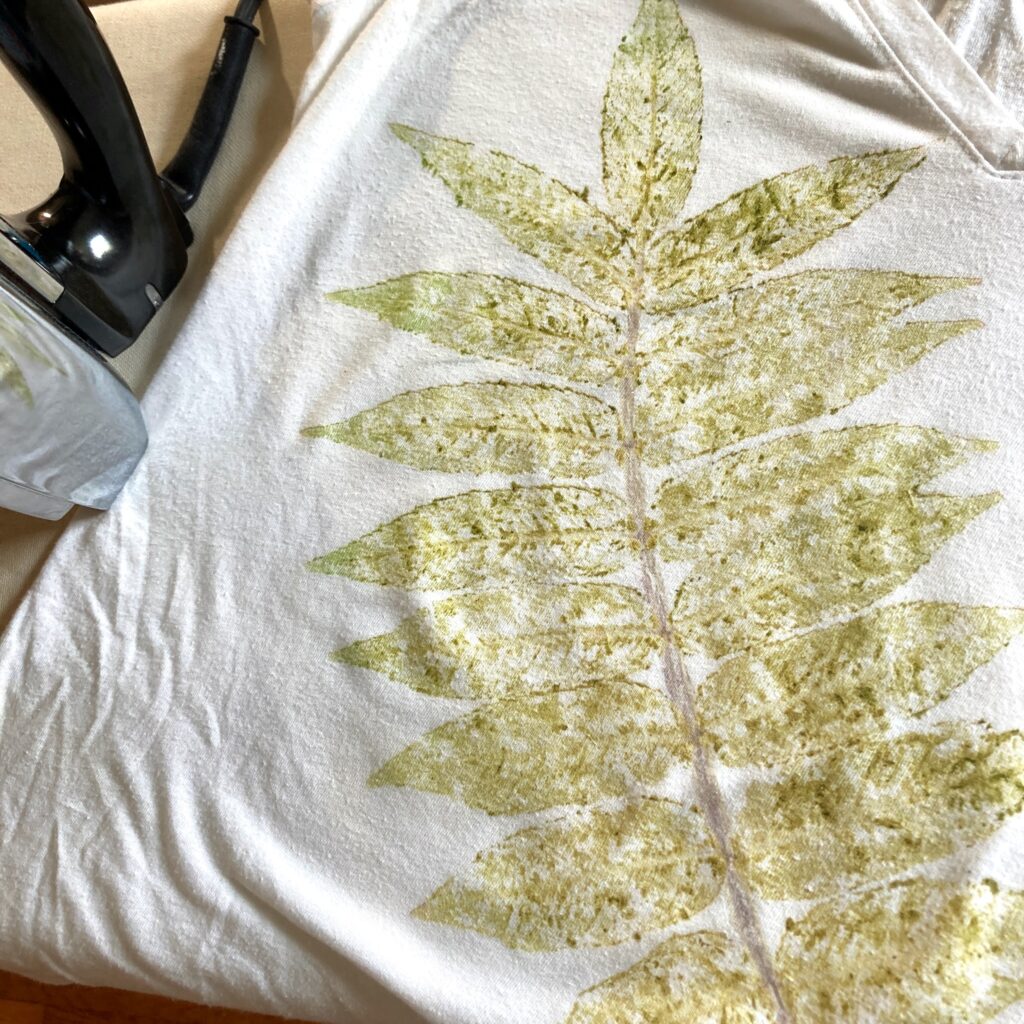
To set the image, I first ironed with a steam iron. This is what it looked like after ironing — you can see that the color has shifted from a bright green to more of a yellow-green.
5: Setting the image with vinegar
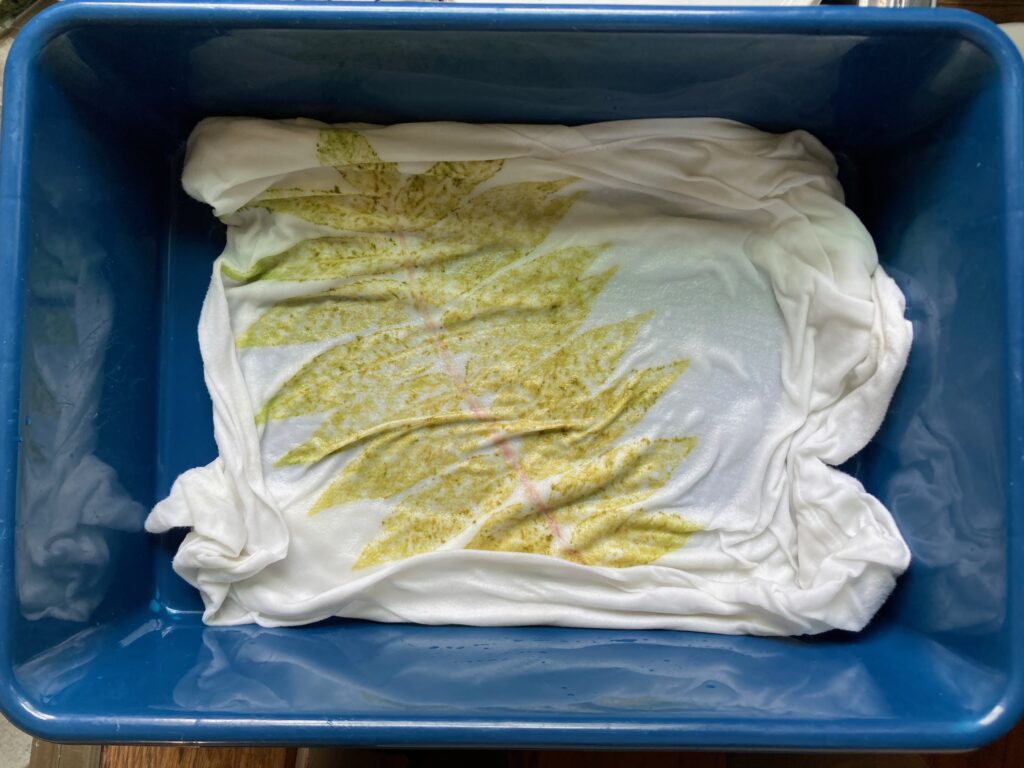
Bettye Kimbrell, a 20th century quiltmaker from Alabama, soaked her hammer-dyed designs in viengar to set them. So next I immersed the t-shirt in diluted vinegar (a part ordinary white viengar to 2 parts of water). After about 5 minutes in the bath, I gently wrung excess liquid. The color had shifted further towards yellow.
6: The finished product
Finally, I washed the t-shirt in the washing machine, then tumble-dried it in an electric dryer. The color faded ever so slightly, but the design was still clear. So this process does produce an image that is reasonably colorfast.
Also, the color shifted a bit towards brown. This was to be expected — the mordant ingredient in sumac leaves is tannin, which does tend to move dye colors to a browner shade.
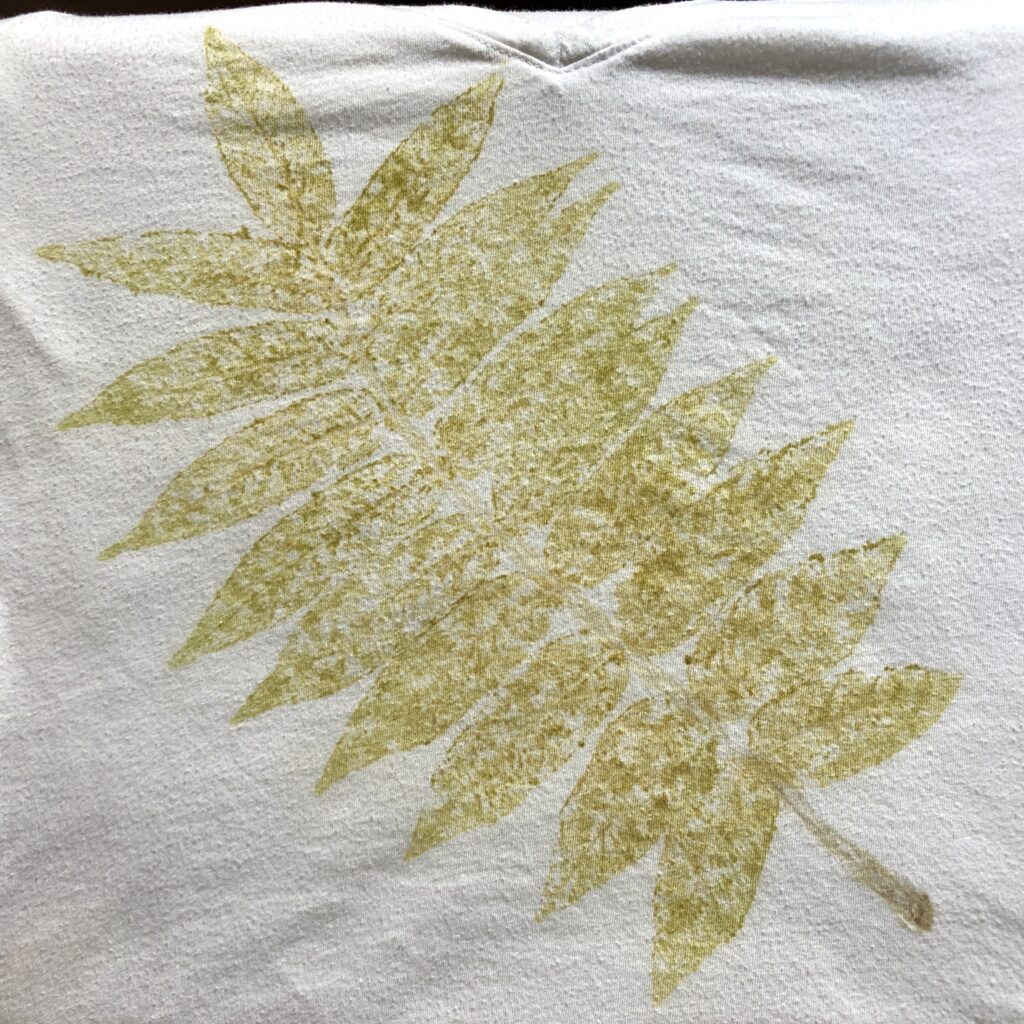
“I love it!” Carol exclaimed when she saw it come out of the dryer. Carol loves the shape of sumac leaves, so it’s not surprising she loved this t-shirt.
Unfortunately, the shirt is old, the cloth has gotten thin, and we discovered that it’s a little too sheer to wear in public. But the t-shirt will still serve as an example when we teach this project to kids at our ecology camp.