Upgrade

Upgrade to blog software should now be complete. If you notice anything that looks amiss, please let me know in the comments below.

During this blog update, I have increased protection against comment spam. If you experience problems posting comments, please let me know via my email address danrharper-AT-aoldotcom.

Morning

The gulls woke me up at the crack of dawn. Every morning they sit on the rooftops around our building screaming: Auw! Auw! Kee! Kee! Kee! Kee! Kyoh! Kyoh! Kyoh! Kyoh! With an effort of will I tuned them out and went back to sleep. I don’t know when Carol got up.

A cicada wakes me up much later. It must be sitting on the volunteer maple that sprouted up right next the the building behind us and which is now twelve feet tall. This cicada sounds just like the cicadas I listened to on hot summer afternoons when I was a kid. It almost lulls me back to sleep: zzzZZZZZ…. It seems to go on forever.

When it stops, I get up. I happen to glance in the mirror. If I’m not going to kid myself, my hair is more gray than blond now. It’s my day off and it’s still summer, so I forget to shave.

I stand in the kitchen. A cicada buzzes in the tree across the street. I hear a gull screaming in the distance. We bought a blueberry pie yesterday at the farmers market, and there is one small slice left this morning. I know I’m going to eat it for breakfast. There’s one slice of pie left, I say to Carol. It’s yours, she says, and looks back at her computer. I make a pot of tea, and slide the blueberry pie onto a dark green plate.

The last ones of the year

It was 3:30, an hour and a half after the farmer’s market opened. I walked around the corner and saw that there weren’t any lines of people waiting any more. It doesn’t pay to be late at our farmer’s market.

I stopped at the fruit stand. “No blueberries, huh?” I said. Just in case he had a few stray pints hidden away in the coolers in the back of his truck. He had pears and apples and peaches, but no blueberries.

“No, sorry,” he said. “I had a few pints earlier but they sold out quick.”

“Any more coming?” I asked, even though he had already said last week that this week would be the end.

“Nope,” he said, “That’s it, the end of the season.”

After I did all my shopping, I had cherry tomatoes for Carol, squash, Swiss chard, two loaves of bread, two dozen eggs, carrots, beets, and some sunflowers to put on the table at home, and a few other things. It was a lot of food to carry the four blocks to our apartment. It was a lot of food, but even so I kept thinking: I was too late for the last blueberries of the year.

On a busy day

In the course of my job, I sometimes get to do things that might actually make the world very slightly better, in very small ways. I was very busy at work today, and once or twice I might have made the world ever-so-slightly better, so I feel like I actually accomplished something. I came home to eat dinner on the run before I had to head off for an evening meeting, and while I was home I watered the chrysanthemums I planted last week in our tiny little garden. We have had no rain for two weeks, the soil was so dry it was like powder, the plants needed the water.

Of all the many things I did today, watering those flowers was without doubt the best thing I did all day long:– the sun was shining, the air was cool and delightful, and I knew the plants benefited from my actions.

Quiz

Mr. Crankypants was pleased to learn that the Unitarian Universalist Association (UUA) has been standing up for religious liberal values in the aftermath of the shootings during a worship service at the Tennessee Valley Unitarian Universalist Church back in July. It is the Right Thing To Do.

But Mr. Crankypants wishes to point out that taking out a full-page newspaper ad in the New York Times on Sunday, August 10, may not be the most effective way of standing up for religious liberal values. For example, here’s what marketing guru Seth Godin has to say about full-page newspaper ads, taken from a short essay titled “Why The Wall Street Journal annoys me so much,” from his book Purple Cow:–

“The Journal is the poster child for marketing old-think. Every day, more than a million dollars’ worth of full-age ads run in this paper — testimony to traditional marketers’ belief that the old ways are still valid.

“A full-age ad in the Journal costs more than a house in Buffalo, New York [Mr. Crankypants notes that the August 10 full-page ad cost the UUA $130,000]. Page after page of dull gray ads…. If you took 90% of these ads, and switched the logos around, no one could tell…. One morning, with time to kill at a fine hotel, I interrupted a few people who were reading the Journal over breakfast. I waited until they had finished the first section, and then I asked them if they could name just two of the companies that had run full-page ads. Not one person could….

“Finally, I asked them the million-dollar question (literally). Had they ever requested more information about a product because they’d seen a full-page ad in the Journal?

“You can probably guess the answer.”

Thank you for that insight, Seth.

OK, now here’s a quiz — and no cheating (which includes no texting your friends to ask them for the right answer):

(a) Did you read the ad in the New York Slime? Actually, did you even see the ad, let alone read it?
(b) If you do read dead-tree news publications, do you ever read the ads?
(c) If you had $130,000 to spend on anything relating to publicity around the shootings at Tennessee Valley Unitarian Universalist Church, how would you spend that money?

Mr. Crankypants awaits the appearance of your answers to this quiz in the comments section below….

Singing

This afternoon, I drove to Providence to the monthly Sacred Harp singing. Sacred Harp is one branch of an American shape note singing tradition which dates back to the Boston composer William Billings in the late 18th C.; it is an indigenous polyphonic sacred choral music tradition that left New England in the 19th C., migrated to the Appalachians, survived into the 20th C. in the deep South, whence it migrated back to New England in the 1970s.

A dozen of us sat around singing our hearts out for three hours. In Sacred Harp singings, the people who are singing choose the songs to sing. It was time to end; what should the last song be? Someone suggested we sing number 183, “Greenwich”:

  Lord, what a thoughtless wretch was I,
  To mourn and murmur and repine,
  To see the wicked placed on high,
  In pride of honor shine.

  But oh, their end, their dreadful end,
  Thy sanctuary taught me so,
  On slipp’ry rocks I see them stand,
  And fiery billows roll below.

It’s a lovely song to sing, but one of the tenors said it should not be our last song. Smiling, I said, “You don’t want to be left with that last vivid image as you drive home?” and she replied, “Well, that’s what I believe in, but we really should sing a different song for a closing.” Still smiling, I decided that it was not a good time to reveal that theologically I am a post-Christian Universalist. Then someone suggested that we close with “Christian’s Farewell,” which is slow and easy to sing, and which has words that were altogether more appropriate for a closing song:

  Brethren, farewell, I do you tell,
  I’m sorry to leave, I love you so well.
  Now I must go, where I don’t know,
  Wherever Christ leads me,
  The trumpet to blow….

While singing this, it occurred to me that there are some Unitarian Universalists who would refuse to sing any of these Sacred Harp songs, because they would object to the theology. But that would be like refusing to go into Notre Dame in Paris, because it is a Papist abomination. I sang my heart out, and loved every minute of it, theology notwithstanding:

  Here I have worked, labored a while,
  But labor is sweet if Jesus doth smile.
  When I am done, I will go home,
  Where Jesus is smiling,
  And bids me to come.

Sometimes you do theology, and sometimes you just sing.
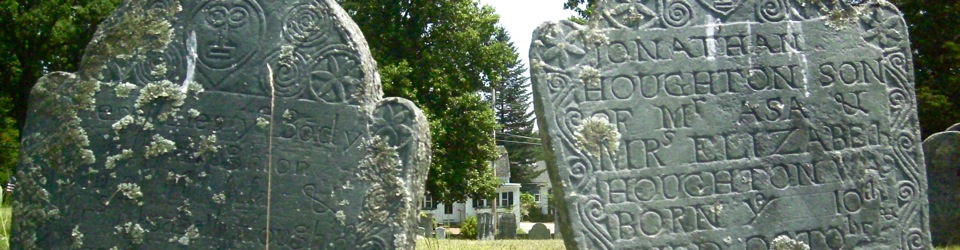
At its height

This week has been filled with those perfect days we sometimes get in late August, when it feels like autumn at night yet becomes pleasantly hot by mid-day; when we are drawn outdoors to let the mellow sun drive the last of the New England cold out of our bones.

Summer is at its height: the parking lot for the Martha’s Vineyard ferry is as almost as full as you’ll ever see it; and there are as many cars as you’ll ever see over on State Pier near where the Cuttyhunk ferry docks.

A few tourists are even wandering around New Bedford, far from their usual haunts. Usually, tourists in New Bedford walk one block from the National Park’s visitor center down to the Whaling Museum, and then get back in their cars and drive away. But today, Carol and I saw several tourists in other, less-touristy, areas. We saw a man pushing a stroller on Macarthur Drive near Fisherman’s Wharf, where he was accosted by one of the more insistent panhandlers (the fellow who once, when I told him I didn’t have any money for him, screamed at me: “Bullshit! Bullshit! Bullshit! Bullshit!”). Only a perfect summer day could draw a tourist to walk along Macarthur Drive.

If I had any doubt that summer is at its height, at it sfull glory right now, that doubt would have been eradicated by the farmer’s market on Thursday. While I stood in line at each farmer’s table, waiting my turn, I looked over the biggest diversity of produce we’ll see all year: blueberries, plums, peaches, pears, summer apples, cataloupe; broccoli, tomatoes, zucchini, yellow straightneck squash, patty-pan squash, acorn squash, lettuce, kale, collards, pole beans, bush beans, garlic; gladiolas, sunflowers, and other cut flowers. There were so many things for sale I’ve forgotten them all.

Summer is at its height, yet the sun sets three minutes earlier every day; I keep getting surprised by how soon it grows dark. Summer is at its height, but yesterday I planted some more fall flowers, white and red chrysanthemums, and tied up the asters. And today I seeded our tiny little raised-bed garden with a fall planting of Swiss chard.