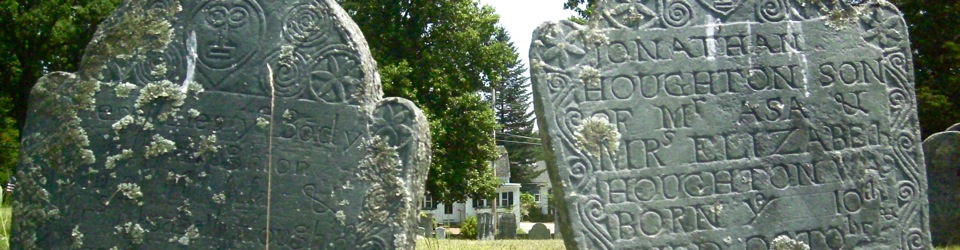
Yesterday I posted one of Rev. Dr. Samuel West’s sermons on this blog. Since long 18th C. colonial sermons aren’t to everyone’s taste, today I figured I’d post a shorter and more entertaining biographical sketch of West. Brilliant but eccentric, West was a classic example of an absent-minded country parson. Enjoy…. Continue reading
Tag Archives: Unitarian history
A Revolutionary sermon
This is the 300th anniversary year for First Unitarian in New Bedford, and this fall I’ll be preaching a series of four sermons on four great ministers from our past. Next week I’m going to speak about Samuel West, minister at our church in the second half of the 18th C. As part of my research on West, I found a sermon he preached in 1776 in support of the American Revolution. First, a little background on West:
Rev. Samuel West of New Bedford (not to be confused with his contemporary, Rev. Samuel West of Boston) was born in 1730 (1729 O.S.), and ordained in 1761 by the established church of what was then the town of Dartmouth, where he served for the next 42 years. In those 42 years, West was awarded the Doctor of Divinity degree by Harvard, oversaw the creation of a new parish in the eastern section of Dartmouth, moved his own church to the fast-growing city of New Bedford, and moved his church theologically from strict Calvinism to liberal Arminianism. In large because of his influence, his church later became Unitarian.
But the most remarkable part of West’s life had nothing to do with theological controversy. During the Revolutionary era, he was an ardent patriot, in a town dominated by Quakers who opposed armed resistance to Britain for theological and financial reasons. In a biographical sketch printed in Hrealds of a Liberal Faith, Rev. John Morison, one of West’s successors in the New Bedford church, described West thus:
Dr. West was an ardent patriot. He could keep no terms with those who were hesitating or lukewarm, but blazed out against them. After the battle at Bunker Hill he set out to join the American Army, and do what he might as a minister of God to keep up their courage. It was while in the army, serving as a chaplain, that he gained great notoriety by deciphering for General Washington a treasonable letter from Dr. Church to an officer in the British army, of which a full account may be found in the third volume of Sparks’s Writings of Washington, pp. 502-506. In 1776 he delivered a discourse (afterwards printed) before the Provincial Convention at Watertown….
Every year, the provincial government asked a minister to deliver an Election Day sermon at the end of May, and in 1776 this honor was given to West.
West’s Election Day sermon is a classic example of American Revolutionary prose. If the American War for Independence captures your imagination, West’s sermon stands up well even today. He begins the sermon by deriving the right to rebel against Great Britain from natural laws, using human reason and Lockean philosophy. He then derives the right to rebel from the Christian scriptures, and some of his readings of the Bible are noteworthy because of his strong reliance on reason and his willingness to draw on extra-Biblical sources to help gain perspective into the thoughts of Jesus. However, the sermon does contain at least one opinion that should make us feel somewhat uncomfortable today: he believes the government should provide financial support for churches, although he does say there shouldn’t be one established church.
West’s Election Day Sermon, sometimes erroneously titled “On the Right To Rebel Against Governors,” is worth reading today. I’m including it as a separate post (because it’s so long), in case you want to read theologically liberal, politically radical sermon from the 18th C. Here it is.
Election Day Sermon
18th C. sermon text by Rev. Samuel West, then minister at the church in Dartmouth, Massachusetts (later New Bedford), is below. Introduction to this sermon of the American Revolution is here. Continue reading
The joy of science
I’m reading a new biography of Maria Mitchell, Maria Mitchell and the Sexing of Science: An Astronomer Among the Romantics. Mitchell, the first American woman who was a professional astronomer, and probably the most famous American woman scientist of the 19th C., said this about the joys of watching the skies:
“The aurora is always a pleasant companion, a meteor seems to come like a messenger from departed spirits and even the blossoming of the trees in the moonlight becomes a sight looked for with pleasure. And from astronomy there is the enjoyment as a night upon the housetops with the stars as in the midst of other grand scenery. There is the same subdued quiet and grateful sensuousness — a calm to the troubled spirit and a hope to the desponding.”
I suspect I’ll have more about this biography after I finish it.
(Mitchell plays a minor role in my mother’s family folklore. My mother’s family comes from Nantucket, where Mitchell spent the first four decades of her life; and Mitchell left the Quakers to join the Nantucket Unitarian church where my mother’s family attended worship. I remember hearing about Mitchell as a child — mostly I remember learning to pronounce her first name “muh-RYE-ah,” not “mah-REE-ah.”)
(a) poet, (b) philosopher; pick one
This judgment of Ralph Waldo Emerson is reported by Julia Ward Howe in her Reminiscences: 1819-1899:
“Theodore Parker once said to me, ‘I do not consider Emerson a philosopher, but a poet lacking the accomplishment of rhyme.’ ”
Coming from Parker, who could at least pretend to be a philosopher/theologian, that’s a fairly harsh thing to say. After she reports Parker’s bon mot, Howe, who considered herself a poet, goes on to add her own judgment:
“This may not be altogether true, but it is worth remembering…. The deep intuitions, the original and startling combinations, the sometimes whimsical beauty of his illustrations,– all these belong rather to the domain of poetry than to that of philosophy…. Despite his rather defective sense of rhythm, his poems are divine snatches of melody….”
I think Howe and Parker are right: Emerson is more of a poet than a philosopher. Since Emerson remains the most important philosopher/theologian of North American Unitarianism, that has some interesting implications for who we are today.
Universalist “conversion” experience
Turns out Julia Ward Howe was emotionally a universalist, and had a fairly emotional “conversion experience”. When she recalled the moment when she discovered liberal religion, she emphasized the joy she found in the universalism of her Unitarian faith:
“Who can say what joy there is in the rehabilitation of human nature, which is one essential condition of the liberal Christian faith? I had been trained to think that all mankind were by nature low, vile, and wicked. Only a chosen few, by a rare and difficult spiritual operation, could be rescued from the doom of a perpetual dwelling with the enemies of God, a perpetual participation in the torments ‘prepared for them from the beginning of the world.’ The rapture of this new freedom [i.e., her new Unitarian faith] of this enlarged brotherhood, which made all men akin to the Divine Father of all, every religion, however ignorant, the expression of a sincere and availing worship, might well produce in the neophyte an exhilaration bordering upon ecstasy. The exclusive doctrine which had made Christianity, and special forms of it, the only way of spiritual redemption, now appeared to me to commend itself as little to human reason as to human affection. I felt that we could not rightly honor our dear Christ by immolating at his shrine the souls of myriads of our fellows born under the widely diverse influences which could not be thought of as existing unwilled by the supreme Providence.” [Reminiscences: 1819-1899, p. 207; gender-specific language in the original, obviously.]
One last comment: I believe that many newcomers to Unitarian Universalism today experience the same kind of joy at their discovery of this liberal faith as did Julia Ward Howe. Theological details may differ, but the joy at realizing that no one is going to be damned to eternal punishment still remains fresh.
William Howard Taft Attack Ad
In the 1908 U.S. presidential election, William Howard Taft was attacked for his Unitarianism. He refused to respond to the attacks, and won the election. But imagine if his opponents had had TV attack ads in their arsenal….

A note about the historical facts behind this attack ad….
The [1908 presidential] campaign was notable for the vicious attacks on Taft’s Unitarianism, particularly in the Midwest. Evangelical Protestants, in a flood of letters and newspaper articles, accused him of being an infidel, a Catholic, etc. His religion was no secret. He attended All Souls Church faithfully. Roosevelt and others responded sharply to the attacks. Following his own instincts, as well as the advice of the President, Elihu Root, and other Republican leaders, he said nothing himself in response. Bryan did not attack Taft personally, but he would not criticize those who did, thereby implying that he agreed with them. (Link.)
Any resemblance between the content of this attack ad, and attacks on the religious liberal running in the 2008 U. S. presidential primaries, is entirely intentional. 1:27.
Note: Although blip.tv is now defunct, I had a copy of this video and uploaded it to Vimeo. Click on the image above to view the video.
Unitarian sports figures
(1) Hearing my plea for some Unitarian or Universalist sports figures, A Denominational History Expert (ADHE) sent me a transcription of the inscription on the Boston Common Football monument, which stands at the entrance to the Common near Beacon and Spruce Streets — his transcription appears at the very end of this post. Anyone who knows their Unitarian history will immediately recognize the name of Francis Greenwood Peabody, who was a Unitarian minister and a theologian of the Social Gospel who wrote Jesus Christ and the Social Question — and who was also the son of Ephraim Peabody, Unitarian minister here in New Bedford from 1837-1846. According to Wikipedia, the Oneida Football Club played a very early version of football that may have had some similarity to either or both American football and soccer. Further research may show that other members of the Oneida Football Club were also Unitarians. In any case, we can claim one of the very first football players in the United States.
(2) I might have found a Unitarian who won an Olympic gold medal. Turns out that Kevin Barrett, a 9/11 conspiracy theorist, was born a Unitarian. His father was Peter Barrett, who was a well-known sailor who won a gold medal for sailing in the 1968 Olympics, and who won a silver medal in the 1964 Olympics (link) — he would have won the gold in 1964, except that he hit another boat, and though no one saw him do so, he dropped out of the race anyway in an act of true sportsmanship. If Kevin Barrett was born a Unitarian, there’s a decent chance that his father Peter was also a Unitarian — but I can’t confirm that. Peter Barrett lived in Madison, Wisconsin, so perhaps some of my readers have connections with the various Madison-area Unitarian Universalist churches and can find out whether or not he was a Unitarian Universalist.
Written work by three remarkable sisters
Some of my regular readers are quite interested in Transcendentalism. There’s been some interesting research into the Transcendentalists recently, and of particular interest has been the attention that scholars have finally been paying to Transcendentalist women. The publication of The Peabody Sisters: Three Women Who Ignited American Romanticism in 2005 has renewed my interest in these three gifted women — Elizabeth Palmer Peabody, an educator who was in the absolute center of the Transcendentalist movement; Sophia Peabody (Hawthorne), who was one of the first American women to make her living as a visual artist; and Mary Peabody (Mann), who was an educator and a writer.
In the past, I have found it difficult to locate writings by these women, but now you can find quite a bit of their work on the Web here’s what I’ve found so far:
Five letters from Sophia to Elizabeth.
Moral Culture of Infancy and Kindergarten Guide, a book co-written by Elizabeth and Mary.
Christianity in the Kitchen, an interesting cookbook by Mary.
Record of a School, a book about education by Elizabeth.
If you’re new to the Peabody sisters, you’ll find a good summary of their lives here.