Autumn watch

We were almost home after having taken a long walk on a warm and humid afternoon.

Carol looked at her watch. “I thought it was later than it is,” she complained.

“What time is it?” I said.

“Five thirty,” she said.

I glanced up at the sun. “It should be seven thirty,” I said. “The sun is setting way too early now.”

We continued complaining about the rapidly shortening days. It still feels like summer, but it’s starting to look like autumn.

There’s a peculiar thing about racism in the United States. Racism is obviously real, and there’s plenty of research that documents its effects on individuals and groups of people. At the same time, the concept of race itself isn’t real; that is to say, race does not have a biological basis. Looking more closely at the legitimate research on racism, it seems obvious that the study of racism properly belongs in the domains of political science, sociology, perhaps psychology; but not in the domains of physiology and biology. That leads me to the unsurprising conclusion that race exists as a social phenomenon which is a result of racism;– it’s not that racism emerges from biological differences between races; instead, racism is existentially prior, and the concept of race is a social or political product or result of racism.

In theology, we could make a parallel argument. Race does not exist at the level of theological anthropology; when we ask, “Who and what are persons?” we do not find that race is an essential attribute of persons. Instead, we find that all persons are of infinite value (to use an old Universalist formulation); persons are not valued differently based on alleged racial attributes. Racism, however, clearly exists as damaged or perverted relationships between persons; racism, then, should be addressed as a problem of ethics and morals. Indeed, racism is so damaging to persons and to society that it can only be classed as an evil existent within the social order. Here the insights of the social gospelers becomes useful, as we attempt to gain an adequate understanding of “the sinfulness of the social order and its share in the sins of all individuals within it”, and further as we attempt to “redeem the permanent institutions of human society from their inherited guilt of oppression and extortion.” [Theology for the Social Gospel, Walter Rauschenbusch, p. 5.]

I find making such a theological argument to be quite useful (although obviously as it stands, it needs to be refined quite a bit). By showing racism to be a species of sin or evil, we make clear that religious persons are in some sense required to put an end to racism. From the point of view of my Universalist theology, racism is a particularly egregious evil, because of the multifarious ways in which it denies the infinite worth of each person. Not that this theological understanding gives us any practical means for putting an end to racism; but it shows anti-racism work to be a strong moral imperative.

Peace witness by phone

My father’s cousin Jack’s wife Abbie grew up a Quaker, and while she currently belongs to a Presbyterian church, she maintains her Quaker peace witness. She tells me via email that an organization called Democracy Rising is planning a nation-wide effort to contact Congressional representatives via telephone tomorrow, Thursday, September 6, to call for an end to the war in Iraq.

If you’d like to participate in the peace witness, the phone number at the Capitol Hill switchboard is 202-224-3121. If you’re not sure who represents you in Congress, you can find out here.

If you’re wondering exactly what to say when some low-level aide in your elected representative’s office answers your call, you could say: “As a voter, I want you to act now to end the war and occupation of Iraq. The Congress has the Constitutional right and a moral responsibility to use the power of the purse to withdraw all U.S. soldiers and contractors from Iraq on a responsibile and binding schedule.”

Democracy Rising offers the following background:

In September, Congress will focus on the war in Iraq. They will vote on the President’s request for continued funding of the war. At this writing, the request stands at $142 billion, but President Bush will probably ask for an additional $50 billion, for a total of more than $190 billion dollars!

Congress is not required to give President Bush any of this money, or even to bring the request to a vote. Congress can also put restrictions, firm withdrawal timelines and other conditions on any funding in order to force an end to the U.S. occupation of Iraq.

To read even more, visit the Democracy Rising Web site.

The coming revolution

I’ve been rereading Carl George’s book The Coming Church Revolution: Empowering Leaders for the Future. Carl George is a church consultant, and he is the most prominent advocate of so-called “Meta-Church,” a church organized primarily around small groups. The Coming Church Revolution is one of the books that inspired the “Small Group Ministry” movement within Unitarian Universalism.

I decided to re-read George’s book because I noticed that current Unitarian Universalist approaches to growth through the formation of small “cell groups” are simply not working. For example, the most recent issue of Interconnections, the newsletter for lay leaders published by the Unitarian Universalist Association, makes the following statement: “First Unitarian Society in Newton, MA (385 members), may have one of the best Small Group Ministry (SGM) programs around. The program began in 2001 with ninety people in nine groups. Today there are seventy-two members in eight groups.” [Link] In other words, the best small group ministry program within Unitarian Universalism is losing members, not gaining members for the congregation.

Opening George’s book at random, I happened to find myself in the middle of the chapter on worship. At this point, those accustomed to Unitarian Universalist Small Group Ministry programs are probably asking themselves what does SGM have to do with worship? Unitarian Universalists are accustomed to think of SGM as another church program, but George makes it clear that Meta-Church is not another program you add to your congregation, it is instead a different organizational model, a different way of organizing and empowering leaders in your congregation.

In the context of his overarching organizational model, George sees worship as an artistic celebration that can involve many lay people in the congregation. The Meta-Church model of organization is scaleable, that is, it can be scaled up from small churches like ours here in New Bedford, to very large (over ten thousand members) churches. Therefore, George believes that worship should involve more than just the preacher — indeed, while he respects preaching and believes it is central to worship, he also believes that preaching is not always necessary for successful worship: “I’m not preaching against preaching. I’m not even questioning the legitimacy of long sermons…. Rather, I’m affirming that there are times when… God’s message is communicated as effectively — or perhaps more effectively — by elements of the service other than preaching.” [p. 145] At the same time, Gerore asserts that his Meta-Church organizational model is “transparent to worship style” — Meta-Church will work with any worship style.

But the Meta-Church organizational model insists on empowering lots of lay people to participate in worship services, through developing the skills of lay people, bringing those artistic skills to worship services, and also out into the community. So there are Guilds in which artistic skills are cultivated and developed — guilds might include group music lessons (e.g., some choir rehearsals), a conservatory for vocal music, an acting academy, etc. Then as people develop skill and talent, they are organized into troupes — troupes might include an a capella choir, a handbell choir, a liturgical dance troupe, a sound team or video production team, etc. These troupes perform at worship services, and also out in the community (e.g., a Christmas concert at a local mall).

One of George’s most interesting bits of advice relating to empowering lay leaders seems counter-intuitive at first. When hiring staff, he does not necessarily recommend hiring staff people who are good performers themselves. Rather, he urges churches to hire producers: “Don’t hire any more music directors; you can usually get volunteer artists to do that for free. Hire worship-service and pageant producers and make sure they have an impressario flair about them; that is, do they know how to create a solid, flowing sense of worship that is put together and produced by various worship groups?” I don’t mean to anger the Unitarian Universalist Musicians Network (UUMN), but I think George is right, while the UUMN is heading in the wrong direction — we don’t need more paid musicians, nor do we need more paid music directors, but we do need producers who can facilitate and empower lay people to succeed in worship.

Of course, by now you’ve figured out some obvious things. Lay worship leaders are supported and trained by paid staff, and lay worship leaders have an outward-directed ministry that makes them feel great. Troupes of lay worship leaders can function as support groups, and troupes can draw new people into a congregation. In fact, these troupes probably do a better job of supporting individuals and promoting growth, than do the small groups of typical SGM programs. It’s an old truism that if you want to grow your church, one sure bet is to have a great choir — because great choirs make people want to come to church, great choirs attract newcomers who want to sing in the choir, and the members of great choirs provide excellent support to one another.

So there you have my thoughts after re-reading just one chapter of The Coming Church Revolution. I’d be curious to know what you think about this….
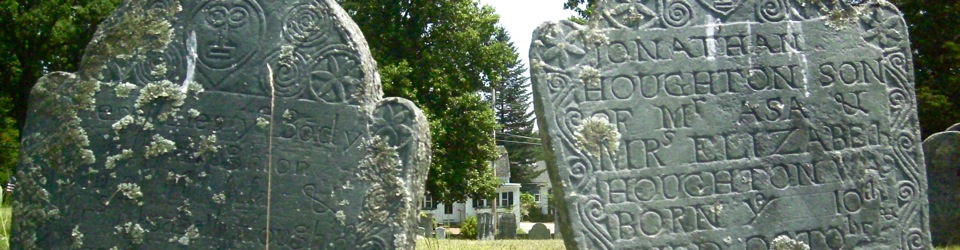
Lifting weights

I hate lifting weights.

Well, actually I don’t hate lifting weights. Once I get started, I kind of enjoy it. It feels good to work all those muscles that tend to get neglected because I have a sedentary job. It feels good to get my blood moving and it even feels good to break a sweat. Lifting weights is a little boring, it’s true, but it’s good to just turn my brain off for twenty minutes while I lift weights. And then when I get done lifting, I feel good and I always sleep better that night.

So lifting weights feels pretty good, once I get started, and after I finish I promise myself that I will lift weights again in two days…. And next thing I know, a whole week has gone by and I haven’t touched the barbell or the dumbbells.

Carol, my partner, likes to say that her body is really a farmer’s body, and she feels best when she has to do lots of physical labor. I think that’s true of all of us. Our bodies are designed to be outdoors most of the day, hunting and gathering and getting lots of exercise. I spent five years working for a carpenter, and during those five years my body loved getting a good eight hour workout five days a week.

If my body craves exercise, if I actually like lifting weights once I get started, why is it that I have such a hard time getting started? Why is it that I let a week go by, my body getting all cranky due to lack of upper body exercise, yet I won’t start lifting weights? I don’t know why. Certainly, that is sufficient proof that human beings are not fully rational beings; that we are ruled by habit and inertia far more than we are ruled by rational thought.

I don’t hate lifting weights. I just hope I remember that on Tuesday, when it’s time for me to lift weights again.

The mastiff and the curs

Guest blogger: Isaac Bickerstaff

According to family tradition, my great-great-grandfather told a story that went something like this:

A huge mastiff, a most magnificent dog, took one of his puppies with him one day on his daily walk. As they walked along Pennsylvania Avenue towards the Capitol building, smaller dogs, curs and mangy mutts, dashed towards the mastiff, baring their teeth and barking furiously. But the mastiff paid no attention to them, and just walked on.

At last the puppy couldn’t stand it any longer, and said, “Father, why do you tolerate the yapping and the impertinences of those curs? Why don’t you bark at them, and silence them?”

“Ignore them, my child,” said the great mastiff, “without the curs, there could be no mastiff.”

Now, in 2007, my correspondent in Washington informs me that there are no longer any mastiffs living openly within the District of Columbia. The last of the great mastiffs was pulled down by a pack of flea-bitten curs more than a quarter of a century ago, his throat bitten in two, and his large heart eaten by the curs.

“There are still a few lesser mastiffs left in the District,” writes my correspondent, “but they dare not walk about openly. They disguise themselves as curs, engaging in all the petty and low behavior that curs engage in — yapping at nothing, eating disgusting bits of unrecognizable food dropped on the sidewalk, mindlessly chasing squirrels, and sticking their noses in each other’s rear ends. Yet those who are in the know say they have a sure-fire way of determining which dog is truly a mastiff, and which is a cur disguised as a mastiff. The curs disguised as mastiffs loudly proclaim that they are misunderstood today, but that future historians will judge them to be mastiffs. The mastiffs disguised as curs snivel and deny that they have great hearts.”

Autumn watch

On the drive from New Bedford up to visit my aunt and uncle this evening, we passed several trees whose leaves are already turning color. The very dry weather we’ve been having for the past two or three weeks has stressed many trees, and the leaves of some trees are turning brown around the edges. Other trees have reacted to the stress by already taking on their fall colors. I noticed one tree in particular, a small Red Maple at the edge of the highway, whose every leaf had turned a vivid scarlet.

On our way home, we drove through a chilly drizzle, blurring the headlights of the oncoming cars, making it feel even more like autumn is coming.

Where we’re coming from?

Theology comes from the week-to-week actions of a worshipping community far more than it comes from academia. Attend some Unitarian Universalist worship services and listen what is being preached, what is being sung, and what is being prayed, and you’ll learn more about Unitarian Universalist theology than if you read books by academic theologians like Thandeka and Paul Rasor. This isn’t meant as a put-down of academic theologians, it’s simply what I feel is true.

So when I read in our denominational magazine that one of our “most beloved hymns” is a song by Carolyn McDade called “Spirit of Life,” that makes me think that if I listen to that hymn, I’ll learn something about where mainstream Unitarian Universalist theology is these days.

“Spirit of Life,” says the hymn, “come unto me.” It’s a hymn written in 1981, one of the peak years of the feminist revolution, when women were really finding their voice and finding their power — the hymn is calling the power of the divine into women who had been too long ignored by Western religion. Or we could reframe that same idea with the insights of third wave feminism: “Spirit of Life” was written when second wave feminism was at its peak, when affluent white college-educated middle-class women were claiming additional power and influence for themselves by putting and end to discrimination against affluent white college-educated middle-class women — but the hymn assumes individuals will have a certain level of power and influence, and includes a cultural bias towards individualism. So if “Spirit of Life” is one of the most popular Unitarian Universalist hymns, we could probably conclude that the feminist theology we have hasn’t been particularly good at including women of color and working-class women.

(However, don’t take this a commentary on Carolyn McDade’s theology. Her earlier hymn, “We’ll Build a Land” from 1979, is far less individualistic, calling for solidarity with all persons with phrases like, “Come build a land where sisters and brothers/ anointed by God may then create peace/ where justice shall roll down like waters….”)

One really good suggestion

Bill, Carl, and I were standing around talking with the architect who’s overseeing the repair work at our church. She had come to tell us how much it might cost to remove an underground oil tank, and she stayed to inspect the repairs to our fire escape. Afterwards, the four of us stood around chatting. Since she’s a church-goer too (she’s active in a nearby UCC church), our conversation turned to churches.

We compared horror stories about how churches neglect routine maintenance, which neglect always leads to costly repairs. Our architect had one really good suggestion that I can’t resist passing along. She said when she served on her church’s board of trustees, she would make them do a complete walk-through inspection of the building and grounds once each year. When the board members confronted building problems face-to-face, they realized just what the money is going to, and routine maintenance was less likely to be neglected.

We also talked about when would be the best time to do such a walk-through. I suggested that maybe November would be the best month for our church, because we try to start planning the next fiscal year’s budget in January — do the walk-through in November, and it would allows you to get estimates in time for the budget planning cycle. Bill added that it’s best to do a walk-through when the leaves are off the trees.