Sermon copyright (c) 2026 Dan Harper. As delivered to First Parish in Cohasset. The text below has not been proofread. The sermon as delivered contained substantial improvisation.
Readings
The first reading was from “Another View of Preston Bradley,” an online memoir by Judy Thornber, giving her memories of Rev. Dr. Preston Bradley, minister of the People’s Church in Chicago from 1912 to 1976. In the 1930s, People’s Church boasted weekly attendance of up to 4,000 people, and Bradley’s radio broadcasts reportedly reached 5 million more.
“As a true admirer who heard Preston Bradley on the radio and in person at his church, I saw no sign of megachurch techniques. Bradley did not ‘orate.’ He spoke in a personal, conversational way, revealing his own feelings and thoughts and his high aspirations for what people could do. He acknowledged that times were difficult and many people had enormous problems. It was, after all, the Depression. He did his best to provide hope to his following, without mention of God or Jesus, and to engage in citywide social action with various civic organizations. This man was not an Elmer Gantry type egoist. He was passionate about empathy and support for those with troubles, but not in a ‘theatrical’ way. His true genius was that he simply talked directly to his congregation, both on the radio and in the church, as if they were intelligent people who wanted to lead good lives. He tried to encourage them and keep their hope alive.
“Since few of today’s UU ministers can grow membership the way Bradley did, we should seriously study his sermons to understand why they spoke so clearly to people and were so well received by the public. When Bradley spoke, you felt he was speaking to you one on one. He shared himself. He did not pretend to have all the answers. He did preach that hope could be nurtured by persevering and by focusing on leading a good life according to our own best lights.”
The second reading was from “What is Unitarianism?” by Alan Ruston, a 1973 pamphlet written for the British Unitarians, whose formal name is the General Assembly of Unitarian and Free Christian Churches.
“What do we find in a local Unitarian church? We find — above all — independence. Each church is a sovereign entity, responsible for its own affairs. It calls its own ministers, and dismisses them if it wishes. It builds its own church structure, and pulls it down if it wishes. It even disbands itself if it considers its useful purpose has been achieved. The churches are loosely united in the General Assembly of Unitarian and Free Christian Churches, which helps with advice, money and ministerial recommendation, but has no control over the local congregation…. The Unitarian church is not the place for the person with the over-tidy mind, who may require a hierarchical church organization. Unitarian churches are inconsistent, going different ways, but as each sees the way forward in a slightly different manner, it cannot be otherwise.”
Sermon
During last year’s question box sermon, someone asked, “What about our service is most similar to other Unitarian Universalist congregations?” I’ve now worked in nine different Unitarian Universalist congregations, preached in another twelve, and attended services in another eight or nine. This may make it seem like I know a lot, but I don’t. If there are perhaps fourteen hundred UU congregations around the world, I only have direct knowledge of maybe 2 percent of them. This is not a large enough sample size to draw firm conclusions. Nor is there any hierarchy to force Unitarian Universalist congregations into some kind of conformity. As a result, I have no way to make any worthwhile generalizations.
Instead, I thought what I’d do is to tell you about the specifics of Sunday services at several different Unitarian Universalist congregations, and then offer some opinions, which you may or may not agree with. I’ll start by telling you about two Unitarian Universalist congregations in detail, then touch briefly on some interesting points I’ve witnessed in other congregations.
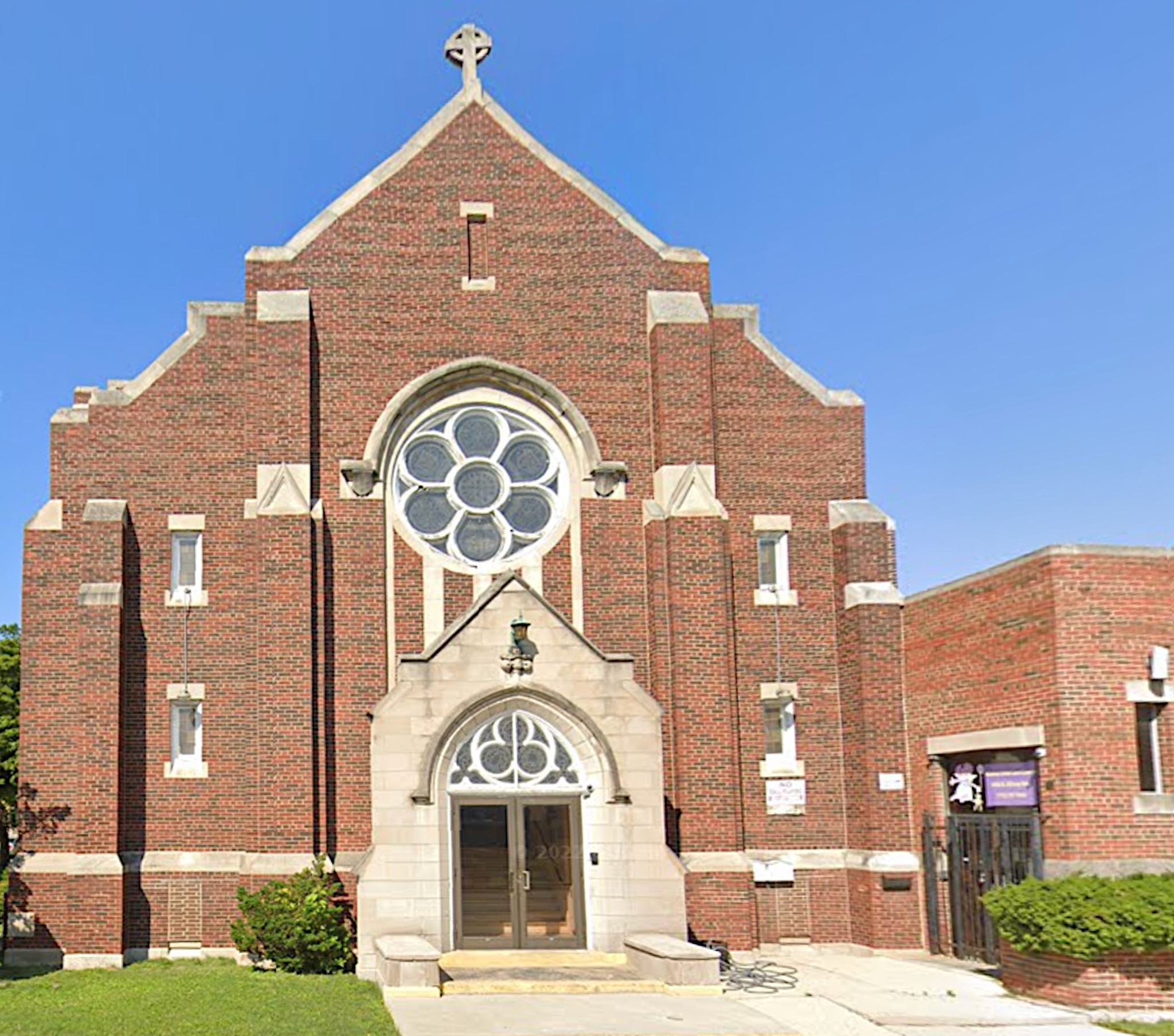
We’ll begin in Chicago. In January, 2001, I took the Coming of Age class from First Parish in Lexington, eight teenagers in eight and ninth grade, to Chicago for a weekend field trip. On Sunday afternoon, we got in a van and drove to 5954 South Albany St. on the southwest side of Chicago. If you know Chicago, that’s a White-minority part of the city. This was were the Church of the Open Door met in a small church building they had obtained in the late 1990s. Led by founding pastors Alma Faith Crawford and Karen Hutt, the Church of the Open Door called themselves “a sacred assembly of Black lesbian, gay, bisexual, transgendered, and heterosexual sisters, bothers, lovers, friends, and allies gathering at the invitation of Christ….”
The worship service began promptly at 4 o’clock everyone getting up on their feet and joining in call-and-response praise music. This was followed by a call for testimony: How had Jesus affected your life this week? While this might sound surprisingly Christian for a Unitarian Universalist congregation, in reality the actual testimonies were not unlike the candles of joy and concern we hear here at First Parish.
Then came the processional, when teens from the congregation (and our Massachusetts teens got to participate) carried a cross, a Bible, an African American national flag, and a rainbow flag to the front of the sanctuary while the gospel choir sang. The pastors came in with the processional, and gave the opening words and a prayer. As is common in the Black church tradition, the organist provided accompaniment to these spoken words, while the congregation offered vocal responses as they were moved by the Spirit. After a hymn came the passing of the peace, which in Church of the Open Door involved full-body hugs.
Pastor Karen gave a children’s message, there was another anthem by the gospel choir, and a lay leader read the lesson from the Bible. We were invited to stand and read along, using the Bibles in the pews.
The sermon was delivered by the church’s student minister; it was her very first sermon. She spoke on the topic, “God will make a way out of no way.” Since it was her first sermon, the congregation offered low-key vocal encouragement to her as she began. When it became clear that she was going to speak with authority, the congregation gave themselves over to her teaching, and when she brought the sermon home, half the congregation was on their feet, carried by the emotion of her words.
The offering came next, introduced by a lay leader who spoke about how important giving to the church was to her. Finally, there were brief announcements, a final hymn, and the benediction. The entire service lasted for about three hours, although about half the attendees only came for the last hour or so, to hear the sermon.
Pastor Alma made time to talk with our group about how she and Pastor Karen structured the services. Pastor Alma told us they strove to create a service in which African Americans from many different Black Church traditions could feel comfortable. The worship style was Black Church all the way, from the preaching style, to the call-and-response singing, to the vocal responses made by the congregation throughout the service. Yet the theology was very non-dogmatic; because the church’s primary ministry was to African American LGBTQ folk who might not be welcomed in other Black churches, the theology had to be as open as possible.
This service at the Church of the Open Door was clearly a Unitarian Universalist service, insofar as the focus was on this world, not the next world; and the core value running through the service was that all persons are equally worthy of love. But almost nothing in that service resembled what we do here in Cohasset; even the sermon was different in style and substance, firmly in the Black Church tradition, with the congregation vocally engaged with the preacher throughout. Sadly the Church of the Open Door had to shut down in 2005; I would have liked to have gone back for another of their services.
From Chicago, let’s travel to Hingham, to Linden Ponds Senior Living, just a few miles from here. The Linden Ponds Unitarian Universalist Community meets just once a month, on Tuesday afternoons, because several of their members also belong to conventional Unitarian Universalist churches in the area. At first glance, the Linden Ponds service might seem to be closer to ours here at First Parish, but I feel their services actually more closely resemble the lay-led humanist fellowships common in the Midwest.
The Linden Ponds UU Community meets in one of the common rooms at the Linden Ponds retirement development. Before the service, people gather outside the common room, and there’s a babble of conversation as people catch up with one another. All three times I’ve preached there (I’m going back next week for a fourth time), there have been fifty to sixty people present; which makes the Linden Ponds Community larger than some conventional Unitarian Universalist congregations in our area.
The service begins with a welcome and announcements. They light a flaming chalice, and someone from the congregation leads them in saying together their covenant. The covenant is followed by joys and concerns, and then a hymn. This is followed by a prayer given by the guest speaker, and then a musical selection — they have a small choir, and they also have some fine individual musicians. There is always a responsive reading, which is projected on large screens at the front of the room. After the responsive reading, the guest speaker gives the sermon.
So far, this doesn’t seem all that much different from what we do here at First Parish. But it gets significantly different after the sermon, when they have what they call a discussion, although to me it seems more like a question and answer and comment session: people in the congregation ask questions or offers comments, and the guest speaker is expected to respond to those questions and comments. Now I’ve seen this kind of thing in other congregations, and it can be really dreary. All too often, you only hear from a handful of people who love the sound of their own voices, and who dominate the discussion, often to the boredom of everyone else in the room.
But the Linden Ponds Unitarian Universalist Community is very skilled at this kind of discussion. They ask thoughtful, interesting questions, usually representing a wide range of viewpoints. Sometimes in this kind of setting, questions and comments are wholly intellectual, allowing the person making the comment to show off their erudition; but the people at Linden Ponds ask questions and make comments which serve to deepen the spiritual exploration. They are always civil — a rare trait in today’s polarized world — and when one of them disagrees with the speaker, they do so in a courteous manner, speaking not to score points but to further the conversation for everyone.
I’ve thought about why are they so good at posing questions and making comments. I can come up with two main reasons. First, they carefully develop volunteer leadership, and most people in their community are accustomed to taking on responsibility in all areas of community life, including leading worship. Second, they actively nurture a culture of civil discourse, which is challenging because that goes against the grain in today’s polarized world. An important aspect of this is that they are willing to make themselves vulnerable, to open themselves to spiritual matters; they worship with both head and heart.
One of the lay leaders usually winds down the discussion after about ten minutes, often making the observation that if they want to get to dinner on time, it’s best to finish up. They then take an offering, which typically goes to the Hingham Food Pantry, and the guest speaker give closing words. About half of the congregation goes off to have dinner together in one of the Linden Ponds dining rooms; and each time I’ve preached there, there have been several people willing to be late to dinner because they wanted to continue the conversation.
The services of these two congregations — the Linden Ponds Unitarian Universalist Community and the Church of the Open Door — may seem quite different at first glance. Yet both these congregations — indeed most Unitarian Universalist congregations — consider the sermon to be the culminating event in the service. In some congregations, it might no be called a sermon. Some staunch humanist congregations reject the term “sermon” as being too tied to Christianity, calling it an “address” or a “reflection” instead. But whatever it’s called, it’s ten to twenty-five minutes of spoken word. Often, but not always, the parts of the service that come before sermon are supposed to tie in to the sermon topic.
Having the sermon as the centerpiece is the norm for Unitarian Universalist services, but the importance of the other parts of the service varies quite a bit. When Preston Bradley was the minister of People’s Church in Chicago, his sermons were by far the most important part of the service; indeed, for the five million people who listened to Bradley on the radio, the sermons were the only part of the service they heard. Here at First Parish, while the sermon remains important, we also place great importance on our music; and we’re fortunate to have such a talented music director, and so many talented musicians in the congregation.
And of course many Unitarian Universalist congregations recognize that there’s more to Sunday services than just a sermon; and many of our congregations have special annual services, such as Music Sunday, the Flower Celebration, and Christmas Eve candlelight services, where the sermon is much less important. Some congregations, including ours, also have one-time services where something else takes the place of the sermon — so, for example, a couple of years ago the poet Everett Hoagland led the service here, and instead of a sermon, we got to hear him reading his poetry. To give another example, I still have vivid memories of a service in 1998 at First Parish in Lexington where a one-act play took the place of the sermon. Written by a member of the congregation, the play was a sort of existentialist take on the story of Noah and the ark, with three main characters: Noah, Noah’s wife, and God. (Before you say, “What a great idea, we should do that here,” let me tell you that the actors and director, all of whom had extensive theatre experience, took two months to rehearse the play, and when it was done, none of them was eager to repeat the experience.)
I also have vivid memories of another unique worship service I got to experience at First Unitarian Church of Chicago. This has been a biracial congregation for many years, and one of the most distinguished Black members was Rev. Dr. Finley Campbell, then professor of African American Studies at the University of Wisconsin in Madison. In 2002, to commemorate the Emancipation Proclamation, Dr. Campbell created what he called the Emancipation Proclamation Pageant. I still remember the slow procession of actors dressed in Civil War uniforms up the main aisle of their big stone Gothic-style building. Dr. Campbell’s pageant lasted three hours, and I have to admit that I had a hard time sitting still through the whole thing — but it made enough of an impression on me that I still remember it, some twenty years later.
While I’ve mostly been talking about the format of the service — hymns, readings, music, sermon, and so on — there are other things that seem to me just as important when talking about similarities and differences between the services of different Unitarian Universalist congregations.
The building where the services are held seems to me to be as important as what takes place in the service. First Unitarian of Chicago has a huge stone church in the English Perpendicular Gothic style; because it was built as a Unitarian church, instead of a cross it features an empty niche behind the altar to symbolize the ongoing Unitarian search for truth. It is a majestic building, perfect for music and pageantry. At the other end of the majesty scale, the simple and modest wood frame building of Starr King Unitarian Universalist Church in Hayward, California, is not at all majestic, but it does serve to place the emphasis on the people rather than on the building. University Unitarian Church in Seattle, Washington, has worship space built in the modernist style, with a huge wall of abstract stained glass on the left, and molded fiberglas seats that look like the midcentury modern Herman Miller chairs. Given my height, the comfort of the seating can have as big an impact on me as the sermon: I find University Unitarian’s molded fiberglas chairs are attractive but not particularly comfortable; by contrast, while the modest building of the Starr King Church might not be visually stunning, I found their chairs to be very comfortable. Different buildings also have different acoustics, and the acoustics in turn affect how I experience the Sunday service. First Unitarian in Chicago had great acoustics for music, but I always found it a bit too echo-y for spoken word. Starr King Church, on the other hand, was perfect for spoken word, but maybe not quite lively enough for music.
I’ve been saving the most important thing for last. For me the most important question is: How friendly is the congregation? Are there friendly people to talk with you before the service starts? If, in the middle of the service, you have a coughing fit (or a fussy baby), do people smile at you understandingly, or maybe even give you a cough drop (or make funny faces at your baby to distract them)? After the service, do people talk with you in coffee hour? At one congregation where I was a guest preacher, no one spoke to me during coffee hour; but that was an exception. Most of the Unitarian Universalist congregations I’ve been to have been friendly. I may have found the seats of University Unitarian to be uncomfortable, but I found the people to be very friendly. By the time we got done talking with all the friendly people at coffee hour, forty-five minutes had gone by. And I found the Open Circle Unitarian Universalist Fellowship in Fond-du-lac, Wisconsin, to be even more friendly — their social hour lasted for an hour — which is actually much like the social hours we have here at First Parish.
The real test of friendliness, though, is how a congregation treats people who are obviously different. To my mind, the biggest test of friendliness is what happens when someone who is homeless shows up. What I look for is whether that person is treated the same as any other newcomer — and mostly they are. Once I actually saw this happen here at First Parish, and we were just as welcoming to that person as we are to everyone else. Mind you, it’s important to have good boundaries; I remember one congregation that had to ask a homeless person not to come any more, because they kept showing up drunk; but you can have good boundaries and still be welcoming.
When I visit a new Unitarian Universalist congregation, I can put up with a mediocre service and mediocre music, as long as I’m welcomed. The most important thing is not the service, but the community: is it friendly and welcoming and supportive? I’ve been part of a congregation where I wasn’t especially fond of the minister, but people in that congregation were supportive of me and of each other, and that was more important to me than the minister. And I feel most comfortable in congregations where people are welcomed for who they are. I want to be part of a congregation that welcomes a wide range of people: bus drivers and venture capitalists; people with non-binary and binary genders; people of all ages; and so on.
This brings me back to the original question: “What about our service is most similar to other Unitarian Universalist congregations?” I’d answer: we are most similar to other congregations in the way we do our best to welcome a wide range of people. We’re not perfect at it, and it is true that sometimes we fall short of our ideals. But at our best, we are a warm and welcoming community; at our best, we really like it when others decided to share their spiritual journeys with us.