• First Parish in Cohasset and its ministers, pt. 2

    Sermon copyright (c) 2022 Dan Harper. Delivered to First Parish in Cohasset. The sermon text may contain typographical errors. The sermon as preached included a significant amount of improvisation.

    Read Part One (covering 1721-1845)

    The photographs, all of ministers who served at least ten years, are from the First Parish archives.

    Reading

    This morning’s reading is a short humorous poem by Roscoe Trueblood, minister of First Parish from 1945 to 1968:

    Congregational Polity

    “The minister should lead,” she said,
    This she chose to say
    Thinking if and when he led
    That he would go her way.

    But later, when they differed wide,
    On points she would not lose,
    “The minister should wait,” she cried,
    “And let the people choose.”

    Sermon

    Our congregation was formally organized on December 13, 1721, so we are in our three hundredth birthday year. This is one of a series or occasional sermons I’m preaching this year on the history of our congregation. This morning’s topic is the relationships between the congregation and its ministers from 1835 to the present day.

    In 1835, after long-time minister Jacob Flint retired, our congregation called Harrison Gray Otis Phipps to be its next minister. He came to Cohasset directly from Harvard Divinity School, and served for six years until he took ill and died at age 30. Phipps was remembered for his kindness and his good relationships with children. (1)
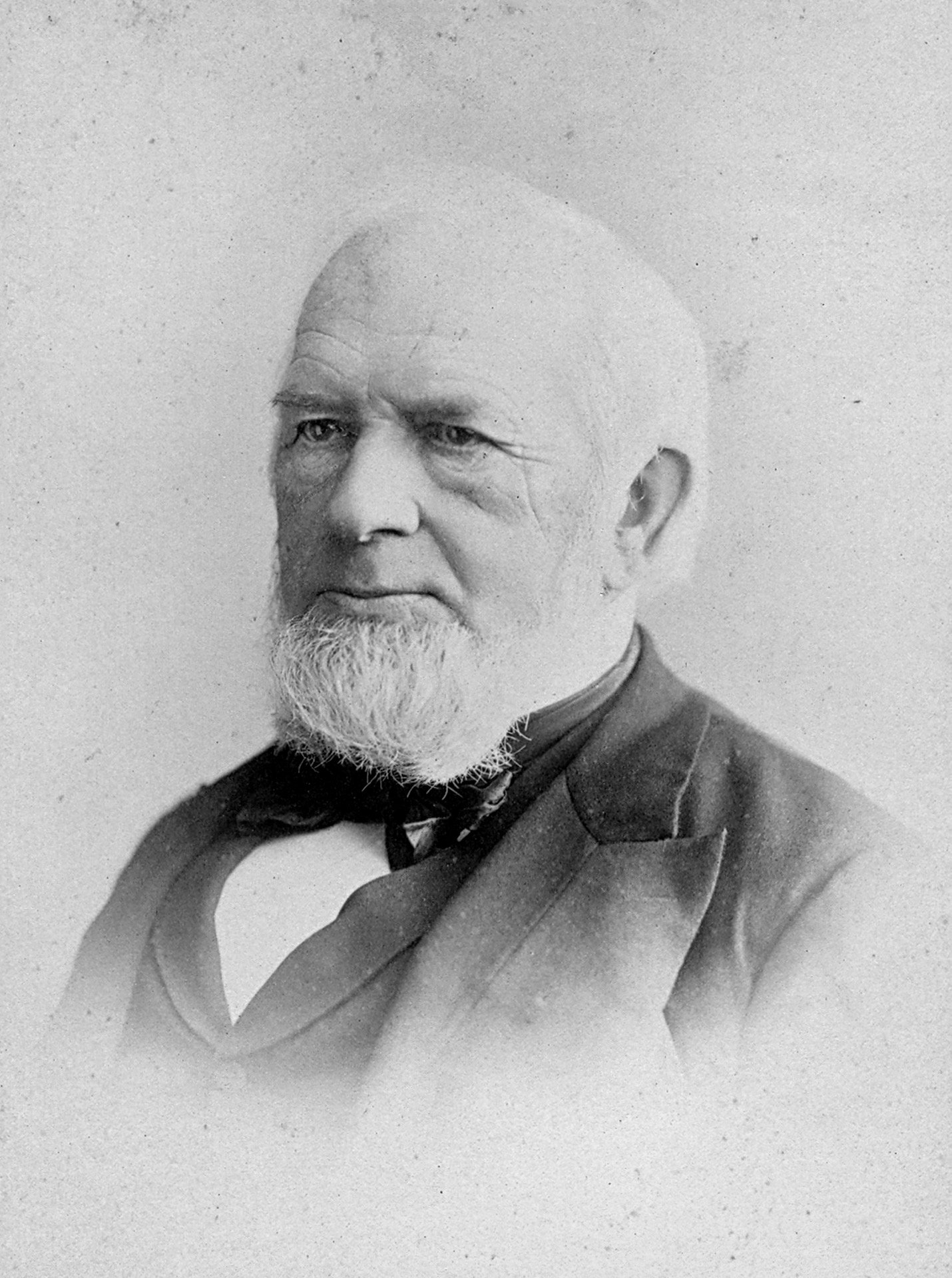
    Black and white portrait photograph shwoing the head and shoulders of an older white man with a full white beard.
    Joseph Osgood, minister from 1842-1898

    Next the congregation called Joseph Osgood, who began his ministry in 1842 at age twenty-six. He continued as the minister here for fifty-six years, until his death in 1898. This was the longest ministry we’ve ever had, or are ever likely to have. Osgood became intimately involved with the people in this congregation. He presided at nearly one thousand funerals. He officiated at nearly 500 weddings, in some cases performing weddings for two or three generations of the same family. During the first years of his ministry, there was no Catholic priest in town, so Osgood was also called upon to assist with funerals and baptisms among the growing Catholic population in town. (2)

    Part of the reason First Parish called Osgood was because of his prior experience as a school teacher. As has been true of many Unitarian congregation, First Parish believed in public education, and they wanted a minister who could help them in that mission. In addition to serving as minister, Osgood devoted significant amounts of time to the Cohasset schools. He served on the Cohasset school committee for thirty years. He helped establish the first high school in town. He served as the superintendent of schools for twelve years; this was a duty of which he later said, “I felt that I had hardly strength to perform or bear.” (3) He served for fifty years on the Board of Trustees of Derby Academy in Hingham. Osgood’s enduring legacy in Cohasset is his work in the schools, and there is still an elementary school in town named after him.

    Osgood was able to devote so much time to education, and to people of other religions, because First Parish was not as large as we might think. In the Norfolk County Manual and Yearbook for 1876, First Parish is reported as having just 50 members, with 68 children and teens in the Sunday school. (4) At this time, women were not allowed to vote on parish affairs, so if we include women there were probably about 100 members, roughly the same number of members we have today. Given the size of the congregation and the record of his activities, I’d guess that Osgood spent forty hours a week on his own congregation, and another forty hours a week on community activities. He later wrote that kept his health from breaking under the strain of overwork by working in his garden. (5) He also depended upon his wife, Ellen Sewall, to keep him fed and clothed and to raise their children.

    Twenty-five years into his ministry, Osgood wrote: “I have, time and again, felt so dissatisfied with my own work and with my own ministry, that I was ready to lay down the burden and relieve you of my presence; but your forbearance, your consideration, your willingness to overlook all my mistakes and blunders, and to take the will for the deed when I have said and done things which I should not perhaps have deliberately said and sone, have tended very much to preserve this connection.” (6) In spite of his extraordinary accomplishments, Osgood acknowledged his mistakes and remained modest about his own abilities. The congregation for its part was flexible in its expectations, and supported Osgood when he needed support. The relationship between congregation and minister was founded on mutual respect and trust .

    Late in life, Osgood began to slow down. First Parish historian Gilbert Tower wrote, “In 1895 [First Parish] was in a weak condition. In his old age, Dr. Osgood had been unable put much life into it.” The congregation hired a young minister named William Roswell Cole to serve as assistant to Osgood. Cole arrived in 1896, and when Osgood died two years later, Cole became the sole minister. Gilbert Tower continues, “Mr. Cole succeeded in starting new projects and fresh ideas so that good health, at least, if not prosperity, was restored to the Parish.” (7)
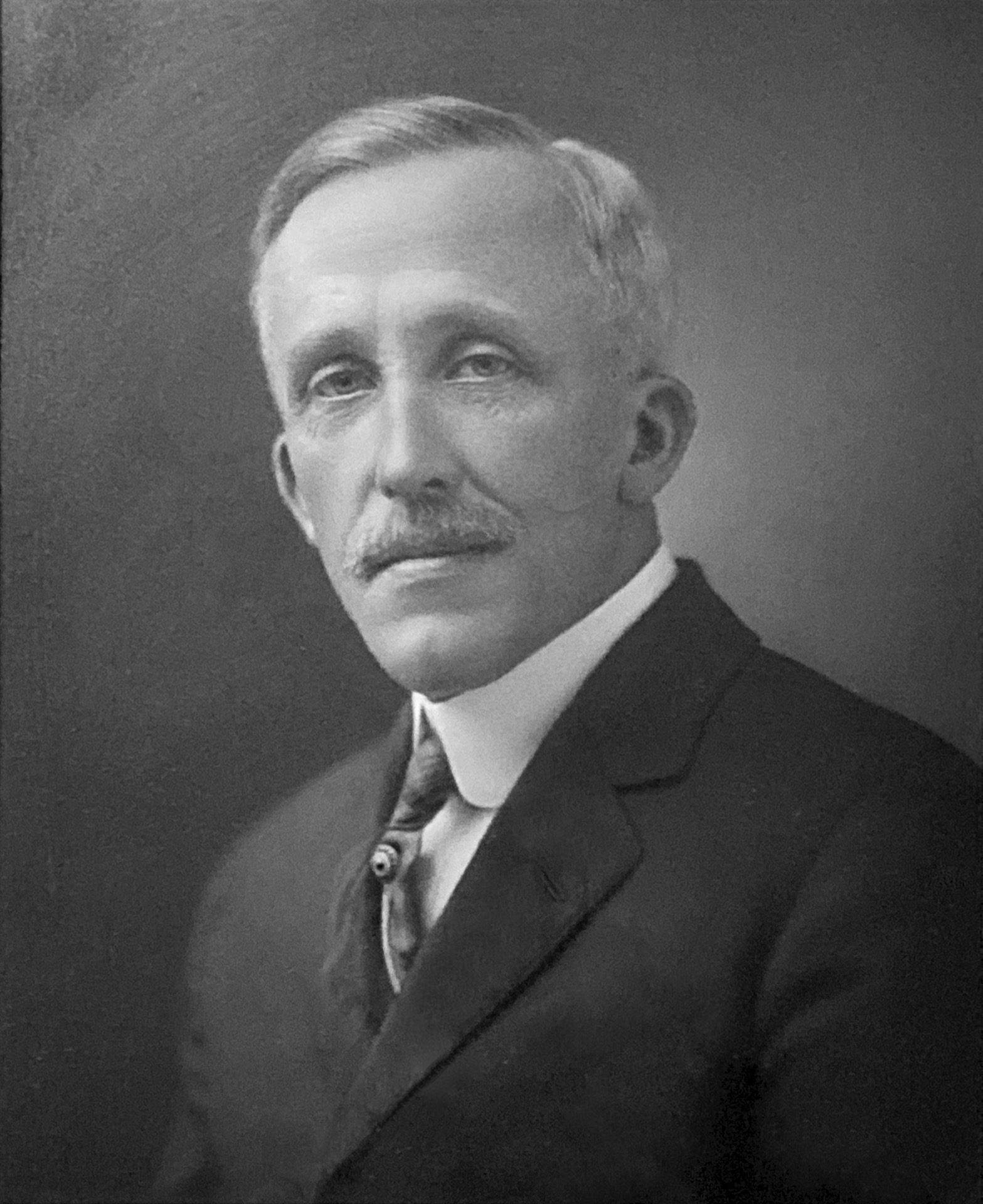
    Head and shoulders portrait of a white man with grey hair and a moustache.
    William Roswell Cole, minister from 1896-1919

    It is tempting to to agree with Gilbert Tower that William Cole was the one who revitalized the congregation. But I think the truth is more complicated than that. First, the Panic of 1893, a serious economic depression that lasted from 1893 to 1897, caused many Unitarian congregations to struggle. No doubt Cole deserves some credit for reviving First Parish, but the improved economic situation after 1897 also deserves credit. Second, Gilbert Tower credits Cole with starting lots of new programs. But in the period from 1890 to the First World War, most Unitarian congregations were adding new programs: local branches of the Women’s Alliance, the Laymen’s League, the Young People’s Religious Union, and so on. This new programmatic approach, a major change in the life of Unitarian congregations, was a widespread social trend, not the innovation of one minister.

    Cole’s leadership style was a good match for the congregation. In Gilbert Tower’s words, Cole was a “quiet, unassuming man, friendly and easy in manner with everyone.” The minister’s unassuming leadership style, probably similar to Osgood’s leadership style, allowed Cole to work smoothly with strong lay leaders.
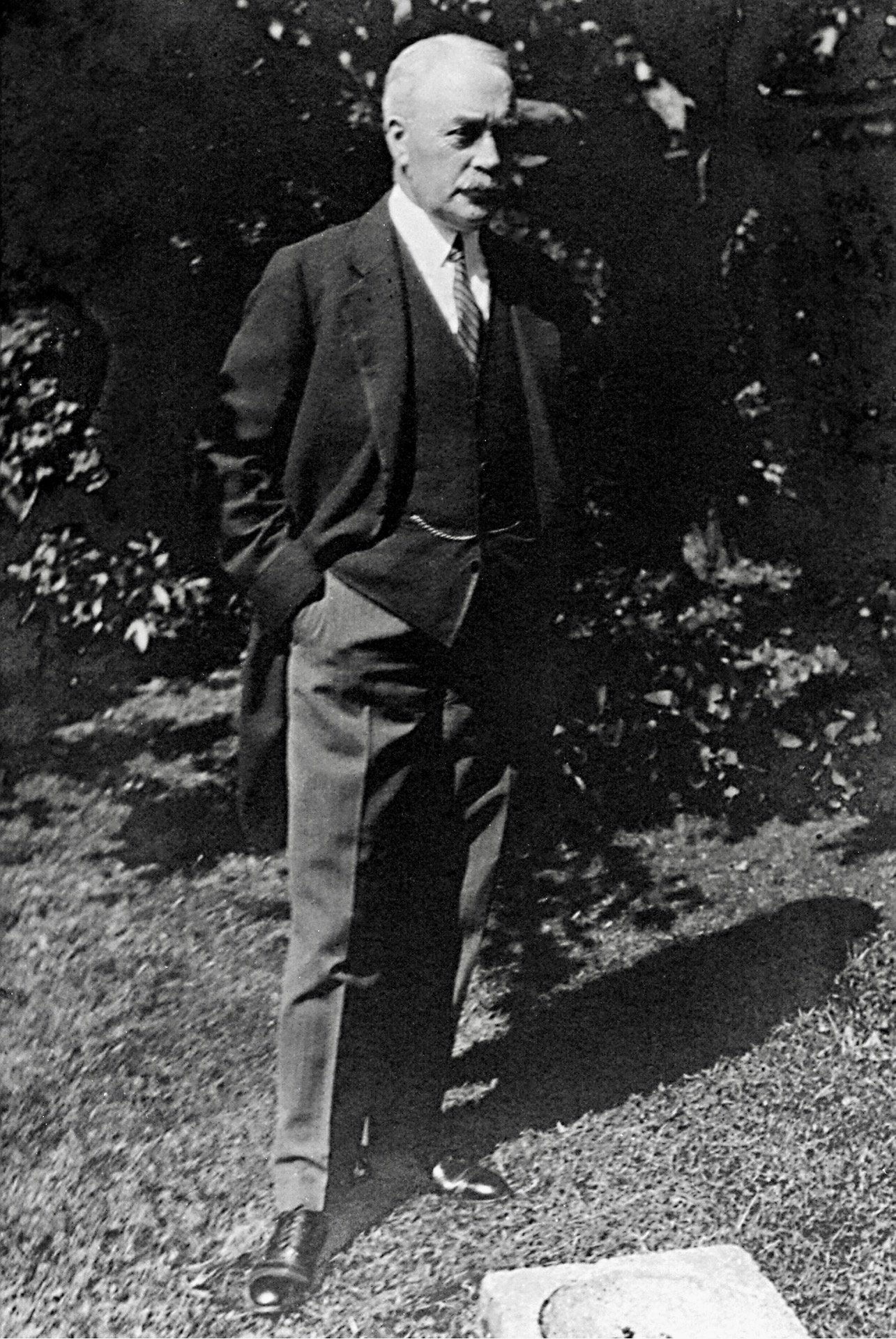
    A white man with white hair and a moustache, standing outdoors in a garden.
    Frederic John Gauld, minister from 1922-1937

    Cole died very suddenly of a coronary embolism on August 21, 1919, at age 54. The congregation called a young minister named George Archibald Mark, who resigned after two years because “First Parish was not active enough for him.” (8) The congregation then called Frederic John Gauld, who served here from 1922 to 1937. First Parish historian Gilbert Tower accused Gauld of being lackluster minister: “Mr. Gauld was a wonderful man and he was very much loved. However he did not accomplish much in building up the parish membership which would have been a real index of success.” (9) But Tower’s assessment of Gauld is unfair. Most of Gauld’s ministry took place during the Great Depression. Perhaps one third of all Unitarian churches closed their doors during the Depression, including many churches in small towns like Cohasset. It’s not fair to blame Gauld for the effects of widespread social forces. Instead, we should credit Gauld and the lay leaders for managing to keep First Parish alive during the Depression.

    Gauld retired in 1938, and was followed by Harry C. Meserve, a talented young minister. After four years, Meserve moved on to a larger, better-paying congregation. He was followed by Walter Pedersen, who within a year needed to take a part-time job at the Hingham shipyards to make ends meet. The congregation did not approve of this, and Pedersen resigned. Then the congregation called Roscoe Trueblood, who came to Cohasset in 1945. He was well-liked, but left after four years for a better-paying position in Seattle.

    That made three ministers in eight years who left First Parish because of low pay. It turns out that Frederic Gauld’s wife had an independent income, so the congregation was able to get away with paying a small salary during the Depression. But the ministers who followed Gauld were neither willing nor able to accept low pay. Inadequate compensation had an adverse effect on the relationship between minister and congregation.

    After Roscoe Trueblood left, First Parish called Gaston Marcel Carrier, a talented young minister from Montreal. When Carrier asked for a substantial raise in salary in his second year, the congregation refused. The congregation wanted Roscoe Trueblood to return, and took advantage of this request for a decent salary to get rid of Carrier. I imagine there was also prejudice against a French Canadian, a common bias in New England through the twentieth century. Carrier left First Parish and went on to a brilliant career as minister in Burlington, Vermont.
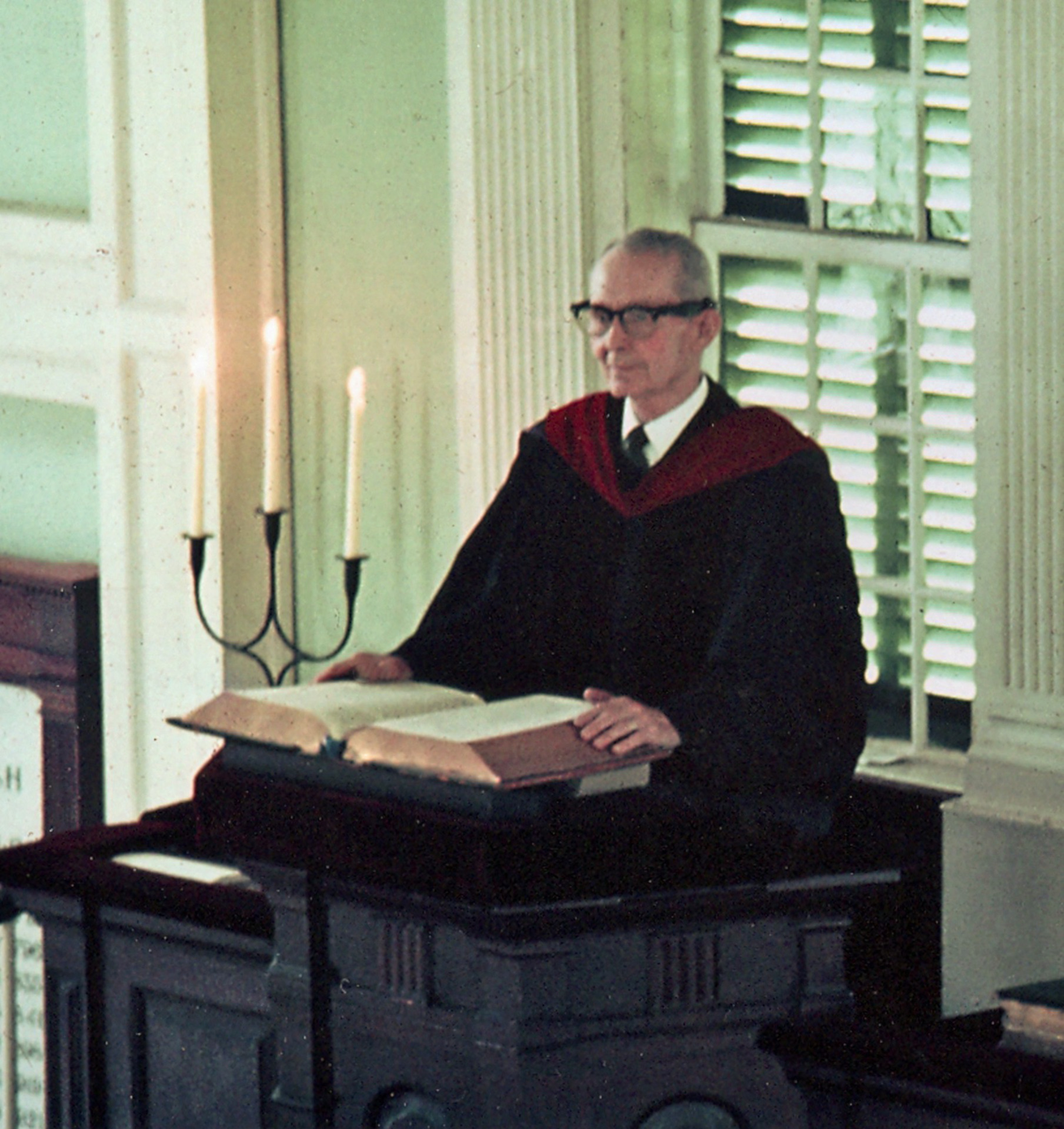
    White man in a black preaching gown standing in the pulpit of the First Parish Meeting House.
    Roscoe Edward Trueblood, minister from 1945-1949 and 1951-1968

    After Carrier’s departure, a handful of big donors pledged gave money to increase the minister’s salary sufficiently to lure Roscoe Trueblood back to Cohasset in 1951. Together, Trueblood and the congregation were able to reap the benefits of post-war demographics. The 1950s was the decade of church-going. It was also the decade of the Baby Boom. Unitarian churches across the United States grew substantially during this time, and First Parish was no exception. While neither the congregation nor Roscoe Trueblood can take credit for the demographic trends that led to growth, both minister and congregation made First Parish a healthy, happy, and welcoming place.

    By all accounts, Roscoe Trueblood was quite a person: a good speaker, a good leader, and a good human being. The congregation was a good place to be during this era: friendly, welcoming to children, full of activity. (11) First Parish reached its highest membership level ever in 1969, the year Trueblood retired — 360 members. (10)
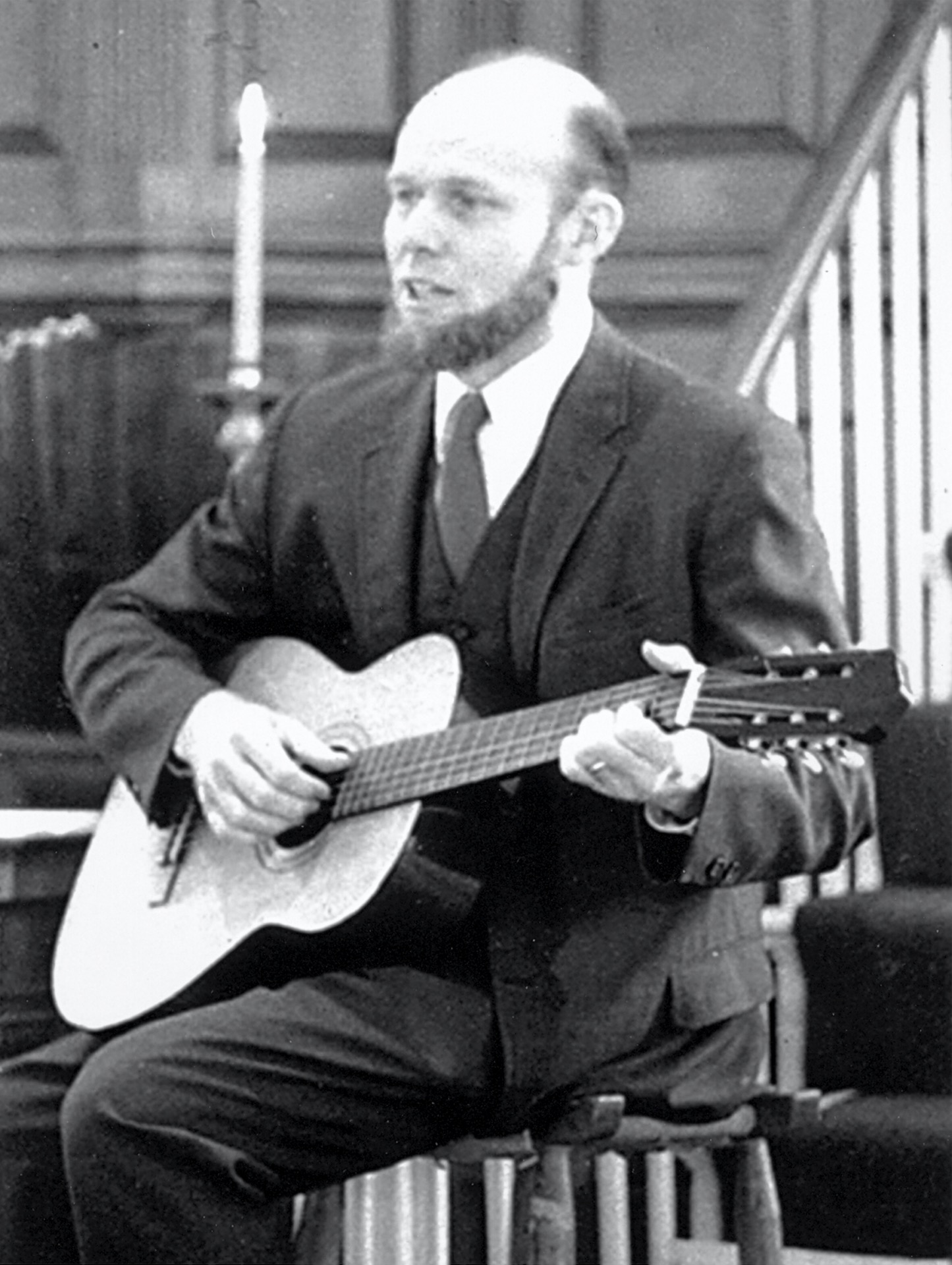
    White man with a chin beard, wearing a formal business suit, sitting on a stool in front of the pulpit of the First Parish Meeting House, and playing a guitar.
    Edward Trivett Atkinson, minister from 1969-1995

    After Roscoe Trueblood’s retirement in 1968, the congregation called Ed Atkinson. Atkinson joined First Parish at a time when people stopped going to church, and congregations across the country began to shrink in size. Some Unitarian Universalist congregations lost three quarters of their members in the 1970s. But not First Parish: there was a decline in membership, but it was slow and gradual. Part of the credit for our success at navigating the troubled times of the 1970s must go to Ed Atkinson. He introduced some big changes. He climbed down out of the high pulpit, and began preaching from the floor. He led an effort to make this building accessible to wheelchairs. He connected with the younger generation by playing his guitar in services. During his tenure, we first began lighting a flaming chalice during Sunday services.

    The congregation didn’t always agree with Atkinson’s innovations, but the relationships between congregation and minister remained one of mutual trust and respect. So his sudden death of a heart attack at age 60, on July 24, 1995, was a huge blow to the congregation. (12)

    Ed Atkinson was followed by two talented interim ministers, Chuck Gaines and Jenny Rankin. This was the first time First Parish had had interim ministers. Interim ministry emerged as a specialty in the 1970s, to help congregations come to terms with the ending of one ministry, and prepare for a new minister to arrive. Jenny Rankin was the very first woman to serve as minister here, and she helped the congregation to believe that a woman could succeed as a minister here.

    In 1997, First Parish called one of the most talented Unitarian Universalist ministers of the 1990s, Elizabeth Tarbox. She was well known in Unitarian Universalist circles for her haunting and compelling writing. But within a year she was diagnosed with cancer, decided not to seek treatment, and died in 1999, aged 55. This was a second huge blow to our congregation, following close upon the death of Ed Atkinson. (13)

    During this troubled time, the congregation found a new minister, Jennifer Justice. A charismatic and colorful figure, Jennifer Justice had a background in theatre. Her ministry was not a success, and the congregation dismissed her within two years. First Parish was wise to dismiss her so quickly, but her unethical conduct was yet another blow to our congregation. A few years later, she was forced to resign from ministerial fellowship in the face of a denominational investigation into ethical violations relating to finances. (14)

    After two years of interim ministry, the congregation called Jan Carlson-Bull, who served here from 2004 to 2010. Jan and First Parish had six reasonably productive years together. Of particular importance, Jan introduced the Circle Ministry program here, which continues to this day. But eventually tension arose between between minister and congregation. This should be no surprise. Think about what this congregation experienced in the ten years before Jan arrived: Ed Atkinson died suddenly; Elizabeth Tarbox died suddenly; Jennifer Justice had to be dismissed suddenly. Events like these strain the relationship of congregation and minister. It is to the credit of both Jan and First Parish that her ministry continued for six productive years. Jan left in 2010, and went on to a long and successful ministry in Connecticut. (15)

    After a two year interim ministry with Anita Farber-Robertson, our congregation called Jill Cowie, a new minister just out of theological school. In many ways, Jill was just what this congregation needed: relatively young, with school-age children, dynamic. However, while Jill related well to some people in the congregation, there were others who did not relate well to her. This kind of divisiveness in a congregation is actually a fairly common pattern in congregations who have had unethical ministers in the past. It also appears that Jill had a different vision for her ministry than some in the congregation. She resigned in 2016, and went on to the Unitarian Universalist church in Harvard, Massachusetts. Recently she decided to leave ministry to become a social worker. (16)

    In the twenty-one years from 1995 to 2016, First Parish was served by eleven ministers, two of whom died suddenly and one of whom had to be dismissed. Yet in spite of that run of bad luck, the congregation remained surprisingly healthy; for which I give credit to talented lay leaders who held kept things going in spite of frequent ministerial turnover.

    Bob McKetchnie arrived as minister in 2016. Bob’s skills and personality proved to be a good match for the congregation, and the congregation started to bounce back. In March of 2020, the congregation was about to begin a major push for new members. Then the COVID pandemic hit. Yet even though the pandemic was another piece of bad luck, because of good relationships between the minister and the congregation, First Parish weathered the pandemic in remarkably good shape.

    As we reflect on the relationships between minister and congregation in the past two centuries, this morning’s reading, the poem by Roscoe Trueblood:

    “The minister should lead,” she said,
    This she chose to say
    Thinking if and when he led
    That he would go her way.
    But later, when they differed wide,
    On points she would not lose,
    “The minister should wait,” she cried,
    “And let the people choose.” (17)

    The relationship between minister and congregation requires constant negotiation. We cannot say definitively that the minister should lead, and the congregation follow. Nor can we say definitively that the congregation should lead, and the minister follow. Sometimes the minister is the leader, and sometimes people in the congregation are the leaders. Because this relationship requires constant negotiation, it helps when the minister and individuals in the congregation are — to borrow from Gilbert Tower’s description of William Cole — quiet and unassuming, friendly and easy in manner with everyone.

    It also helps if both the minister and the congregation have a shared vision for what they want to do together. When minister and congregation share a vision, then the words of Joseph Osgood apply: there will be forbearance and consideration, there will be a willingness by all concerned to overlook any mistakes and blunders, and “to take the will for the deed” when we have said and done things which we should not perhaps have deliberately said and done. As with any human relationship, a shared vision allows people to live and work together peaceably in spite of our human failings; and a shared vision contributes to strengthening the connection between people so that we may together strive towards goodness and truth.

    Notes

    General information is taken from the following histories:
    Cole, William R. “One Hundred Fifty Years of the Old Meeting House in Cohasset, Mass., 1747-1847.” Boston George Ellis, 1897.
    Osgood, Joseph. “A Discourse Delivered in Cohasset … on the 25th Anniversary of His Ordination as Pastor.” Boston: Alfred Mudge & Son, 1884.
    Tower, Gilbert. Unpublished manuscript, 1956.

    (1) E. Q. S., “Notice of the Late Rev. H. G. O. Phipps,” Monthly Miscellany of Religion and Letters (Boston: William Crosby and Company, 1842), Feb., 1842, Vol. VI No. 7, p. 92 ff.
    (2) “Address of Rev. Joseph Osgood,” Celebration of the Fiftieth Anniversary of the Ordination of Rev. Jospeh Osgood, D.D. (Cohasset: privately printed, 1892).
    (3) Joseph Osgood, “Discourse.”
    (4) “Twenty-fifth Anniversary of the Wedding of Rev. and Mrs. Joseph Osgood, Cohasset, Thursday, May 20, 1869” (Boston: Alfred Mudge & Son, Printers, 1869), p. 14.
    (4) Henry O. Hildreth, compiler, Norfolk County Manual and Year Book for 1876 (Dedham, Mass., 1877), p. 54.
    (5) Tower manuscript
    (6) Joseph Osgood, “Discourse.”
    (7) Tower manuscript, p. 101.
    (8) Tower manuscript, p. 118.
    (9) Tower manuscript, p. 122.
    (10) Membership as recorded in the annual Directories of the Unitarian Universalist Association.
    (11) Information about Roscoe Trueblood from First Parish archives, and reminiscences of First Parish members.
    (12) Information about Ed Atkinson from First Parish archives, and reminiscences of First Parish members.
    (13) Information about Elizabeth Tarbox and interim ministers from First Parish archives, and reminiscences of First Parish members.
    (14) Ministerial Fellowship Committee of the Unitarian Universalist Association, “UUA Clergy Removed or Resigned from Fellowship with Completed or Pending Misconduct Investigations,” www.uua.org/uuagovernance/committees/mfc/clergy-misconduct-investigations accessed November 21, 2022.
    (15) Information about Jan Carlson-Bull and interim ministers from First Parish archives, and reminiscences of First Parish members.
    (16) Information about Jill Cowie from First Parish archives, reminiscences of First Parish members, and other sources.
    (17) Roscoe E. Trueblood, I Was Alive and Glad (Cohasset, Mass.: First Parish, 1969).

    (more…)
  • Thanksgiving

    Homily copyright (c) 2022 Dan Harper. Delivered to First Parish in Cohasset. The homily text may contain typographical errors.

    [This homily followed a play, which showed how many myths of Thanksgiving simply aren’t true.]

    For many of us, Thanksgiving is our favorite holiday. It hasn’t gotten too commercial. You don’t have to do anything except eat. And it’s all about giving thanks. What’s not to like? — Which means it can be hard to hear that some of the things we thought we knew about Thanksgiving aren’t exactly true.

    I think the most depressing thing for me is that after that first harvest celebration in the autumn of 1621, that one day when the Native people and the European colonists sat together in peace, the European colonists went back to treating the Native peoples badly. Just two years later, European colonists who had settled on the Fore River in Weymouth, not too far from here, carried out the massacre of Wessagusset, killing seven native people for no good reason. And in the years to follow, people of European descent went on to sell Native men into slavery, break treaties, steal Native land — a centuries-long litany of abuse that continues to this day. It’s fine for us to remember that moment of racial harmony on an autumn day in 1621, but we must also remember the other four centuries of history of the Native people of Massachusetts.

    And I find it disconcerting to learn that our modern celebration of Thanksgiving is really just a fictional invention of Sarah Hale in the mid-nineteenth century. A big dinner with a roast turkey wasn’t central to Thanksgiving until Sarah Hale made it so. In fact, Thanksgiving wasn’t even a national holiday until Sarah Hale started petitioning the president of the United States to make it a holiday. Thanksgiving as we know it today really has no historical connection to the Pilgrims.

    While all this may sounds depressing and disorienting, I feel this actually frees us Unitarian Universalists to reinterpret Thanksgiving in some positive ways. Here are some of my ideas:

    First, turkey becomes optional. If you like turkey, go ahead and have turkey. But if you’re vegan or vegetarian, or if you’re cutting down on eating meat to lower your carbon footprint, then there’s no reason to serve turkey. Or if you just don’t like turkey all that much, then don’t cook something you don’t like.

    Second, we can be more realistic about what happened to Native peoples in southeastern Massachusetts. At some level, we all knew that the old myth of Thanksgiving whitewashed Native history. We all knew that old myth was at least misguided, at worst an outright lie. It’s a relief to be able to let go of a myth that really isn’t true. After all, isn’t that what Unitarian Universalism is all about? We try to find the truth, and not remain mired in misleading myths.

    Third, all this means we can start creating a new kind of Thanksgiving. Instead of following the lead of Sarah Hale, we can create a Thanksgiving that’s more in tune with our hopes and dreams and values. We can keep those Thanksgiving rituals that work well for us, and let go of whatever doesn’t work well for us. For myself, I’d like to keep gathering together with family and friends to share a meal, but I don’t feel a need to cook a turkey any more.

    Going beyond the Thanksgiving rituals, we might also reconsider the purpose of Thanksgiving. Which means it’s OK to revise the old myth of Thanksgiving, and tell what really happened to the Native peoples. And as we revise that old myth, we can put the emphasis back where it belongs: on giving thanks. We can give thanks in spite of everything that’s going wrong in the world. Last Thanksgiving, I did that for myself by rereading the poem “Catalog of Unabashed Gratitude” by Ross Gay. I’m going to do that again this year, but this time in public — at this afternoon’s community Thanksgiving celebration, I’ll be reading an excerpt from Ross Gay’s “Catalog of Unabashed Gratitude.” I especially like Ross Gay’s approach to gratitude, because he gives thanks in spite of his father’s death, in spite of his friend’s drug addiction, in spite of all that can go wrong in this world. Just as I’ll be giving thanks this year in spite of serious health problems in my extended family.

    All this makes Thanksgiving simple. We gather together, with friends or family or chosen family — and if prefer your alone time, you can even gather together with just yourself. We gather together, and we give thanks. We give thanks in spite of all that’s wrong with the world. We give thanks for those little moments of joy that burst into our lives, often when we least expect them. We give thanks for whatever is good, for whatever is true.

    And that’s all we have to do. Gather together. Give thanks. Anything else we choose to do is icing on the cake. So go ahead and cook that elaborate turkey dinner, with five different kinds of pie, and thirteen side dishes. Go ahead and set up a table that will seat twenty-three, and bring out the fancy dishes and flatware, and create elaborate centerpieces. Go ahead, just so long as you remember to gather together and give thanks. In my household, we might just opt for a Thanksgiving picnic at the beach; that’s what we did for the last thirteen years in California, and it might be warm enough here in Massachusetts this year. It doesn’t matter where you gather, as long as you gather together and give thanks.

    May your Thanksgiving be what you want it to be. May your Thanksgiving be as elaborate as you want, as long as you remember the two simple things at its core: to gather together, and to give thanks.

  • Calming the Quarrel

    Reading

    The reading this morning is rather long, but I think you’ll find it engaging. It is a Buddhist story, Jataka tale no. 33, translated by Viggo Fausboll, and published in 1873 in the Journal of the Royal Asiatic Society. I have lightly edited and modernized the language.

    “Living in harmony.” The Master related this story, while living in the grove of banyan-trees near Kapilavatthu, in reference to a dispute he had just witnessed. The Master, admonishing his royal relations, said: ‘Dispute between relatives is not becoming. Even animals which had conquered their enemies while living in concord, when quarreling suffered great destruction.’ Then his royal relatives called upon him to tell this story.

    Once upon a time, when Brahmadatta was king of Benares, the Bodhisattva was born a quail. He lived in the wood, with a following of many thousands of quails.

    One day a quail-hunter went their dwelling-place and counterfeited the cry of quails. When the hunter saw that they had assembled, he threw his net over them, and after drawing it together, he filled his basket. He went to his house, sold the quails, and thus had his livelihood with that money.

    The Bodhisattva said to the quails, “This quail-hunter destroys our kin. But I know a means by which he will not be able to catch us. As soon as he throws the net over us, each of you put your head into one mesh of the net. Then fly together and lift the net and carry it to a thorn-bush. This being done, we shall escape each from under his place.”

    Saying, “Very good!” they all promised to do so.

    The next day when the quail-hunter threw the net over them, they lifted the net together, and having cast it on a thorn-bush, they themselves fled away from underneath. It took so long for the fowler to extricate the net from the thorn-bush that it became dark, and he went away empty-handed.

    Day after day, the quails continued in the same way. Each day the quail-hunter went to his house empty-handed. His wife grew angry, saying, “You come empty-handed every day. I think you are keeping another household.”

    The fowler said, “Dear, I have no other household. Those quails live in harmony, and as soon as I throw my net on them, they fly away with it and cast it on a thorn-bush, and so escape. But fear not, they will not always live in harmony. Thou must not grieve. When they fall into disunion, I will take them all. Then I shall come and make your face smile.” Then he repeated this short poem:

    While they agree, the birds go
    and carry off the net;
    but when they quarrel
    they will fall into my power.

    Not long thereafter, one quail, descending on the pasture-ground, unawares trod on the head of another. The other was angry, and said, “Who trod on my head?” The first said, “Be not angry, I trod upon you unawares.” Yet the first quail was angry. They began to quarrel. Before long, one said scornfully, “It is thou, I suppose, that liftest the net all by yourself.”

    Hearing them quarreling, the Bodhisatta thought, “For those who quarrel there is no safety. Now they will not lift the net together. Then they will incur great destruction, and the quail-hutner will capture them. I cannot stay in this place any longer.” So he gathered together his close followers and flew away.

    Soon the quail-hunter returned. Once again, he counterfeited the cry of the quails, and when they had assembled he threw the net over them. Then one quail said mockingly, “They say that last time while lifting the net, the feathers on thy head fell off. Now this time, lift!” Another said, “While thou wert lifting the net, thy wings on both sides dropped. Now you lift.”

    While they quarreled thus, the fowler threw his net over them, gathered them together, and filled his basket. He went home, showed all the quails to his wife, and made her smile.

    Having finished telling this story, the Master said, “Thus, O King! dispute among kinfolk is the root of destruction.” Having given this moral instruction, he completed the story by saying: “At that time the unwise quail was Devadatta, while I was the wise quail.”

    Sermon: “Calming the Quarrel”

    The reading this morning is one of the Jataka tales. The Jataka tales are ostensibly stories about one of the Buddha’s previous lives. At the same time, they are stories that often help us reflect on the problems of day to day life.

    The Jataka tales typically start with a brief description of a problem faced by Buddha’s followers. The problem reminds Buddha of one of his previous lives — for, being an enlightened being he can remember all of his five hundred or so previous lives. The Buddha tells the story of this previous life, and concludes by drawing a moral to instruct his followers in how to live a better life. So there’s a framing story that presents an opening problem, a story told by Buddha, and a conclusion of the framing story, with a closing moral.

    This reading this morning was Jataka tale number 33, the Sammodamāna-Jātaka. You have probably heard it before, in some form or another, for it is one of the best-known stories in the South Asian cultural legacy. It’s a simple story, the kind of story you tell to your children to keep siblings from fighting with one another. Although perhaps we hope that children don’t feel the full horror of the ending of the story. When the quails quarrel, the quail-hunter captures them, and crushes them in a basket, where not doubt they panic and trod on one another’s heads and smother one another, until they are pulled out and sold for someone’s dinner. In short, as a result of their quarreling, they die a miserable death.

    This story reminds me of the current situation in the United States. We face problems that can kill some of us. Those problems include things like a decrease in the number of decent jobs, an opioid crisis, racial injustice, a looming environmental disaster, and conflict with aggressive nations like Russia and North Korea. We have been told — we know in our hearts — that if we could just work together, we could address these problems. If we could keep our common goals in the forefront of our minds, we could work together. Only if we work together can we extricate ourselves from the danger.

    So (to paraphrase a catchphrase made popular in 1896 by Christian Socialist Charles Sheldon), when we are faced with overwhelming social problems, we first ask the question: What would Buddha do? Then we ask the question: Can we follow the Buddha’s lead?

    What does Buddha do in the story of the quails? He first tries persuasion and leadership. He gently explains the problem to the other quails: the reason so many of them are disappearing is that a quail-hunter is using a net to catch them. He then explains what they can do to avoid the problem: they can fly up together, lifting the net. And finally he persuades them to try.

    Can we follow the Buddha’s lead? At first glance, it looks like we can follow the Buddha’s lead. We face more complex problems than the quails faced. We face — among other things — loss of jobs, an opioid crisis, racial injustice, environmental disaster, and international conflict. But if we worked together, we could address these problems.

    On the other hand, we also know that not everyone is in complete agreement with the nature of the problems facing us. The quails in the story seemed to be in agreement about the problem facing them. But we today do not agree about everything. For example, some people in the United States would add same-sex marriage to the list of problems facing us; while we Unitarian Universalists generally support same sex marriage. So at second glance, it looks like we cannot follow the Buddha’s lead.

    But if we look again, I think we can indeed follow the Buddha’s lead. We do not have to agree on everything in order to work together. As an example of what I mean, I can point to the last two Unitarian Universalist congregations I served. Both those congregations did a lot to fight homelessness. Both of those Unitarian Universalist congregations had to team up with other congregations in order to carry on an effective fight against homelessness, and some of those other congregations we worked with were bitterly opposed to same sex marriage. But we managed to put aside our differences to work together towards a common goal.

    And I suspect the story of the quails glosses over some of the problems the Buddha faced to convince the other quails to work together. The story makes it sound easy, but I’m willing to bet that the Buddhas had to do a lot of persuading and explaining to get the quails to work together.

    The real miracle in this story is that the Buddha did all that persuading and explaining without losing his temper, without losing his cool. He managed to not get into any fights with the other quails. He managed to stay calm and centered. And remember too that at this point he wasn’t yet the Buddha; he had not yet achieved Enlightenment. In that incarnation, he was merely a Boddhisatva, that is, someone who has the potential to reach Enlightenment. The progressive Buddhists I know believe we all have the potential to achieve Enlightenment, meaning each of us (in that specific sense) is a Boddhisatva.

    In other words, we — you and I — have the capability to do what the Buddha did in his incarnation as a quail. We have the capability to persuade and explain how to work together for the common good. And to do that, we will have to be like the Buddha, and remain calm and centered.

    That’s the hard part, isn’t it? I don’t know about you, but I’m pretty good at persuading and explaining. But in order to be good at explaining and persuading, you have to stay calm and centered. I found this out when I was selling building materials. I quickly learned that if you came across as desperate, you were likely to lose the sale. Similarly, if the Buddha had come across as desperate, half the quails would just stop listening to him. He cultivated a state of being where he was both fully aware of the danger — it was, after all, a matter of life and death — and he did not let the danger ruffle the calm of his soul.

    And this, it seems to me, is one of the big problems we face in the United States today. We are letting danger ruffle the calm of our souls. We go from passive to frantic very quickly. When we become frantic, we are no longer effective at either explaining or persuading.

    So how can we stay calm and centered? This is something that religion is actually quite useful for. In fact, helping people stay calm and centered is one of the default settings in just about any organized religion. And most organized religions offer a number of different techniques we can use to stay calm and centered. We human beings are a diverse lot, and organized religions typically offer more than one path to being calm and centered. Buddhism, for example, encourages people to meditate, to study sacred texts, to chant, to gather together in community, to give offerings and alms, and Zen Buddhists even get to practice archery.

    Or, more to the point, take our own organized religion, Unitarian Universalism. In our worship service alone, we offer a diversity of paths: we can sit in community, we can sing, we can listen to music, we can share our joys and sorrows, we can listen to a sermon, we even have a short time of silence for those of us who need silence. Beyond Sunday morning worship, you can join a Circle Ministry group, you can go on a meditation retreat, you can do hands-on volunteering, you can lead worship yourself in the summer. These are all spiritual practices you can find in our congregation, practices that can help you get calm and centered.

    And I suspect the most important aspect of Unitarian Universalist spiritual practice, or indeed of any organized religion, is the communal aspect. Thich Nhat Hahn, one of the most interesting Buddhist thinkers of the past few decades, used the term “inter-being” to describe how we are linked to all beings. Thich Nhat Hahn said, “You cannot be by yourself alone, you have to inter-be with everything else.” (1) We Unitarian Universalists often use the phrase, “the interdependent web of existence,” which means much the same thing. (2)

    “You cannot be by yourself alone.” This is the most important part of learning how to be calm and centered. “You have to inter-be with everything else.” This is how the Buddha remained calm and centered in the story about the quails: he was always fully aware of how he was “inter-being” with all the other quails, and indeed with all existence.

    So in our spiritual practices, this is what we must always remain fully aware of: we are all part of each other; we all “inter-be.” It’s fairly easy to remember that when we gather for Sunday worship services. We mostly like one another, and while there are inevitably feuds and squabbles in every congregation, the bonds between us end to be stronger than the weak forces trying to pull us apart. So we gather for Sunday worship — or for Circle Ministry, or to volunteer, or for a mediation retreat — we gather together with people we more or less get along with, and that is the key to our spiritual practice. We remember what it is to get along with other people. We remember inter-being.

    The next step is to take that spiritual practice out into the wider world. When we hear something inflammatory on social media, we can remember that feeling of inter-being. Instead of lashing out, we remain calm and centered. Remaining calm and centered, we can stay focused on what’s really important: that we must work together if we’re going to get out of this mess we’re in. And so we can remember that we don’t need to react to that inflammatory social media post. When we don’t react to that social media post, that helps other to back down, so that they can return to being calm and centered. So it is that calmness can spread, and so it might be that we can learn to work together again.

    Not that this is an easy task. It’s hard to remember about inter-being. It’s hard to really and truly believe in the interdependent web of existence. That’s why we keep coming back to communities like this one; we all need constant reminders. Well, maybe not all of us. It does seem that there are a few special persons, like the Buddha, who don’t need constant reminders. The rest of us rely on each other, we rely on our gathered community, to help us stay calm and centered. And then we’re able to take that feeling of calm, that feeling of being centered, out into the world. May it be so: may we spread calm wherever we go in our lives; may we live our lives as if we are all interdependent.

    Notes

    (1) Dharma talk by Thich Nhat Hanh, 1998, “The Island of Self” http://www.purifymind.com/IslandSelf.htm This dharma talk was reprinted in a slightly different form in the book No Mud No Lotus: The Art of Transforming Suffering (Parallax Press). Available as a print book or ebook from Parallax Press or it can be borrowed online from the Internet Archive.

    (2) The phrase “interdependent web of existence” comes from theologian Bernard Loomer, who was affiliated with the Unitarian Unviersalists and the Presbyterians. Loomer used the phrase to describe what Jesus of Nazareth meant by the phrase “the Kingdom of Heaven.” One can also find parallels between the concepts of interdependence and intersubjectivity, and the Jewish Philopher Martin Buber’s book I and Thou. While all these concepts have distinct differences, arising in part out of the distinctly different religious traditions from whence they come, nevertheless the parallels are striking.