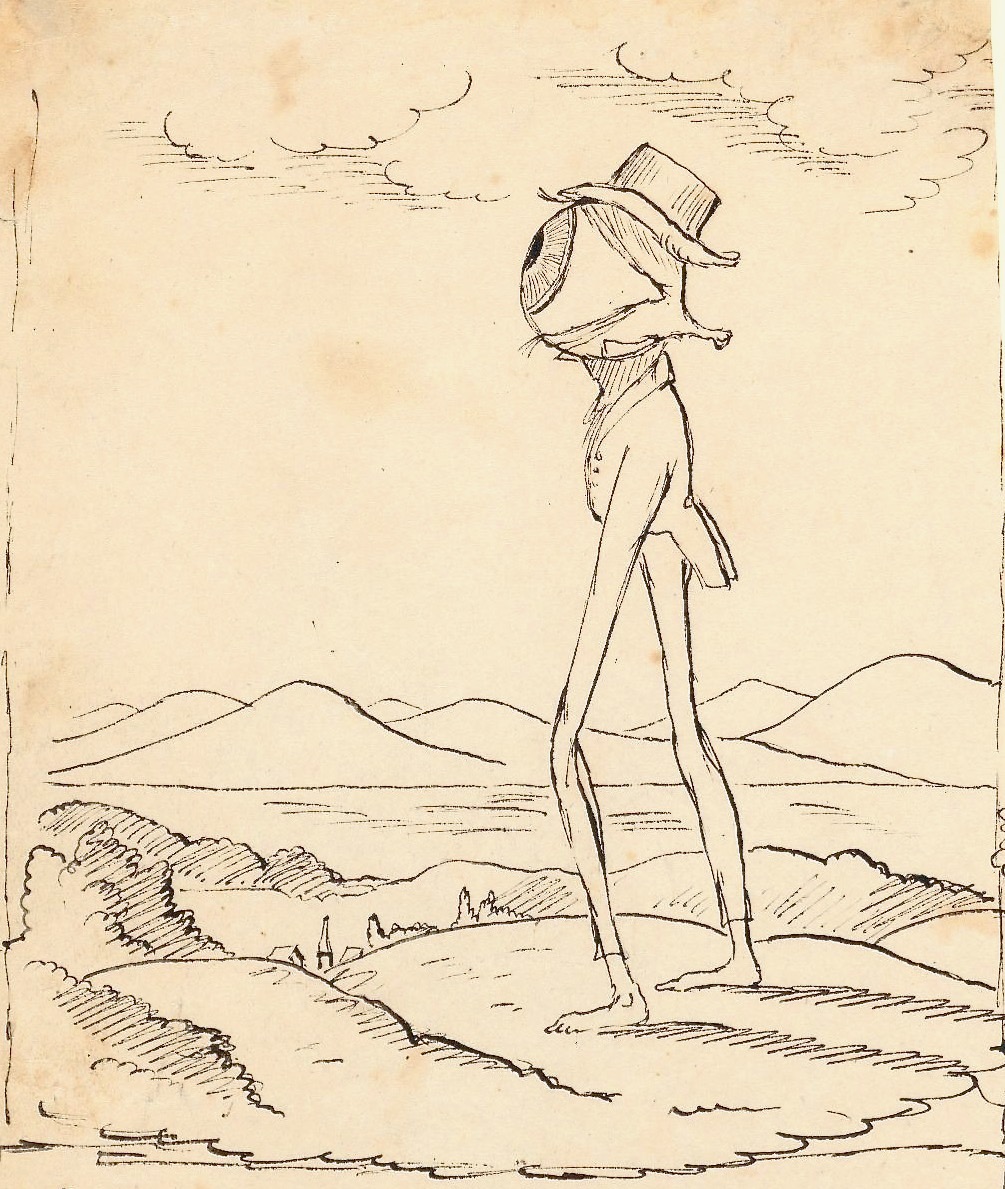
Tag: Ralph Waldo Emerson

  • What the World Needs Now

    Sermon copyright (c) 2023 Dan Harper. As delivered to First Parish in Cohasset. As usual, the sermon as delivered contained substantial improvisation.

    Readings

    The first reading was the poem “Perhaps the World Ends Here,” by Joy Harjo.

    The second reading was from the essay “Friendship” by Ralph Waldo Emerson.

    Gender-specific language has NOT been changed, since it may be central to Emerson’s argument.

    Every man alone is sincere. At the entrance of a second person, hypocrisy begins. We parry and fend the approach of our fellow-man by compliments, by gossip, by amusements, by affairs. We cover up our thought from him under a hundred folds. I knew a man, who, under a certain religious frenzy, cast off this drapery, and, omitting all compliment and commonplace, spoke to the conscience of every person he encountered, and that with great insight and beauty. At first he was resisted, and all men agreed he was mad. But persisting, as indeed he could not help doing, for some time in this course, he attained to the advantage of bringing every man of his acquaintance into true relations with him. No man would think of speaking falsely with him, or of putting him off with any chat of markets or reading-rooms. But every man was constrained by so much sincerity to the like plaindealing, and what love of nature, what poetry, what symbol of truth he had, he did certainly show him. But to most of us society shows not its face and eye, but its side and its back. To stand in true relations with men in a false age is worth a fit of insanity…. Almost every man we meet requires some civility, — requires to be humored; he has some fame, some talent, some whim of religion or philanthropy in his head that is not to be questioned, and which spoils all conversation with him.

    Sermon: “What the World Needs Now”

    Back in the 1960s, lyricist Hal David was working regularly with pop composer Burt Bachrach. One day, while commuting in to New York City to work with Bachrach, Hal David came up with the line, “What the world needs now is love, sweet love / It’s the only thing that there’s just too little of.” Then for more than a year, he couldn’t make any progress with the lyrics. He knew the song was talking to God, but he wasn’t quite sure what the song wanted to say to God.

    Now it would be easy to jump to conclusions about what Hal David meant by the word “God.” In this decade of the 2020s, it seems like the only people who talk about God are the right-wing Christians; as a result, when we hear the word “God,” we often think of their god, the stereotypical old white guy sitting on a cloud wearing long white robes and advocating for school prayer and the Ten Commandments displayed in every classroom. Hal David was most definitely not a right wing Christian. He was the child of Jewish immigrants who left Austria in the 1920s and settled in New York City, where they ran a delicatessen. On his website, when discussing this song, he left the interpretation of God wide open; it could, he said, be the “someone or something we call God.” In other words, not the narrow, sectarian notion of God so beloved by right-wing Christians, but an open expansive understanding that could include a range of ideas from a traditional Jewish God, all the way to “God” as a humanistic or even atheistic metaphor.

    In any case, Hal David finally figured out what he wanted to say to God: we don’t need some transcendent all-powerful God to create any more mountains, we don’t need any more oceans, we don’t even need any more rivers or meadows; what we really need is enough love to go around. Once the lyrics were done, Burt Bachrach wrote music for it, they both looked at the song, and decided it was “a flop.” (1) Burt Bachrach had hoped that Dionne Warwick, whom they felt was the singer who was best at performing their songs, would record it. But, as he later recalled, “Dionne rejected that song. She might have thought it was too preachy and I thought Dionne was probably right.” (2)

    Well, Dionne Warwick was right. The song is indeed too preachy. It begins with the chorus: “What the world needs now is love, sweet love / It’s the only thing there’s too little of.” How very mid-1960s. Not only is it too preachy, but it’s hard not to make fun of the lyrics. If we all had just a little more love, then all those 1960s problems would just go away — the racial prejudice, the Vietnam War, the assassinations — just a little more love, and they’d go away. Just another pop song about love, and the problems will all go away.

    In 1965, Jackie DeShannon finally recorded the song, and to the surprise of the songwriters, it became a top ten hit. Since then, it has been recorded and performed over and over again — by singers, by jazz groups, by hardcore punk rockers, by high school bands. It even got performed at the Democratic National Convention in 2016. The song still sounds preachy. It still sounds too much like a willfully naive and saccharine 1960s pop song. Most performances of it wind up sounding schlocky. But somehow the song has managed to strike a chord in our popular unconscious.

    There’s a good reason for that. Hal David was actually correct. The world actually does need more love. Maybe it wouldn’t solve all the world’s problems, but with all the hatred and violence in the world — yes, we do in fact need more love.

    Though we need to be careful what kind of love we’re talking about here. The English language uses the single word “love” to smush together several different concepts: romantic love, love between family members, love of oneself, love among good friends, love extended to strangers, a kind of selfless love that includes all beings, and so on. Even though this was a 1960s pop song, Hal David’s lyrics are not talking specifically about romantic love. Nor are Hal David’s lyrics talking specifically about love between family members, or love of oneself, though these might be a part of what the world needs now. The song is talking about a love that is “not just for some, but for everyone.” This is a love that is inclusive, that includes all of humankind.

    Back in the 1960s, there was an ol-fashioned term for this kind of love. They called it “brotherhood.” Brotherhood meant that people should extend idealized feelings of sibling love to all of humanity. Political conservatives like Hubert Humphrey referred to “brotherhood” in their speeches. Progressives like Martin Luther King, Jr., spoke of lifting “our nation from the quick sands of racial injustice to solid rock of brotherhood.” Indeed, some Unitarian Universalists in the 1960s, when asked what they believed, might have responded with the words of Unitarian minister James Freeman Clarke: the fatherhood of God, the brotherhood of man, the leadership of Jesus, salvation by character, and progress of mankind onward and upward forever. Brotherhood, the brotherhood of man — those old words and phrases aimed to capture the kind of love that the world needs now. If all men are truly my brothers, how could I do anything hateful to them? — brotherly love would prevent me from acting with hate.

    Of course, we now know the big problem with the word “brotherhood” — it ignores women. The second wave feminists pointed out this uncomfortable fact in the late 1960s. At first, some people pushed back against the second wave feminists saying that of course the word “brotherhood” included women and girls. In response, there were a great many women and girls who bluntly replied that they did in fact feel left out; oh, and by the way, if that’s the way things worked, then they were going to start using the word “sisterhood” to include all people. The men who liked the word “brotherhood” decided they didn’t want to substitute the word “sisterhood.” By the 1980s, we Unitarian Universalists had stopped using the term “brotherhood.”

    We really haven’t come up with another word to put in its place. I’ve been thinking about this recently. We know what we want to say: that all human beings are interdependent, we are all connected, we are all part of the same human race. What single word or short phrase might we use that communicates this rather complex idea? And it is a complex idea. Rabbi Hillel said: “That which is hateful to you, do not do to your fellow. That is the entire Torah, and the rest is commentary. Now go and study.” (3) Here is a very simple statement that gets at the same basic idea — If you wouldn’t do it to yourself, don’t do it to someone else — but then Rabbi Hillel ends by telling us to go study the Torah. It looks like a simple idea on the surface; then we need to study the rest of the Torah to help us fully understand this seemingly simple idea.

    It is this same seemingly simple idea that Emerson was getting at in his essay on friendship. Friendship, in Emerson’s essay, is the meeting of souls. Friendship is when we can be utterly genuine with another person, speaking directly to each other’s consciences; not speaking falsely, not falling into gossip or chit-chat, but a meeting of souls that is entirely honest and lacking in pretense. If we could be this genuine with others, if we could know another’s soul in this way, then we would naturally follow Rabbi Hillel’s maxim; if I fully encounter another’s soul, how could I possibly do anything hateful to them?

    But I’ve finally decided that Emerson is missing something in this essay in this essay. Yes, there are those intense friendships where you feel like your soul is directly meeting another person’s soul. Emerson writes, “to most of us, society shows not its face and eye, but its side and its back.” But I realized that many of my best and strongest relationships with other people have taken place, not face to face and eye to eye, but side by side.

    For example, I think about the times when I helped prepare a meal for a certain homeless shelter that aimed to provide not just food and warm housing, but human interaction as well. While we were cooking dinner at this homeless shelter, we spend quite a lot of time seeing the sides and backs of other people, because everyone was working; not just the volunteers, but some of the guests would also come help prepare the meal. Then, before COVID hit, an essential part of this homeless shelter was that the people cooking the meal would sit down with the guests and everyone would eat dinner together. When you’re eating a meal with other people, you don’t spend all your time staring at their faces and eyes. When you’re sitting at a table with half a dozen others, you’re going to see the faces of some people and the sides of others — and maybe the backs of other people who are sitting at other tables. And then when everyone joins in cleaning up together, once again, more often you’d be side-by-side than face to face. Emerson would say, this was society showing its side and back. But it seems to me that there was just as much real connection happening in that setting as in some intense one-on-one face-to-face conversation with a Transcendental friend.

    Emerson levels another criticism at society: “We parry and fend the approach of our fellow-man by compliments, by gossip, by amusements….” And in every homeless shelter I’ve volunteered at, in every communal living situation, in every family — there are always the little dramas going on, just as Emerson pointed out: people who are temporarily angry with each other, people who have stopped being angry with each other, and so on. But I think Emerson got it exactly wrong. Gossip, compliments, amusements: these are how we hold our fellow human beings at arm’s length; these are all ways that human communities can become more closely interwoven. When you think about it this way, Emerson’s use of gender-specific male language actually makes sense. In nineteenth century America, middle class and upper class men were able to have time to have intense face-to-face, one-on-one conversations with other men, because women took on much of the burden of housework. Since women were considered inferior to men, the kind of social interaction associated with women — small talk, exchanging news with others, keeping each other entertained while working around the kitchen table — these kinds of social interactions would also be considered inferior. Yet it is in these daily mundane tasks that the complex love of human communities becomes apparent.

    Which brings me to the first reading, the excerpt from the poem by Joy Harjo. “The world begins at a kitchen table,” she tells us, and then she lists all the other things that happen at kitchen tables: food is prepared and served; babies teethe; children are instructed in how to be human; we gossip; we dream; we laugh when we fall down; we pull ourselves back together again. Births happen next to the kitchen table, bodies are prepared for burial there. We sing there, we pray, we give thanks, we laugh, we cry, we eat “the last sweet bite.” Joy Harjo says the world begins and ends at the kitchen table.

    Emersonian friendship is a lovely ideal, especially for those who have the time for it. But I think it is the kitchen table kind of love that the world needs much more of. It begins with the love that comes when preparing food and eating it together. This love includes gossip too: not hateful hurtful gossip, not the mean gossip of junior high school, but gossip that is actually the exchange of everyday life-and-death matters: who is ill, who is caring for whom, who is well, who is falling in love with whom, all the little bits of news that come with the ordinary life of a human community. It is through this kind of talk around the kitchen table, this talk of ordinary life — who is dying; who just gave birth, who has grown up, who has become a wise elder — this is how children learn to become human. It is through these ordinary conversations that adults are reminded how to remain human, to remain humane. And sometimes the deepest conversations on becoming human happen when we are working side by side with our elders, with our children.

    Maybe this is what we should mean if we want to talk about the kind of love the world needs more of. I would not call this brotherhood, nor would I call this sisterhood; but it is a way of being human together. Like Emerson, I want to be genuine and to stand in true relation with other people; but in my own life I’ve found that is most likely to happen when human beings are cooking a meal together, when we are cleaning up together, when we are gossiping (in the best sense), when we are helping one other.

    Not that sitting around a kitchen table is going solve all the world’s problems. No more did “brotherhood” solve the problems of racism and war in the 1960s. No more did “sisterhood” solve the problems of sexism in the 1970s. But in a era when we spend more time staring at screens than we spend sitting around a kitchen table, I would say that it would be worth our while to spend more time sitting around kitchen tables than staring at screens. It is more difficult to do something hateful to another person if you have sat down with that person at a kitchen table. Once someone sits down to dinner with a homeless person, they have to see that person as just another human being. We also saw this phenomenon during the fight for marriage equality: acceptance for same-sex marriage increased as more and more heterosexual people had friends who were same sex couples. These experiences are even changing the right-wing Christians: younger conservative Christians are more likely to be tolerant of same sex marriage than older conservative Christians. We are slowly seeing this phenomenon play out in the struggle against racism: as our society becomes more and more racially diverse, racial attitudes are being changed; when you sit down to Thanksgiving dinner with your cousin or in-law who is of a different race than you are, it’s harder for you to be racist.

    This is where it begins, and this is where it ends: seeing ourselves in the other, and seeing the other in ourselves. For some, this might happen in great Emersonian moments of Transcendental friendship. But for most of us, it happens in day-to-day life. It happens around the kitchen table, if we would just notice it. This is the love, sweet love, that the world needs more of.

    Notes:

    (1) Hal David, “Words: What the World Needs Now,” Hal David: Official Website, https://www.haldavid.com/words.htm accessed 28 April 2023.
    (2) Burt Bachrach in an interview with Ken Sharp, “Burt Bachrach: What the World Needs Now,” Record Collector [UK magazine], May, 2006, issue 323.
    (3) Talmud Shabbat 31 a

  • Mysticism in the Unitarian Universalist Tradition

    The sermon below was preached by Rev. Dan Harper at the Unitarian Universalist Church of Palo Alto, California, at the 9:30 and 11:00 a.m. services. The sermon text below is a reading text; the actual sermon contained improvisation and extemporaneous remarks. Sermon copyright (c) 2014 Daniel Harper. The reflection was delivered by Brooke Bishara on the same date. Reflection copyright (c) 2014 Brooke Bishara; used by permission.

    Reading — from Mysticism: Holiness East and West by Denise and John Carmody,

    “[C]onsider Lao-tzu, reputed author of the Tao te Ching. Grappling with the Way, he found his reason clouding. All around him moved bright, busy, and certain people. They seemed clear about what they were doing, about who they were and what was happening to them. He alone seemed to feel overcast, dull, and not at all certain. They more he searched, the less he found. The long he studied, the less he knew. It is easy to picture him trekking off into silence: the Tao that could be told was not the Tao. However, painful though his dissociation was, hard as his alienation struck him, he was in love with the Tao and so was willing to suffer for it. Life without the Tao would have been no life. Clarity without reality and depth would have been horrible.”

    Reflection — Brooke Bishara, worship associate

    A mystic is one who seeks direct experience of ultimate reality. The mystic senses that the divine is always present, but also that in our “normal lives” we are only dimly aware of it. The mystic wants to come closer, to connect, and know the truth intimately.

    About ten years ago, I had a mystical experience. It started as I was painting a picture to express a painful feeling from the past. With black paint, I painted the top half of a face along the bottom edge of the paper. It almost looked like the face was peeking just above a window sill at me. The face had a sad expression, with a hat pulled down close to its eyes. In the act of painting the image, I was allowing an old feeling of shame that I had held for a long time to be expressed. I asked the spirit for help with this feeling, and suddenly I received a surge of energy through my arms and into my chest and head. It tingled like electricity, and it was so strong that I got up from the desk and lay down on my bed. I stayed there for about a half an hour, feeling this tingling current of energy radiating through my body. I was fully awake and consciously thanking God for this gift, and for the love being shown to me. I was deeply changed by the experience.

    The next day, when I had to get up and go through the regular motions of my life and work as a teacher, my eyes were open a little wider. I was awed by what had happened to me. I wanted to tell my colleagues and students, but I knew it was not for telling, not yet. Mostly, I wanted to reassure the people around me that there is, indeed, an abiding love that reaches far beyond our comprehension. As years have passed, and I’ve told this story a few times, someone once suggested that the feeling was a release—the energy of that old emotion leaving my body. Someone else suggested that it was the holy spirit coming in to me to heal what was hurting.

    I do not worry about finding the right explanation. Nor do I expect to ever have that experience again. But it has become a touchstone of my life. Though my mind cannot explain it, that experience opened a pathway in my heart that can never be closed.

    Sermon — Mysticism in the Unitarian Universalist Tradition

    In her reflection, Brooke has given us one of the best short descriptions of a mystical experience that I have heard. She brings out several typical features of a mystical experience: that it is an experience that is difficult or impossible to put into words; that it changed the person who had the experience; that such an experience gives knowledge of some deep and abiding force or presence in the universe; that such an experience ultimately cannot be explained, nor explained away.

    I wanted to talk with you about mystical experiences this morning because such experiences lie at the very core of our Unitarian Universalist tradition; more specifically, at the core of the Unitarian half of our tradition. Unitarianism began to arise in North America at about the time of the Revolutionary War, and although the movement later came to be known for affirming that Jesus was not God, it started out as a movement that asserted the free will of individual human beings: in the late eighteenth century, the movement that became known as Unitarianism reacted against the then-dominant Calvinist notion that human beings not only are depraved, but that human beings have little free will and can do nothing to further their own salvation. So the early Unitarians said, in effect, that we human beings do have a fair amount of free will, and that each of us must take responsibility for living the best life possible.

    By the 1830s, a number of Unitarians were refining that basic argument further. One person in particular — a man who had been a Unitarian minister but who left the ministry to become a full-time philosopher, writer, and lecturer — made a strong case for individual responsibility and free will in a famous essay titled “Self Reliance.” That person was Ralph Waldo Emerson, who was part of the Transcendentalist circle, and who had himself been affected by his own mystical experiences. Emerson said that any person could apprehend the ultimate reality directly. You could call that ultimate reality “God,” or you could call it the “Oversoul,” as Emerson sometimes did; the name was less important than was the truth that we all have direct access to this ultimate reality. We don’t have to go through priests or clergy; we don’t have to read certain specified scriptures, nor do we have to engage in specific religious practices like prayer. We all have direct access to this ultimate reality — no strings attached.

    Of course, this kind of self reliance carries with it great responsibility. Having direct access to ultimate reality has moral and ethical implications: if you have direct access to ultimate reality, this implies that you will have high standards against which to judge your own behavior and decisions. Self reliance is not an easy philosophy: freedom comes with great responsibility, and that can lead to political action.

    One of Emerson’s protegés, Henry David Thoreau, explored some of the political implications of self reliance in his famous essay “Civil Disobedience.” Thoreau said that while there are human-made laws, there are also “higher laws,” and we can have direct knowledge of these higher laws. Sometimes human-made laws are unjust, and when that is true, we may be called to obey higher laws. (Notice that Thoreau starts with the assumption that we can have direct apprehension of those higher laws.) In her reflection, Brooke talked about “an abiding love that reaches far beyond our comprehension.” Once you have that kind of experience, it is difficult to put up with human-made laws which go against that abiding love, and which instead promote hatred and warfare. So it was that Thoreau was appalled by the Mexican American War, which he felt was unjust and unjustifiable. Appealing to higher laws, he refused to pay taxes that would support that war, and for his refusal he was thrown in jail. As I said, this philosophy of self reliance is not an easy philosophy.

    More than a century later, Martin Luther King drew inspiration from Thoreau when he was formulating his own theory of civil disobedience. King knew that the human-made Jim Crow laws were in direct violation of that deep abiding love that reaches beyond our rational comprehension. Appealing to that higher law, King said that it was acceptable to break the human-made Jim Crow laws. I would say King’s theory of civil disobedience comes out of his direct experience of ultimate reality. King was careful to call that ultimate reality by the name “God” — to call it “God” made it possible to explain civil disobedience to others, particularly to those ostensibly God-fearing authorities who were trying to enforce the human-made Jim Crow laws; but the name of the ultimate reality is less important than the experience. I don’t know that King was a mystic himself; but if he wasn’t one himself, he drew on Thoreau, who was a mystic; and he drew on Jesus of Nazareth, who was also a mystic.

    And by telling you about Thoreau’s notion of civil disobedience, I am making the point that mysticism can be a disruptive influence. Mystical experiences are personally disruptive: Brooke told us that in her reflection; she told us that her experience was so strong that she had to lie down. (I’ve had my own mystical experiences, starting in my mid-teens, and I can assure you from my own experience that they can disrupt one’s sense of the world.) When you have powerful experiences of an ultimate reality, that can cause you to look with skepticism on the way humans rationalize our actions. This is what happened to Thoreau. He had his transcendent experiences, he had direct apprehension of higher laws, of ultimate reality, and with that perspective he found himself unable to accept the half-truths that were foisted on the public by those who were trying to rationalize the unjust Mexican American War. Nor did he stop there: Thoreau also knew with perfect clarity that slavery and fugitive slave laws were wrong, that those laws went directly counter to higher laws; and he broke the human-made laws by participating in the Underground Railroad. (Indeed, we have independent documentation that he harbored fugitive slaves at his cabin on Walden Pond.) Thoreau’s mystical experiences proved to be a very disruptive influence.

    Emerson, Thoreau, and the other Transcendentalists — all of them open to direct experiences of ultimate reality — went on to disrupt the world around them. They disrupted the older Unitarianism that had been founded on sound, rational Enlightenment principles. The rational Unitarians were infuriated by Transcendentalists like Theodore Parker. Parker infuriated them partly because of his challenge to their rational ways of thinking; partly because he managed to draw over two thousand people to his sermons each week (his was the very first mega-church, by the way); and partly by his adamant opposition to slavery and the Fugitive Slave Law. The more rational Unitarians may have been opposed to slavery, but they were appalled when Parker told them that not only had he harbored fugitive slaves in his own house, thus breaking the law; in addition to that, he had written sermons with a loaded pistol on the desk in front of him, expecting to have his house broken into at any moment by slave-catchers. Keeping a loaded pistol on his desk was not a rational act, as defined by the rational Unitarians steeped in Enlightenment thinking, but it brought Parker into harmony with higher laws.

    Mystics can be less openly disruptive — not all of us mystics keep loaded pistols on our desks — but no less challenging in more subtle ways. I think of Mary Rotch, who had a strong influence on Emerson’s thinking. Mary Rotch had grown up a Quaker, a mystical tradition; she knew what it was to commune directly with ultimate reality. When she became a Unitarian in the 1820s, Unitarian churches still had communion services about once a month. Emerson filled the pulpit of Mary Rotch’s Unitarian church for a few months while the regular minister was on sabbatical, and he noticed that Mary Rotch would stand up and quietly walk out of the church just before the communion ceremony. He discussed this with her, and she convinced him that the ritual of communion was an empty ritual; that the direct communion with ultimate reality was real communion, and the only communion that was needed. This prompted Emerson to write his famous sermon stating why he could no longer officiate at communion services. The rational Unitarians of the day were not pleased by Emerson’s argument; to them, communion made complete rational sense, as a memorial ritual that helped commemorate an important moment from our religious history. It’s fairly easy to come up with rational reasons for most things, and I suspect that if rational Unitarianism had prevailed over Emerson’s Transcendentalism, we would still be serving communion here in our historically Unitarian church.

    In our day, Unitarian Universalism is once again dominated by religious rationalism. This is not a bad thing: logic and rational thought are extremely powerful intellectual tools. But a year ago, I had a very interesting conversation with Fred Hawley about the way Unitarian Universalism is currently dominated by religious rationalism. Fred was a long-time member here in our congregation, and he gave me permission to tell you about this conversation. Fred suggested to me that our congregation was overly dominated by those who value rationality above all else, to the exclusion of other modes of thinking and being.

    As I said, logic and rationality are powerful tools. Emerson and Thoreau and Theodore Parker and Mary Rotch all used rational thought and logic. But what the Transcendentalists, and other Unitarian mystics, have tried to demonstrate is that logic and rational thinking have limits; we cannot rely on them for everything. The limits of rationality became particularly evident during the twentieth century: Nazi Germany was in many ways the epitomy of a rationally-run nation; here in the U.S., separate-but-equal Jim Crow laws were perfectly rational; and the doctrine of mutually assured destruction by nuclear weapons was eminently rational. All these things were quite rational, but they were not necessarily right.

    One of the things Fred Hawley talked to me about was the book Koviashuvik by Sam Wright [San Francisco: Sierra Club, 1988]. Sam Wright is a Unitarian Universalist minister, who served our congregation as interim minister in 1990 and 1991. In Koviashuvik, published by the Sierra Club, Sam Wright tells about living in the Brooks Range in Alaska while the Alaskan pipeline was being built. Koviashuvik is a book about different ways of knowing. Sam Wright knew about the Brooks Range as a place where he and his wife lived off the land; the people who planned the Alaskan pipeline knew the Brooks Range in a different way, as a mere obstacle to the building of the pipeline; the people who worked on the pipeline knew about the Brooks Range as the background to their well-compensated jobs; the Arctic Terns and caribou knew about the Brooks Range in still other ways. Now, the people who planned the Alaskan pipeline were entirely rational people who knew that they had to transport oil from where it was being pumped out of the ground to where it could be refined and used. But, says Sam Wright, the Arctic Tern and caribou have equally valid, albeit non-rational, ways of knowing the world. Were the builders of the oil pipeline right simply because they used rational thought? I’m not sure the Arctic Tern or the caribou would say that was true.

    I have never lived in the Alaskan wilderness, but in my work as a religious educator, I see the limits of rationality all the time. Anyone who teaches sees the limits of rationality. As a religious educator, one of the things I like to teach children is how to be radical feminists — that is, teach children that girls and women are just as good as boys and men. Now if you’re trying to teach a nine year old girl about feminism, you can give all the rational explanations that you want, and that nine year old girl will probably agree with you, but she has not really gotten what feminism is all about. But if a boy is given preferential treatment, a teacher suddenly has a moment when they can suggest that perhaps this instance of preferential treatment is part of a larger pattern, and sometimes you can watch as that girl suddenly gets it, suddenly perceives this mass injustice that pervades our society: Oh yeah, boys get preferential treatment all the time, and that’s not fair! We do this with boys, too, and they are equally capable of directly apprehending the unfairness of sexism. But in my teaching experience, this is not a rational process.

    Rational exposition can work as a teaching tool, for some people, at least some of the time. More often, however, I think learning takes place in flashes of direct apprehension: suddenly you get it, suddenly it all makes sense, suddenly you can do it. Fred Hawley talked with me about this experience in relation to his favorite pastime of lawn bowling. Referring to the work of psychologist Mihaly Csikszentmihalyi, Fred spoke about “flow,” when you get so involved in something that your self is subsumed in the task at hand. In Fred’s interpretation, this happens when you are not thinking about doing something; you are doing it, doing it so well that there is no thinking involved: you have direct contact with the game in that moment. You can learn all you want about the physics and mechanics of lawn bowling; but unless you actually do it, and practice it, and get good at it, mere rational knowledge of lawn bowling means you know everything about lawn bowling while knowing nothing about lawn bowling.

    Teachers run into this situation, too: every teacher has run into learners who can talk a good game, but who don’t really know much of anything. Mystics also run into this situation all the time: people who have not had mystical experiences themselves trying to give rational explanations of other people’s mystical experiences. Rationality is a good and useful took, but it is merely one tool in your toolkit, and like any other tool, it is good for some things and useless for other things. What I have learned from our Unitarian Universalist mystical tradition is that rationality is a very useful tool for explaining, describing, and designing new technology. It is less useful for making moral and ethical decisions. It is next to useless for lawn bowling. Just as you should not use an ohmmeter to hammer a nail or open a can, you should not use rationality to do everything. And as for transcendent experiences and direct apprehension of reality and the feeling of “flow” — these are not particularly useful tools for explaining and describing, but they are quite useful tools for teaching kids about sexism, for engaging in civil disobedience, and for lawn bowling.

    This is why we are fortunate to have such a strong mystical tradition within Unitarian Universalism: it significantly expands our kit of useful tools. If you find yourself engaging in civil disobedience, and being hauled off to prison, it might be helpful to have a rational understanding of why you are getting arrested; but Henry David Thoreau and Martin Luther King, Jr., might suggest that it could be more helpful to have a direct experience of an abiding love that reaches far beyond our comprehension. If you find yourself fighting very rational arguments for ignoring something like global climate change or toxics in the environment, it might be helpful to remember that people can learn through direct apprehension at teachable moments.

    I certainly don’t expect every Unitarian Universalist to have mystical transcendental experiences; after all, ours is a non-creedal faith that does not enforce intellectual conformity. But when I think about all the serious problems that face us — racism, toxics in the environment, global climate weirdness — I am glad that we can draw on the mystical tradition of Mary Rotch, Ralph Waldo Emerson, and Henry Thoreau.

  • Ralph Waldo Emerson Speaks

    Worship service conducted by Rev. Dan Harper at First Unitarian Church in New Bedford. See note below.

    Readings

    The first reading is from Ellen Tucker Emerson’s biography of her mother, Lidian Jackson Emerson. In this passage, Ellen describes the first time her mother saw Ellen’s father, in 1829 :

    “On one Sunday when Mother was in Boston she went to Dr. Barrett’s church at Chambers St. and had a seat at the side of the pulpit. When she looked at the minister she was struck by his long neck, she didn’t know a human being could have a neck so long. He began the service. When church was over she found herself leaning eagerly forward, and as she looked back on the whole dear and beautiful service, and noticed that she now felt tired of her position, she made up her mind that she must have taken that position when the minister said his first words and had been too much absorbed to move from beginning to end. She inquired who the preacher was and was told it was Ralph Waldo Emerson….”

    Second reading —

    I am fearfully and wonderfully made. Marvellous are thy works; and that my soul knoweth right well.

    [Psalms 139.14]

    Sermon

    This is a re-creation of a sermon preached by Ralph Waldo Emerson. Please read the “Note on the sermon” below.

    Everybody knows that he is wonderfully made. And yet it will occur sometimes to a thoughtful mind as strange, that we do not continually break out into expressions of astonishment at ourselves. When an Asiatic prince came to Paris and was asked what seemed to him most surprising in that capital, he replied “to find himself there.” With better reason, a man might say that, to himself, his own existence in the world was more amazing than any other fact. I believe almost no few person does perceive the exceeding strangeness of their own constitution, and yet it is more wondrous than any fiction that was ever conceived. “Truth is strange — stranger than fiction.”

    The proposition that “we are wonderfully made,” is applied by people generally to the external condition of men and admitted without debate and without afterthought. And surely our external constitution is ingenious enough to justify the expression.

    The fine contrivance in every part of our frame, the perfect fitting of the members, the admirable working of the whole machine transcend all praise : Then, the fitness of man to the earth; and his peaceful dwelling among the cattle, the birds, and the fish, turning the earth into his garden and pleasure ground, the round of the seasons, and the universal order of the plants, is all set down in the books. The external fitness is wonderful indeed ; — but I doubt if to those who saw this only it would have ever occurred (in the first instance) to remark upon the marvel. It has been said with some ingenuity of conjecture that “without the phenomenon of sleep, we should be atheists” ; because, if we had no experience of the interruption of the activity of the Will, “we would never be brought to a sense and acknowledgment of its dependence on the Divine Will.” With more assurance it may be said of the things apprehended by the senses, that they are so nicely grooved into one another that the sight of one suggests the next preceding and this the next before, that the understanding would run forever in the round of second causes, so that we see men go through life and die without surprise, but that the Reason sometimes grows impatient of the narrow circlet, and demands tidings of the First Cause. Were there not graver considerations to be remembered, there is something almost comic in seeing such a creature as is a man growing up with perfect senses and faculties, and going in and out for seventy years amid the shows of nature and of humanity making up his mouth every day to express all degrees of surprise at every impertinent trifle, and never suspecting all the time that it is even remarkable he should exist.

    But superficial views will not always satisfy us. It will not always suffice us to ask why this bone is thus terminated and be answered that it may fit that socket, or why is this animal thus configured, and be answered that the residence and the food of the animal requires such frame but the question starts up and almost with terror within us, why the animal or any animal exists? to what farther end its being has regard beyond this nice tissue of neighboring facts? Why organization, why order exist? Nay, why this interrogator exists, and what he is?

    Indeed if you will steadily contemplate the bare fact of your existence as a man, it is one of such bewildering, astonishment that it seems it were the part of reason to spend one’s lifetime in a trance of wonder — altogether more rational to lift one’s hands in blank amaze — than to assume the least shadow of dogmatism or pride.

    I say these things because I think that man has not yet arrived at a just perception of his own position and duties in the Creation, who is not yet alive to the miracle that surrounds him. “Let others wrangle,” said the pious Augustine, “I will wonder.” It is related of the wisest man in the ancient world, the Athenian Socrates, that on one occasion he stopped short in his walk and stood stock still in a fast contemplation from sunset to sunrise in a rapture of amazement.

    But we may be conscious of the mystery without always saying so. Certainly ; and a man might be well forgiven his omission to express his admiration of that which is, if his employments indicated any sense of his powers and relations.

    But see the oddity of his demeanor. This little creature set down, he knows not how, amid all the sublimities of the moving universe, sharp-sighted enough to find out the movement not only of the sphere he inhabits but of all the spheres in the depths around him ; and not only so, but capable by the subtle powers of intellect and affection of acting upon remote men as upon himself : Yes, and from his little hour extending the arms of his influence through thousands of years, and to millions of millions of rational men : Nay, by means of virtue of entering instantly upon a life that seems to make the whole grandeur of the Creation pale and visionary : — Yet this little creature, quite unmindful of these vast prerogatives, struts about with immense activity to procure various meats to eat, and stuffs to wear, and most of all salutations and marks of respect from his fellows. He seems to think it quite natural he should be here, and things should be as they are, — so natural, as not to deserve a second thought : And the moment he has got a neat house to sit down and to eat and to sleep in, he is so possessed with a sense of his importance, that he not only thinks he deserves much more attention than if he knew the whole order of the creation, but he expects confidently great deference from his fellow men.

    We go so gravely about our ordinary trifling employments that we are apt to lose the sense of the absurdity of much that we do. We allow by acquiescence a man that has more houses and ships and farms than his neighbors, to assume consequence in his manners on that ground. Although we know very well, when we ponder the matter, that if instead of a few thousand acres of land, or a score of ships or houses, he owned the entire property of the civilized world, he would be as much in the dark, as mortal, and as insufficient to himself as he is now. He could not then solve not so much as one word of the vast mystery that envelopes us ; he would not have a particle more of real power. In the great All, he would be the very insect he is now.

    Yet the extent and consistency of the world’s farce keeps each particular puppet in countenance, and we go on in the universal hunt for station and real estate and horses and coaches and ships and stocks and attentions and compliments, hiding the vanity of the whole thing in the confusion of the particulars. Is it not as if one should have a nest of a hundred boxes, and nothing in the last box?

    And hence the wise laughter of the ancient philosopher Democritus who made a jest of all human society and pursuits. No wise man he said could keep his countenance in view of such utter folly.

    There is much that is ludicrous in the solemnity with which we labor year after year until we fall sick and die in the work of taking a little from that heap and adding it to this other which we are pleased to call mine. We have no leisure to laugh, we are so intent upon the work. We keep each other in countenance and as all are agreed to consider it in the ludicrous language of the world “the main chance,” the nonsense of the whole thing is carefully kept out of sight.

    But why call it ludicrous? Is it not necessary that we acquire property? –Assuredly it is. Let us carefully distinguish between wisdom and folly. We are of an animal constitution and have animal wants, which must be supplied and indispensably demand continual exertion. This whole matter of commerce, — a net woven round every man — grows out of it and it is good that every man should do his part ; and one sow the field, and one weave the cloth, and one draw the contracts, and one plough the sea, and one build the ship, one throw the harpoon. There’s much that is wonderful but nothing that is ludicrous in this simply considered.

    The ludicrous part of it is in the acting as if it were the ultimate end ; just that for which we lived ; and the entire oversight of the end for which this is only means. The proud man, the sensualist, the denier of divine power, the avaricious, the selfish : — By such earthworms the wonder of our being is not perceived, they are merely the highest class of animals, and like ants and horses and elephants, they do not perceive anything extraordinary in their life.

    And what remedy? What can save us from this capital error, or repair it? The exercise of Reason, the act of reflection redeems a man at once out of this brutishness; the man who reflects is a man, and not an animal. I take it to be a main object of that education which this world administers to each soul, to touch the springs of wonder in us, and make us alive to the marvel of our condition. That done, all is done. Before, he was so wrongheaded, so at discord with things around him, that he was ridiculous : now, he is at one with all. He accepts his lot : he perceives the great astonishment. He adores. Awaked to truth and virtue, he perceives the wonder he did not perceive before. The chief wonders of the human condition begin with the act of reason.

    Let me, for more accurate consideration, separate a few of the particulars that amaze the contemplative spirit.


    See how cunningly constructed are all things in such a manner as to make each being the centre of the Creation. You seem to be a point or focus upon which all objects, all ages, concentrate their influence : nothing past but affects you ; nothing remote but through some means reaches you. Every superficial grain of sand may be considered as the fixed point round which all things revolve, so intimately is it allied to all, and so truly do all turn as if for it alone. This is true to the least leaf or moss.

    Who has ever selected one individual from the annual reproduction of nature without profoundest astonishment? — Who has not seen the summer blackberry lifting his polished surface a few inches from the ground without wondering : How did that little chemist extract from the sandy soil the spices and sweetness it has concocted in its cells? The whole creation has been at the cost of its nurture. A globe of fire near a hundred millions of miles distant in the great space has been flooding it with light and heat as if he shone for no other. It is six or seven months that the sun has made the tour of the heavens every day over this little sprout before it could bear its fruit. The sea has evaporated its countless tuns of water into the atmosphere that the rain of heaven might wet the roots of this little vine. The elastic air exhaled from all creatures and all minerals and yielded the small pensioner the gaseous aliment it required. The earth by the attraction of its mass determined its form and size ; and when we consider how the earth’s attraction is fixed this moment in equilibrium by the innumerable attractions, on every side, of distant bodies, we shall see that the summer blackberry’s form and history is determined by causes and agents the most prodigious and remote.

    What then shall we say of the manner in which one man is made the center round which all things revolve and upon which all things scatter gifts? Let us take one from the crowd — not one of the sons of prosperity but a poor solitary virtuous man who is capable of reflection.

    He stands on the top of the world : he is the centre of the horizon. Morning and Evening lavish their sweetness and their solemnity upon his senses; summer and winter bring to him the instruction of their harvests and their storms. All that he sees and hears, gives him a lesson. Do not the ages that are past record their experience for his tuition, and millions and millions of rational spirits epitomize their fate for his behoof? Is he not continually moved to joy or grief by things said a thousand years ago? He understands them. His soul embraces the act or the sentiment, as if it were done or said for him only. Is not his condition different for every one of the men that has acted upon the world? See how much Luther ; — see how much Calvin, Newton, Columbus, have affected his condition ; — and all the inventors of arts. Do they not give him the unshared total benefit of their wisdom? Does not Socrates, Solomon, Bacon, and Shakespeare counsel him alone? Does not Jesus live for him only? Does not God exist for him only? — and Right, and Wrong, and Wisdom, and Folly? — and the whole of Pleasure ; and of Pain ; and all the Heaven of thought ; — Are they not all poured into his bosom as if the world had no other child?

    And this perfect world exists thus entire to every man, to the poorest drover in the mountains, the poorest laborer in his ditch. Quite independent of his work, are his wonderful endowments. There is enough in him, (granting that he is capable of thought and virtue) to puzzle and outwit all our philosophy. The history of one man, inasmuch as it is searching and profound, is as valuable as the history of a nation. Thoroughly acquaint me with the heart of one living man, though the humblest — and what can Italy or England teach me more, with all their wars and all their laws? Sharpen the insight of these obtuse perceptions of ours and show us the motives, the fancy, the affection, the distorting and coloring lenses that pauper makes use of, and the redeeming power that still sets him right after countless errors, and that promises him a kingdom of heaven whilst he shuffles about in his field; and we shall be able to do without Tacitus, Hume, and Clarendon.

    Thus, in the first place, is each man placed in the focus, at the heart of the world. But that is only half of his power. That is merely to receive influence. He receives only to impart. He is appointed to action. He is an active being and is not designed to be an idle eye before which Nature passes in panorama but is by his action enabled to learn the irresistible properties of moral nature perceived only by the mind as laws difficult to be grasped or defined yet everywhere working out their inevitable results to the last jot and tittle in human affairs, whereupon if a man fall it will grind him to powder. There is nothing in material nature, certainly nothing in fiction, so splendid and perfect as the law of compensations, — the law according to which not an act is done by any moral being draws after it its inevitable fruit which no chance and no art can elude.

    The Creation is so majestically woven that nothing can do him any mischief but himself ; an invisible immortal fence surrounds his whole being, which forever defends him from all harm he wills to resist; that the whole Creation cannot bend him whilst he stands upright ; but on the other hand that every act of his, is judged not hereafter; but instantaneously judged and rewarded : that the lightning loiters by the speed of Retribution ; that every generous effort impulse of his is to its full amount compensated by the instant enlargement and ennobling of his soul ; that his patience disarms calamity ; his love brightens the sun ; his purity destroys temptation ; — Whilst falsehood is a foolish suicide and is never believed ; selfishness separates itself from the happy human family idleness whips itself with discontent ; malice multiplies foes. So that ever it seems, as some have maintained, that he is solicited by good and by evil spirits and that he gives himself up to them whose bidding he does and they labor continually to make him more entirely their own, and induce him and confirm his last action by repetition and by fresh energy of the same kind.

    To open to ourselves, to open to others these laws — is it not worth living for, to make the slavish soul acquainted with the mighty secrets of its own power? — that by self-renouncement a kingdom of heaven of which indeed he had no conception begins at once in his heart ; — by the high act of yielding his will, a total sacrifice, — that little individual heart becomes dilated as with the presence and inhabitation of the Spirit of God.


    Shall I select a third trait of our human condition so wonderful, which only begins with reflection, that it turns all our evil to good? — Thus the moment Reason assumes its empire over a man, he finds that he has nothing low and injurious in him but it is, under this dominion, the root of power and beauty ; that which was debasing him, will now prove the very sinew of his character ; his petulance, is the love of order ; and out of his natural necessities grew this complex structure of civilization.

    Nay what he blushes for, and reckons his weakness, because it is different from other men whom he admires, — the odds are, it is what he should throw himself on his knees and thank God for, as his crowning gift. For there is somewhat peculiar in every man, which is, on that account, apt to be neglected, but which must be let grow, and suffered to give direction to the other faculties, if he would attain his acme and be dear and honorable to his brethren. — He finds that whatever disadvantages he has labored under ; whatever uncommon exertions he has been called to make ; whatever poverty ; what sickness ; what unpopularity ; what mistake ; yes, even what deep sin he has been given up to commit ; when once his soul is awaked to truth and virtue, touched with the veneration of God, and stung with the insatiable desire of making every day his soul more perfect — then all these, the darkest worst calamities, the sorest sorrows, are changed, are glorified ; — he owns his deep debt to them and sees (with even rapture) the omnipresent energy of the God who transforms all things into the divine.

    And what is this Admiration? What is it but a perception of his true position in the Universe and his consequent obligation. This is the whole moral and end of such views as I present. I desire a man to consider faithfully in solitude and silence the unknown nature within him, that he may not sink into his own contempt, and be a spectacle of folly to the Universe. I would have him open his eyes to true wonder, that he may never more be agitated by trifles. I would have him convinced that by the act of his own will alone can that which is most worth his study be disclosed to him. I would have him open his eyes to see that the unreflecting laborer is a brute ; that the reflecting laborer only is a man. Let him consider that all riches though convenient to the senses cannot profit himself ; but that a true thought, a worthy deed, puts him at once into harmony with the real and eternal. Let him consider that if he loves respect, he must seek it in what really belongs to a man and not in anything accidental such as fortune or appearance. Instead of making it his pride to be announced as a person of consideration in the state or in his profession, or in the fashionable world, or as a rich or a traveled or a powerful man, let him delight rather to make himself known in all companies by his action and by his discourse as one who has attained unto self-command ; one who has thought in earnest upon the questions of human duty ; one who carries with his presence the terrors and the beauty of justice ; and who, even in the moment when his friends ignorantly censure him, is privy to the virtuous action he has performed, and those he has in hand.

    It is a maxim of state that that an ambassador carries his country with him, so that he and they who belong to him, are not amenable to the laws of the country where they reside, but to their own. The good man always carries his country with him. The miracle which his soul contemplates is so much more to him than all outward objects and events that wherever God is, there is he at home.

    What is in this Admiration of which I speak? Is it not the fountain of religion in his soul? What is it but an acknowledgment of the incomprehensible? — not a sight only but a love and adoration of the Wisdom and Love which breathes through the Creation into the heart. What does the world inspire but a lofty Faith that all will be, that all is well, that the God who thus vouchsafes to reveal himself in all that is great and all that is lovely, will not forsake the child whom every hour and every event and memory and hope educate. What does it intimate but presages of an infinite and a perfect life? What but an assured Trust through all evil and danger and Death.

    Why should we fear Disease, let it come in what unwanted forms it will? — when the soul has once awakened to duty and love no change that merely touches the body can affect its everlasting peace. It is defended and embosomed in the love of God.

    Brethren, I aim in presenting these truths to awaken the divine spirit in us, not to specify single duties. If a man will admit these thoughts, will listen to the pleadings of God through the voice of Nature and the wonders of human life, he will then be not less but more disposed to a faithful performance of his specific duties. He will feel that though all else is visionary and may come to nothing, the love of God remains forever, that Duty which is God’s law is never one moment relaxed, and only in a sacred obedience to it in every moment in every alternative do we bring ourselves into unity and accord with good spirits and with God.

    Note on the sermon

    The following essay is copyright (c) 2007 Daniel Harper.

    This sermon was originally preached by Rev. Ralph Waldo Emerson to the Unitarian congregation in New Bedford on September 7, 1834, in the old wood-frame Unitarian church that once stood on the corner of William and Purchase Streets.

    Why Emerson was in New Bedford

    From 1823 through 1834, Orville Dewey was the minister of the Unitarian church in New Bedford, then known as the First Congregational Society of New Bedford. Dewey was prone to overwork, and by 1833 had so worn himself down that he felt he needed to take several months away from his parish duties. He asked a number of other Unitarian ministers, including Ralph Waldo Emerson, to fill the pulpit while he was away.

    In 1833, Emerson was at a crossroads in his life. His first wife was dead after they had been married only three years; then he had resigned as minister of Second Church in Boston, saying that he could no longer in good conscience preside at communion services (at that time a part of the liturgical life of all Unitarian churches); and then he had gone to Europe, where he had met Wordsworth, Thomas Carlyle, and other intellectuals, and had imbibed the heady atmosphere of Romanticism. When he returned to the United States in the fall of 1833, he needed money and so was pleased to be able to preach for an extended period in New Bedford.

    Emerson was no stranger to New Bedford, having preached here for three Sundays in November, 1827. During the 1833-1834 season, Emerson preached more than a dozen Sundays to the Unitarian congregation in New Bedford : November 10 through December 8, 1833; January 26 through March 30, 1834 (though not on February 23 or March 2 when he was preaching to the Unitarian congregation in Plymouth, at which time he met Lydia Jackson Emerson, the woman who was to become his second wife); and finally on September 7, 1834. In those days, there were services on Sunday morning and evening, so Emerson preached approximately 30 sermons in New Bedford in 1833-1834. Of the sermons Emerson preached here for which we have texts, only one was delivered first in New Bedford; all the others were sermons he had previously preached to other Unitarian churches. But the sermon you will hear this morning is one that Emerson apparently wrote specifically for the New Bedford congregation.

    The scholar Robert D. Richardson, Jr., tells us that in 1834 Emerson had at last reached his full maturity as a writer. Thus the Emerson who preached in New Bedford in 1834 had already arrived at his mature prose style, “an appropriate language for the direct statement of personal intuition” (Richardson, pp. 179-180). You can hear Emerson’s mature writing in this sermon.

    Emerson after New Bedford

    New Bedford wound up having a permanent effect on Emerson. While staying here in 1833-1834, he got to know Mary Rotch, a remarkable religious thinker in her own right. By 1833, Rotch, a Quaker by birth, had become a member of the Unitarian church after having been ejected from the city’s Quaker meeting for her too-liberal theology. Emerson met this profound and liberal thinker at a key moment in his intellectual life, and many scholars have pointed out his indebtedness to Rotch’s theology.

    Emerson could have remained in the city, had he wished. Orville Dewey’s health had been so broken down that in 1834 he resigned as minister of the New Bedford congregation. The congregation asked Emerson to replace Dewey, but Emerson said that he could not in good conscience preside at the communion table, and that he could only offer a prayer if he happened to be moved to do so. Surely he knew this would be unacceptable, and of course the church balked at his terms. Instead of serving the Unitarian church in New Bedford, Emerson made the choice to devote himself to writing and lecturing. By October, 1834, Emerson was living in his grandfather’s house in Concord, Massachusetts, and writing the essays and poems that would first make him famous.

    About the text of the sermon

    The text of the sermon today is taken from The Complete Sermons of Ralph Waldo Emerson, Volume 4. Emerson rarely provided titles for his sermons, so this is known as sermon no. 169.

    Sermon 169 exists in two variants, 169A and 169B. The Complete Sermons of Ralph Waldo Emerson offers both variants, but considers 169B to be the definitive version. Since 169A was the earlier version, the version he preached in New Bedford, I have generally chosen to preach the earlier, non-definitive, text, although I sometimes included material from the later sermon when that later material helped clarify the earlier version.

    In The Complete Sermons of Ralph Waldo Emerson, 169A appears as an exact transcription from the manuscript, including deleted phrases, insertions, incomplete sentences, etc. No doubt Emerson could preach from such a text, since he knew what he wanted to say; however, I had to make many decisions between alternate words and phrases, and I have had omitted what seemed to me to be extraneous material. I have also modified punctuation in several places, to help me read the text. Thus, while I have done my best to stay true to Emerson’s original intent, the sermon you are hearing today is in fact my editorial creation.

    Finally, it should be said that Emerson was a gifted preacher, a genius as a public speaker. My own ability as a speaker does not come close to his level. Yet sermons are meant to be spoken, not read; so while I cannot match his delivery it is always better to hear Emerson’s sermons read aloud than to merely read them in a book.

    — Dan Harper

    References

    Allen, Gay Wilson. Waldo Emerson: A biography. Viking Press, 1991.
    Emerson, Ellen Tucker. The life of Lydian Jackson Emerson. Ed. Delores Bird Carpenter. Michigan State University Press, 1992.
    Emerson, Ralph Waldo. The Complete Sermons of Ralph Waldo Emerson, Volume 4. Ed. Wesley T. Mott; series editor, Albert J. Frank. University of Missouri Press, 1992.
    Richardson, Robert D., Jr. Emerson: The mind on fire. University of California Press, 1995.