Stories for liberal religious kids, drawn from a wide variety of religious and spiritual traditions.
- Stories labeled “Wisdom Tale” teach life lessons.
- Stories labeled “Spiritual Tale” have a spiritual purpose (which can seem alien to Westerners).
- Stories labeled “Tale of Deities” tell about the attributes and characters of gods/goddesses/divine beings.
- Stories labeled “Myth” explain or describe some natural phenomenon.
The stories on these pages were originally written for a variety of
purposes — worship services, classes, or just for fun. You should adapt
them to whatever situation you want to use them in.
Copyright: Please respect copyright. For just one example, if you use one of my copyright-protected stories in a webcast or recording, I ask that you give me credit for the story (e.g., “This story is copyright by Dan Harper”). You do not have to give me credit in educational settings or at home.
Cultural appropriateness: When I wrote these stories, I worked from original sources whenever possible, and I attempted to retain the distinctive flavor of the original era of each story. You will have to decide how you want to present these other times where they conflict with modern Unitarian Universalist sensibilities, whether you will cover over religious differences or not. Some examples of what I mean: Can you tell the story of Theodore Parker’s loaded pistol when so many of today’s Unitarian Universalists are uncomfortable with gun ownership? Will you adhere to twenty-first century understandings of feminism and gender, or acknowledge that understandings of these topics have altered over time? You will have to judge for yourself, based on the needs of your class or local congregation.
UNITARIAN UNIVERSALIST STORIES
John Murray’s Miracle
Myth, Wisdom Tale
John Murray lived in England, with his wife and his baby. John Murray and his wife had started out going to an ordinary Christian church, and people in that church believed that if you were bad, when you died you would go to a very unpleasant place called Hell.
But John Murray’s wife, Eliza, found a Universalist church where she learned that love is the most powerful force in the universe, and therefore no one would ever go to Hell after they died. Soon, she brought her husband to that church, too, and they became enthusiastic about their new Universalist religion. John even became a Universalist preacher. But just as all seemed to be going well in their lives, Eliza and their baby got sick, so sick that they both died. John was so sad that he decided to give up preaching Universal-ism. He decided to leave England, and go to America to start a new life. He bought passage on a ship that was going to sail across the ocean to America.
The ship sailed for many days, and at last they saw the shores of America. But as they got close to shore, the ship suddenly stopped moving — it had gone aground on a sandbar. Try as they might, the sailors could not get the ship off the sandbar. At last the captain sent John Murray ashore to fetch back some food and water.
The ship had grounded far from any town, and at first John Murray saw nothing but fields and forests as he walked along. But then he came to a strange sight. There was a small farmhouse out in the middle of nowhere, and next to it stood a church. What was a church doing in such a lonely place?
John Murray introduced himself to Thomas Potter, the man who lived in the lonely farmhouse. John asked him why there was a church next to his farmhouse.
Thomas Potter answered that he had built the church, and he was waiting for a preacher to come along, someone who would preach about a loving God, and who would preach that there was no such thing as Hell.
“I used to preach just exactly that,” said John Murray. “I used to be a Universalist preacher. But I don’t preach any more.”
Thomas Potter grew excited. “You’re the preacher I’ve been waiting for,” he said. “Come preach to me and my neighbors in my church!”
“No,” said John Murray. “I have to get back on my ship, which has run aground on a sandbar.”
“If your ship is still aground on the sandbar on Sunday,” said Thomas Potter, “will you come preach in my church?”
“Yes,” said John Murray, “I will.” But he was sure that the ship would be free of the sandbar by then.
The next few days flew by. The captain and the crew tried again and again to float the ship off the sandbar. But when Sunday came around, the ship was still aground. Thomas Potter was overjoyed, because he knew that John Murray would keep his promise and preach Universalism in his small church.
And that’s exactly what happened. John Murray came ashore, and preached a sermon on Universalism to everyone in that neighborhood. Everyone who came to hear him said that he was such a good preacher, he should keep on preaching Universalism.
John Murray decided that they were right. He decided to begin preaching Universalism once again. And he decided that he would preach Universalism everywhere he could, throughout the English colonies in America.
Source: Life of Rev. John Murray by John Murray, ed. by Judith Sargent Murray.
John Murray and the Rock
Wisdom Tale
After John Murray first preached Universalism in Thomas Potter’s meeting house in 1770, he went on to preach Universalism throughout the American colonies. He traveled for many miles telling crowds of people what he believed: that God was love, and that all people would go to heaven when they died.
In 1773, John Murray took a long trip through the colonies to preach Universalism. He went as far south as Maryland. He traveled through Philadelphia, New Jersey, New York, Connecticut, Rhode Island, and all the north to Portsmouth, New Hampshire, preaching the whole way. He’d stop in a city where he knew some people, find a place where he could preach, and then get lots of people to come hear him.
But it wasn’t easy. There were many people who thought John Murray should not be allowed to preach Universalism. Sometimes people would try to interrupt him while he spoke. Sometimes someone might even try to throw him out of the building where he was speaking.
From New Hampshire he returned southwards to Boston. After so many months traveling, he decided to stay in Boston for a while. He began preaching in a church in School Street in Boston. The proprietors of the church, the lay leaders, had invited John Murray to preach there. But the minister, a man named Andrew Croswell, did not like John Murray, and did not like Universalism.
In November, John Murray began preaching Universalism in the School Street church. He preached one Sunday evening, and then he preached again on Wednesday. On Wednesday evening, someone threw water all over the audience who had gathered to hear him, and someone else threw an egg at John Murray (which didn’t hit). John Murray knew that Mr. Croswell had arranged for the water, and the egg. The very next day, Mr. Croswell wrote a nasty letter to the newspaper about John Murray. That was the last straw.
John Murray challenged Mr. Croswell to a debate the next Sunday evening. No more of this secret plotting by Mr. Croswell. The two of them would argue in public about whether or not Universalism was true.
The debate started, and a big crowd came out to hear them. Mr. Croswell said many nasty things to John Murray. At last Mr. Croswell demanded that John Murray prove the truth of Universalism. John Murray started a long explanation of how he proved that Universalism was true. But while John Murray was trying to explain Universalism, Mr. Croswell was kicking his legs, or pulling on his coat, or butting at him as hard as he could with his shoulder and saying over and over again, “Have done, have done; you have said enough; quite enough.”
The congregation noticed how rude Mr. Croswell was being, and they did not like it. Soon the debate ended, but Mr. Croswell remained just as nasty as ever.
At the next Sunday evening lecture on Universalism, a huge crowd had gathered in the School Street church. John Murray had a hard time pushing his way through the crowd to get to the pulpit. When he got there, he was almost overwhelmed by a terrible stench. Someone had sprinkled asafoetida, an extremely smelly herb, all over the pulpit. The smell was so bad that for a moment John Murray thought he would not be able to give his lecture. But he managed to recover, and began to speak.
As he began to speak, some of his enemies started to throw stones through the windows of the church. No one was injured, although everyone was so alarmed that it was almost impossible for the lecture to continue. Then someone threw a large rugged stone, weighing about a pound and a half, into the window behind John Murray’s back. It missed him; if it had hit him, it surely would have killed him. He bent down and picked up the rock, and showed it to the people who had gathered to hear him speak.
“This argument,” he said, waving the rock so everyone could see it, “is solid and weighty, but it is neither rational nor convincing.”
When the people in the church saw the rock, they urged him to give up.
“Pray leave the pulpit,” someone called out. “Your life is in danger!”
“That may be so,” said John Murray. “But not all the stones in Boston shall shut my mouth, or stop me from testifying what I believe to be true.”
And he did continue to preach the truth as he understood it, the truth of Universalism, for the rest of his life. He preached that love was the most powerful force in the universe, and that God was love — and for saying that in public, he was threatened again and again with violence. In spite of the threats, he continued to speak what he knew to be true.
A few years later, he helped to found a Universalist church in Gloucester, Massachusetts. He married a woman named Judith Sargent. Both of them worked hard to make the new Universalist church a success. And it was successful; it was so successful that it still exists today, and it is still a Unitarian Universalist church.
Source: The Life of Rev. John Murray, by John Murray, ed. by Judith Sargent Murray.
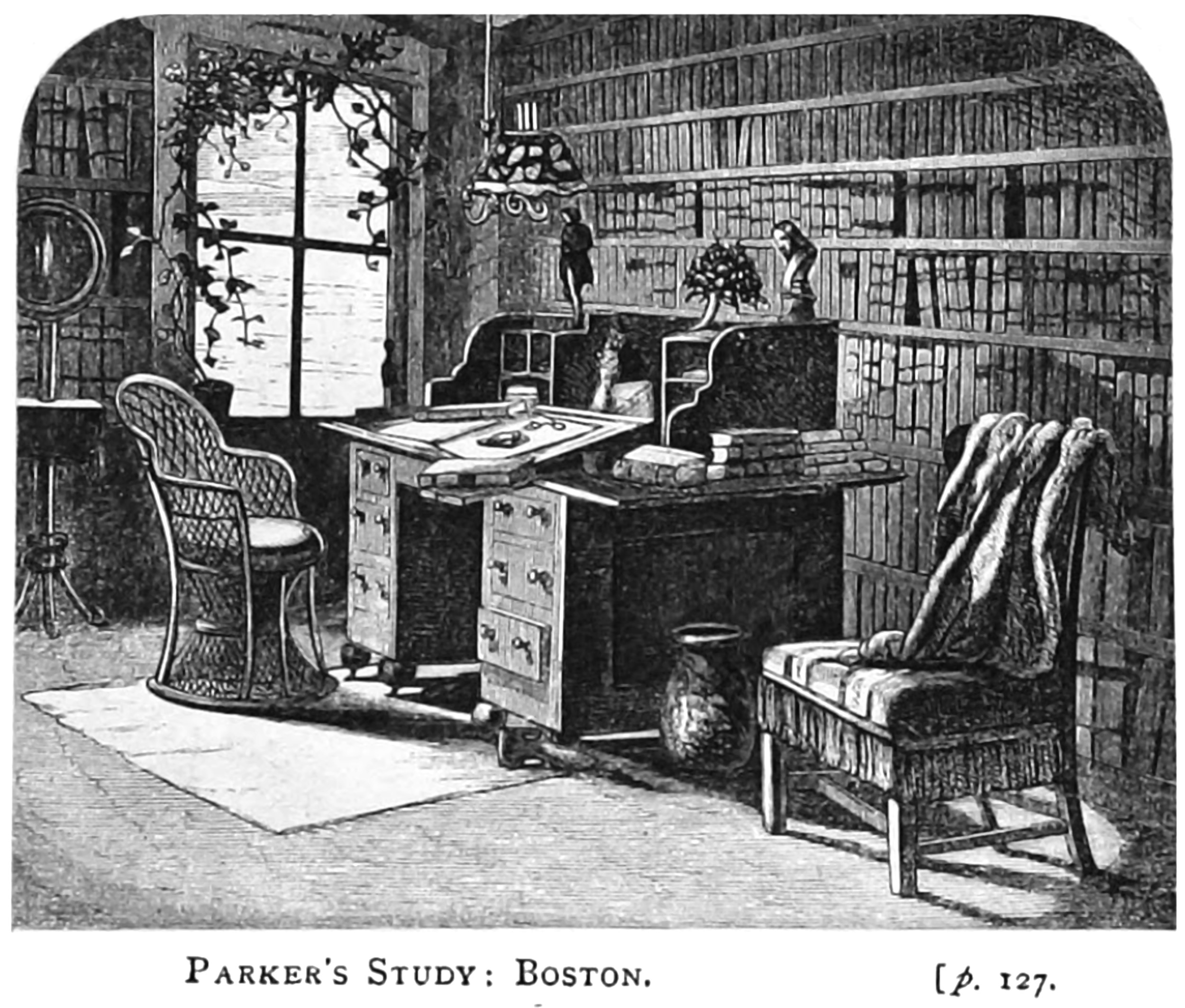
Theodore Parker and the loaded pistol
Wisdom Tale
Among the people who used to come each Sunday to Theodore Parker’s church in Boston were William and Ellen Craft. William was a carpenter, and they had a nice home in Boston, where they had lived for some years. Theodore Parker knew them well, and went often to see them in their house, and welcomed them gladly when they came to visit him. He knew the sad, true story of their past lives, which was a secret from other people in Boston: years ago they had been held as slaves by a cruel master in Georgia. They had managed to escape from slavery, and had fled over nine hundred miles, until they had finally come to safety in Boston, for Massachusetts was a free state that did not allow slavery.
The Crafts lived peaceful lives in Boston until 1850, when the United States Congress passed the Fugitive Slave Law.
The Fugitive Slave Law allowed slave owners to take former slaves who had escaped to freedom in one of the free states. To demonstrate the power of the new law, some supporters of slavery decided to pull off a high-profile capture of escaped slaves — they decided to capture William and Ellen Craft, who had been free for so long, and who lived a city which was a stronghold of abolition.
The slave-catchers came to Boston. So the Committee on Vigilance, a group of people who organized themselves to stop the Fugitive Slave Law and end slavery, went into action. Theodore Parker let Ellen hide out in his own home. By hiding Ellen, he made himself liable to a fine of a thousand dollars and imprisonment for six months under the Fugitive Slave Law.
Parker said, “I will [helped a fugitive slave] as readily as I would lift a man out of the water, or pluck him from the teeth of a wolf or snatch him from the hands of a murderer. What is a fine of a thousand dollars, and jailing for six months, to the liberty of a man? My money perish with me if it stand between me and the eternal law of God!”
While his wife stayed in the safety of Parker’s house, William Craft armed himself, and with support from the Committee on Vigilance he was able to move around Boston and keep away from the slave-catchers. Then Theodore Parker heard that the slave-catchers had threatened to break into his house at night.
Determined to keep them out, Parker kept a loaded pistol at the ready. A few months later, when some other Unitarian ministers criticized Parker for breaking the law, here’s what he said:
“I have in my church black men [and women], fugitive slaves. They are the crown of my apostleship, the seal of my ministry. It becomes me to look after their bodies in order to ‘save their souls.’ This [Fugitive Slave] law has brought us into the most intimate connection with the sin of slavery. I have been obliged to take my own parishioners into my house to keep them out of the clutches of the kidnapper. Yes, gentlemen, I have been obliged to do that; and then to keep my doors guarded by day as well as by night. Yes, I have had to arm myself. I have written my sermons with a pistol in my desk,— loaded … and ready for action. Yes, with a drawn sword within reach of my right hand. This I have done in Boston; in the middle of the nineteenth century; been obliged to do it to defend the [innocent] members of my own church, women as well as men!”
But the slave-catchers, and the Federal marshals who helped them, never broke into Parker’s house. He went to their hotel, and let them know that whoever came into his house to try to capture Ellen Craft would do so at the peril of their lives. He went on to tell them exactly what the people of Boston thought of them, and what might happen to them if some people in Boston got hold of them, and Parker so scared the slave-catchers that they left the city as soon as they could catch a train out.
While all this was going on, the Committee on Vigilance (that was the name of the organization of abolitionists Parker was working with) raised enough money to send William and Ellen Craft to England, where slavery was illegal, with enough additional money so that they could get established in their new country.
Before they left, it turned out that William and Ellen had never been legally married. They had been living as husband and wife when they were slaves, but since it was illegal for slaves to marry they had never married. Before they left for England, Parker officially married them. But Theodore Parker added his own twist to the marriage ceremony. Here’s how he told the story:
“Then came the marriage ceremony; then a prayer such as the occasion inspired. Then I noticed a Bible lying on one table and a sword on the other. I took the Bible, put it into William’s right hand, and told him the use of it. It contained the noblest truths in the possession of the human race, &c., it was an instrument he was to use to help save his own soul, and his wife’s soul, and charged him to use it for its purpose, &c. I then took the sword; I put that in his right hand, and told him if the worst came to the worst to use that to save [his and] his wife’s liberty, or life, if he could effect it in no other way. I told him that I hated violence, that I reverenced the sacredness of human life, and thought there was seldom a case in which it was justifiable to take it; that if he could save his wife’s liberty in no other way, then this would be one of the cases, and as a minister of religion I put into his hands these two dissimilar instruments, one for the body, if need were — one for his soul at all events. Then I charged him not to use it except at the last extremity, to bear no harsh and revengeful feelings against those who once held him in bondage, or such as sought to make him and his wife slaves even now.”
William and Ellen Craft succeeded in reaching England safely. All this took place in 1851, the year of the first Great Exhibition, held in London. William and Ellen appeared at the Great Exhibition, and crowds of people went to see them, two former slaves who had escaped to England, two now-free people who sang “God save the Queen” to thank Heaven for having escaped from the slave-catchers.
Source: The Life and Writings of Theodore Parker, Albert Réville (London: Simpkin, Marshall, & Co., 1865), pp. 112-114; and The Story of Theodore Parker, Francis E. Cooke (London: Sunday School Association, 1890), pp. 100-101.]
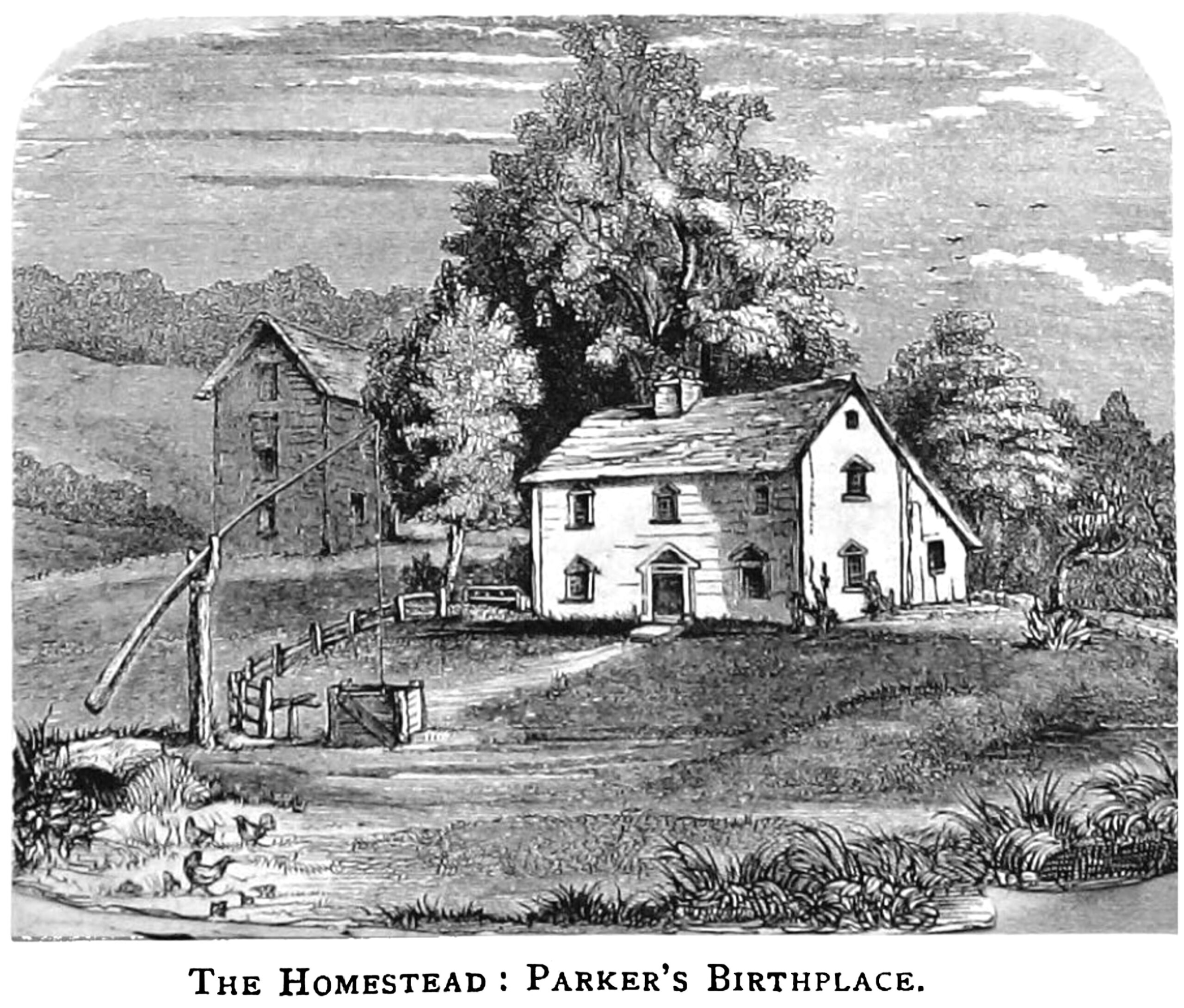
Theodore Parker and the Turtle
Wisdom Tale
Once upon a time there lived a little boy named Theodore Parker. He lived on a farm in Lexington, Massachusetts. His grandfather had been one of the militia-men who had stood up to the soldiers in the Battle of Lexington at the beginning of the Revolutionary War, protesting the injustice of the English King. The musket that his grandfather had carried on that day hung over the fireplace in the farmhouse.
One fine day in spring, when Theodore Parker was nearly four years old, his father led him by the hand to a distant part of the farm. Soon his father sent him to walk home alone. On the way, little Theodore had to pass a small pond in the field. A rhodora flower in full bloom drew him to the spot. There in the pond, Theodore saw a little spotted turtle sunning itself in the water at the foot of the flower.
Theodore went up to the turtle. He was carrying a stick in his hand, and he lifted up the stick to lifted the stick to strike it. All at once something checked his arm and stopped him from striking the turtle, and a voice within him said, clear and loud, “It is wrong!”
Theodore held his stick in the air, and wondered at this new feeling. Then he ran home, and told the story to his mother.
“What was it that told me it was wrong?” he said.
His mother took him in her arms. “Some people call it Conscience,” she said. “I like to call it the Voice of God in the soul of people. If you listen and obey it, then it will speak clearer and clearer, and always guide you right. But if you turn a deaf ear, or disobey, then it will fade out little by little, and leave you all in the dark and without a guide. Your life depends on your heeding this little voice.”
For the rest of his life, Theodore Parker listened to his conscience, that voice in his soul, and like his grandfather before him, he always tried to do what was right.
Source: The original of this story appears in John Weiss, Life and Correspondence of Theodore Parker, vol. I (New York: D. Appleton & Co., 1864), pp. 25-26; the version in Weiss’s book was written by Parker, is written in the first person, and contains more details. The present version of story is derived from the Unitarian collection The Little Child at the Breakfast Table, by William Channing Gannett and Mary Thorn Lewis Gannett (Boston: Beacon, 1915), p. 16. The information about Parker’s grandfather, and about Parker’s claims that the Revolutionary War influenced his moral views, comes from American Heretic: Theodore Parker and Transcendentalism, by Dean Grodzins (Chapel Hill, N.C.: University of North Carolina Press, 2002), pp. 10-12.
Maja Capek and the Story of the Flower Celebration
Spiritual Tale
Maja Oktavec came to the United States from what we now call the Czech Republic as a young woman just over a hundred years ago. She became a librarian, and while working in the Webster Branch of the New York Public Library, she met a man named Norbert Capek who had come to America from the same place. They fell in love, and got married in 1917.
Norbert was a Baptist minister, but he was beginning to doubt his Baptist beliefs. Maja encouraged his doubts, and soon he had resigned from the Baptist ministry, and they had both stopped going to church.
One day, their children said they wanted to go to Sunday school. They chose a church to try, and they came back, their parents asked them what they had learned. It sounded like the old religion they had rejected, so Norbert said that he wished the children would try a different Sunday school the next week. This went on for weeks. The children would go off to a new Sunday school, they would tell what they learned when they got home, and Norbert would ask them to please try another church the next week.
Until one Sunday when the children went to a Unitarian church. When they came home and told what they had learned, Norbert encouraged them to return to that church. Soon Norbert and Maja decided that they, too, would like to go to the Unitarian church, and they liked it so much they became members.
At about this time, their homeland became an independent country called Czechoslovakia. The Capeks returned to their homeland to start a Unitarian church there, in the city of Prague. Most members of their new church had left other religions to become Unitarians. Many of these people did not want to be reminded of the religions they had left behind. In 1923, Norbert and Maja Capek decided to create a new ritual for their congregation: a Flower Celebration, where everyone exchanged flowers to symbolize how all human beings are connected.
Within ten years, this new Unitarian church grew to three thousand members, the largest Unitarian church in the world.
Within another ten years, Nazi Germany started the Second World War. It was a terrible time. Maja Capek came to the United States to raise money to help refugees. While she was in the United States, the Nazis invaded Czechoslovakia, arrested Norbert Capek because he spoke out for freedom, and they put him into the concentration camp at Dachau, where he died in 1942.
After the war, Maja Capek stayed in the United States. She was deeply saddened by her husband’s death. She continued to her relief work with the United Nations Relief and Rehabilitation Agency. She also brought the joyous Flower Celebration to us here in the United States. And each year when we have our own Flower Celebration, we give thanks to Maja Capek for sharing this wonderful ritual with us here in the United States.
Sources: Material on the Flower Celebration in Quest, the monthly publication of the Church of the Larger Fellowship (June, 2002); Reginald Zotolli, “The Flower Communion: A Service of Celebration for Religious Liberals,” UUA pamphlet; Richard Henry, Norbert Fabian Capek: A Spiritual Journey (Skinner House, 1999).
Connected by Water
Spiritual Tale. A story for Water Communion services. I based this story on something Steve Hersey said in the water communion service at the First Parish in Watertown, Massachusetts, in 1995.
This story requires that you make two simple props. First, print out the PDF files on standard letter size paper:
PDF of 602
PDF of 22
PDF of ,000
Now take the “602” sheet and tape 7 sheets of “,000” to the right hand edge; carefully fold the “,000” sheets behind the “602” sheet with an accordion fold. Then take the “22” sheet and tape 9 sheets of “,000” to the right hand edge; fold as above. You have just made two very long numbers; these are the two props you will need.
Each year we do this water communion service. When we share our water in the common bowl, it symbolizes that while we are separate people, we are also part of an interdependent community.
You probably know about the water cycle. When it rains, water falls from clouds onto the ground, and eventually it flows into a river, and all rivers flow down to the ocean. Water evaporates from the ocean and forms clouds, the clouds drift over the land, it rains, and the cycle begins again. You’re in the middle of this cycle because you drink about 2 liters of water every day, and then you sweat or urinate and put water back into the water cycle. So water is constantly on the move.
You probably know that water is made up of molecules, and that each water molecule is made up of two atoms of hydrogen and one atom of oxygen. Water molecules are incredibly tiny, so tiny you cannot see them. If you had 18 grams of water, or a little more than half an ounce, that would be about 6 x 10^23 [pronounced: “six times ten to the twenty-third”] molecules. The molecular weight of water is approximately 18, and therefore 18 grams of water should have a number of molecules equal to Avogadro’s number, or 6.02 x 10^23.
This is a fairly large number. I can show you what this number would look like. This would be 602 — [show “602” with all the zeros folded behind it]. This would be 602 million [unfold two of the “,000” sheets from behind the “602” sheet]. Um, if I go any higher, I’m going to need some adults to help me hold this very large number up (I need adults because they are tall enough to hold it up where everyone can see it). [Get three or four helpers to hold up the number.] Thank you! Now you can see this very large number: 6.02 x 10^23, or 602 sextillion.
If you’re a child who weighs about 77 pounds, or 35 kilograms, then you have about 20 liters of water in your body (adults, you can multiply up to figure it out for yourselves). That’s approximately 20,000 grams of water, or 6.02 x 10^26, or 602 septillion, molecules of water in your body if you’re a child. And if you drink 2 liters of water a day, you’re replacing about ten percent of that, or 6 x 10^25 molecules, each day. So if you are 3,650 days old (that’s ten years old), about 2.2 x 10^28 water molecules have already passed through your body. This is an even larger number, and here’s what that number looks like. [Begin to unfold the other large number.] Oh, I guess I’m going to need helpers to hold up this number as well. [Get four or five people to hold up this number.]]
Because water is constantly cycling around, and because every human being has such large numbers of molecules of water cycling through them, there’s a very good chance that each one of us has at least a few molecules of water that were formerly in the body of Socrates, the great philosopher. We each probably have some molecules of water that were once in the body of Jesus of Nazareth, and of the Buddha, and any number of great and wise people who lived in the past.
Thus when we say that we are all interconnected, that statement is quite literally true — we are all interconnected through the water cycle, not only with each other, but with all living beings past and present. Jesus, Confucius, Ralph Waldo Emerson, Eliza Tupper Wilkes who was the first Unitarian minister in Palo Alto — you might be literally connected with each of these good and wise people.
(Let’s thank all our helpers!)
Note: Obviously, you can substitute someone else for Eliza Tupper Wilkes. However, given that the Water Communion is a feminist ritual, you should include a woman.
The Christmas Eve Candles
Spiritual Tale
(A story to be told as part of a Christmas Eve candle-lighting service, where each person in the congregation winds up with a lighted candle. Near the story teller are three rows of candles: one tall candle that is already lit as the congregation comes in to the service; two medium-height candles directly in front of it, waiting to be lit; and four short candles in a row in front of that.)
Each year on Christmas eve, we light candles here at the Unitarian Universalist Church of Valhalla. Soon, each of us will be holding a lighted candle, and the light from all our candles will light up our church. We have a reason for lighting all these candles, besides the fact that it looks pretty. Let me tell you a little bit about why we light all these candles.
Here in front of me is a tall candle, a candle that is already lit; this candle was lit when you walked into this room. This candle represents the light of the ages. It represents the wisdom that people have been able to know since people first existed. Those who are willing to search for it, all people, of all cultures and races and nations, right on down through the ages, have been able to find the light of the ages.
[Begin lighting the second row of candles.]
Right in front of this candle representing the light of the ages, you can see two more candles. These two candles represent the prophets and sages. Today we celebrate the birth of Jesus, who was one of these great prophets. Of course there are others — Socrates and Confucius and Buddha, and people like Joan of Arc and Martin Luther King Jr. and Mahatma Gandhi — and the prophets and sages whose names we haven’t happened to have heard in this time and place. The prophets and sages have reminded us — continue to remind us — of the wisdom that is our birthright.
[Begin lighting the third row of candles.]
Then you can see four more candles in front of the those two. These four candles represent the teachers who appear in every age, in every community. When I say “teachers,” I don’t just mean school teachers. Teachers are the ones who introduce us to the prophets and sages, who take the time to remind us of the highest wisdom. They might be your parents, or someone here at church; other friends, mentors, and guides, or even the author of a book you once read.
And finally there are many more candles representing you and me, all of us. We will light all our candles from these candles representing the teachers, the sages, and the light of the ages. For we all have been taught, we have all been touched by the wisdom of the sages, we have all felt our lives brightened by the light of the ages. And it is our sacred duty to let our own lights shine, to keep the light of wisdom, the light of hope, shining in the world around us.
Remember this as you receive the light which lights your own candle. The prophets and sages have spoken, the teachers have taught us, but it is up to us to make sure the light of the ages, the light of wisdom and justice and righteousness, burns brightly in the world today.
Source: Based on a story told by Dana Maclean Greeley at First Parish of Concord, Massachusetts, in the 1970s.
The Old Story of Thanksgiving
Myth. Please read the notes on sources (see below) before you use this story.
This is the old story of Thanksgiving. Even though you’ve heard this story about a million times, it’s good to tell it every year to remind ourselves why we celebrate Thanksgiving.
The story begins in England. In England in those days, every town had only one church, and it was called the Church of England. You had to belong to that church, like it or not. It’s not like it is here today, where families get to choose which church they want to go to — back then, there were no other churches to choose from!
A small group of people decided they could no longer believe the things that were said and believed in the Church of England. When they tried to form their own church in England, they got in trouble. They went to live in Holland, where they were free to practice their own religion, but they felt odd living in someone else’s country.
Then this small group of people heard about a new land across the ocean called America, a place where they could practice their own religion. They found a ship called the Mayflower, and made plans to sail to America. These are the people we call the Pilgrims.
After a long, difficult trip across a stormy sea, the Pilgrims finally came to the new land, which was called New England. The voyage took much longer than they had hoped, and by the time they got to New England, it was already December. The nights were long, the days were cold, and the Pilgrims had to build houses and find food and try to make themselves comfortable for the long, cold winter.
The weather grew very cold. The Pilgrims very little to eat. The first winter that the Pilgrims spent here in New England was so long and cold and hard, that some of the Pilgrims began to sicken and die. Fortunately, the people who were already living in this new land were very generous — these were people from the Patuxet band of the Wampanoag people. When the Patuxet saw how badly the Pilgrims were faring, they shared their food so at least the Pilgrims wouldn’t starve to death. Perhaps the Patuxet were especially sympathetic because a few years earlier, ninety percent of them had died when diseases brought by Europeans had spread down from Canada.
That first winter, fully half the Pilgrims died from cold and lack of food. Yet without the help of the sympathetic Patuxet, many more would have died.
After that first winter, life got better for the Pilgrims. Spring came, and they were able to build real houses for themselves. They planted crops, and most of the crops did pretty well. The Pilgrims went hunting and fishing, and they found lots of game and caught lots of fish.
By the time fall came around again, the Pilgrims had a pretty comfortable life. To celebrate their good fortune, they decided to hold a harvest celebration. They went hunting and killed some turkeys to eat at their celebration. They grilled fish, and baked pumpkin pie, and we’re pretty sure they had lobster, wild grapes and maybe some dried fruit, and venison. However, they probably did not call their holiday “thanksgiving,” because for them a thanksgiving celebration was something you did in church. At that first celebration, they did not have a church service.
Their harvest celebration lasted for several days, with food, and games, and other recreation. The Patuxet leader Massasoit and some of his followers heard the Pilgrims celebrating, and came to see what was going on. In a spirit of generosity, the fifty Pilgrims invited all ninety Indians to stay for dinner. Imagine inviting ninety guests over to your house for Thanksgiving! And in those days only Pilgrim women and older girls prepared and cooked meals, but there were only four women old enough to help with the cooking. Four women to cook for a hundred and forty people!
The Patuxet quickly saw that there probably wasn’t going to be quite enough food to go around. So Massasoit and his followers went hunting, and in a few hours brought back lots more game to share at the harvest celebration. At last all the food was cooked, and everyone sat down to eat together: men and women, adults and children, Patuxet and English.
That’s the old story of Thanksgiving.
The Pilgrims and other Europeans did well over the next few centuries. But on Thanksgiving we must also remember that the Wampanoag people did not do well. In the 1600s, most of their lands were stolen by Europeans. In the 1700s, many of them were enslaved by the Europeans. In the 1800s, the Wampanoag were not allowed to be U.S. citizens, and had limited legal rights. Through 1900s, many Wampanoag experienced severe discrimination. Yet in spite of all this, the Wampanoag people continue to live and carry on their culture in southeastern Massachusetts today.
Sources and notes
Since at least 1980, the history of the European settlement at Plymouth, and the relations of the Europeans and the indigenous peoples, has been the subject of intense scholarly scrutiny. The emerging scholarly consensus is that the Thanksgiving story is far more complex than it is usually told.
The story above tries to include some of this complexity — the Thanksgiving story includes a story of a group of Europeans escaping violent repression of their religious conviction and a story of the genocide of indigenous peoples in southeastern New England through settler colonialism and the story of the complicated political situation of the indigenous peoples of southeastern New England from 1600-1621 and the complicated internal divisions in the European settlers, and a story of how women have been erased from both indigenous and European history.These are the stories that need to be considered, at a bare minimum.
Unitarian Universalists have typically told the Thanksgiving story as a story of religious freedom, centering the experience and viewpoints of the male Pilgrims with religious convictions. The story above tries to include the perspective of female Europeans, and (to a lesser extent) the perspective of Massasoit and what he and his people hoped to accomplish by temporarily allying themselves to the Europeans.
However, one level of complexity completely missing from the story above is the perspective of the non-religious settlers, some of whom perpetrated the Wessagusett Massacre in what is now Weymouth, Mass., just two years after the “first Thanksgiving.” In a sense, British imperialists manipulated the Pilgrims’ religious persecution to further the end of colonialism, whereas the whole purpose of the non-religious English was settler colonialism. This is not to excuse the Pilgrims, but merely to point out the different motivations driving the English settlers.
Another level of complexity completely missing from this story: the class divisions among both the Europeans and the indigenous peoples. The European settlers included indentured servants who had little control over their own lives. In a similar vein, some scholars interpret the historical evidence as meaning that the indigenous peoples were non-egalitarian (see, e.g., Kathleen Bragdon, Native People of Southern New England, 1650-1775 [Univ. of Oklahoma, 1999]), with implications for the relative agency of elite vs. non-elite indigenous persons.
Still another level of complexity completely missing from this story is an adequate overview of the regional power struggles going on among European polities and among indigenous polities. On the European side, the English in the settler colony at Plymouth were part of a European power struggle going on between the colonial powers of England, Spain, and France. On the indigenous side, the Wamponoag and Massachusett peoples of southeastern New England faced pressures from other indigenous polities to their west such as the Naragansett; furthermore, all indigenous polities of southeastern New England apparently faced pressure from indigenous polities to the west of the Berkshires. All these international power struggles affected what was going on in the 50-person English settlement at Plymouth in 1621.
So be forewarned. If you use this story today, you will probably get complaints from those who feel you have misinterpreted the story. Because of this, I’d suggest you would be wise to do your own research rather than relying on my research.
Among the many sources consulted:
— Books: Mourt’s Relation; A People’s History of the United States, Howard Zinn (1980); An Indigenous People’s History of the United States, Roxanne Dunbar-Ortiz (Zed Press, 1987); Guns, Germs, and Steel, Jared Diamond (1997); Mayflower, Nathaniel Philbrick (Penguin Random House, 2007).
— Websites: The Massachusett Tribe at Ponkapoag; Cothutikut Mattakeeset Massachusetts Tribe; Plimoth Patuxet Museums; and Praying Indians of Natick and Ponkapoag.
The Story of the Flaming Chalice
Spiritual Tale
There’s a story about how the flaming chalice came to be the symbol of our faith community. Back around 1940, as the Second World War was spreading throughout Europe, the Unitarian Service Committee was hard at work in Europe. The Unitarian Service Committee got Unitarians here in the United States to donate clothing and food to send overseas to Europe, to give to refugees who were cold and hungry.
When they got to Europe, people from the Unitarian Service Committee set up headquarters in Lisbon, Portugal. They soon discovered that almost no one over there had heard of them — even though there were Unitarians in Europe, the people they had to deal with had no idea what a Unitarian was.
Meanwhile, an Austrian artist named Hans Deutsch was living in Paris. When the Nazis invaded Paris, he had to flee for his life, because he had drawn cartoons making fun of Adolf Hitler. He wound up in Portugal, where he met Charles Joy, who was the head of the Unitarian Service Committee. Hans Deutsch like the Unitarian Service Committee, and soon wound up working for them. Deutsch wrote to Charles Joy, telling why he liked working for the Unitarians:
“I am not what you may actually call a believer. But if your kind of life is the profession of your faith — as it is, I feel sure — then religion, ceasing to be magic and mysticism, becomes confession to practical philosophy and — what is more — to active, really useful social work. And this religion … is one to which even a ‘godless’ fellow like myself can say wholeheartedly, Yes!”
From the Unitarian Service Committee headquarters in Lisbon, Charles Joy not only directed relief work, he also helped Jews and other refugees escape the Nazis, and he also directed a network of secret agents and couriers who helped contact refugees who needed to escape. But Charles Joy faced a problem — the Unitarian Service Committee was not well-known, and this could cause problems for their relief workers and for their agents and couriers.
So Charles Joy asked Hans Deutsch to make a symbol for the Service Committee. Why have a symbol? Charles Joy explained that he needed to make Service Committee documents “look official, to give dignity and importance to them, and at the same time to symbolize the spirit of our work…. When a document may keep a man out of jail, give him standing with governments and police, it is important that it look important.”
The symbol that Hans Deutsch drew — and that the Unitarian Service Committee enthusiastically adopted — was a flame coming out of a chalice, the kind of chalice that the ancient Greeks and Romans used. Hans Deutsch thought that the holy oil burning in an ancient Greek chalice symbolized helpfulness and sacrifice. Charles Joy noticed that this chalice remotely suggested a Christian cross, which made sense since Unitarianism did come out of the Christian tradition.
And I think the best thing about the flaming chalice is that it has no official meaning at all. It was created only because it was going to make social justice work easier to carry out. Its original meaning was very simple:— get the work done, help other people, make the world a better place.
Source: Dan Hotchkiss, “The Wartime Origins of the Flaming Chalice,” UU World magazine, May/June 2001; Dan Hotchkiss, “The Flaming Chalice,” pamphlet of the Unitarian Universalist Association (c. 2000; no longer available online); Susan Ritchie, “The Flaming Chalice,” pamphlet of the Unitarian Universalist Association (c. 2020).
The Mood Pillow
Wisdom Tale. Adapted from an episode in Little Women by Unitarian author Louisa May Alcott
Once upon a time, about a hundred and fifty years ago in the town of Concord, Massachusetts, a family lived in a house they called “Apple Slump.” There were four children in the family, Meg, Jo, Beth, and Amy, along with their father, Mr. March, and Marmee, their mother. At the time this story takes place, Mr. March was far away, serving in the army during the Civil War.
Jo had long, chestnut-colored hair. She was a tall tomboy who didn’t really like being a girl. Jo also had a terrible temper; she had a hard time controlling their anger. But Jo figured out a way to keep her temper under control. She had what I think of as a “mood pillow.”
“Apple Slump,” the house that the March family lived in, was a big, old, rambling New England farmhouse. Jo thought the best room in the house was the garret, a room up in the attic that had a nice, sunny window. Next to the window stood an old sofa.
The sofa was long, and broad, and low. It had been the perfect thing for the girls to play on when they were little. They had slept on it, ridden on the arms as if they were horses, and crawled under it pretending they were animals. As they got older, they had long, serious talks sitting on it, they lay down and dreamed daydreams on it.
Jo liked the sofa more than the other girls. It was her favorite place to read. She would curl up in one corner with a good book, and half a dozen russet apples to eat. As she sat reading and eating her apples, a tame little rat would stick its head out and enjoy her quiet company.
But sometimes Jo went up into the garret for a different reason. She had a terrible temper, and sometimes she would get in a horrible nasty mood. Sometimes, when she was in a particularly bad mood, she just needed to be alone.
She would run up into the garret, and pick up the pillow that was on the sofa. This was an old, hard, round pillow shaped liked a sausage. This repulsive-looking old thing was her special property. If she stood it on its end, that was a sign that any one of her sisters, or her best friend Laurence, or her mother, was allowed to come and sit down next to her on the sofa and chat; but if it lay flat across the sofa, “woe to the man, woman, or child who dared disturb it!” When they were younger, her sisters and Laurence had been pummeled mercilessly by this pillow, and now they knew better than to try to sit next to Jo when it lay flat.
I call this her “mood pillow,” and I think it’s a great idea. When Jo was in a bad mood, or angry about something, or when she just needed to be alone, she could use the pillow to let her family and friends know that they should leave her alone for a while. That way, she wouldn’t hurt those around her when she was in a bad mood.
When you’re in a bad mood, what do you do to keep from hurting those around you?
How’s Your Heart?
Spiritual Tale. I heard Rev. Barbara Marshman tell this story back in 1995. I no longer remember exactly the way she told the story, but it went something like this….
We just celebrated Valentine’s Day. The heart has become the symbol of Valentine’s Day, and we send Valentine’s Day cards with red paper cut-outs in a shape that we call heart-shaped.
Actually, your heart isn’t made out of red paper. Your heart is a muscle right here in your chest. It’s about the size of your fist, and it pumps blood all through your body. When you listen to a heart through a stethoscope you can hear it pumping: “bu-bump, bu-bump, bu-bump.” Your heart is really an organ in your body that pumps blood.
But we like to think that our feelings come from our hearts. Maybe this is because when you’re excited your heart beats quickly, or when you feel relaxed, your heart beats slowly. And we like to think that when someone is in love, their heart beats quickly every time they see the one they love. Our hearts and our feelings seem to work together.
Now when I was a little child, my grandmother would say things that I didn’t quite understand. She would describe other people, and talk about their hearts. I wasn’t quite sure what she meant. For example, when she thought someone was an especially kind and good person, she would say, “Oh, he has a heart of gold.” If you think about it, that old expression makes sense: if our hearts seem to be where our feelings are, and if someone is so good they are as good as gold, why then it makes sense to say that person’s heart is as good as gold. But when I was a little child, here’s how I imagined it:
[Show a heart cut out of gold paper]
Sometimes my grandmother would talk about a different kind of person, a person who didn’t seem to have the normal kind feelings that human beings have. She would say, “Oh, that person has a heart of stone.” And when I was a little child, here’s how I imagined it:
[Show a heart made out of stone]
Of course, no one wants to have a heart of stone!
When my grandmother knew someone who was warm and good, who was always ready to help other people, she might say, “Now that’s someone who is warm-hearted.” And this is how I imagined warm-hearted:
[Show a heart with a fire burning in it]
Or there might be someone who had enough love for everyone, whom my grandmother would call “big-hearted.” Here’s how I saw that in my mind’s eye: [Show a bigger heart than the others]
If you show your feelings easily, my grandmother might have said that you “wear your heart on your sleeve.” And here’s how I imagined that:
[Place a small heart on your sleeve]
Every year, Valentine’s day comes just two days after Abraham Lincoln’s birthday. In the old days, people like my grandmother used to call Abraham Lincoln the “Great Heart,” because of his leadership in making the Emancipation Proclamation into law, and eventually ending slavery. Of course you know how I imagined “great heart” when I was little
[Show the biggest heart of all]
A “Great Heart” is someone who really makes a difference in the world. A “Great Heart” is someone who believes that love is the most powerful force in the universe, who lives their lives as if that’s true, and who makes the world a better place through their love. A month ago we celebrated the birthday of Martin Luther King, Jr., and he too was a Great Heart.
I like to imagine that each one of us could become a Great Hears. You just have to try to be the best person you can be. And as you think about being the best person you can be, maybe you can feel your heart growing — however you might imagine what that would look like!
[Show a heart that is folded so that it can expand]
Source: Rev. Barbara Marshman story, told at a meeting of the Mass. Bay District Religious Education Team, circa 1995.
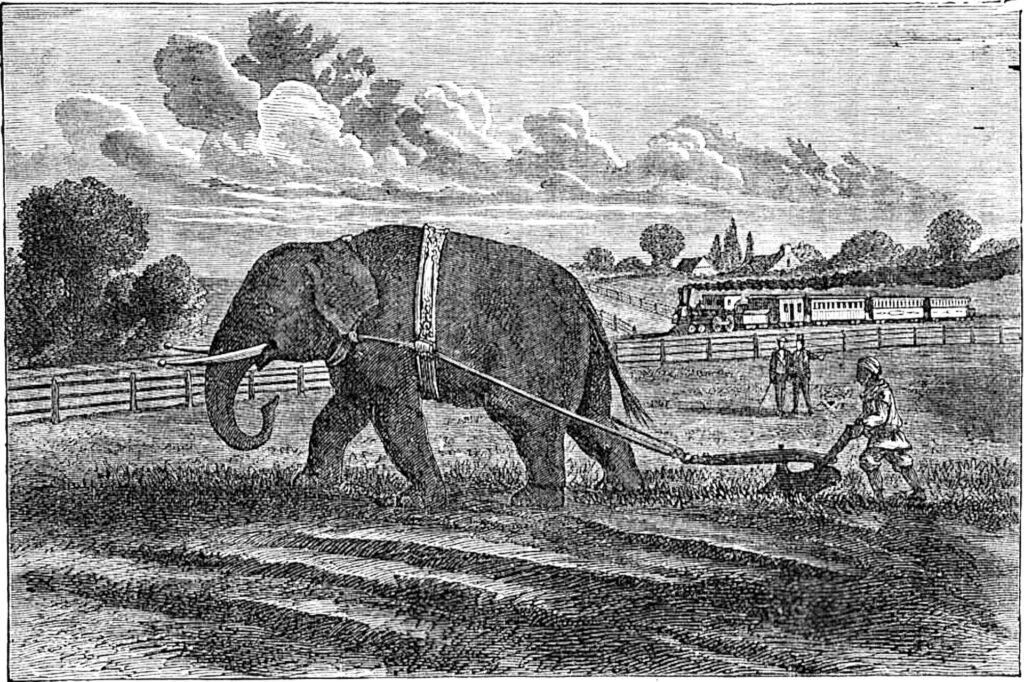
P. T. Barnum’s Elephant
Wisdom Tale, Spiritual Tale
He was the greatest showman in America! He was a man who was known and loved everywhere, the most famous person in the United States in the nineteenth century! He was the man who created “the greatest show on earth”! His name was Phineas Taylor Barnum.
P. T. Barnum was a showman, the greatest showman of all time, a man who put on shows of strange and wonderful things in his giant Museum in New York City. He exhibited the very first live hippopotamus ever seen in North America. His museum was known for its amazing and incredible animals. He even exhibited the amazing Feejee Mermaid. (Well, actually he later admitted that the Feejee Mermaid was a fake that had been glued together.)
He was a showman, but more than that he was an expert at making money. He had a two-part secret for making money. First, give the public good value. Second, get all the free advertising that you can. Here’s an example of how Barnum gave good value, and got free advertising for his fabulous American Museum….
P. T. Barnum brought thirteen elephants Asia to North America. He exhibited them in New York and all across the North American continent. After four years, he sold all but one. He kept that one for his farm in Connecticut. He figured out a way that the elephant could draw a plow. Then he hired a man to use the elephant to plow a tiny corner of Barnum’s farm, which just happened to be right next to the main line of the New York and New Haven Railroad.
P. T. Barnum gave this man a time-table for the railroad. Every time a passenger train was due to pass by, the man made sure the elephant was busily engaged in drawing the plow, right where all the passengers could see.
Hundreds of people each day rode the train past Barnum’s elephant. Everyone who saw it was amazed and astonished. Barnum was using an elephant to draw a plow! Reporters from all the New York newspapers came to write stories on this amazing spectacle. People wrote letters to Barnum from far and wide, asking his advice on how they, too, might use an elephant to draw a plow on their farms.
When Barnum responded to these letters, he always wrote: “Now this is strictly confidential, but for goodness sake don’t even think of getting an elephant. They eat far too much hay and you would lose money. I’m just doing it to draw attention to my museum in New York.”
Pictures of Barnum’s elephant pulling the plow began to appear in newspapers all across the United States, and even overseas in Europe. People came out to Connecticut on purpose just to see Barnum’s elephant at work. They would say, “Why look at that! That’s a real elephant drawing that plow! If Barnum can use an elephant on his farm, he must have all kinds of animals at his Museum. Guess I’ll go to Barnum’s Museum next time I’m in New York city.”
One day, an old farmer friend of Barnum’s came to visit. This farmer wanted to see the elephant at work. By this time, that six acre plot of land beside the railroad had been plowed over about sixty times. The farmer watched the elephant work for a while, and then he turned to Barnum and said, “My team of oxen could pull harder than that elephant any day.”
“Oh, I think that elephant can draw better than your oxen,” said Barnum.
“I don’t want to doubt your word,” said his farmer friend, “but tell me how that elephant can draw better than my oxen.”
Barnum replied, “That elephant is drawing the attention of twenty million people to Barnum’s Museum.”
P. T. Barnum later became famous for his circus, but not many people know that he was also a Universalist. He’s one of my favorite Unitarian Universalists, precisely because he wasn’t perfect. He didn’t always tell the truth, but at least he later admitted when he tried to fool people. He made too much money, but he made sure to give lots of his money away to help other people. He gave money to poor people, and he gave money to help people stop drinking, and he built parks that everyone could use, and he gave lots of money to his Universalist church. I like P. T. Barnum because I know I’m not perfect. But even though I make mistakes, I can follow Barnum’s example and help make the world a better place.
Source: This morally ambiguous story comes from P. T. Barnum’s 1872 autobiography, Struggles and Triumphs.
The Golden Memory Box
Spiritual Tale. You should adapt this story so that it has recognizable details from your own Unitarian Universalist congregation.
Once upon a time there was a girl named Keilah and a boy named Kyle who lived with their parents in the second floor of an old house that looked out over the harbor. During the week, Kyle and Keilah went to school, and on Sunday they went to church. Kyle liked school, Keilah didn’t like school, but they both liked church. They liked going into the worship service with their parents and singing one of the hymns they knew as loud as they could. They liked listening to the things their minister read, even though they didn’t always understand them. They liked going to Sunday school to see their friends. They liked going to social hour where they drank hot chocolate and, when the weather was nice, went outside to play in the church’s labyrinth.
***
On the first day of the new church year, Keilah and Kyle went to their new Sunday school class. Keilah was only a year older than Kyle, and this year they would be in the same class together. Kyle did not want to go to the new Sunday school class. “I won’t know any of the kids,” he told his father as they were getting ready to go. “Can’t I go back to my old Sunday school class?” Keilah was not sure that she wanted Kyle to be in her Sunday school class. “Can’t we go to different Sunday school classes?” she said to her mother. But in the end, they wound up going to Sunday school together.
As usual, they stayed in the first part of the worship service for fifteen minutes with their parents. Then they left when all the other children left. They walked more slowly than anyone else, so when they got to their new classroom, ten other children and three grown-ups, their new Sunday school teachers, were already there. A pleasant-looking man welcomed them and said, My name is Joe. You must be Keilah and Kyle. You’re just in time to play a game.”
The way the game worked, Joe told them, was that everyone had to pick something in a grocery store that had the same first letter, or the same first sound, as their name. “So I’m Joe Jumbo Juice,” he said. “That’s my grocery store name.” Keilah decided her grocery store name was “Keilah Cantaloupe,” and Kyle was “Kyle Kale.” Joe stood in the middle with a pillow, and one person started by saying someone else’s grocery store name. Then that person tried to say someone else’s grocery store name before Joe tapped them with the pillow. If you got tapped before you could say someone else’s name, then you went in the middle. It was a really fun game. At one point, everyone was laughing because Hong Hot Chocolate managed to get Sam Salmon with the pillow while he was talking to the person next to him. Keilah turned to Kyle and whispered, “This is a great game!” Kyle said, “Yeah, I wish it would go on forever!” Suddenly they both heard a voice, a mysterious high-pitched echo-y voice, say, “Put it in your Golden Memory Box!” (Except the voice dragged out “golden” so it really sounded like this: “Put it in your Gooolden Memory Box!”)
“Did you say that?” Keilah whispered to Kyle.
But Kyle didn’t respond, because Sam Salmon had just tapped him with the pillow. Laughing, he went into the center of the circle, and the game kept going.
***
One Sunday in December, Joe, their favorite Sunday school teacher, told the class that the next week there would be no Sunday school. Kyle and Keilah started to frown, but Joe said, “Instead of Sunday school, kids get to stay in the entire worship service next week because there will be a No-Rehearsal Christmas Pageant.”
Keilah asked what a “No-Rehearsal Christmas Pageant” might be. Mr. Lee smiled mysteriously, and told them they would just have to come to church the next week and see for themselves.
The next Sunday, Keilah and Kyle were ready to go to church early, and told their parents to hurry up, because they wanted to know what a “No-Rehearsal Christmas Pageant” might be. finally, they got to church, and at first everything was disappointingly the same as usual. Then the minister said it was time to start the No Rehearsal Christmas Pageant. She said that she would read the Christmas story, and people in the congregation would help her make it come alive by playing a part in the pageant. She said no one would have to speak, but if you volunteered for a part you’d get to wear a simple costume and stand up at the front of the church. Soon she came to the place where the Angel of the God of the Israelites spoke to the shepherds, and Keilah raised her hand high in the air, and the minister actually saw her and picked her to be the angel. She got to put on wings and a halo, and stand up in the pulpit looking down at everyone. Then the minister said she needed some animals who lived in the stable, and Kyle raised his hand when she asked for someone to be a camel, and she picked him. He got to go up front and wear a shaggy brown coat and put a plastic camel’s nose over his own nose.
It was the best pageant ever, and afterwards there were special snacks at social hour, including Christmas cookies. Their parents told them that since there were lots of cookies, they could have three cookies each, along with their hot chocolate. The cookies tasted very good washed down with hot chocolate. Keilah whispered to Kyle, “This has been the best Sunday ever. I wish this day could go on and on forever!” Suddenly they both heard a mysterious voice say, “Put it in your Gooolden Memory Box!”
“Who said that?” Kyle said.
They looked behind them, but there was no one there. And no one else seemed to hear the voice. So they just kept on nibbling their Christmas cookies and talking about the No Rehearsal Christmas Pageant.
***
In the spring, their Sunday school teachers arranged for their class to come to the church on a Saturday evening. They weren’t yet old enough to go on an overnight at the church, but this year they got to come in and have dinner together and play games. Some of the parents made dinner while all the kids helped set the table and get everything ready. Kyle even got to help arrange the flowers on the table. The food came out, and everyone sat down, and the minister said grace, and everyone started eating. After dinner, everyone helped clean up, and then they got out the games. Kielah and Kyle wound up playing Apples to Apples with the minister and her wife and some other kids. Then Joe, their favorite teacher, taught everyone a game called Spoons that was crazy and silly, where if someone got four cards of a kind you had to grab a spoon off the table. By now it was getting dark, and everyone played a game of Sardines that went all over the church building.
At last it was time for the closing worship service. It was ten o’clock, way past Kyle’s bed time, and he thought he might just like to fall asleep. But when they went into the sanctuary, it was lit only by candles and it looked so mysterious and beautiful that he rubbed his eyes and decided to stay awake. Joe played the guitar while they all sang the song “Evening Breeze,” and then Joe and the minister and some other grown-ups sang harmony parts that were so pretty that it made Keilah’s hair stand on end. Everybody lay on the floor while the minister told a story from the olden times. The minister blew out all but a few candles, and they lay on their backs looking up at the high ceiling. One by one, they all got to say what they thought about the story. Then there was a long time of silence that was broken by someone singing “There Is More Love Somewhere.” Soon everyone was singing, lying on their backs and singing up into the great dim empty space above them.
Kyle turned to Keilah and said, “I wish this night would go on forever!” “Me, too,” said Keilah. And then the both heard a mysterious voice calling, as if from a great distance, “Put it in your Gooolden Memory Box!”
But before they could wonder where the voice came from, the worship service was over and it was time to go home.
***
That summer, Keilah became very ill, and she had to go to the hospital. Kyle saw how worried his parents were, and he grew worried and scared, too. The minister came to see his parents, and hugged Kyle while she was there. Keilah was in the hospital for two weeks. When she came home at last, Kyle wasn’t allowed to see her right away. Finally he was allowed to go in to see his sister. “But you can’t stay too long,” his father said. “She’s still quite weak.” The room was dark, so Kyle didn’t see much, and Keilah didn’t say much.
As the days went by, Keilah got better, and stronger. She was still weak, and couldn’t get out of bed, but she was bored. Kyle came in to talk with her, and they played card games, and read stories together. That got boring after a day or two. Kyle kind of wanted to go outside and play with his friends, but he didn’t want to leave Keilah inside by herself, so he stayed with her.
“Boy, I am bored,” said Keilah.
“I wish we had something to do,” said Kyle.
Then, seemingly out of nowhere, came a mysterious, high-pitched echo-y voice. “Open your Gooolden Memory Box!” said the voice.
“Where did that voice come from?” said Keilah.
“I remember that voice!” said Kyle. “That’s the voice that we heard when we played that cool game, remember? The game where we had grocery store names.”
“I remember that game,” said Keilah. “I didn’t want it to ever end. And remember the No Rehearsal Christmas Pageant? I got to be the Angel.”
“Oh yeah, and I was the camel,” said Kyle.
And as they talked, they remembered more and more of the good things that had happened to them in the past year. They talked and they talked, and the time seemed to pass quickly. Before long, Keilah could get out of bed, and not long after that she could go outside to play again.
And from then on, whenever something really good happened, Keilah and Kyle remembered to put it in their golden memory box.
Source: Based on a story told by Grace Mitchell. Mrs. Mitchell (as I knew her) was an inspired educator who wrote a column for many years in Early Education magazine. While Mrs. Mitchell was not a Unitarian Universalist, she was what you might call “UU-adjacent.” She founded of Green Acres Day Camp in Waltham, Massachusetts, a camp with a distinctly progressive philosophy of education, where I worked for six summers. I have adapted this camp story to church life; as I tell it, this story reflects my feeling that when church looks more like camp, it is more memorable to children. A good story to tell at the end of the church year.